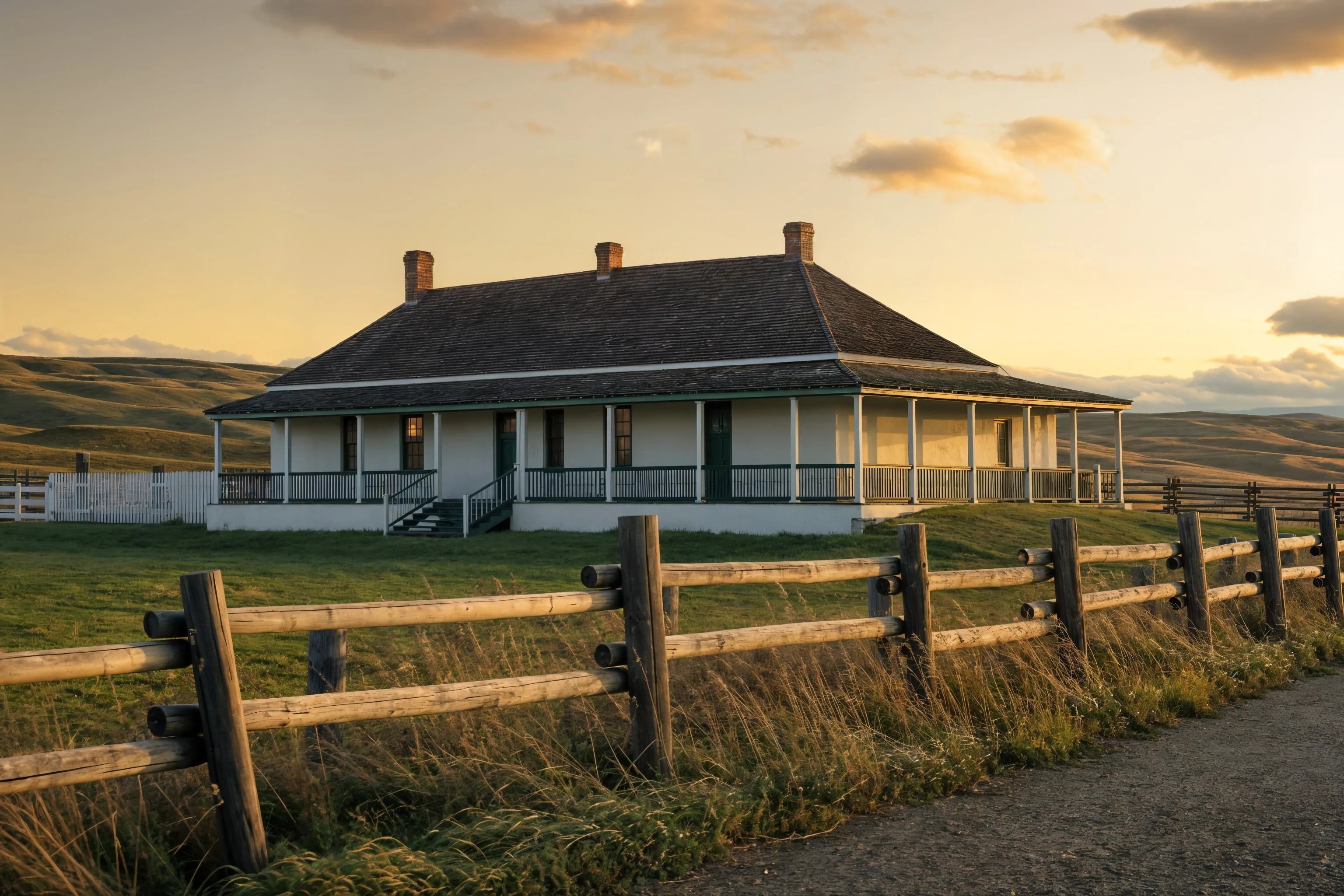
What solar Rocky Mountain House property owners ask for most is straightforward: LONGi panels, APsystems microinverters, and installers who understand rural electrical service, not a crew guessing at acreage wiring from a Calgary job site. LONGi panels handle the panel side of nearly every system we put up, whether that's a straightforward asphalt-shingle roof on an in-town bungalow or a ground mount set out in a yard with room to work with. APsystems microinverters do the conversion work panel by panel instead of through one central inverter, which matters on rural rooflines where a tree, a grain bin, or an outbuilding shades part of an array at different times of day. If one panel's output drops, the rest of the string keeps producing instead of the whole string dragging down with it. We handle the full job start to finish: site visit, electrical review, racking and mounting, wiring, and the FortisAlberta interconnection paperwork that has to get filed before the system goes live. For acreages and farm properties in the area, that often means ground-mount arrays set away from the house, sized to cover a shop or an irrigation pump as well as the home. For in-town properties, it's usually a roof-mount system sized to the house alone. Either way, we design to your property's actual roof, ground, and electrical conditions, not a generic template pulled off a spec sheet.
Solar Planning for Rocky Mountain House Properties
Rocky Mountain House, Alberta is home to about 6,765 people, with properties ranging from in-town lots to acreages and farms spread toward the forestry land that still anchors a chunk of the local economy around Forestry and West Fraser Mills. That mix means two properties on the same road can need very different system sizes, even if the houses look alike from the street. We don't start a design with assumptions about local weather. Environment Canada's bright sunshine normals for the nearby Red Deer A station list 2,208.2 hours of bright sunshine a year, which is a regional reference point, not a promise about what any particular roof or ground mount will produce. What actually drives the numbers for your property is roof pitch and orientation if you're mounting on the house, available open ground if you're not, and the service FortisAlberta runs to your meter. We don't guess at usage either. We pull the 12-month usage graph off your most recent power bill and size the system around what the property actually draws, whether that's a modest in-town home or an acreage running a shop and well pump off the same panel.
Electrical Site Review for Rural Alberta Properties
Voltage Rise
Voltage rise happens when power runs a long distance down a feeder before it reaches your meter, and rural lines often run longer than in-town service. That matters for solar because a system pushing power back onto a line that's already running high voltage can trip inverter protection and clip output. We check voltage conditions at the service during the site visit so the system is sized and configured to avoid that, not discovered after it's installed.
Single-Phase vs Three-Phase
Rural Alberta properties run on either single-phase or three-phase electrical service, and which one you have changes what inverter equipment fits and how much capacity the system can carry. Three-phase service, more common on larger farm and shop setups, generally supports a bigger system than single-phase residential service of the same size. We confirm which service type a property has before finalizing equipment, not after.
Panel Infrastructure
A lot of rural properties are running electrical panels that are decades old, and breaker capacity hasn't always kept pace with what a solar system needs to tie in safely. We check panel age, busbar rating, and available breaker space during the site visit. If the panel can't support the added circuit, an upgrade means a new panel sized for both existing loads and the solar system, done before the interconnection application goes in.
Service Entrance Review
The service entrance and meter base are part of what FortisAlberta reviews in a micro-generation application, so we check their condition early rather than late. A corroded or undersized meter base can hold up an application or force a utility-side upgrade before the system can connect. We flag that during the site visit so it's accounted for in the quote, not a surprise after the paperwork is already filed.
Right-Sizing Solar for Rural Properties
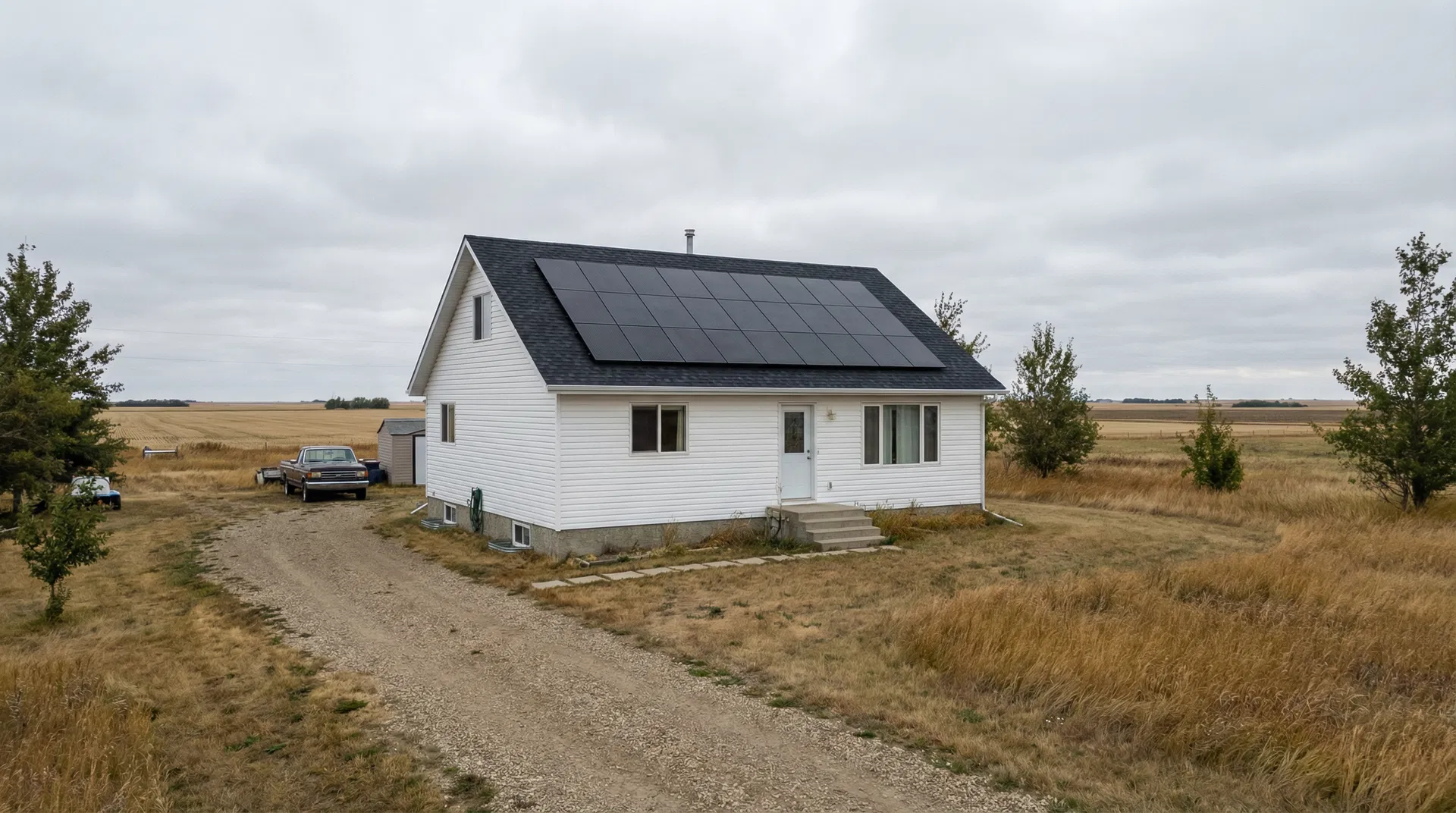
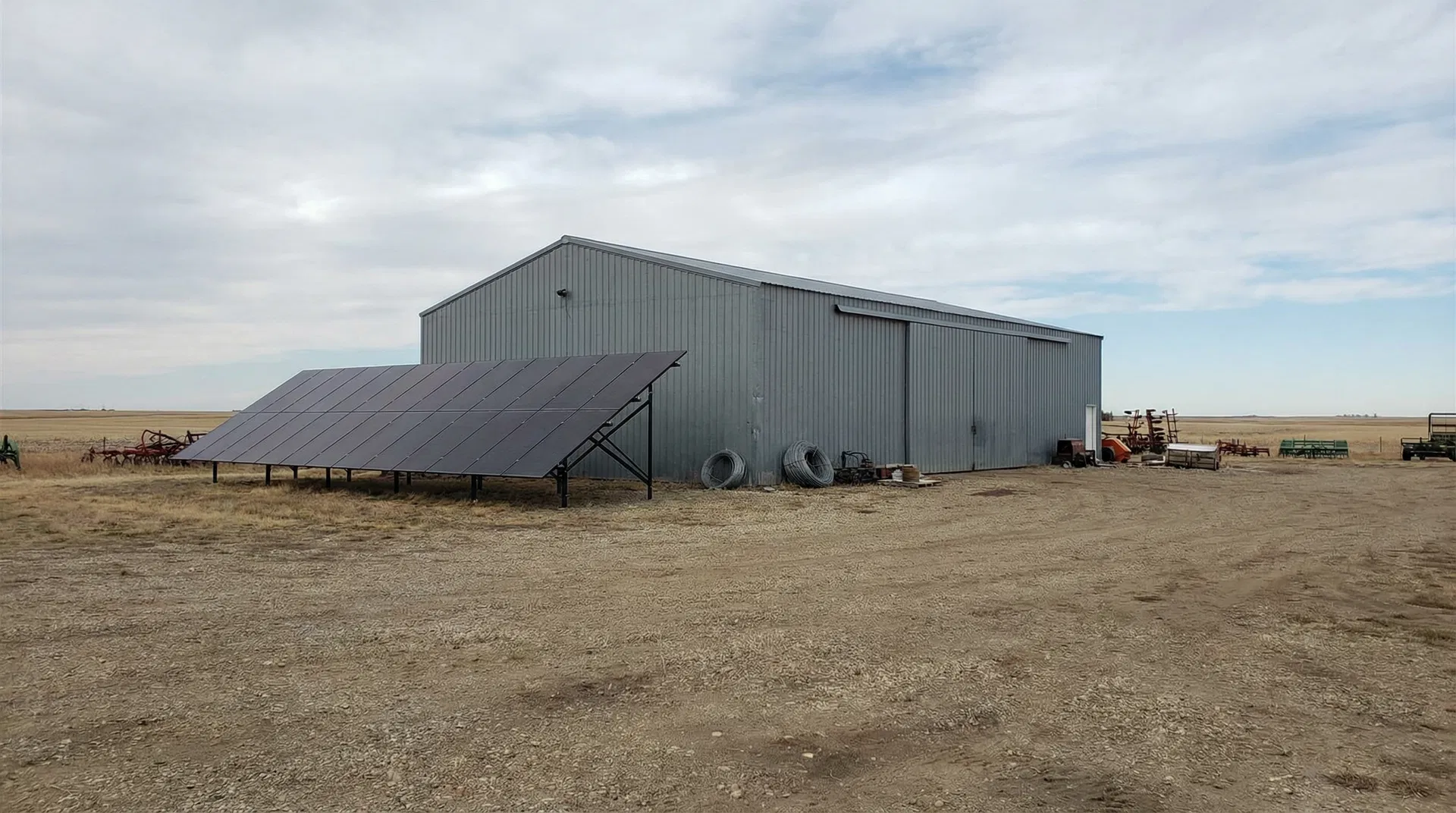
Solar systems around Rocky Mountain House tend to run bigger than what you'd size for a house alone, because rural properties usually aren't just a house. A shop with a welder and compressor, a well pump, grain handling equipment, or an irrigation system can add as much load as the home itself, and a system sized only to the house's usage leaves all of that running on grid power anyway. Roof mount versus ground mount comes down to what the property actually offers. A roof with a clean southern exposure and no shade from trees or outbuildings is often the simpler and cheaper option. But a lot of acreages have roofs shaded by shelterbelts, steep or broken rooflines that don't suit an array well, or just more open yard than roof space. In those cases, a ground mount set out away from the house, angled and oriented properly, is the better call, especially when there's land to spare. Either way, we size the system from the 12-month usage graph on your most recent power bill, not a rule-of-thumb number based on square footage or a generic per-person estimate. That graph shows your actual draw month to month, including seasonal spikes from heating, a shop, or irrigation, and it's a far better starting point than guessing. Combined with a site visit to confirm roof or ground conditions, that's what determines the system size we quote.
Typical Load Profiles We Design For
Home + Heated Shop
This is the most common profile we see on properties with both a house and a heated detached shop, each with its own panel and its own load. We size the system to cover both, which usually pushes it toward the higher end of the 8 to 15 kW range we typically install, but the actual number comes from the usage graph on your most recent power bill, not a flat add-on estimate for a shop plus a house.
Acreage with Well Pump and Outbuildings
Properties running a well pump, a bunkhouse, or a few outbuildings off the same service have load that's spread out and often intermittent, which changes how a system gets sized compared to a single steady household draw. We look at how those loads show up on the 12-month usage graph before settling on a system size, since a well pump's draw pattern looks very different from a furnace or an electric water heater.
In-Town Residential
A straightforward in-town home with typical household loads, furnace, water heater, appliances, is the simplest profile to design for and usually lands toward the lower end of the 8 to 15 kW range. Even here, we pull the usage graph off the most recent bill rather than assuming a standard house needs a standard system, since insulation, heating type, and household size all shift the number.
FortisAlberta Interconnection in Rocky Mountain House
Rocky Mountain House properties are on FortisAlberta's distribution system, which means any grid-tied solar install here goes through FortisAlberta's micro-generation interconnection process before it can be switched on. We handle that application as part of the job: the single-line diagrams, equipment specifications, and site details FortisAlberta needs to review the connection. Every property's existing service plays into that review. Older panels, older meter bases, and the capacity of the line running to the property all factor into what FortisAlberta needs to see before approving a system, and we flag any of that during the site visit rather than after permits are filed. We don't quote approval timelines or make claims about how FortisAlberta settles production credits, because those are FortisAlberta's rules to state, not ours. What we can tell you is that we've filed this paperwork before, we know what FortisAlberta's reviewers look for, and we build the application so it doesn't bounce back for missing information.
Project Economics and Design Review
| System Size | Annual Production | Year 1 Savings | Payback Period |
|---|---|---|---|
| 8-15 kW range, 10 kW typical |
Production, savings, and payback figures depend on a property-specific design review and your most recent power bill; we don't publish generic estimates.
How We Work in Rocky Mountain House
Bill and Load Review
We review your power bill to understand your energy use in Rocky Mountain House and size the system to your actual consumption, not a generic estimate.
Site Assessment
We assess your roof or ground area, south-facing exposure, electrical service, and utility interconnection requirements specific to your property.
Design and Utility Application
We produce a system layout, production estimate, and cost summary, then submit your micro-generation application to your utility on your behalf.
Installation and Commissioning
Our crew installs racking, panels, inverter, and electrical connections. All work is performed by licensed electricians. We commission and test before handoff.
Current Program and Interconnection Review
Utility connection review
FortisAlberta reviews every grid-tied solar connection application before a system can go live, and that review covers the equipment specifications, single-line diagram, and site details for the install. We put that design package together and file it as part of the job, so you're not navigating FortisAlberta's process on your own.
Current program review
Eligibility for commercial, farm, and residential solar programs changes, and what applies to a shop building might differ from what applies to a house on the same property. We review current program and eligibility rules against your specific setup at design time rather than assuming last year's rules still apply.
Frequently Asked Questions
Get a Solar Assessment for Rocky Mountain House
Submit a recent power bill and we will review your consumption and provide an honest assessment for your Rocky Mountain House property. No obligation.
(587) 330-7502 Book a CallRelated Resources
More Solar Services in Rocky Mountain House