Off-grid solar in Rocky Mountain House, Alberta starts with matching the system to the property, not the other way around. We install LONGi panels paired with hybrid inverters and lithium battery storage, sized in the 5 to 15 kW range depending on what the site needs to run, with 8 kW being a common starting point for a cabin or acreage shop combination. For a hunting cabin or seasonal property, that might mean a smaller array with enough battery capacity to carry you through a few cloudy days between visits. For a year-round acreage out past FortisAlberta's service area, or a property where extending a grid connection isn't practical, the array and battery bank get built around full-time loads: a well pump, fridge and freezer, lighting, and whatever shop tools or block heaters you're running through winter. Hybrid inverters let the system manage solar input, battery charge and discharge, and generator backup in one package, which matters when there's no grid to fall back on. Lithium battery storage handles the deep, repeated discharge cycles off-grid use demands and fits in a smaller footprint in a mechanical room or battery shed. We design every off-grid system around a load list specific to your property: what runs daily, what runs seasonally, and what needs backup during a multi-day stretch of low sun or a generator outage. That's a different design problem than a grid-tied home, and we treat it that way from the first site visit.
Solar Planning for Rocky Mountain House Properties
Rocky Mountain House has been a town since August 31, 1939, and its economy still runs on resource work: forestry, oil and gas services, and the West Fraser Mills operation that's anchored jobs here for decades. Properties around here aren't uniform. Some sit close to the grid along FortisAlberta's distribution lines. Others sit well back on acreage, down a long access road, or out past the end of three-phase service in Clearwater County, where running new poles and wire costs more than most people expect. That's the gap off-grid solar fills. Instead of paying FortisAlberta to extend service to a shop, a well, or a remote cabin, you size a system, battery bank, and backup plan around what the site actually needs. We don't guess at that number from a chart. We walk the property, check what's drawing power (a shop, a sawmill-adjacent outbuilding, irrigation, a cabin's basic loads), and look at your most recent power bill if you've got grid service nearby for comparison. Rural Alberta load profiles vary more than town lots do, so the design process matters more than the brochure specs. Whether you're off the grid by choice or by distance from FortisAlberta's nearest line, the sizing conversation starts the same way: what do you actually need to run, and when.
Electrical Site Review for Rocky Mountain House Properties
Voltage Rise
Voltage rise happens when a long run of distribution line between the transformer and your property causes voltage to climb as solar output pushes back toward the source, and rural properties with longer line runs see this more than in-town lots. We measure it during the site visit because it affects how hard an inverter can push before it clips output to stay within voltage limits. That measurement feeds directly into how we size the inverter and array for your specific service.
Single-Phase vs Three-Phase
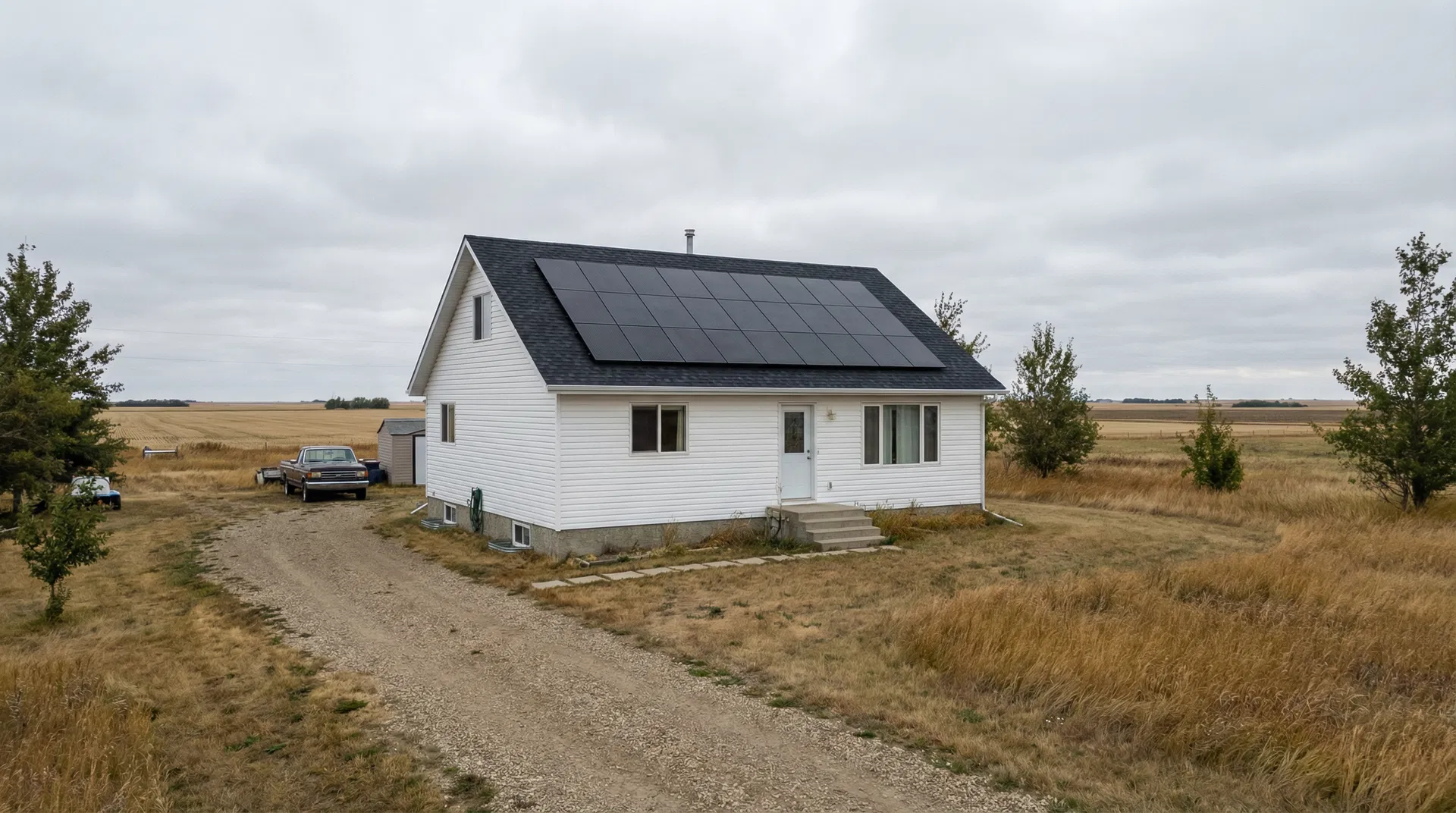
Rural Alberta properties can have single-phase or three-phase electrical service, and which one you've got determines what inverter equipment fits and how much capacity the system can carry. A shop or outbuilding wired for three-phase motors needs different equipment planning than a single-phase home panel. We confirm which service type is on-site before finalizing equipment selection, since it shapes the whole design.
Panel Infrastructure
Older rural properties sometimes have electrical panels with limited breaker capacity or equipment that's aged past what a new solar or battery system needs to tie into safely. We check panel age, breaker space, and busbar rating as part of every site review. If the existing panel can't support the new system, an upgrade happens before installation, not as a surprise after.
Service Entrance Review
The service entrance and meter base are part of the site review too, since their condition affects what's possible for any grid-tied component of the system and for the FortisAlberta micro-generation application if one applies. We check the meter base for wear, corrosion, and capacity during the same visit. If it needs upgrading to support the new equipment, we flag that as part of the design package before anything gets installed.
Right-Sizing Off-Grid Solar for Rocky Mountain House Properties
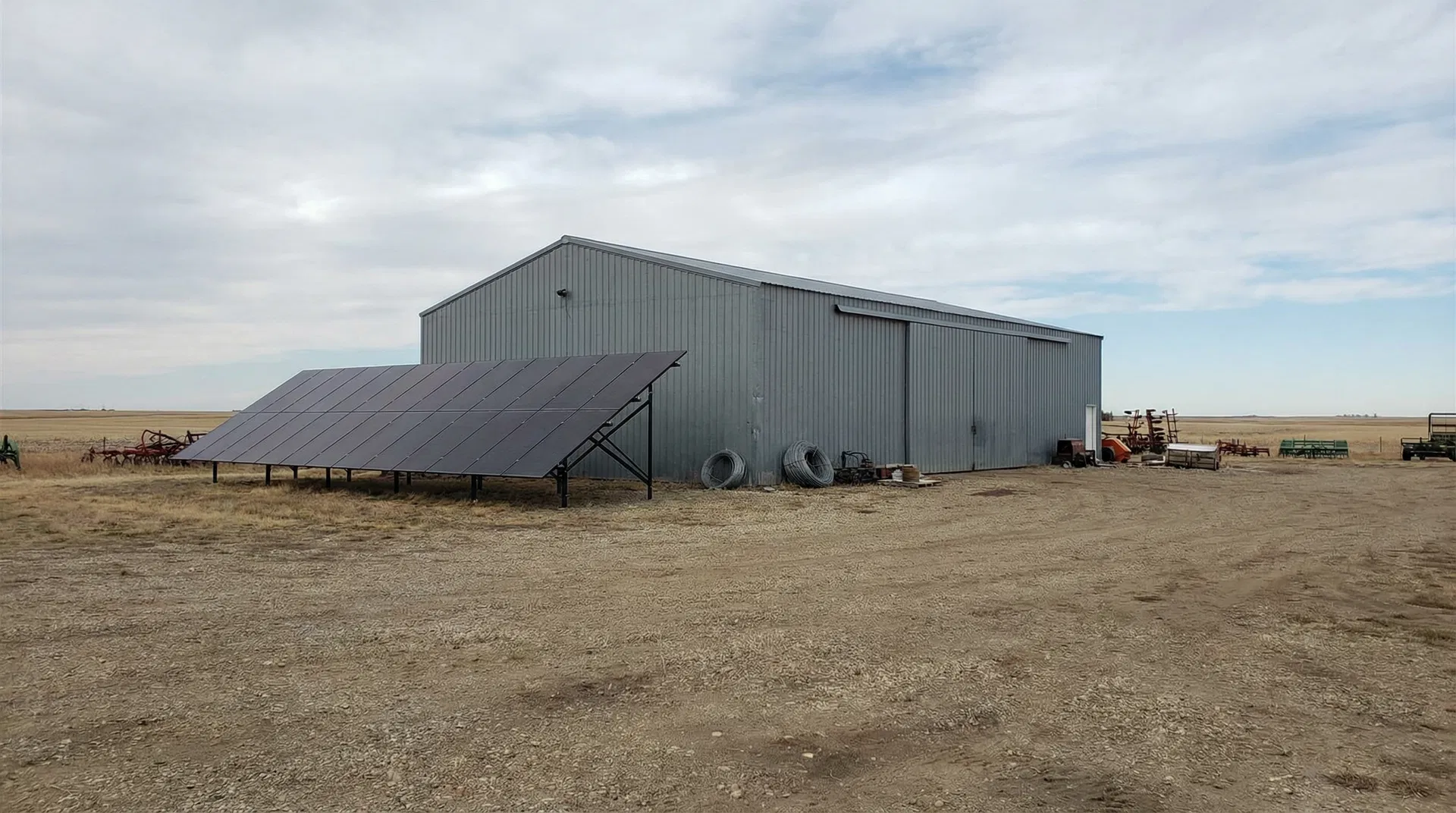
Rural systems around this area tend to run bigger than a typical town install, because there's usually more than one load to cover: the house, a heated shop, outbuildings, maybe a well pump or grain-handling equipment if the property runs any kind of operation. That's part of why the off-grid range here spans 5 to 15 kW, with 8 kW as a common starting point, rather than one fixed number. Roof versus ground mount comes down to the property itself. A roof with good south or west exposure and no shade from trees or outbuildings is often the simpler build. Ground mount makes more sense when the roof is shaded, pitched wrong for the array, or when there's just more usable open yard than roof space, which is common on acreages with room to spare. We don't size a system off a rule of thumb like watts per square foot or a flat number per household. If you've got grid service nearby for comparison, we size from the 12-month usage graph on your most recent power bill, which shows exactly how your loads move through the year, not an estimate. Combine that usage pattern with a site design that accounts for shading, orientation, and your specific load list, and you get a system sized for what the property actually draws, not a guess.
Typical Load Profiles We Design For Near Rocky Mountain House
Cabin or Seasonal Retreat
A seasonal cabin usually means basic loads: lighting, a fridge, maybe a well pump, and no need to carry the system through months of inactivity at full draw. We size the battery bank around how long you need to ride out low-sun stretches between visits, not around a theoretical peak load that never happens. A current power bill from a comparable property, plus your own sense of how the cabin gets used, shapes the final design.
Home Plus Heated Shop
Adding a heated shop to the load list changes the math, since shop tools, a block heater, and shop lighting draw differently than a house alone. We walk through what runs in the shop and when, then size the array and battery bank to cover the house and shop together rather than treating them as two separate systems. Your most recent power bill and a site walk-through tell us more than a generic shop load table would.
Acreage with Irrigation or Grain Handling
Properties running irrigation pumps or grain-handling equipment have loads that spike hard for short periods rather than drawing steadily all day. That changes how we size the inverter and battery bank, since the system needs to handle the peak draw, not just the average. We review the equipment specs and timing with you directly so the design accounts for when those loads actually hit.
FortisAlberta Interconnection in Rocky Mountain House
FortisAlberta is the wire service here, and most off-grid systems we design for this area stay completely disconnected from the grid, no interconnection application needed. Where a property keeps a grid connection as backup alongside battery and generator power, or where a system includes any grid-tied component, FortisAlberta reviews the micro-generation application before that connection goes live. We handle that paperwork start to finish: the design package, the electrical specs, and the submission to FortisAlberta. You don't deal with FortisAlberta directly unless you want to. For true off-grid installs with no wire ever touching the FortisAlberta system, there's no application to file at all. We'll tell you during the site visit which category your property falls into and what, if anything, needs to go to FortisAlberta before we install.
Project Economics and Design Review
| System Size | Annual Production | Year 1 Savings | Payback Period |
|---|---|---|---|
| 5-15 kW range, 8 kW typical |
Production, savings, and payback figures depend on a property-specific design review and your most recent power bill, and we provide those after that review, not before.
How We Work in Rocky Mountain House
Bill and Load Review
We review your power bill to understand your energy use in Rocky Mountain House and size the system to your actual consumption, not a generic estimate.
Site Assessment
We assess your roof or ground area, south-facing exposure, electrical service, and utility interconnection requirements specific to your property.
Design and Utility Application
We produce a system layout, production estimate, and cost summary, then submit your micro-generation application to your utility on your behalf.
Installation and Commissioning
Our crew installs racking, panels, inverter, and electrical connections. All work is performed by licensed electricians. We commission and test before handoff.
Current Program and Interconnection Review
Utility connection review
FortisAlberta reviews micro-generation applications for any system that keeps a grid-tied connection, and most fully off-grid systems don't need one at all. Range Road Solar puts together the design package and submits it when an application applies, so you're not the one filling out FortisAlberta paperwork.
Current program review
Residential, farm, and commercial off-grid projects each get reviewed against whatever program and eligibility rules are current at the time of your design, since those rules shift. We check that during the design review rather than assuming last year's rules still apply.
Frequently Asked Questions
Get a Solar Assessment for Rocky Mountain House
Submit a recent power bill and we will review your consumption and provide an honest assessment for your Rocky Mountain House property. No obligation.
(587) 330-7502 Book a CallRelated Resources
More Solar Services in Rocky Mountain House