
Off-grid solar in Eckville, Alberta means designing a system that has to carry the full load itself, with no FortisAlberta line to lean on when the sun's down. We install systems in the 5 to 15 kW range here, with 8 kW being the typical starting point for a cabin or acreage yard site, depending on what you're running and how many days of no-sun autonomy you want built into the battery bank. Every off-grid system we put in here starts with LONGi panels, which is what we run across our residential and off-grid installs. For off-grid work specifically, we pair the array with a hybrid inverter and lithium battery storage instead of the APsystems microinverters we use on grid-tied roofs, since off-grid mode needs an inverter that can form its own AC waveform and manage battery charge and discharge. Property types around here vary. Some are seasonal hunting or recreation cabins that only need power a few months a year. Others are year-round acreages with a home, a shop, and maybe a well pump, all needing power around the clock. We size the battery bank and panel array differently for each: a seasonal cabin might run a smaller array with modest storage, while a year-round yard site with continuous loads needs a bigger array and enough lithium capacity to ride through a stretch of overcast days. Every design starts with a walk through your loads: what you run, how often, and what happens if the batteries run low.
Solar Planning for Eckville Properties
A lot of the properties we quote here aren't looking for a standard rooftop grid-tied system. They're acreages down a long lane, hunting cabins, or yard sites where running a new FortisAlberta service drop would cost more than a full off-grid setup: panels, hybrid inverter, and battery bank combined. The population sat at 1,014 at the last census, down from 1,125 the time before, and the area falls within Lacombe County, but neither number changes the math on any one property. What matters is your specific site: distance from the nearest pole, your loads, and whether you need year-round power or seasonal use only. The surrounding economy still leans agricultural, and around events like the Eckville Indoor Rodeo you can see how much local activity runs through farm and ranch operations, exactly the kind of property where an off-grid shop, well pump, or bunkhouse makes sense without extending wire to reach it. We don't quote off-grid systems off a rule of thumb. We look at your loads, your battery reserve needs, and whether a hybrid inverter with lithium storage covers what you actually run, day and night, before we ever talk numbers.
Electrical Site Review for Off-Grid Properties
Voltage Rise
On long rural distribution runs, voltage can sag or rise depending on how far a property sits from the nearest transformer and what else is drawing power on that line. For an off-grid system, this matters less for grid interaction and more for how we size the inverter's output stage and charge controller so neither one clips under load. We check the actual numbers during the site review instead of assuming a standard voltage profile.
Single-Phase vs Three-Phase
Rural Alberta properties can have either single-phase or three-phase electrical service, and off-grid inverter setups are typically built around one or the other. A shop with three-phase equipment, like a large motor or grain handling gear, needs an off-grid system sized and configured to match that load, not a single-phase unit stretched to cover it. We confirm which service type a property has before specifying any equipment.
Panel Infrastructure
Older rural properties sometimes have a main panel or subpanel that's been added to over the years without a full capacity review. Before we spec an off-grid system, we check breaker capacity, panel age, and whether the existing panel can handle the inverter's output and any transfer switch we need to add. If the panel can't support it, an upgrade happens as part of the install, not as a surprise afterward.
Service Entrance Review
For properties that keep a FortisAlberta connection alongside an off-grid subsystem, we review the service entrance and meter base condition as part of the site visit. A meter base in poor condition can hold up a micro-generation application to FortisAlberta if one's ever needed for that portion of the property. If an upgrade is required, we flag it early so it doesn't stall the project.
Right-Sizing Off-Grid Solar for Rural Alberta Properties
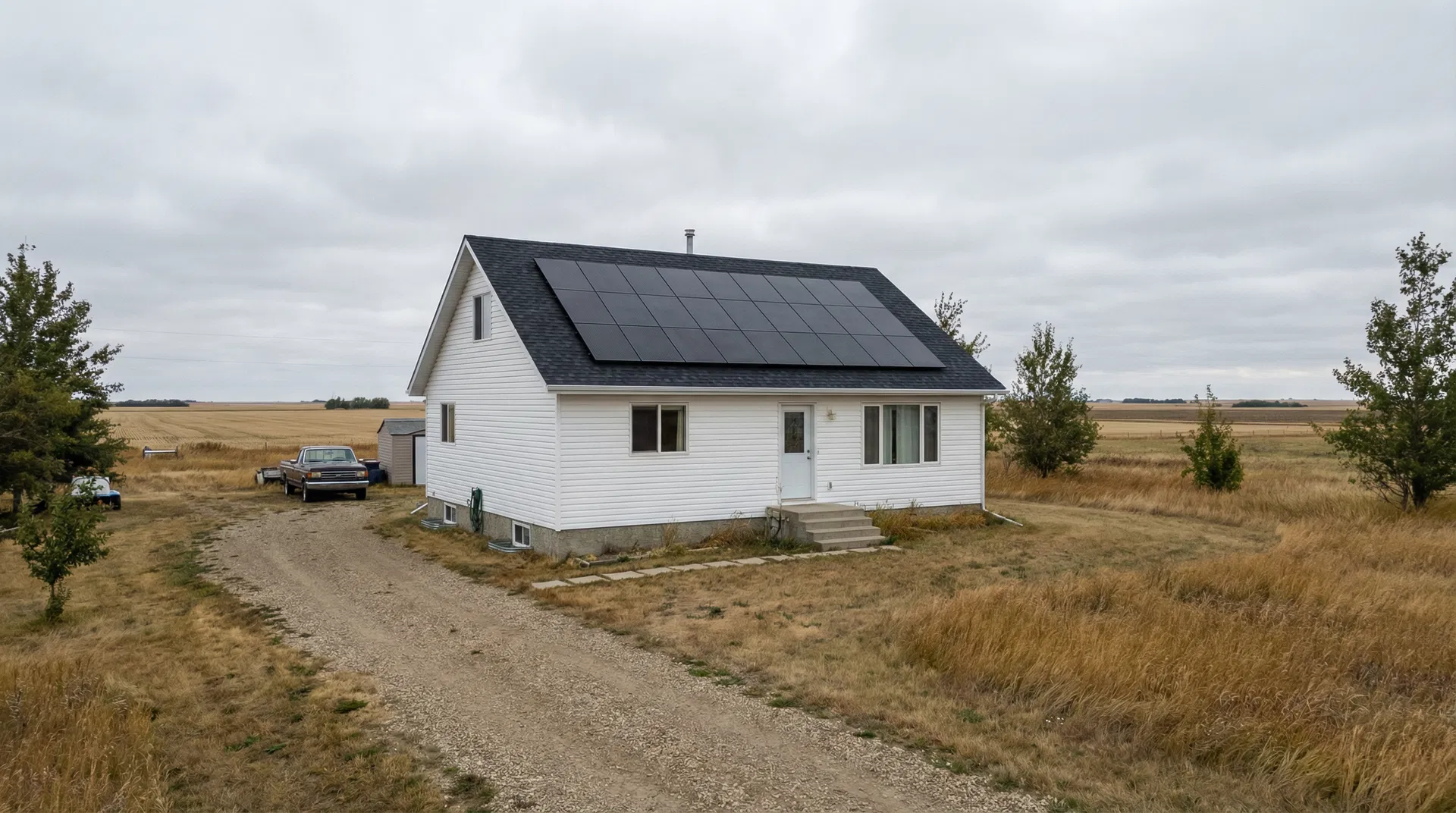
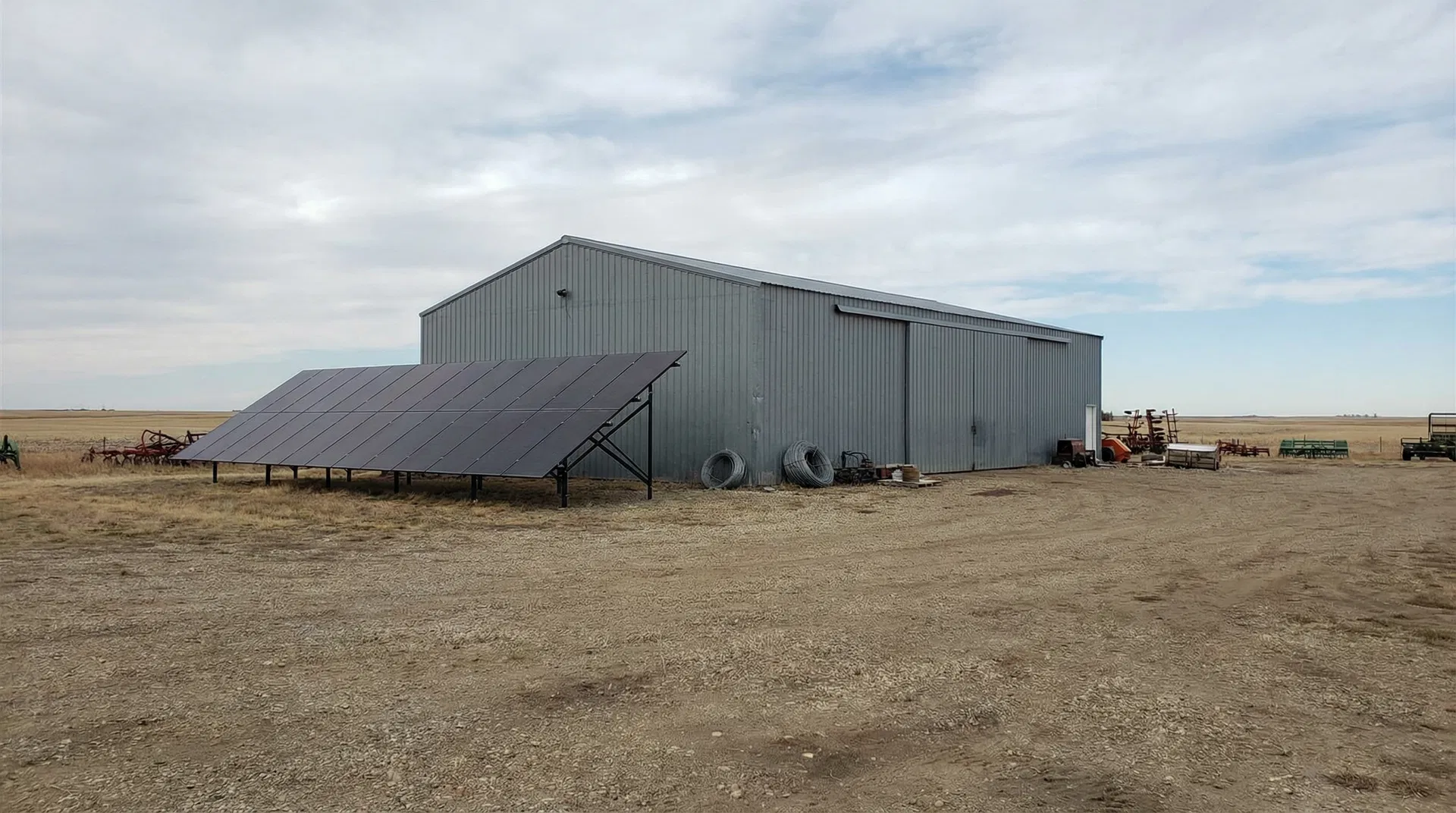
Rural properties in this area almost never have just one load to cover. A yard site might run a house, a heated shop, a well pump, and maybe grain handling equipment come harvest, and an off-grid system has to carry all of it without a grid connection to fall back on. That's why off-grid systems out here tend to run larger than a typical grid-tied city rooftop: there's no utility to smooth out a high-draw afternoon. Roof mount works fine on some properties, but a lot of acreage and farm layouts are better suited to ground mount, especially where trees or outbuildings shade the roof, the roof pitch or orientation isn't ideal, or there's simply open yard space that makes a ground-mounted array easier to install, maintain, and expand later if loads grow. We size every system from real usage, not a rule-of-thumb number per square foot or per outbuilding. If you have a FortisAlberta account with billing history, the 12-month usage graph on your most recent power bill shows us seasonal swings, so we can size the battery bank and array for your worst month, not your average one. For a property with no prior utility account at all, we build the load list directly from what you plan to run, then confirm it on site.
Typical Off-Grid Load Profiles for Rural Alberta Properties
Seasonal Cabin or Recreation Property
Some properties in this area are only occupied a few months a year: hunting season, summer weekends, that kind of use. These systems usually need a smaller panel array and modest battery reserve since the loads are lights, a fridge, maybe a well pump, and nothing running while the place sits empty. We size the array and battery bank around the months you're actually there, not year-round use.
Year-Round Acreage with Home and Shop
A year-round off-grid acreage usually means a house plus a detached shop, each with its own loads: heat, lights, appliances, maybe power tools or a block heater in the shop. These systems need enough battery capacity to carry the property through a stretch of low-sun days without a grid to fall back on. We build the load list from every circuit you run, not just the obvious ones.
Agricultural Yard Site with Well and Equipment
Farm and acreage yard sites in this area often add a well pump, grain handling equipment, or seasonal irrigation to the mix, loads that draw hard for short bursts rather than steadily through the day. An off-grid system here needs an inverter and battery bank sized for those peak draws, not just average daily use. We map out equipment nameplate loads and run times during the site visit before sizing anything.
FortisAlberta and Off-Grid Systems Near Eckville
Eckville, Alberta sits in FortisAlberta's service territory, and that matters for off-grid solar in one specific way: a true off-grid system doesn't connect to the FortisAlberta wire at all, which is usually the whole point. If a new service drop from the nearest FortisAlberta line is the expensive alternative you're trying to avoid, whether that's a remote cabin, a yard site down a long lane, or land with no service nearby, off-grid solar with battery storage replaces that connection instead of running alongside it. That said, some properties around here keep an existing FortisAlberta account for part of the site, a house, say, while a detached shop or cabin runs off-grid on its own. We look at the full picture during design: what's already connected, what isn't, and where a standalone off-grid system makes more sense than extending wire. If your project needs any coordination with FortisAlberta for an existing service, we handle that paperwork as part of the design package.
Project Economics and Design Review
| System Size | Annual Production | Year 1 Savings | Payback Period |
|---|---|---|---|
| 5-15 kW range, 8 kW typical |
Production, battery runtime, and payback for an off-grid system all depend on a property-specific design and, where one exists, your most recent power bill.
How We Work in Eckville
Bill and Load Review
We review your power bill to understand your energy use in Eckville and size the system to your actual consumption, not a generic estimate.
Site Assessment
We assess your roof or ground area, south-facing exposure, electrical service, and utility interconnection requirements specific to your property.
Design and Utility Application
We produce a system layout, production estimate, and cost summary, then submit your micro-generation application to your utility on your behalf.
Installation and Commissioning
Our crew installs racking, panels, inverter, and electrical connections. All work is performed by licensed electricians. We commission and test before handoff.
Current Program and Interconnection Review
Utility connection review
FortisAlberta reviews grid connection applications for properties that keep or add a grid-tied component, but a fully off-grid system doesn't require that application at all since it never connects to the FortisAlberta wire. Range Road Solar handles any FortisAlberta paperwork that does apply to your property as part of the design package, so you're not sorting through utility forms on your own.
Current program review
Whether a farm, commercial, or residential property qualifies for any current government or utility program gets checked against the rules in place at the time we design your system, since those rules change. We don't assume eligibility based on property type alone; we confirm it as part of the design review.
Frequently Asked Questions
Get a Solar Assessment for Eckville
Submit a recent power bill and we will review your consumption and provide an honest assessment for your Eckville property. No obligation.
(587) 330-7502 Book a CallMore Solar Services in Eckville