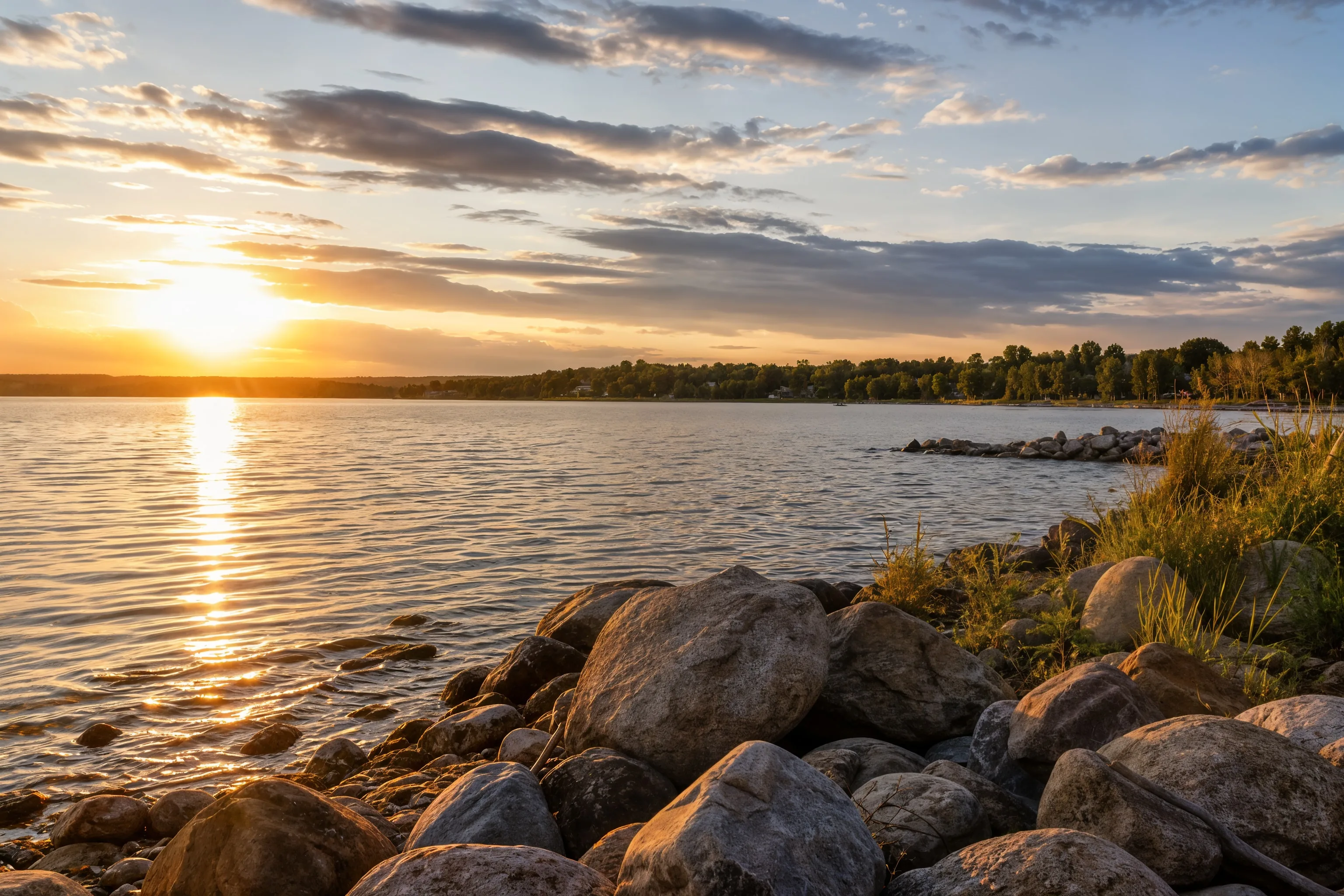
Off-grid solar in Sylvan Lake, Alberta means a complete power system that never touches the FortisAlberta grid, built for cabins, acreages, and remote sites where the cost of a new service connection doesn't pencil out. Every system we install uses LONGi panels paired with hybrid inverters, the kind built to form their own AC waveform instead of syncing to grid voltage. That's the core difference from a grid-tied residential setup: the inverter has to run the show on its own, day and night. Storage is lithium battery banks sized to the property's actual load, not a flat number pulled from a brochure. A seasonal cabin used on weekends needs a different battery bank than a year-round residence running a well pump, a fridge, and lighting through an Alberta winter. We size the array and the battery together, based on what the property actually draws and how it's used through the year. For properties in the area, that often means quarter-sections, lake-access lots set back from existing lines, or outbuildings a good distance from the main panel. Ground mounts are common where the site has open, unshaded land and the roof pitch or orientation isn't ideal. We handle the racking, wiring, and battery installation as one package, and we walk you through the tradeoffs between a smaller system with tighter usage habits and a larger one built for full-time, unrestricted use.
Solar Planning for Sylvan Lake Properties
Sylvan Lake, Alberta was incorporated as a town on May 20, 1946, and has grown into a community of 15,995 residents, up from 14,816 at the last census. It sits in Central Alberta, within Red Deer County and Lacombe County, an area with a mix of year-round homes, acreages, and lake-access cabins that don't always sit close to an existing distribution line. That's the property type off-grid solar is built for: a cabin, a quarter-section, or a remote outbuilding where the cost of trenching or stringing a new line to the grid outweighs the cost of a self-contained system. For these properties, the math isn't about offsetting a bill. It's about avoiding a connection charge entirely. We start with a site visit: where the structure sits, what loads it needs to run, how it's used through the seasons, and whether a roof or a ground mount makes more sense for the layout. From there, we size a system, typically in the 5 to 15 kW range, with hybrid inverters and lithium battery storage to carry the property through periods without direct production. Every design is specific to the property, not a template pulled from a neighboring lot. If FortisAlberta service already reaches the site, we'll also walk through what a grid-tied alternative would look like before you commit to going off-grid.
Electrical Site Review for Off-Grid Properties
Voltage Rise
Voltage rise happens when power travels a long distance along a distribution line, and rural properties at the end of a line can see different baseline voltage than one close to a substation. For an off-grid system this doesn't involve the grid connection itself, but it still factors into how we size conductors and set inverter voltage windows on the property's own wiring. We check this during the site visit so the inverter isn't clipping or tripping on voltage it wasn't configured for.
Single-Phase vs Three-Phase
Rural Alberta properties can have single-phase or three-phase electrical service, and outbuildings on the same property sometimes differ from the main house. For an off-grid system, the property's existing wiring and phase configuration determine which hybrid inverter and how many units we spec, since the system has to match the loads it's replacing. Getting this wrong means equipment that can't carry a well pump, a three-phase shop motor, or grain-handling equipment when it's needed most.
Panel Infrastructure
Older rural properties often have electrical panels rated well below what a modern hybrid inverter and battery bank need to run. We check the panel's age, breaker capacity, and available space before finalizing a design, since older fuse-based or undersized panels can't always support the equipment safely. If the panel can't handle it, an upgrade to a modern breaker panel with enough capacity becomes part of the project scope, not a surprise afterward.
Service Entrance Review
We review the service entrance and meter base condition on properties where FortisAlberta service exists or could reach the site, since a worn or outdated meter base can hold up a micro-generation application even when the rest of the property is ready. Corrosion, outdated equipment, or insufficient capacity at the meter base are common findings on older rural services. If an upgrade is needed, we scope it as part of the project so it doesn't stall an application later.
Right-Sizing Off-Grid Systems for Rural Properties
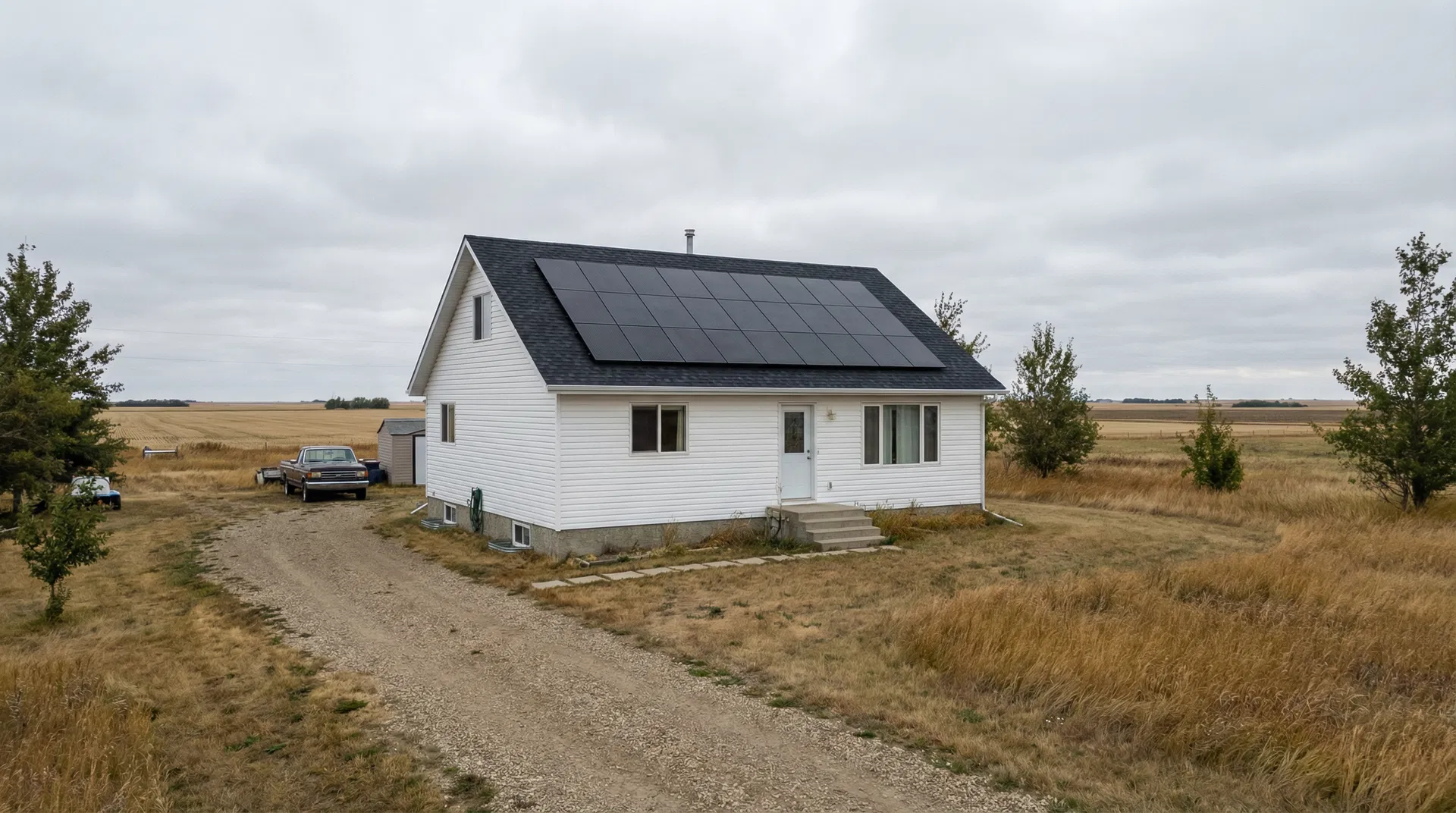
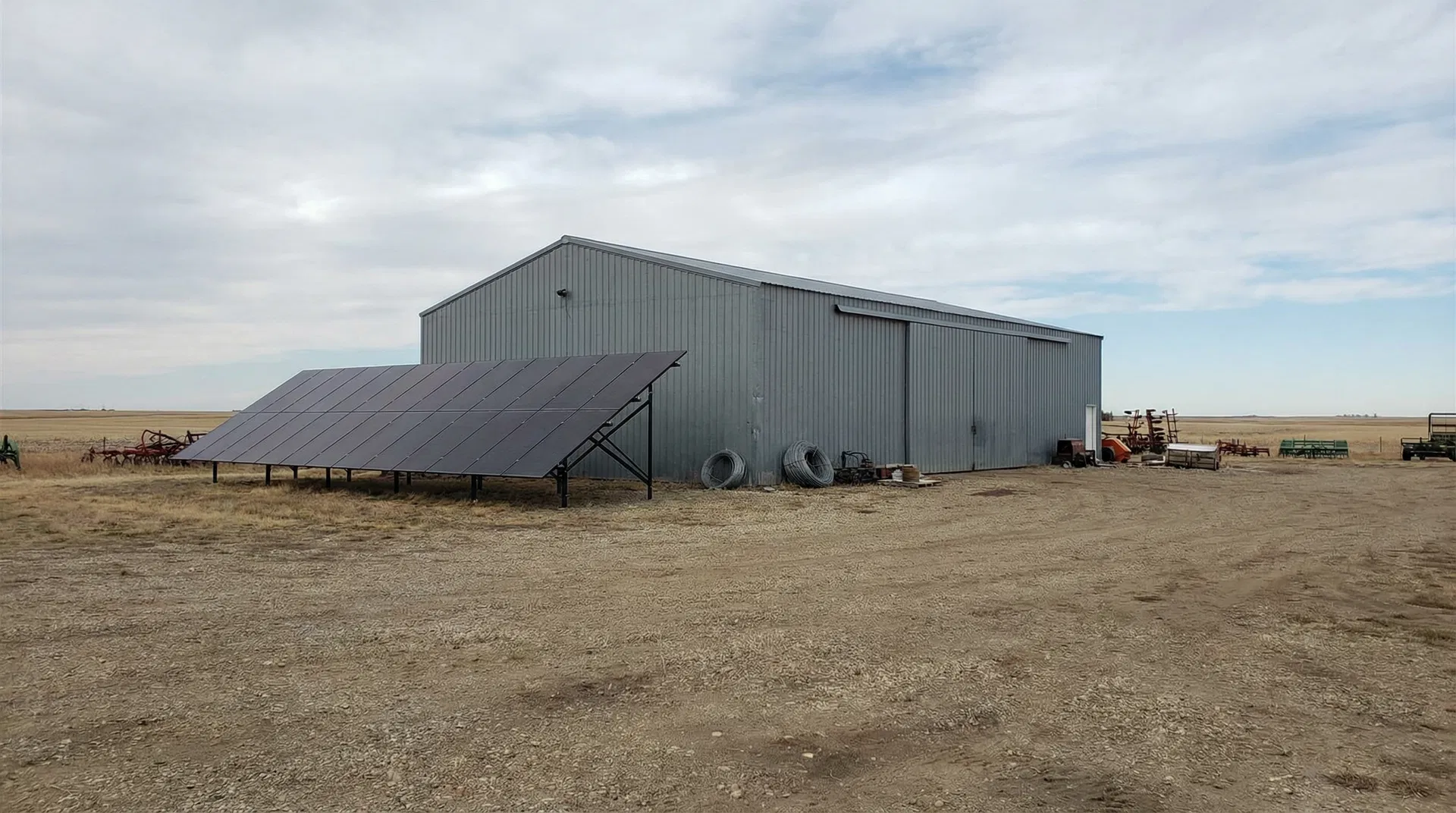
Off-grid systems in this area tend to run larger than a typical in-town rooftop system, because they're often replacing every source of power a property uses, not just topping up a grid connection. A single-family cabin is one load. A property with a home, a heated shop, a well pump, and maybe a grain bin or irrigation pump is several loads stacked together, and the system has to cover all of them without a grid to lean on when demand spikes. Roof versus ground mount comes down to the site, not a default preference. If mature trees or the shop itself shade the roof through most of the day, or the roof pitch and orientation aren't workable, a ground mount on open, unshaded land is usually the better call, especially on acreages and lake-access lots with room to spread the array out. We size every system from real usage, not a rule of thumb. If the property already has a most recent power bill from a nearby account or a comparable structure, the 12-month usage graph on that bill tells us the actual pattern of draw through the seasons, which is a far better starting point than guessing off square footage. Combined with the site visit, that usage data and the physical layout of the property are what determine whether you need an 8 kW system or something closer to 15.
Typical Load Profiles We Design For Near Sylvan Lake
Seasonal Lake Cabin
A weekend or seasonal cabin typically runs lighting, a fridge, a water pump, and small appliances, with long stretches where nobody's on site drawing power at all. We size these systems around actual weekend and holiday use patterns rather than year-round averages, and battery capacity is usually the bigger design question here, not panel count.
Home Plus Heated Shop
A full-time residence with an attached or detached heated shop adds a second, often larger load: shop heat, power tools, and sometimes a welder or compressor running intermittently. These properties usually need a bigger array and a battery bank sized to carry both buildings through low-production stretches without cycling the batteries too deep.
Acreage with Well Pump and Outbuildings
Acreages with a well pump, a barn or grain bin, and general outbuilding power spread the load across several structures instead of one. We map out every building's draw individually before sizing the system, since a well pump's startup surge and grain-handling equipment can demand more from an inverter than steady household loads do.
FortisAlberta and Off-Grid Systems in the Area
FortisAlberta is the wire service across the area, but a true off-grid system is designed specifically not to connect to it. There's no interconnection application, no net metering agreement, and no ongoing relationship with the utility once the system is running, because the property draws no power from the grid at all. That said, plenty of the properties we look at nearby have FortisAlberta service somewhere close, even if it doesn't reach the specific cabin, shop, or outbuilding in question. Part of our site visit is confirming whether extending that service is even realistic for your property, and what it would cost against a self-contained system. If it turns out a grid-tied or hybrid setup makes more sense for your situation, we'll walk you through that option and handle the FortisAlberta application ourselves. Either way, that decision gets made before any equipment goes on order, not after.
Project Economics and Design Review
| System Size | Annual Production | Year 1 Savings | Payback Period |
|---|---|---|---|
| 5-15 kW range, 8 kW typical |
Production, savings, and payback numbers are provided only after a property-specific design review and a look at your most recent power bill.
How We Work in Sylvan Lake
Bill and Load Review
We review your power bill to understand your energy use in Sylvan Lake and size the system to your actual consumption, not a generic estimate.
Site Assessment
We assess your roof or ground area, south-facing exposure, electrical service, and utility interconnection requirements specific to your property.
Design and Utility Application
We produce a system layout, production estimate, and cost summary, then submit your micro-generation application to your utility on your behalf.
Installation and Commissioning
Our crew installs racking, panels, inverter, and electrical connections. All work is performed by licensed electricians. We commission and test before handoff.
Current Program and Interconnection Review
Utility connection review
For properties in the area where FortisAlberta service reaches the site, we review what a grid connection or micro-generation application would involve as part of the design process, even for a project that ultimately goes off-grid. Range Road Solar prepares the design package and handles that application if a grid-tied or hybrid path ends up making more sense for your property.
Current program review
Residential, farm, and commercial off-grid projects can be affected by different rules depending on when they're designed, and that eligibility shifts over time. We review your project against whatever rules are in place at the time of design, rather than relying on general assumptions from other projects or other provinces.
Frequently Asked Questions
Get a Solar Assessment for Sylvan Lake
Submit a recent power bill and we will review your consumption and provide an honest assessment for your Sylvan Lake property. No obligation.
(587) 330-7502 Book a CallMore Solar Services in Sylvan Lake