
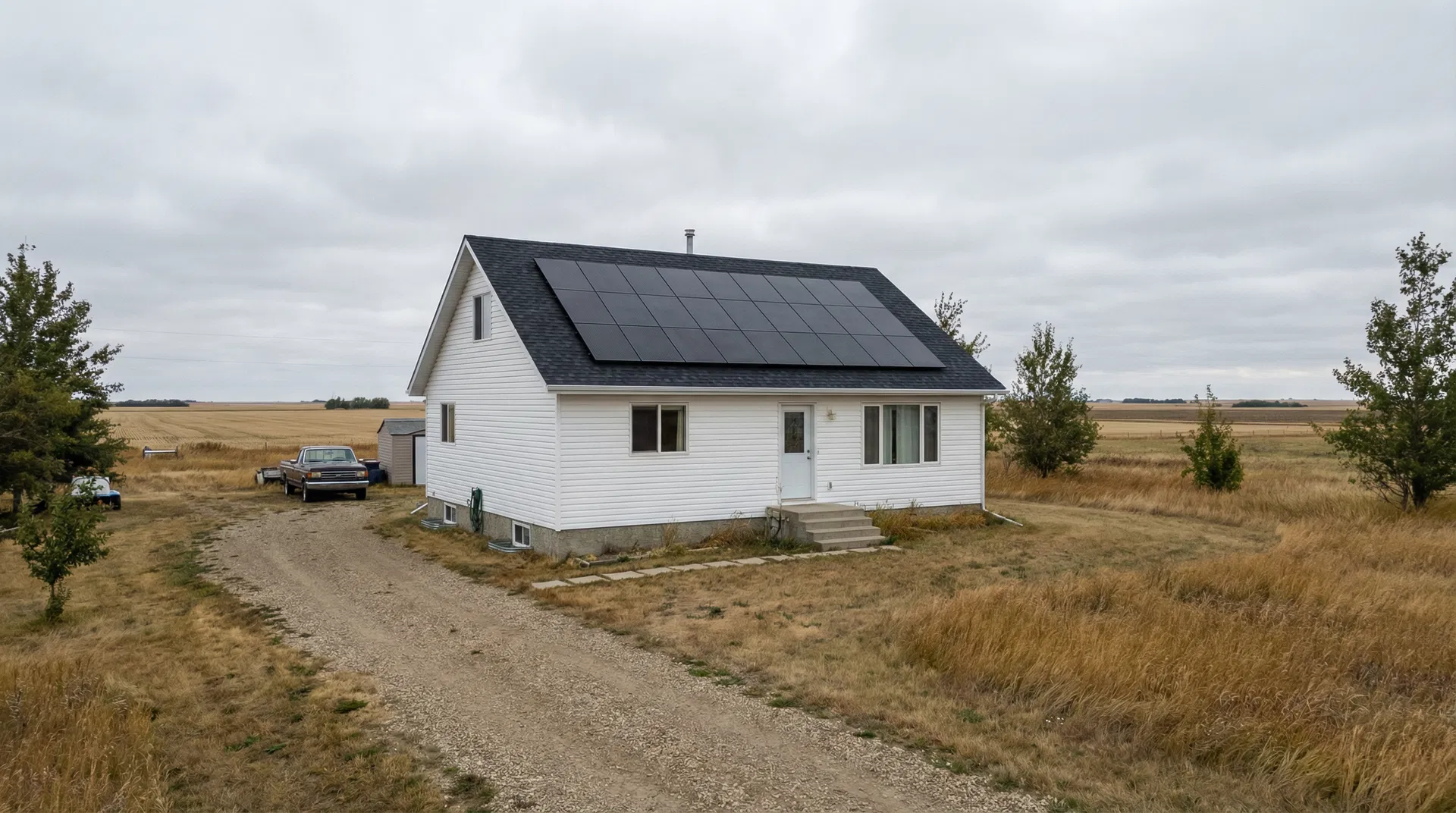
Solar installation in Sylvan Lake starts the same way every time: a site visit, a review of your most recent power bill, and a design sized to your roof or yard, not a generic package. Residential systems here run in the 8-12 kW range, with most homes landing around 10 kW once we've accounted for roof orientation, shading from mature trees common on older lakefront lots, and available panel capacity. We install LONGi panels paired with APsystems microinverters on every residential job. The microinverter setup matters more here than it might elsewhere: a lot of local roofs have dormers, additions, or a garage angled differently than the main house, and panel-level power conversion means one shaded or oddly oriented section doesn't drag down the whole array's output. For homes with steep or complicated roof pitches, or where a detached garage offers a cleaner, unshaded surface, we'll walk through whether roof mount or a small ground mount array makes more sense before anything gets ordered. Every install includes the engineering package and the FortisAlberta interconnection application, so you're not stuck chasing paperwork after the panels go up. We handle racking, conduit runs, electrical tie-in, and final inspection sign-off as one coordinated job, with a single crew responsible for the work from the first ladder climb to system commissioning.
Solar Planning for Sylvan Lake Properties
Sylvan Lake, Alberta grew from 14,816 residents to 15,995 between the last two census counts, and most of that growth shows up in the subdivisions ringing the lake rather than in new high-rises downtown. That means a lot of the housing stock here is newer construction with straightforward roof lines, which simplifies panel layout, but it also means plenty of older acreages and lakefront cottages that were never built with a 10 kW array in mind. Tourism tied to Sylvan Lake Provincial Park drives a seasonal rhythm in the local economy, and a fair number of homeowners we talk to are weighing a system that has to carry a house through a busy summer of guests and a quiet winter with the place mostly empty. Environment Canada's climate normals record 2,125.3 hours of bright sunshine a year for this area, but we don't use a single regional number to size a system. We pull the 12-month usage graph off your most recent power bill, walk the roof or yard for shading and orientation, and build the design around what your property actually draws. Whether you're close to the lake or on an acreage outside it, the starting point is the same: your bill, your roof, and a site visit, not a brochure figure.
Electrical Site Review for Sylvan Lake Properties
Voltage Rise
Voltage rise happens when the distribution line feeding a property sits a long way from the nearest transformer, which pushes line voltage higher at the point of connection. On rural and edge-of-town feeders in this area, that can affect how an inverter responds under load and influences how much capacity we size into a string before clipping becomes a concern. We check line conditions during the site visit so the inverter configuration accounts for it from the start, rather than finding out after installation.
Single-Phase vs Three-Phase
Properties in this area run on either single-phase or three-phase electrical service, depending on when the property was built and what's connected to it, like a shop or an irrigation pump. That distinction changes which inverter models are compatible and how much total system capacity the service can support. We confirm which service type your property has before finalizing equipment selection, since ordering the wrong inverter class for the service means a redo.
Panel Infrastructure
Older electrical panels, especially on properties built before modern breaker standards, sometimes don't have the spare breaker capacity or busbar rating a solar system needs. We check panel age, amperage rating, and available breaker space as part of the site review. If the existing panel can't support the interconnection, an upgrade means a new panel or a breaker rated for the backfeed, which we scope and quote before the main install begins.
Service Entrance Review
We inspect the service entrance and meter base condition as part of every site visit, since FortisAlberta's micro-generation application requires the meter base to meet current standards before a system can be connected. A corroded, undersized, or outdated meter base can hold up the application even if the rest of the electrical system is sound. When an upgrade is needed, we identify it during the review and include it in the project scope rather than as a surprise mid-install.
Right-Sizing Solar for Sylvan Lake Properties
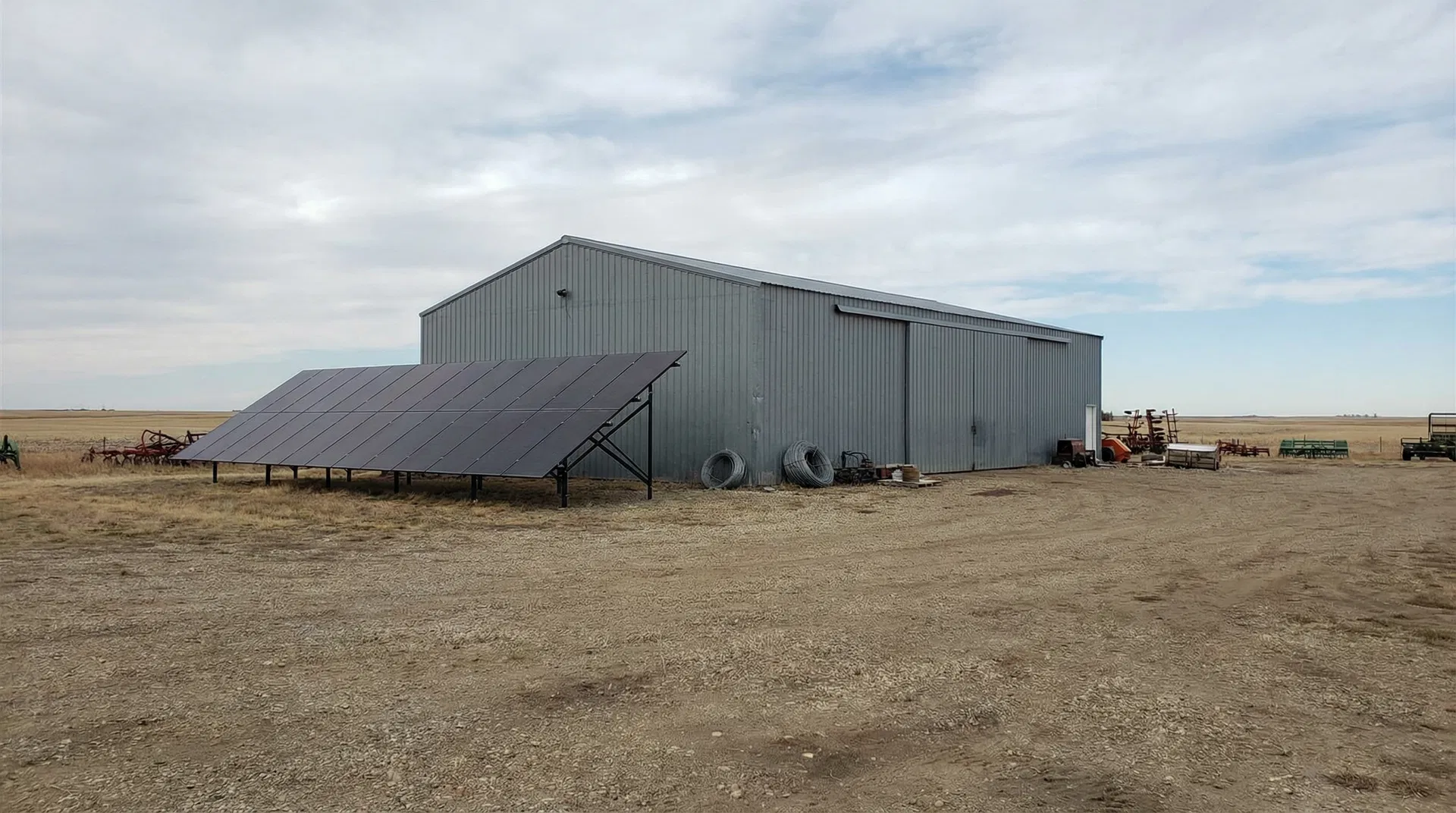
Rural and edge-of-town properties typically need more solar capacity than a comparable house on a compact urban lot, because there's often more than one load to cover: the house itself, plus a detached shop, a well pump, or outbuildings that draw power on their own schedule. That's part of why residential systems here land in the 8-12 kW range rather than the smaller systems common in dense subdivisions. Roof mount is the default when the roof has clear southern or western exposure and the shingles or metal roofing have enough remaining service life to outlast the panels. Ground mount becomes the better call when mature trees shade the roof for a good part of the day, when the roofline is broken up by dormers and additions, or when the property has open yard space and a roof pitch that doesn't suit panel layout well. Either way, we don't size a system off a rule of thumb like watts per square foot of roof. We pull the 12-month usage graph straight off your most recent power bill, which shows exactly how your consumption moves through the year, and build the array size around that curve along with the site conditions we find on the walk-through. A current power bill and an on-site design review are what actually determine system size, not a generic estimate.
Typical Load Profiles We Design For Near Sylvan Lake
Home Plus Detached Shop
A lot of properties in this area run a house and a heated or powered shop off the same service, which adds a load that doesn't show up on a typical urban residential bill. We size the system around the combined draw shown on your most recent power bill rather than estimating the shop separately. The result is usually a larger array than a house alone would need, landing toward the upper end of the 8-12 kW range.
Lakefront Seasonal Use
Properties near the lake sometimes see a sharp seasonal swing: light draw through the winter and a much busier household through the summer months. We look at how that pattern shows up across the 12-month usage graph on your most recent power bill and design around the full year, not just the peak months. That keeps the system matched to actual annual use instead of oversized for a few busy weeks.
Acreage With Well Pump or Irrigation
Acreages on the outskirts often run a well pump, yard lighting, or small-scale irrigation alongside the house, each with its own draw pattern. Those loads get folded into the usage review from your most recent power bill so the system accounts for them specifically, rather than being sized for the house alone and running short. It's one more reason we review your actual bill before quoting a system size.
FortisAlberta Interconnection in Sylvan Lake
FortisAlberta is the wire service for Sylvan Lake, which means every grid-tied residential system we install here goes through FortisAlberta's micro-generation application process before it's allowed to operate alongside the grid. We prepare and submit that application as part of your project, including the single-line diagrams and equipment specifications FortisAlberta requires to review a residential interconnection. You won't need to manage that paperwork yourself or figure out which form applies to your system. What we can't do is promise a specific review timeline, a credit structure, or a payout rate. Those are set by FortisAlberta and the retailer on your account, and they're confirmed at the time of your application, not locked in at the design stage. If your property already has three-phase service or an older service entrance, we'll flag anything that could affect the interconnection review during the site visit, well before the application goes in.
Project Economics and Design Review
| System Size | Annual Production | Year 1 Savings | Payback Period |
|---|---|---|---|
| 8-12 kW range, 10 kW typical |
Production, savings, and payback figures require a property-specific design and a copy of your most recent power bill; we don't quote them before that.
How We Work in Sylvan Lake
Bill and Load Review
We review your power bill to understand your energy use in Sylvan Lake and size the system to your actual consumption, not a generic estimate.
Site Assessment
We assess your roof or ground area, south-facing exposure, electrical service, and utility interconnection requirements specific to your property.
Design and Utility Application
We produce a system layout, production estimate, and cost summary, then submit your micro-generation application to your utility on your behalf.
Installation and Commissioning
Our crew installs racking, panels, inverter, and electrical connections. All work is performed by licensed electricians. We commission and test before handoff.
Current Program and Interconnection Review
Utility connection review
FortisAlberta reviews every residential micro-generation application against its current technical standards before a system is allowed to connect. Range Road Solar prepares that full design package, including single-line diagrams and equipment specs, and submits it as part of your project. We don't control FortisAlberta's review process, but we make sure the paperwork going in is complete the first time.
Current program review
Eligibility for any current residential, farm, or commercial program is checked against the rules in effect at the time of your design, since those rules can change. We review what applies to your specific property and project type during the design stage rather than assuming a blanket answer for every property we quote.
Frequently Asked Questions
Get a Solar Assessment for Sylvan Lake
Submit a recent power bill and we will review your consumption and provide an honest assessment for your Sylvan Lake property. No obligation.
(587) 330-7502 Book a CallRelated Resources
More Solar Services in Sylvan Lake