If you're searching for solar net-metering Sylvan Lake alberta options, the short version is this: a properly sized system, built with LONGi panels and APsystems microinverters, and registered through FortisAlberta. Net metering and micro-generation covers the whole path from the array on your property to the connection on the grid. APsystems microinverters work panel by panel, so shade on one panel doesn't drag down the rest of the array. That matters on a roof where a tree line or a chimney throws a shadow across part of the array in the afternoon. For a typical residential job, we design within an 8-12 kW range, with 10 kW as the common starting point. That's a workable size for many homes, but the final number comes from your site and your bill, not from a figure we pick in advance. Lakeside homes often have roofs that face several directions and limited open yard, so the layout takes more planning. Acreages usually have more room, which opens the door to a ground mount. Small farms and rural lots with shops or outbuildings need the design to account for those loads too, not just the house. Our install scope covers the LONGi array, the inverter layout, the disconnects, and the electrical tie-in to your existing service. We handle the full interconnection application, so you don't have to chase FortisAlberta forms yourself. What we need from you to get started is your most recent power bill. We'll take it from there with the site visit and the design.
Solar Planning for Sylvan Lake Properties
Sylvan Lake doesn't have one property type, and that shapes how we plan. Lakeside homes, acreages with outbuildings, and small farms all sit within the same local market, and each one puts a different load on the electrical system. Tourism is one of the anchors of the local economy, so some properties run guest traffic or boat storage alongside a main house. Sylvan Lake Provincial Park and the Sylvan Lake Lighthouse are part of what draws people here, and the properties around them reflect that. FortisAlberta is the wire service for the area, so every micro-generation application runs through them. Our planning starts with the property itself. We look at the roof or yard, the shade from trees and buildings, the orientation, and the service entrance. Then we review the 12-month usage graph on your most recent power bill, because that graph shows how the property uses power across the year. Range Road Solar confirms production and project economics through site design and that bill, not through a generic estimate. Some owners come to us with a clear plan. Others only know the power bill is high and want to understand their options. Either way, you'll get a straight answer about what the property can support before anything gets built.
Electrical Site Review for Sylvan Lake Properties
Voltage Rise
Voltage rise happens when a solar system pushes power back onto the distribution line and the voltage at the connection point climbs. How much it climbs depends on the distribution conditions where the property connects, and that can affect how much the inverters clip during peak output. We factor it into the system size so the design doesn't lose output on the sunniest days.
Single-Phase vs Three-Phase
Properties in rural Alberta may have single-phase or three-phase service, and which one you have changes what the system can do. Inverter selection depends on that service type, so the phase is one of the first things we confirm. It also sets the capacity a given inverter setup can feed into.
Panel Infrastructure
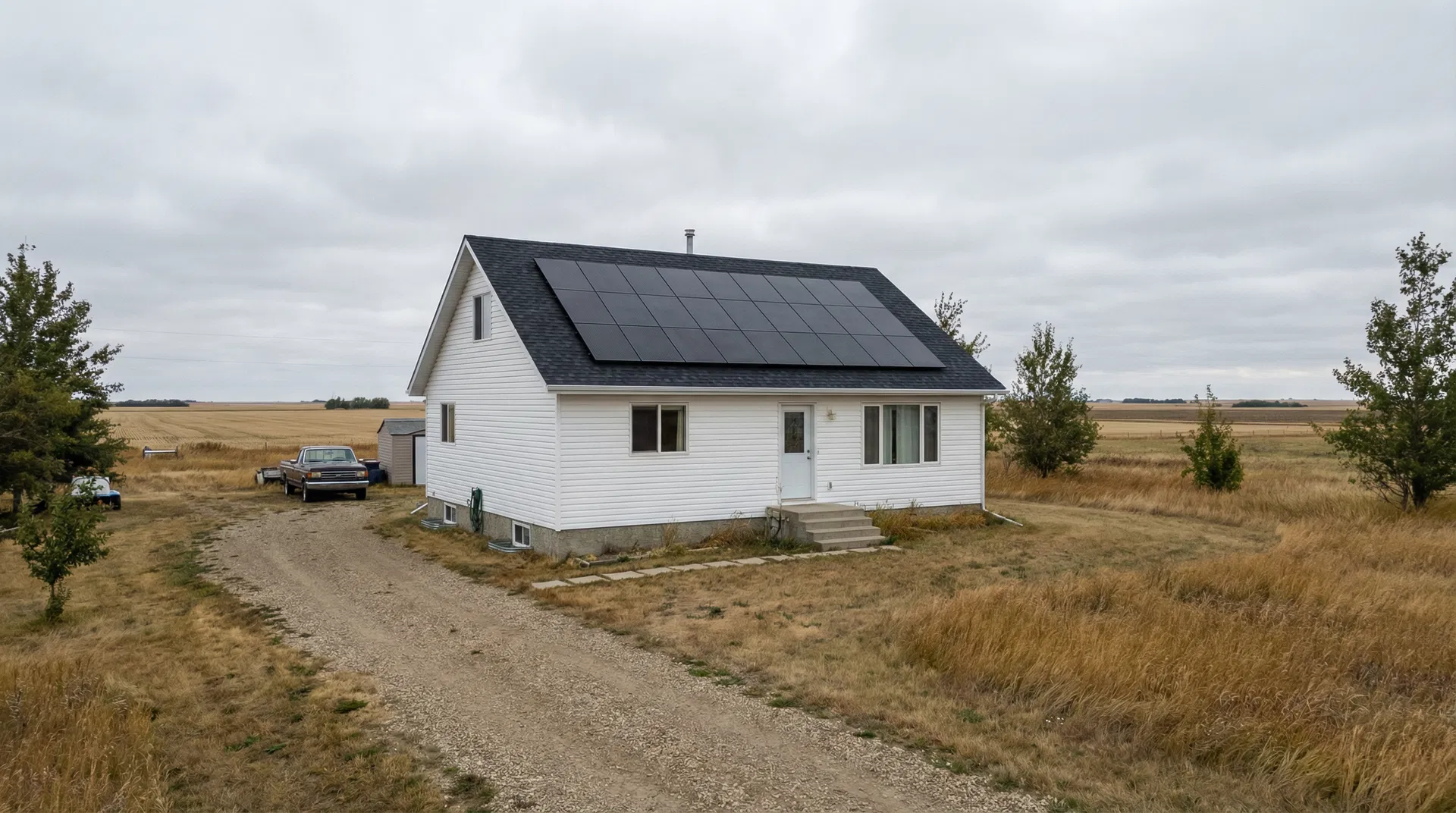
Older electrical panels on rural properties often have breaker capacity or spacing that wasn't designed for a solar tie-in. We check the breaker ratings, the bus rating, and the panel's age, then compare them against the size of the system we're designing. If the panel can't support the system, the upgrade usually means replacing it with one rated for the load, and we scope that work before anything is installed.
Service Entrance Review
We check the service entrance and the meter base at the property before the micro-generation application goes to FortisAlberta. The condition of the meter base matters because FortisAlberta reviews the connection details as part of the application, and a damaged or non-compliant base can stall the project until it's corrected. If an upgrade is required, we tell you what it involves and why it's needed before any work starts.
Right-Sizing Solar for Sylvan Lake Properties
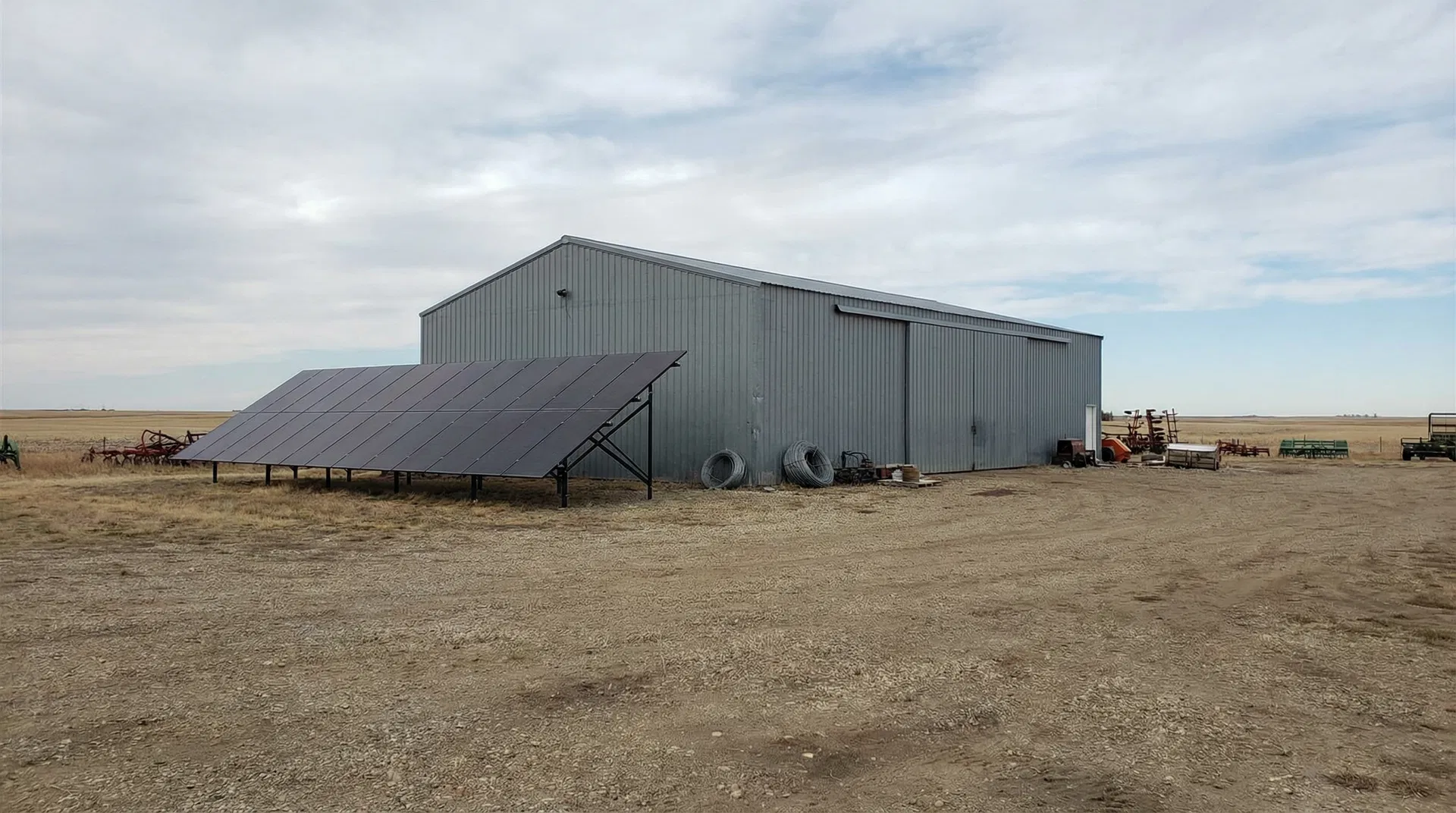
Rural properties rarely run on one load. A house might sit next to a shop with a welder, a barn with heated water bowls, an irrigation pump, or a grain dryer, and each one pulls power on its own schedule. That's why an acreage system is often larger than the same house on a city lot. We size for the whole property, not just the kitchen and the furnace. Roof or ground mount is the next decision. A roof works well when the pitch and orientation are reasonable and the shingles are in good shape, because it keeps the array off the yard. Ground mount makes more sense when trees or buildings shade the roof, when the pitch is poor, or when the yard has open land that's sitting idle. A ground mount also leaves room to expand later, which matters on a farm where needs change. Sizing comes from the 12-month usage graph on your most recent power bill, not from a rule of thumb. That graph shows the highest and lowest months, the seasonal swings, and the base load the property carries year-round. We line those patterns up against the site design, the roof or yard, and the shading, then recommend a system that fits the property. A current power bill and a site design together give us the inputs we need, and nothing gets sized from guesswork.
Typical Load Profiles We Design For Near Sylvan Lake
Home + Heated Shop
A house with a 40 by 60 foot heated shop runs its shop heaters, compressor, and welder on a different schedule than the kitchen and furnace. The shop often pulls the most during working hours, so the design has to cover that daytime load. We use your most recent power bill and the site design to set the system size against both loads.
Acreage with Irrigation Pump
A 5 HP irrigation pump running through a summer afternoon adds a large daytime block to an acreage's usage. Pump runtime varies widely by season and by field, so the usage graph on your most recent power bill shows the pattern better than a guess. We pair that graph with the pump's schedule to decide how much of the array the pump and the house each need.
Lakeside Home with Seasonal Guest Suite
A main house with a 600 square foot guest suite changes the load picture when the suite is occupied and sits empty the rest of the year. The usage graph on your most recent power bill shows how often the suite runs, and that's what the design is built around. Tourism traffic can make that pattern uneven, so we size for the occupancy your bill actually shows rather than an average.
FortisAlberta Interconnection in Sylvan Lake
FortisAlberta is the wire service for Sylvan Lake, so your micro-generation connection runs through FortisAlberta. Range Road Solar prepares the application package for your property. That includes the system design, the equipment details for the LONGi panels and APsystems microinverters, and the site information the utility asks for. We handle the application from start to finish, so you're not left matching forms to requirements on your own. The design and the application are tied together. Every property has its own service entrance and meter base, and what we find there affects both the design and what gets submitted. A panel that can't carry the system, or a meter base in poor condition, is easier to fix before the package goes in than after. That's why we review the electrical side during the site visit instead of at the end. Once the package is complete, we keep you updated on what has been submitted and what's still needed from your side.
Project Economics and Design Review
| System Size | Annual Production | Year 1 Savings | Payback Period |
|---|---|---|---|
| 8-12 kW range, 10 kW typical |
Production, savings, and payback require a property-specific design and your most recent power bill.
How We Work in Sylvan Lake
Bill and Load Review
We review your power bill to understand your energy use in Sylvan Lake and size the system to your actual consumption, not a generic estimate.
Site Assessment
We assess your roof or ground area, south-facing exposure, electrical service, and utility interconnection requirements specific to your property.
Design and Utility Application
We produce a system layout, production estimate, and cost summary, then submit your micro-generation application to your utility on your behalf.
Installation and Commissioning
Our crew installs racking, panels, inverter, and electrical connections. All work is performed by licensed electricians. We commission and test before handoff.
Current Program and Interconnection Review
Utility connection review
FortisAlberta, the wire service for Sylvan Lake, reviews grid connection applications for micro-generation systems. Range Road Solar handles the design package and the application, so you're not stuck coordinating the paperwork yourself. Connection details depend on your property's service, which we confirm during the site review.
Current program review
Commercial, farm, and residential eligibility is reviewed against current rules at design time. We check the property type and project scope against the rules that apply when the design is prepared.
Frequently Asked Questions
Get a Solar Assessment for Sylvan Lake
Submit a recent power bill and we will review your consumption and provide an honest assessment for your Sylvan Lake property. No obligation.
(587) 330-7502 Book a CallRelated Resources
More Solar Services in Sylvan Lake