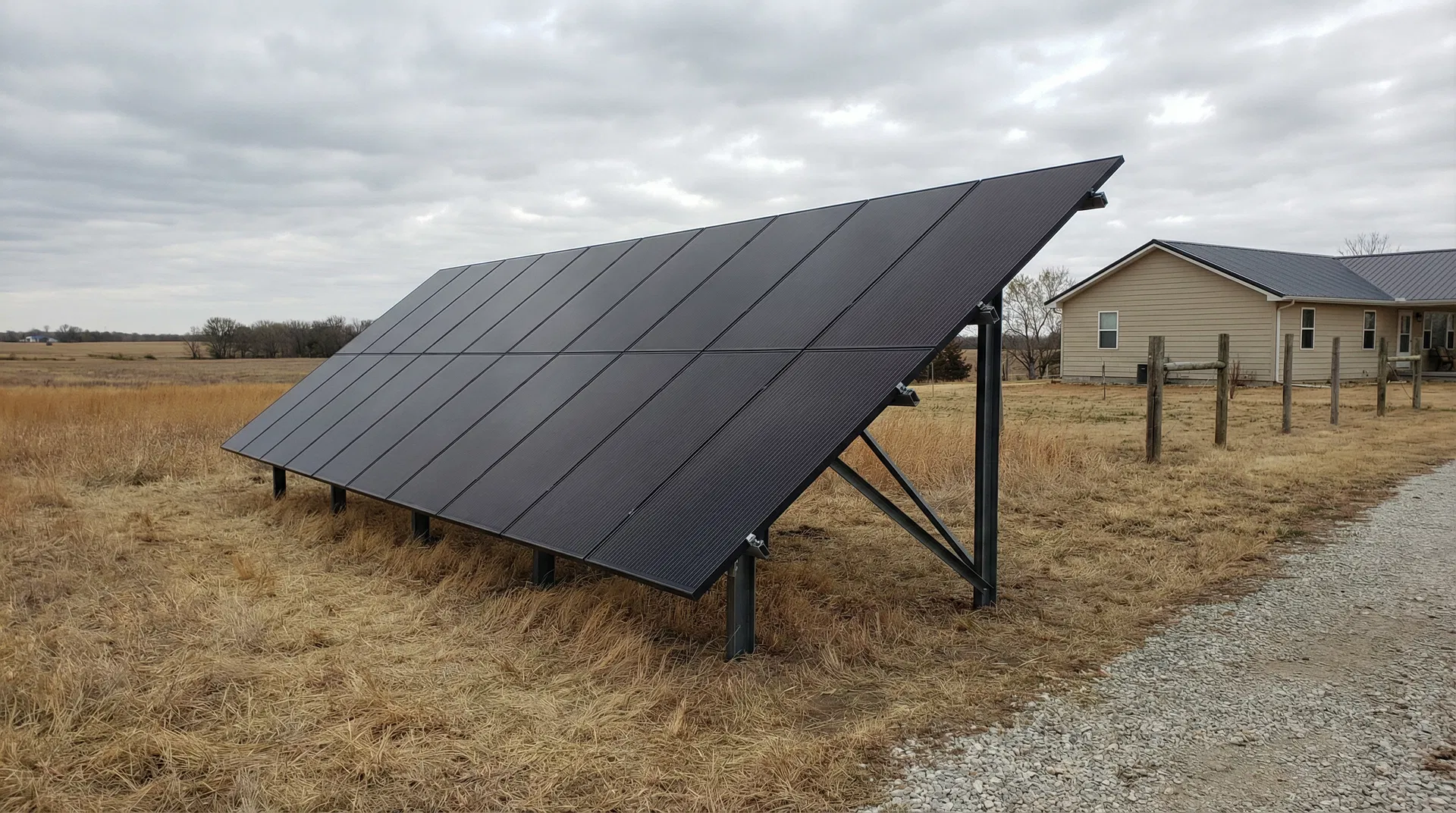
Solar battery storage in Sylvan Lake, Alberta pairs a hybrid inverter with a lithium battery bank so the power your panels already produce keeps working when the grid goes down. On new installs, we typically pair a hybrid inverter and lithium battery with LONGi panels, so the array, the battery, and the inverter are all sized together from day one instead of bolted together after the fact. For properties that already have a solar array running on APsystems microinverters, we can add an AC-coupled battery that charges from whatever the array is already producing, without tearing out equipment that's working fine. Either path gets reviewed on-site first: we look at the panel or garage wall where the battery cabinet will go, the run back to the main panel, and whether the existing wiring can carry a backup subpanel for the loads you actually want protected, like a well pump, a freezer, or a sump pump. Acreage and lakefront properties around here often have loads that a standard suburban battery setup wasn't designed for, so we don't default to a single battery size. We look at what you're trying to keep running during an outage, whether that's the whole house or just the essentials, and size the battery bank and inverter capacity to match. The system size range for these projects runs 8 to 20 kW, with most properties landing closer to 12 kW once the design review is done.
Solar Planning for Sylvan Lake Properties
The population here grew from 14,816 to 15,995 over the last census period, and that growth shows up in the mix of properties we design for: lakefront homes, acreages set back from the water, and in-town lots. Every one of those pulls power differently, and that's the starting point for a battery storage design, not a generic template. Some homeowners draw more on the FortisAlberta grid because of a hot tub, a heat pump, or a home business run out of the garage. Others want backup capacity through Tourism season, when extra people and activity move through the area and a short outage means more than an inconvenience. We don't guess at any of that. We start with your most recent power bill, which carries a 12-month usage graph, and we walk the property to check the electrical panel, the service entrance, and whatever roof or ground-mount space makes sense. From there we size a system, solar plus storage, around what the property actually draws. If the service is single-phase, that changes inverter selection. If it's three-phase, it opens up different options. Either way, the plan gets built around this address, not copied from somewhere else.
Electrical Site Review for Sylvan Lake Properties
Voltage Rise
Voltage rise happens when the distance and wire gauge between a property and the nearest transformer cause voltage to climb as solar power is exported back onto the line. Properties farther out on a distribution run can see more of it than ones close to a transformer. We measure it during the site visit because it directly affects inverter clipping and how large a system the connection can support.
Single-Phase vs Three-Phase
Rural Alberta properties can have either single-phase or three-phase electrical service, and that split matters for battery storage design. Single-phase service limits which hybrid inverters and how much continuous capacity you can run, while three-phase service opens up larger inverter and battery configurations. We confirm which service type a property has before we spec any equipment.
Panel Infrastructure
Older electrical panels, especially ones original to a property built decades ago, often don't have the breaker capacity or busbar rating to add a hybrid inverter and battery backup subpanel without changes. We check the panel's age, amperage, and available breaker slots as part of the site review. If it can't support the new equipment, an upgrade means a new panel or a subpanel dedicated to backup loads, which we scope before the project is quoted.
Service Entrance Review
We inspect the service entrance and meter base condition on every property, since a worn or outdated meter base can hold up the micro-generation application to FortisAlberta. The utility needs to see equipment that meets current standards before approving an interconnection. If the meter base needs replacing, we fold that into the project scope up front so it doesn't surface as a surprise mid-install.
Right-Sizing Solar and Battery Storage for Sylvan Lake Properties
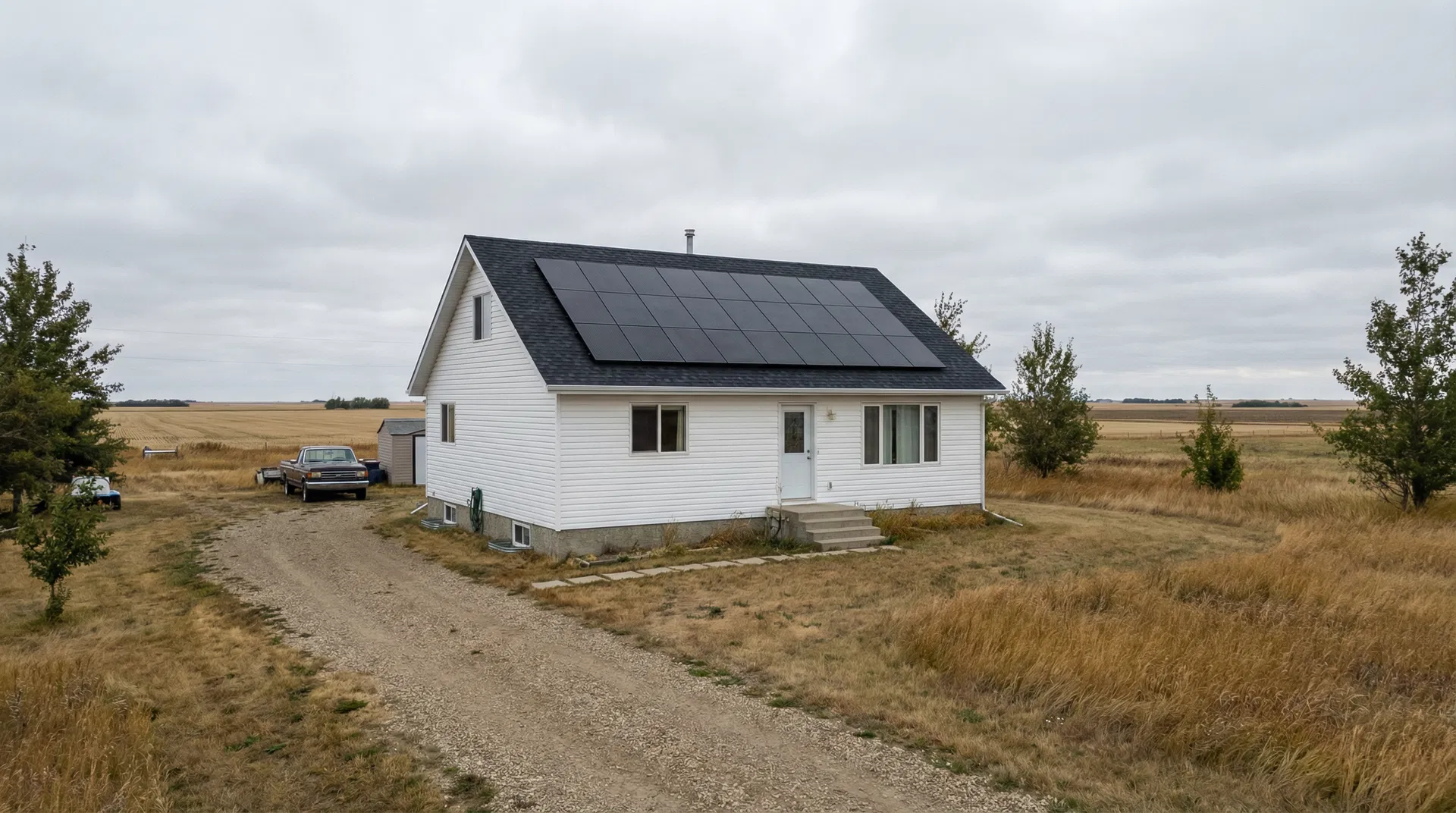
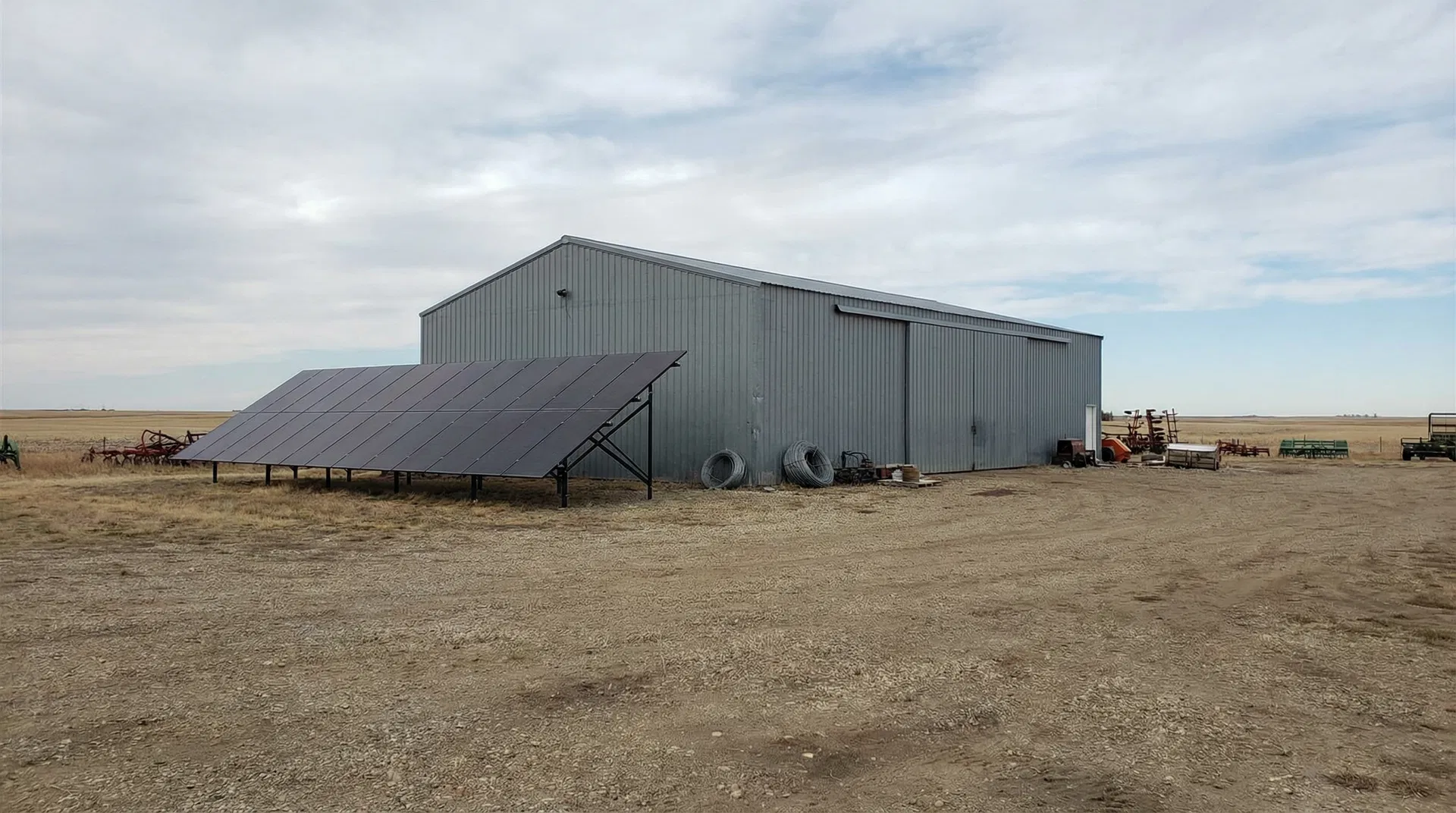
Properties in this area often carry more than one load center: a house plus a detached garage or shop, a dock or boathouse with its own circuit, or an acreage with an outbuilding or well pump running independently. That's why systems out here tend to run larger than a typical in-town residential install, and it's also why battery sizing has to account for which of those loads you actually want backed up during an outage, not just the house. Roof space is the first thing we check, but it isn't always the right answer. If mature trees shade the roof for part of the day, if the roof pitch or orientation isn't ideal, or if the property has open yard space that's easier to access for maintenance, a ground-mounted array can outperform a roof-mounted one even though it costs more to install. We don't size any of this off a rule of thumb. We pull the 12-month usage graph off your most recent power bill and look at how your draw shifts month to month, then match the solar and battery capacity to that actual pattern. Combined with a site design that accounts for shading, orientation, and the loads you want protected, that usage graph is what determines whether a property lands at the low end of the system size range or the high end.
Typical Load Profiles We Design For Near Sylvan Lake
Lakefront Home, Seasonal Occupancy
Lakefront properties in this area are sometimes used seasonally, with heavier draw in summer and lighter draw in winter, or the reverse if the property is winterized and used year-round. We size the battery and inverter around your actual occupancy pattern from the usage graph on your power bill, rather than assuming a flat, year-round load.
Home Plus Detached Shop
A house paired with a heated detached shop or garage draws differently than either building alone, especially if the shop runs power tools, a compressor, or vehicle charging. We look at how much of that shop load you want covered during an outage and size the backup subpanel and battery capacity to match, rather than backing up the whole property by default.
Acreage with Well Pump and Outbuildings
Acreages nearby often rely on a well pump for water, which makes backup power a priority beyond just keeping the lights on. We treat the well pump, along with any barn, coop, or outbuilding circuits, as essential loads and design the battery bank and backup subpanel around keeping those running first.
FortisAlberta Interconnection in Sylvan Lake
FortisAlberta is the wire service provider here, and any grid-tied solar and battery system goes through FortisAlberta's micro-generation interconnection process before it's switched on. Range Road Solar prepares and submits that application as part of the project, including the electrical drawings and equipment specifications FortisAlberta asks for. We don't guess at what the utility will or won't require. Instead, we build the application against FortisAlberta's current interconnection requirements at the time of your project, since those requirements can be updated. Because a battery system can be configured to charge from the grid, from solar, or both, we also confirm how your specific setup needs to be documented in the application so it matches how the system will actually operate day to day. We handle the paperwork end to end, but we don't make claims here about how long FortisAlberta's review will take or how any billing credits work. Those are utility-side questions, and we'll walk you through what applies to your project once your application is in and your design is finalized.
Project Economics and Design Review
| System Size | Annual Production | Year 1 Savings | Payback Period |
|---|---|---|---|
| 8-20 kW range, 12 kW typical |
Production, savings, and payback figures require a property-specific design review using your most recent power bill, not a generic estimate.
How We Work in Sylvan Lake
Bill and Load Review
We review your power bill to understand your energy use in Sylvan Lake and size the system to your actual consumption, not a generic estimate.
Site Assessment
We assess your roof or ground area, south-facing exposure, electrical service, and utility interconnection requirements specific to your property.
Design and Utility Application
We produce a system layout, production estimate, and cost summary, then submit your micro-generation application to your utility on your behalf.
Installation and Commissioning
Our crew installs racking, panels, inverter, and electrical connections. All work is performed by licensed electricians. We commission and test before handoff.
Current Program and Interconnection Review
Utility connection review
FortisAlberta reviews the grid connection application for any new solar and battery system before it's energized. Range Road Solar prepares the full design package, including the electrical drawings and equipment specs FortisAlberta requires, and submits it as part of your project.
Current program review
Residential, farm, and commercial properties can fall under different eligibility rules depending on what's in effect at the time of your install. We check current rules against your specific property and project during the design review rather than assuming last year's rules still apply.
Frequently Asked Questions
Get a Solar Assessment for Sylvan Lake
Submit a recent power bill and we will review your consumption and provide an honest assessment for your Sylvan Lake property. No obligation.
(587) 330-7502 Book a CallMore Solar Services in Sylvan Lake