Solar rebates and incentives for Sylvan Lake, Alberta properties start with a current-rules review, because what's eligible changes year to year and depends on whether the property is residential, a farm operation, or a registered business. We install LONGi panels paired with APsystems microinverters on every project, and most of the systems we design in the area land in the 8 to 15 kW range, with 10 kW typical for a single-family home. For farm and business customers, that review includes a look at whether the federal Clean Technology ITC applies to the installation, since that program is built around commercial and agricultural ownership structures rather than residential rooftops. Micro-generation credits through the local wire service are part of the same conversation, and we check current municipal programs too, since those change independently of provincial and federal rules. None of that review happens in the abstract. We start from your most recent power bill and a site walk, because equipment choice and system size depend on roof condition, shading, and whether the property has single-phase or three-phase service. APsystems microinverters let us build out a system panel by panel rather than committing to a single string inverter, which matters on older roofs or properties with more than one roof plane. The rebate and incentive picture gets laid out alongside the design, not before it, so the numbers you see reflect your actual property and the rules in effect when you sign.
Solar Planning for Sylvan Lake Properties
Sylvan Lake was incorporated as a Town on May 20, 1946, and it's grown from 14,816 residents to 15,995 at the last census. That growth means more rooftops, more acreages on the edges of town, and more properties where a design review needs to account for how the building is actually used, not just its address. The town sits in Central Alberta, within Red Deer County and Lacombe County, and the local economy leans heavily on tourism built around the lake, the Sylvan Lake Lighthouse, and the summer crowds that come with it. That mix shows up in the properties we design for: lakefront homes with shading from mature trees, seasonal businesses with uneven year-round loads, and acreages just outside town limits with sheds and shops to power alongside the house. Environment Canada's climate normals put bright sunshine at 2,125.3 hours a year for the area, which is useful context but not a substitute for a site walk. We don't size a system off a regional average. We pull the 12-month usage graph off your most recent power bill, look at roof pitch, orientation, and any shading from lake-adjacent tree cover, then build a design around what the property actually draws. That's the starting point for any rebate or incentive conversation, because eligibility rules get checked against the actual system, not a guess.
Electrical Site Review for Sylvan Lake Properties
Voltage Rise
Voltage rise happens when a solar inverter pushes power back onto a line that's already running near the top of its allowed range, which is more common on longer rural distribution runs. If the line voltage at your property is already elevated, that affects how much headroom the inverter has before it clips output to stay within range. We check voltage conditions as part of the site review so the system size and inverter configuration account for it up front, rather than discovering a clipping issue after installation.
Single-Phase vs Three-Phase
Rural Alberta properties may have single-phase or three-phase electrical service, depending on when the property was connected and what kind of loads it was built to run. That distinction matters for inverter selection, since the APsystems microinverters we install need to match the phase configuration at the panel. It also affects how much capacity a property can support, which feeds directly into how large a system we can design.
Panel Infrastructure
Older rural properties sometimes have electrical panels that predate the breaker capacity a solar installation needs, so we check panel age and available breaker space during the site review. We're looking for whether the panel can safely add a solar breaker without exceeding its rated capacity. If it can't, an upgrade means replacing or supplementing the panel before the solar installation can proceed, and we scope that as part of the project rather than as a surprise later.
Service Entrance Review
We review the service entrance and meter base condition on every project, because the meter base has to support the interconnection equipment before we can submit the micro-generation application to FortisAlberta. A meter base that's outdated or undersized can hold up that application until it's addressed. When an upgrade is needed, we scope it alongside the solar installation so the project moves through FortisAlberta's review without a separate delay.
Right-Sizing Solar for Sylvan Lake Properties
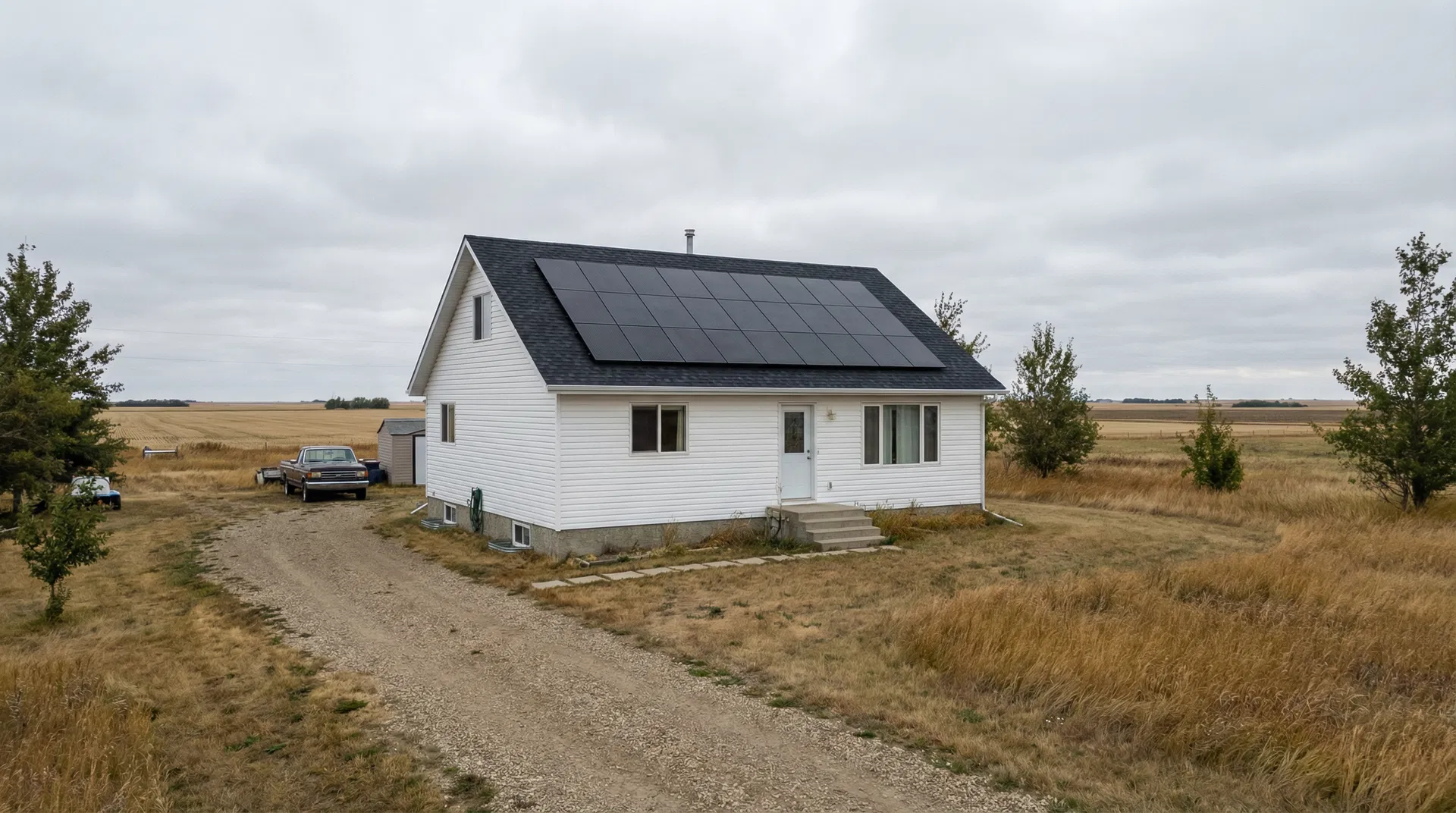
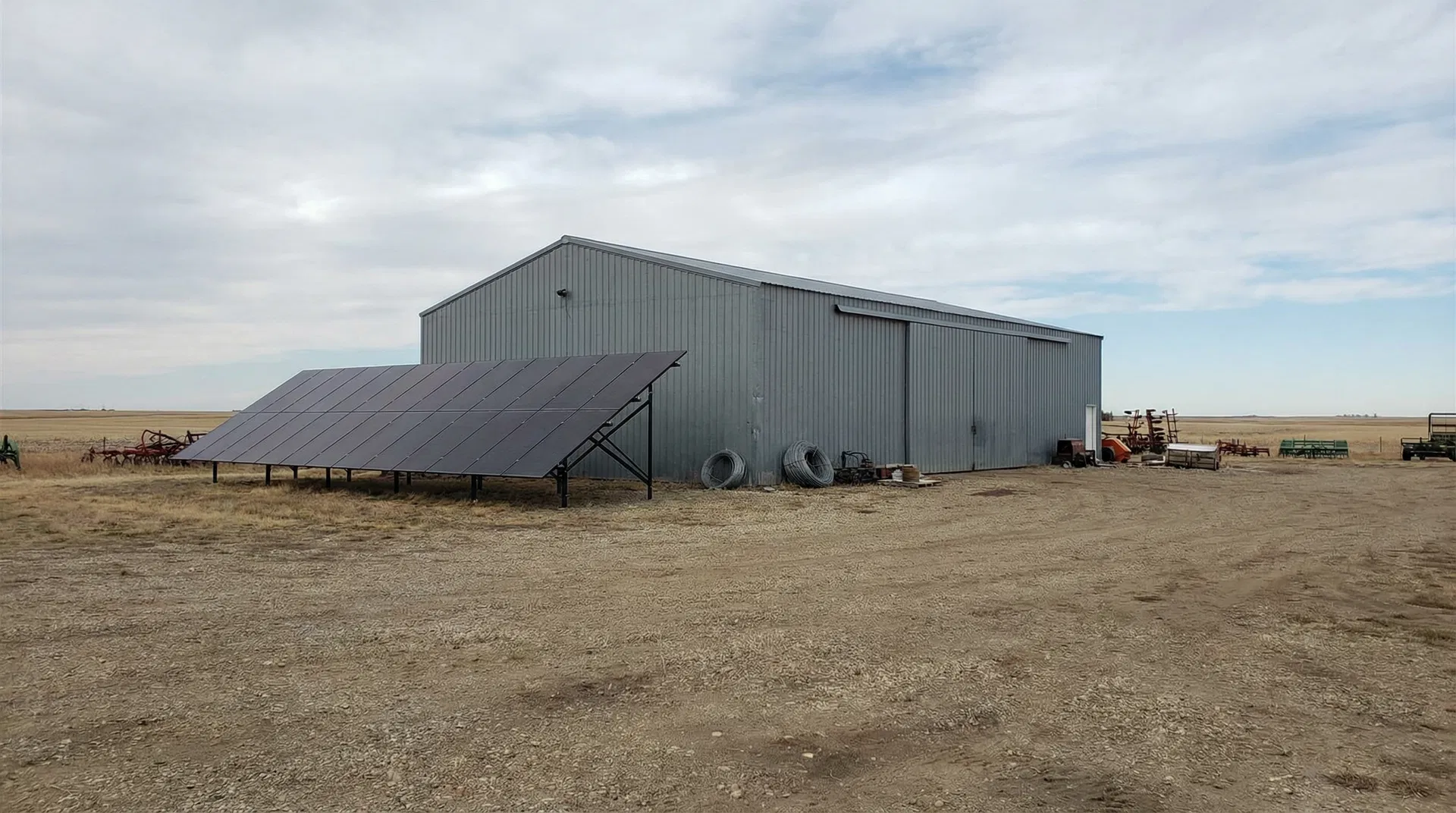
Rural properties typically carry more than one load. A house might share a service with a heated shop, a barn, an irrigation pump, or grain-handling equipment, and each of those adds draw that a basic rule-of-thumb calculation misses. That's why rural systems tend to run larger than a comparable in-town home, and why we don't size off a per-square-foot estimate. Roof mount works well when there's enough unshaded roof area with a workable pitch and orientation, but it's not always the right call. Ground mount makes more sense when mature trees or outbuildings shade the roof, when the roof pitch or orientation is poor for solar, or when the yard has open, unshaded land that's easier and cheaper to build on than a complicated roof. We walk the property to weigh those factors before recommending one over the other. Either way, sizing starts with the 12-month usage graph on your most recent power bill, which shows how your actual draw moves through the seasons, including any shop heat, irrigation, or grain-drying load that spikes at specific times of year. We combine that graph with the site design, including shading, roof or ground-mount orientation, and available space, to land on a system size that matches how the property actually uses power, not a generic number pulled from square footage or guesswork.
Typical Load Profiles We Design For Near Sylvan Lake
Home + Heated Shop
This profile covers a house and a heated, insulated shop on the same service, often with the shop running power tools, a vehicle hoist, or supplemental heat through the colder months. We size around the combined draw shown on the 12-month usage graph from your most recent power bill, rather than treating the shop as an afterthought. The system has to account for both buildings pulling from the same panel, especially during the months when shop heat runs longest.
Acreage with Irrigation
Acreage properties with irrigation pumps see sharp seasonal spikes that a single annual average would completely miss. We look at how that pump load shows up on the usage graph across the growing season and size the system around those months specifically, not an averaged-out number. Irrigation timing also factors into whether roof or ground mount makes more sense, depending on where the pump equipment and panel sit relative to the house.
Working Farm with Grain Handling
Grain-handling equipment, including augers, aeration fans, and dryers, creates short but heavy load spikes concentrated around harvest. We design for that pattern using the usage graph from the farm's most recent power bill, looking at how those spikes stack against the baseline household and shop draw. A farm with this profile often needs a different system size and layout than a straight residential property, even on a similar-sized parcel.
FortisAlberta Interconnection in Sylvan Lake
FortisAlberta is the wire service for properties in this area, and any grid-connected solar system goes through their micro-generation interconnection process. Range Road Solar handles that application as part of the project, preparing the technical package FortisAlberta needs to review the system design, including inverter specifications for the APsystems equipment we install and single-line diagrams for the installation. We submit the paperwork, track the application, and coordinate any site requirements FortisAlberta asks for during their review. What we don't do is promise a specific approval window or guess at how credits settle on your account, because those details depend on FortisAlberta's current process and your retailer agreement, not on us. We'll walk you through what the application covers and what to expect procedurally, but the specifics of timing and credit treatment come from FortisAlberta and your electricity retailer directly. Our job is making sure the design package is accurate and complete so the review goes smoothly on the first pass.
Project Economics and Design Review
| System Size | Annual Production | Year 1 Savings | Payback Period |
|---|---|---|---|
| 8-15 kW range, 10 kW typical |
Production, savings, and payback figures require a property-specific design review using your most recent power bill, and we provide those only after that review is complete.
How We Work in Sylvan Lake
Bill and Load Review
We review your power bill to understand your energy use in Sylvan Lake and size the system to your actual consumption, not a generic estimate.
Site Assessment
We assess your roof or ground area, south-facing exposure, electrical service, and utility interconnection requirements specific to your property.
Design and Utility Application
We produce a system layout, production estimate, and cost summary, then submit your micro-generation application to your utility on your behalf.
Installation and Commissioning
Our crew installs racking, panels, inverter, and electrical connections. All work is performed by licensed electricians. We commission and test before handoff.
Current Program and Interconnection Review
Utility connection review
FortisAlberta reviews every grid-connected micro-generation application before a system goes live, and Range Road Solar prepares that design package as part of your project. We handle the submission and respond to any technical follow-up FortisAlberta requests during their review.
Current program review
Commercial, farm, and residential eligibility for current credits and programs gets checked against the rules in effect at the time of your design, since those rules shift independently of each other. We review that eligibility alongside your system design rather than quoting a program detail that might already be out of date.
Frequently Asked Questions
Get a Solar Assessment for Sylvan Lake
Submit a recent power bill and we will review your consumption and provide an honest assessment for your Sylvan Lake property. No obligation.
(587) 330-7502 Book a CallRelated Resources
More Solar Services in Sylvan Lake