
Solar rebates and incentives in Eckville, Alberta shift from year to year, and the equipment we install is chosen to hold up regardless of which programs happen to be active when you sign. Every system uses LONGi panels paired with APsystems microinverters, sized in the 8 to 15 kW range that fits most residential and small acreage properties in this area. Micro-generation credits are reviewed against current FortisAlberta rules at the time of your design, not against whatever applied last year. If the property is a working farm or a registered business, we also review eligibility for the federal Clean Technology ITC, since that program applies differently to commercial and farm operations than it does to a straight residential install. Municipal programs get the same treatment: we check what's active for the property before we finalize a quote, because these programs change without much notice. None of this replaces a proper site assessment. A rebate or credit affects what a system costs to install, not how big it needs to be or where the panels go. We still start with the electrical service, the roof or ground conditions, and the most recent power bill, then layer the current program review on top of that design. For a property here, that might mean a straightforward residential microinverter array on the house, or it might mean a larger array split across a home and a shop, each metered and reviewed separately depending on how the site is wired.
Solar Planning for Eckville Properties
Eckville sits in Lacombe County, and the 2021 census counted 1,014 residents here, down from 1,125 the census before. That kind of population shift doesn't change how we size a system: what matters is the property in front of us, the electrical service feeding it, and the most recent power bill. Properties in this area range from in-town lots to acreages supporting agricultural support industries, and each one carries a different load profile. A shop with a grain dryer draws differently than a home with electric heat, and a system built for one won't fit the other. FortisAlberta is the wire service here, and any system we design has to work within that utility's interconnection process from the start, not as an afterthought. We don't hand a homeowner or farm operator a generic number and call it done. We look at the electrical panel, the service entrance, roof or ground conditions, and the usage graph on the bill before we size anything. Rebates and incentives move the economics, but they don't change the engineering. We confirm what applies to a given property at the time of design, not off a list we wrote last year, and we build the system around what the site and the bill actually show.
Electrical Site Review for Eckville Properties
Voltage Rise
Voltage rise happens when the distance and wire gauge between a property and the nearest transformer cause voltage to climb as a solar system pushes power back onto the line. On some rural feeders, that rise can push inverter output voltage close to its upper trip limit, which causes the inverter to clip or curtail output. We check the distribution conditions at your service point before finalizing system size, so the design accounts for it instead of running into it after installation.
Single-Phase vs Three-Phase
Properties in this area can have either single-phase or three-phase electrical service, depending on when the property was connected and what it was built to run. That distinction affects which inverters we can use and how much capacity the service can carry, since three-phase equipment isn't compatible with a single-phase feed. We confirm which service type is present during the site review, before we spec any equipment.
Panel Infrastructure
Older rural properties often have electrical panels rated well below what a modern solar system and today's loads require. We check breaker capacity, panel age, and available bus space as part of every site review, looking for signs of an outdated or undersized panel. If the panel can't support the added breakers a solar system needs, an upgrade happens before installation, not as a surprise afterward.
Service Entrance Review
The service entrance and meter base are what FortisAlberta actually inspects as part of a micro-generation application, so we check their condition alongside the panel. A worn or outdated meter base can hold up an interconnection application even when the solar equipment itself is ready to go. If an upgrade is needed, we scope and schedule it as part of the project so it doesn't stall the FortisAlberta review.
Right-Sizing Solar for Eckville Properties
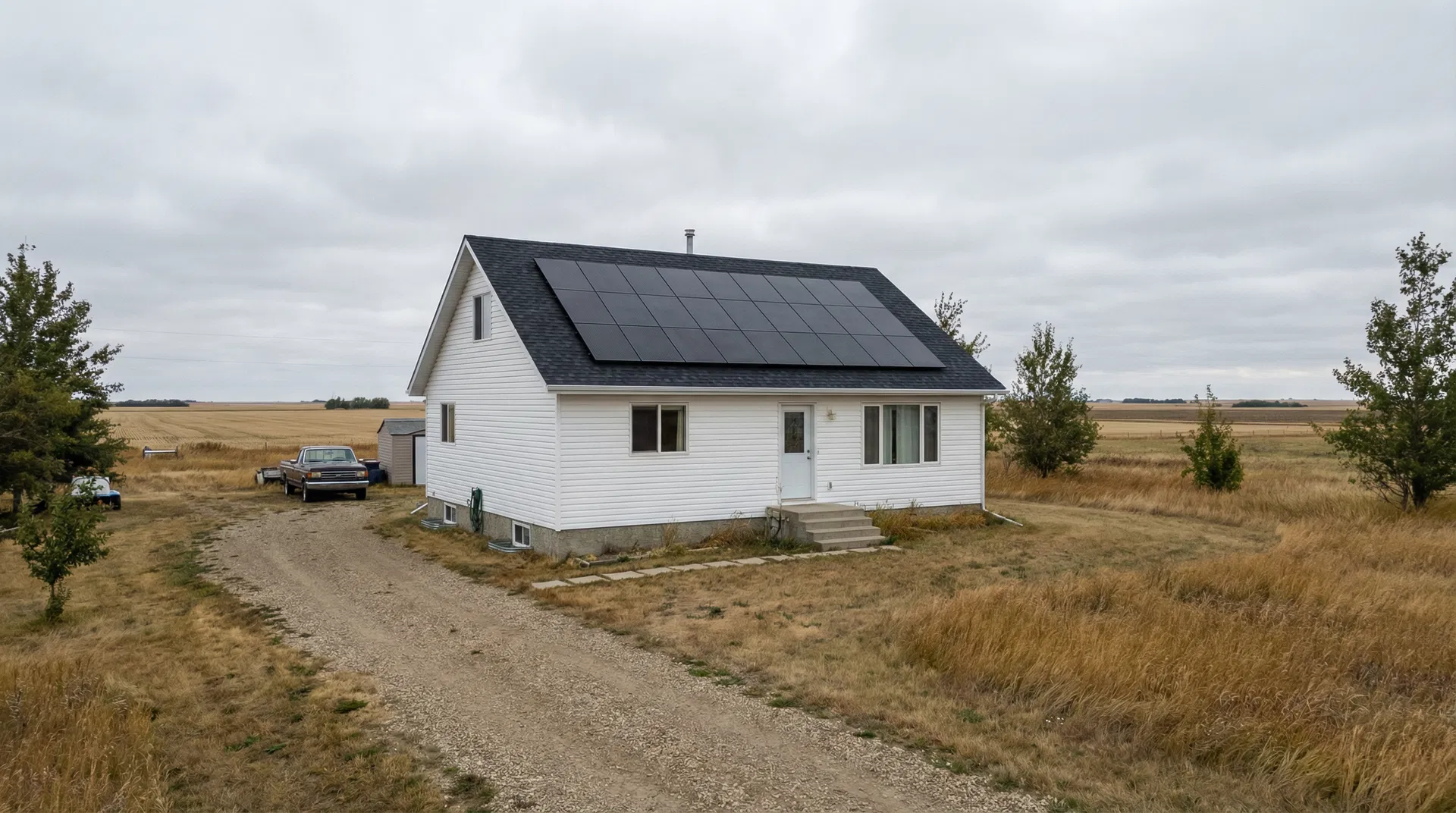
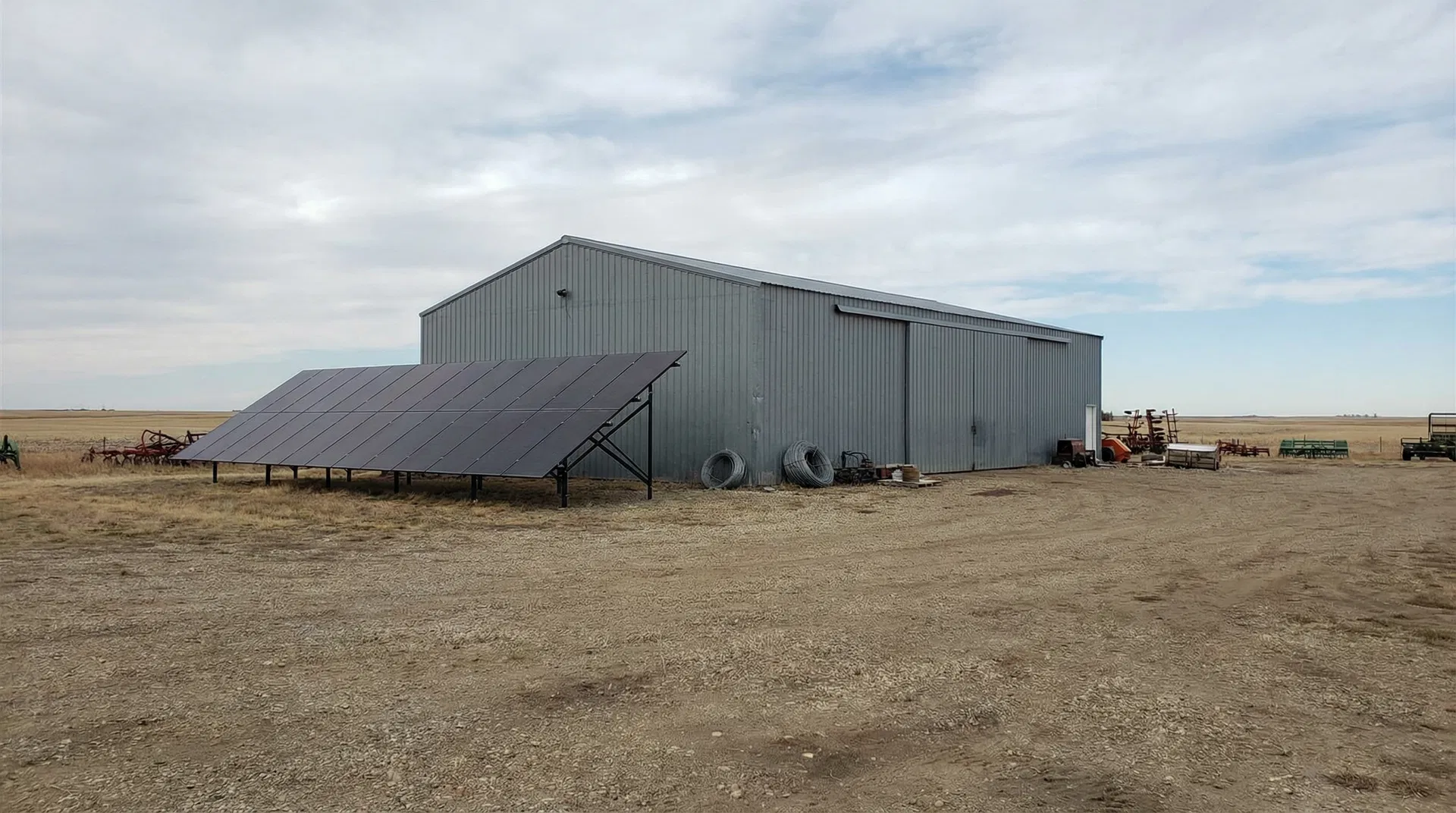
Rural systems tend to run larger than a typical in-town install because they're covering more than just a house. A property in this area might have a home, a heated shop, a grain bin setup, or an irrigation pump all drawing from the same service, and a system sized only for the house misses most of the actual load. Roof versus ground mount comes down to what the site gives us. A roof with good southern exposure and no shading is often the simplest option. But plenty of acreages have trees or outbuildings shading the house roof, a roofline with poor pitch for solar, or a yard with room to spare, and in those cases a ground-mounted array on open land makes more sense than fighting a bad roof. Either way, we size the system from the 12-month usage graph on your most recent power bill, not a rule-of-thumb number based on square footage or guesswork. That graph shows us the seasonal pattern, whether there's a grain dryer spike in the fall or steady shop heating through winter, and we design around that actual pattern. Combined with a site visit to confirm roof or ground conditions, that bill and that graph are what turn a general size range into a specific system.
Typical Load Profiles We Design For Near Eckville
Home Only
A standalone home with typical household loads: kitchen, laundry, electric water heating, and maybe a heat pump or ductless unit. We size these off the usage graph on your most recent power bill, which shows the seasonal swing between summer and winter draw better than a flat average would.
Home + Heated Shop
This is a common layout in the area: a house plus a detached shop with electric heat, a welder, or air tools. The shop's draw often shows up as a distinct pattern on the power bill separate from the house, and we design the system to cover both loads rather than sizing for the house alone.
Home + Grain Handling or Irrigation
Grain drying, bin aeration, and irrigation pumps create short, heavy load spikes rather than steady draw. Those spikes show up clearly on the 12-month usage graph, and we account for them when sizing the system so the array is built around the property's real operating pattern, not just its baseline load.
FortisAlberta Interconnection in Eckville
FortisAlberta is the wire service for this area, and that's the utility any grid-tied system here connects through. Before a system goes in, we prepare and submit the micro-generation interconnection application on your behalf, covering the technical details FortisAlberta needs to review the connection: inverter specifications, one-line diagrams, and site information. We handle that paperwork as part of the project, so you're not filling out utility forms on top of everything else. What we don't do is promise a specific approval timeline, credit structure, or payout rate here, because those details come from FortisAlberta's current tariff and process, and we confirm the specifics that apply to your property during the design review rather than guessing at them in advance. If anything about the application changes between design and installation, we handle that update as part of the interconnection process, not as a separate cost.
Project Economics and Design Review
| System Size | Annual Production | Year 1 Savings | Payback Period |
|---|---|---|---|
| 8-15 kW range, 10 kW typical |
Production, savings, and payback figures are calculated during a property-specific design review using your most recent power bill, not estimated in advance.
How We Work in Eckville
Bill and Load Review
We review your power bill to understand your energy use in Eckville and size the system to your actual consumption, not a generic estimate.
Site Assessment
We assess your roof or ground area, south-facing exposure, electrical service, and utility interconnection requirements specific to your property.
Design and Utility Application
We produce a system layout, production estimate, and cost summary, then submit your micro-generation application to your utility on your behalf.
Installation and Commissioning
Our crew installs racking, panels, inverter, and electrical connections. All work is performed by licensed electricians. We commission and test before handoff.
Current Program and Interconnection Review
Utility connection review
FortisAlberta reviews every micro-generation grid connection application for the properties it serves in this area. Range Road Solar prepares the full design package, inverter specs, one-line diagrams, and site details, and submits it on your behalf as part of the project.
Current program review
Eligibility for current commercial, farm, and residential programs is reviewed against the rules in place at the time of your design, whether that's a straightforward residential install or a larger farm or business system. We check what applies to your specific property rather than assuming a program you read about still applies exactly as written.
Frequently Asked Questions
Get a Solar Assessment for Eckville
Submit a recent power bill and we will review your consumption and provide an honest assessment for your Eckville property. No obligation.
(587) 330-7502 Book a CallRelated Resources
More Solar Services in Eckville