
Solar installation Eckville homeowners choose us for starts with LONGi panels paired with APsystems microinverters, a combination that handles partial shading from a tree line or a neighboring roofline better than a single string inverter setup. For most houses in Eckville, we're looking at an 8 to 12 kW system, with 10 kW being the typical landing point once we've reviewed your roof and usage. Microinverters also make sense on properties where the roof has more than one orientation, which is common on older Eckville homes that have had additions built on over the years. Every panel operates independently, so a dormer or chimney shadow on one section of roof doesn't drag down output across the whole array. We handle the full design engineering package in-house, from load calculations to the single-line electrical diagram, and we prepare the interconnection application that goes to FortisAlberta on your behalf. That includes the equipment spec sheets, site plan, and electrical schematics FortisAlberta requires to review a micro-generation connection. For homes near the Friendship Center or anywhere in town, we walk the roof in person before we finalize a design, because satellite imagery alone doesn't tell us enough about tree cover, roof condition, or how your attic venting is laid out. If your property has a detached shop or garage with its own panel, we factor that into the design too, since it can change how we size the system and where we recommend mounting it.
Solar Planning for Eckville Properties
Eckville sits in Lacombe County, and most of the residential properties we see here range from in-town lots to acreages with a shop or outbuilding on the same meter. That mix matters for design. A house on a standard in-town lot has different roof orientation options than a property set back from the road with mature trees along one edge. We don't start with a sunshine chart or a generic yield number. We start with your most recent power bill, which carries a 12-month usage graph FortisAlberta prints right on the statement, and we pair that with a site visit to check roof pitch, shading, and panel orientation. The town's population sat at 1,014 as of the last census, down from 1,125 previously, and a smaller, tighter-knit community like this one often means word travels fast about who did a clean install and who didn't. We've designed around the local mix of in-town homes and properties tied to agricultural support industries, where a shop or barn can share load with the house. Whatever your setup, we confirm system size through design, not a rule of thumb.
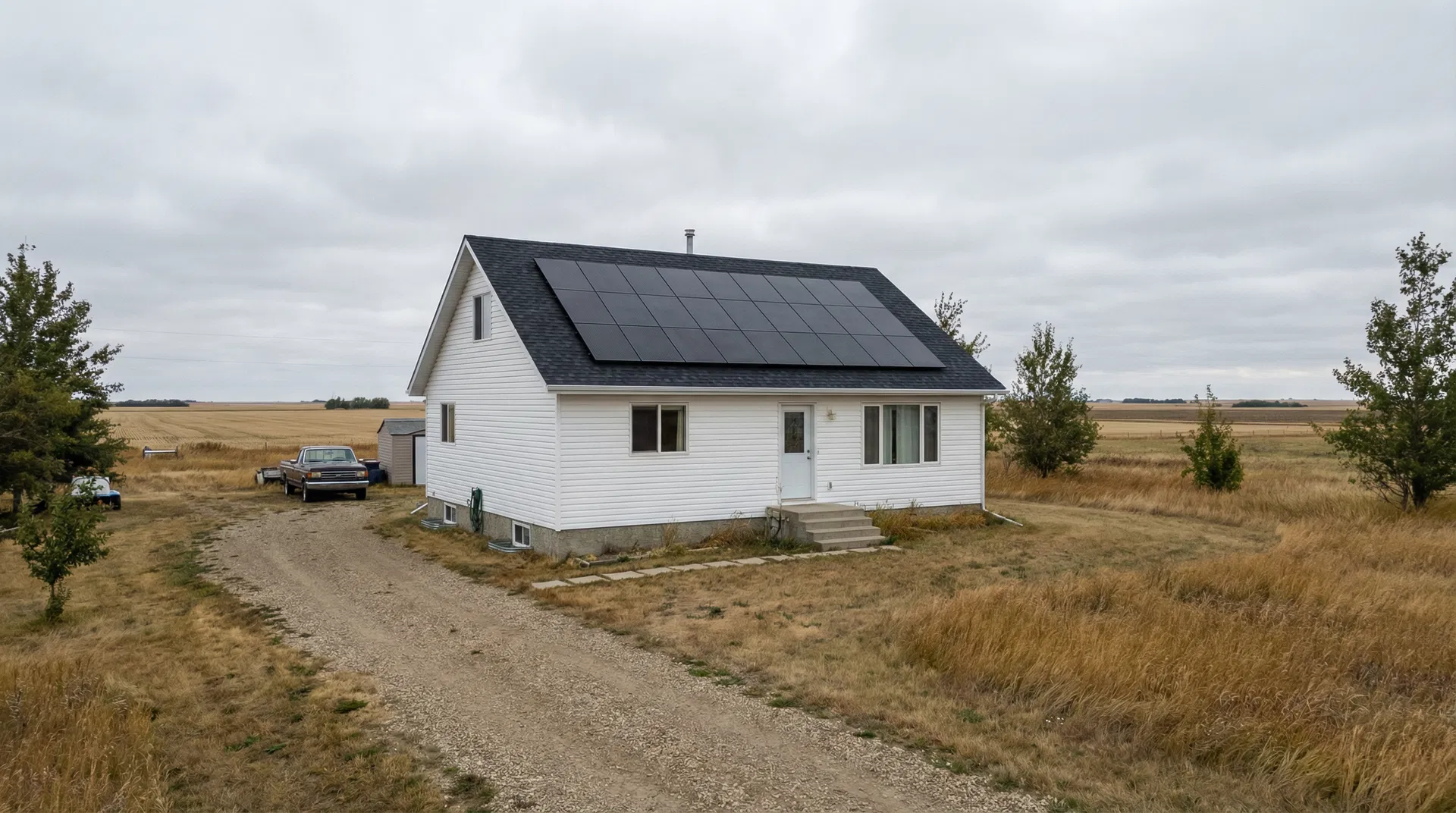
Electrical Site Review for Eckville Properties
Voltage Rise
Voltage rise happens when the voltage at your service point sits higher than standard because of distribution line conditions on your section of the FortisAlberta network. On properties further from a substation or transformer, this can be more pronounced, and it affects how close an inverter runs to its upper voltage trip point. We check for this during design because it influences how we size and configure the inverter setup to avoid nuisance clipping or shutdowns.
Single-Phase vs Three-Phase
Rural Alberta properties can have either single-phase or three-phase electrical service, and Eckville is no exception, especially where a shop or outbuilding was added with its own service upgrade over the years. The phase configuration on your property determines which inverter models we can spec and how much total capacity the system can support. We confirm phase type on-site rather than assuming, since it changes the equipment list.
Panel Infrastructure
Older electrical panels common on established Eckville properties sometimes have limited breaker capacity or busbar ratings that weren't built with solar in mind. We check the panel's age, amperage rating, and available breaker space during the site visit to confirm it can handle a new solar circuit safely. If the panel can't support the added capacity, an upgrade means a new panel or a busbar rating increase before the solar installation moves forward.
Service Entrance Review
We inspect the service entrance and meter base condition as part of every site review, since FortisAlberta's micro-generation application requires the connection point to meet current standards. A worn or outdated meter base can hold up approval if it doesn't meet spec. When an upgrade is required, we coordinate that work as part of the project scope rather than leaving it as a surprise after the application is already in.
Right-Sizing Solar for Eckville Properties
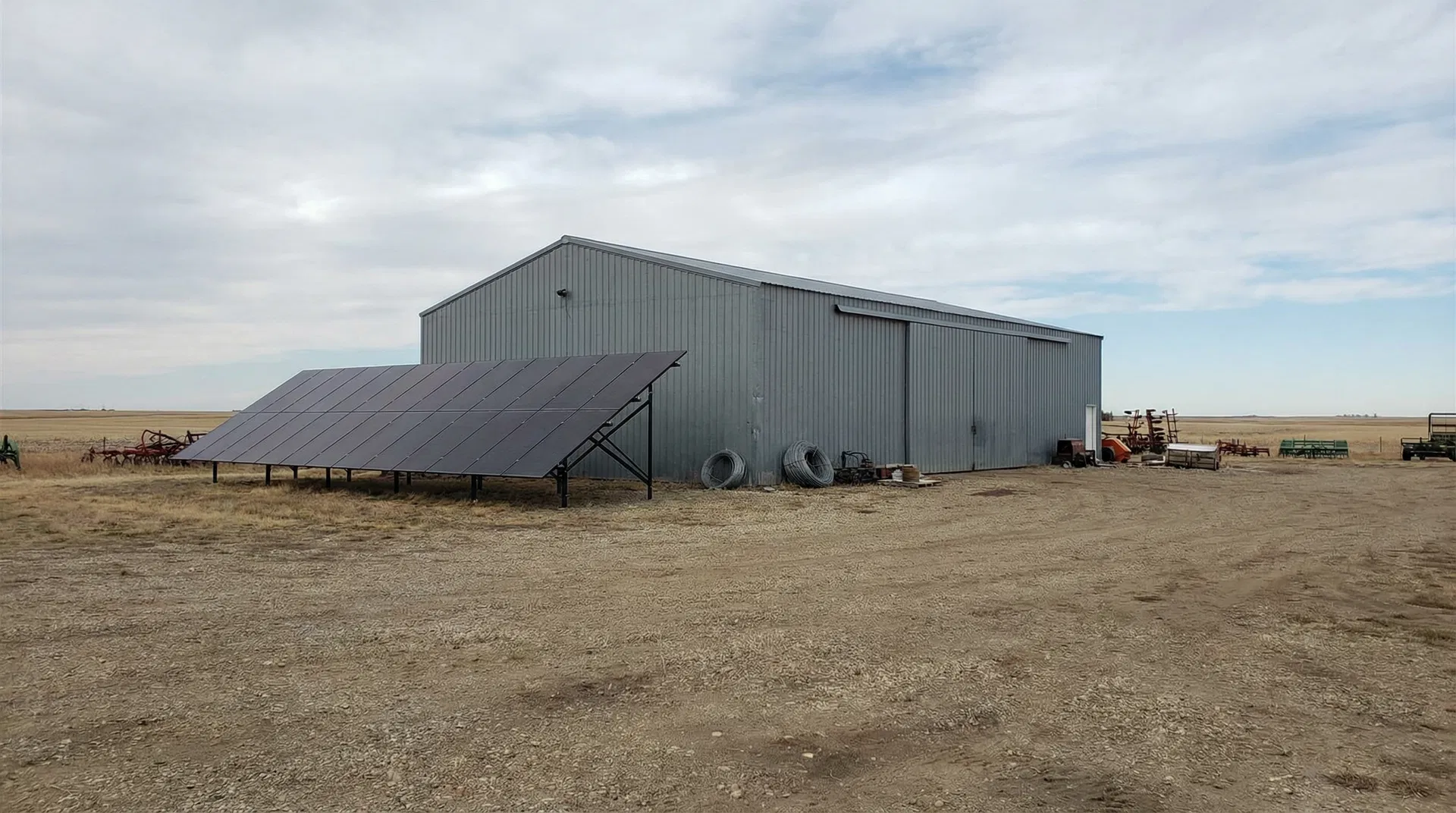
Rural properties around Eckville often carry more electrical load than a typical in-town house, since a shop, barn, or grain handling equipment can all draw off the same service. That's why systems out here tend to run larger than a comparable urban install. One of the first design decisions is roof versus ground mount. A roof with good south or west exposure and no major shading is usually the simpler and more cost-effective choice. But if mature trees shade the house, the roof pitch isn't ideal, or the yard has open space that isn't going anywhere, a ground-mounted array can make more sense, and it gives us more control over panel angle and orientation. Either way, we don't size a system off a rule of thumb like watts per square foot of roof. We size it from the 12-month usage graph printed on your most recent power bill, which shows us how your load shifts across seasons, whether that's a well pump running harder in summer or a shop heater pulling more in winter. Combined with a site visit to confirm roof or ground conditions, that usage graph is what actually drives the kW number we land on, not a generic estimate.
Typical Load Profiles We Design For Near Eckville
Home + Heated Shop
This is a common setup on Eckville properties where a detached shop runs a heater, compressor, or welder alongside normal household load. We pull the usage graph from your most recent power bill to see how much that shop pulls across the seasons, then size the system and inverter configuration around both loads together rather than treating the house in isolation.
Acreage with Well Pump and Outbuildings
Properties with a well pump, grain bin fans, or a secondary outbuilding on the same service tend to show a different load signature than a straight residential account. We look at how those loads show up on your bill's usage graph across the year and design the system to match that pattern rather than guessing at a flat daily average.
Standard In-Town Residential Home
For a house on a typical Eckville lot without a shop or acreage-scale load, the load profile is usually more consistent month to month. Here, roof orientation and shading tend to drive the design decisions more than seasonal load swings, and the 8 to 12 kW range usually covers the bulk of what a standard home's bill shows.
FortisAlberta Interconnection in Eckville
Eckville properties are served by FortisAlberta, the wire service responsible for the distribution lines in this part of Lacombe County. Any grid-tied solar system here needs a micro-generation interconnection application submitted to and reviewed by FortisAlberta before the system can be energized. We put that application package together for you: the electrical schematics, equipment specifications for the LONGi panels and APsystems microinverters, and the site plan FortisAlberta needs to review the connection. We don't quote approval timelines or make claims about how credits or exports are settled, because those details are set by FortisAlberta's current rules and your retailer's terms, not by us. What we can tell you is that we've built the paperwork package before and know what FortisAlberta expects to see in a complete submission. If anything about your service entrance or meter base needs attention before the application can move forward, we flag that during the site review, not after.
Project Economics and Design Review
| System Size | Annual Production | Year 1 Savings | Payback Period |
|---|---|---|---|
| 8-12 kW range, 10 kW typical |
Production, savings, and payback figures depend on a property-specific design and your most recent power bill, and we won't quote them before reviewing both.
How We Work in Eckville
Bill and Load Review
We review your power bill to understand your energy use in Eckville and size the system to your actual consumption, not a generic estimate.
Site Assessment
We assess your roof or ground area, south-facing exposure, electrical service, and utility interconnection requirements specific to your property.
Design and Utility Application
We produce a system layout, production estimate, and cost summary, then submit your micro-generation application to your utility on your behalf.
Installation and Commissioning
Our crew installs racking, panels, inverter, and electrical connections. All work is performed by licensed electricians. We commission and test before handoff.
Current Program and Interconnection Review
Utility connection review
FortisAlberta reviews every micro-generation interconnection application before a residential solar system in Eckville can be energized. Range Road Solar prepares the full design package, including electrical schematics and equipment specs, and submits it on your behalf. We don't make claims about how long that review takes or how exports are credited, since those terms are set by FortisAlberta and your retailer.
Current program review
Whether a property qualifies for any current commercial, farm, or residential program is something we check against the rules in place at the time we design your system, not at the time you first call us. Eligibility criteria and program terms change, so we confirm current status as part of the design review rather than quoting it upfront.
Frequently Asked Questions
Get a Solar Assessment for Eckville
Submit a recent power bill and we will review your consumption and provide an honest assessment for your Eckville property. No obligation.
(587) 330-7502 Book a CallRelated Resources
More Solar Services in Eckville