
Solar battery storage in Eckville, Alberta pairs a hybrid inverter with lithium battery storage to keep essential loads running when the grid goes down and to raise how much of your panels' output you use on site instead of sending it back through the meter. On acreages and farm properties around Eckville, that usually means backing up a well pump, a furnace fan, freezers, and a handful of household circuits rather than trying to run the whole property off batteries alone. We build these systems on LONGi panels paired with a hybrid inverter and a lithium battery bank sized to the loads you actually need to keep running, not a one-size battery. Where a property doesn't need battery backup, we typically spec APsystems microinverters instead, since a straight grid-tied system doesn't need the hybrid inverter a battery requires. System sizing for battery storage projects in this area runs in the 8-20 kW range, with most properties landing around 12 kW once we've looked at the loads that need to stay powered and the shop, shed, or outbuilding wiring already on the property. Battery sizing isn't a guess: we look at your most recent power bill, walk the panel and service entrance, and confirm which circuits matter most before we spec the battery bank and inverter. That's different from a subdivision installation where every roof and panel looks the same. An Eckville property with a detached shop and a well pump gets a different battery configuration than a house with just a fridge and a furnace to protect, and we design around the one you actually have.
Solar Planning for Eckville Properties
Eckville, Alberta sits within Lacombe County, and most of the properties we work with here are acreages and small farm operations rather than tight subdivision lots. That changes how we plan a battery storage system: outbuildings, well pumps, and shop loads all need to be accounted for on the same panel as the house, not treated as an afterthought. Eckville was incorporated as a Village on November 3, 1921, and became a Town on July 1, 1966, and the community has grown up around agricultural support industries and family operations that depend on power staying up through the working day. The population sat at 1,014 in the most recent census, down from 1,125 previously, and that smaller scale means we get to know the specific electrical layout of a property instead of running a standard subdivision design across it. Local landmarks like the Eckville Indoor Rodeo and the Friendship Center anchor the community, but the electrical realities of an acreage outside town look nothing like a suburban lot. Before we spec a battery, we walk the property, check the panel and service entrance, and go through your most recent power bill to understand which loads actually need backup power and which just need higher self-consumption. Range Road Solar designs every system around what's on your property and what's on your bill, not a generic template.
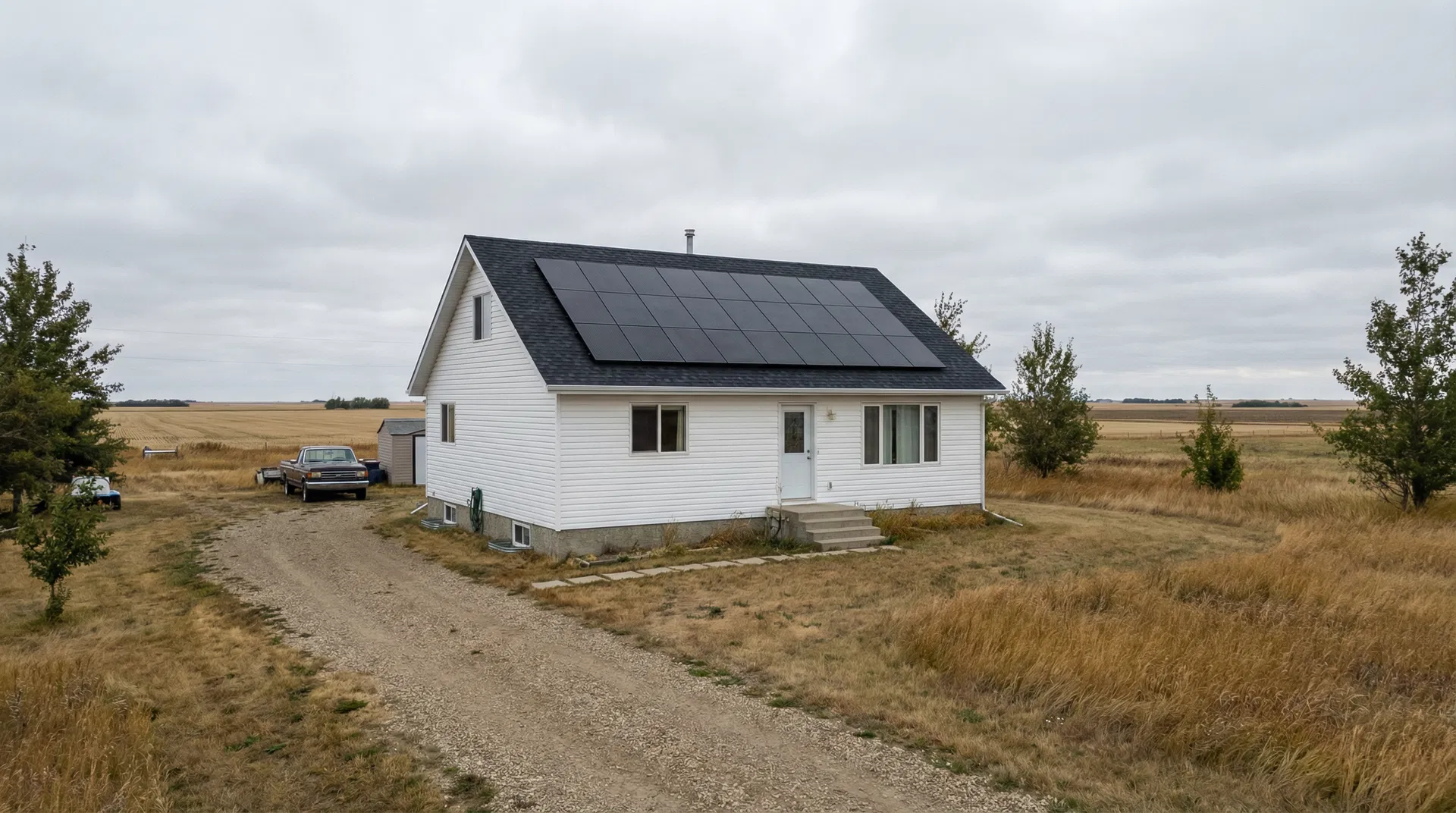
Electrical Site Review for Eckville Properties
Voltage Rise
Voltage rise happens when the line voltage at the far end of a rural distribution feeder runs higher than what's measured near the substation, and it's more common the farther a property sits out along a FortisAlberta feeder. When it's present, a battery system's hybrid inverter can hit its upper voltage threshold and clip output before the panels or battery are actually maxed out. We measure voltage rise on site before finalizing inverter selection and system size so the battery isn't sized against a number that doesn't hold up on your feeder.
Single-Phase vs Three-Phase
Rural Alberta properties around Eckville can have single-phase or three-phase electrical service, and which one you have determines which hybrid inverters and battery configurations are even available to spec. Three-phase service generally opens up more inverter capacity for larger combined loads like a shop and a home on one system, while single-phase service caps what a single inverter can carry. We confirm which service type is on the property before we size the battery system, not after.
Panel Infrastructure
Older rural electrical panels weren't built with a hybrid inverter and battery bank in mind, so we check breaker capacity and panel age as part of every site review. What we're looking for is whether the panel has room for the backup subpanel a battery system typically needs and whether the existing breakers and bus bar can handle the added equipment safely. If the panel can't support it, an upgrade means a new panel or a dedicated backup subpanel installed alongside the existing one, sized to the circuits you actually want protected.
Service Entrance Review
We check the service entrance and meter base condition on every property before submitting a FortisAlberta micro-generation application, since a battery storage system typically requires a meter base that can accommodate the added equipment and wiring. An older or undersized meter base can hold up the application or require work before FortisAlberta will approve the connection. If an upgrade is needed, we scope it as part of the design package so it's accounted for before installation starts, not discovered partway through.
Right-Sizing Battery Storage for Eckville Properties
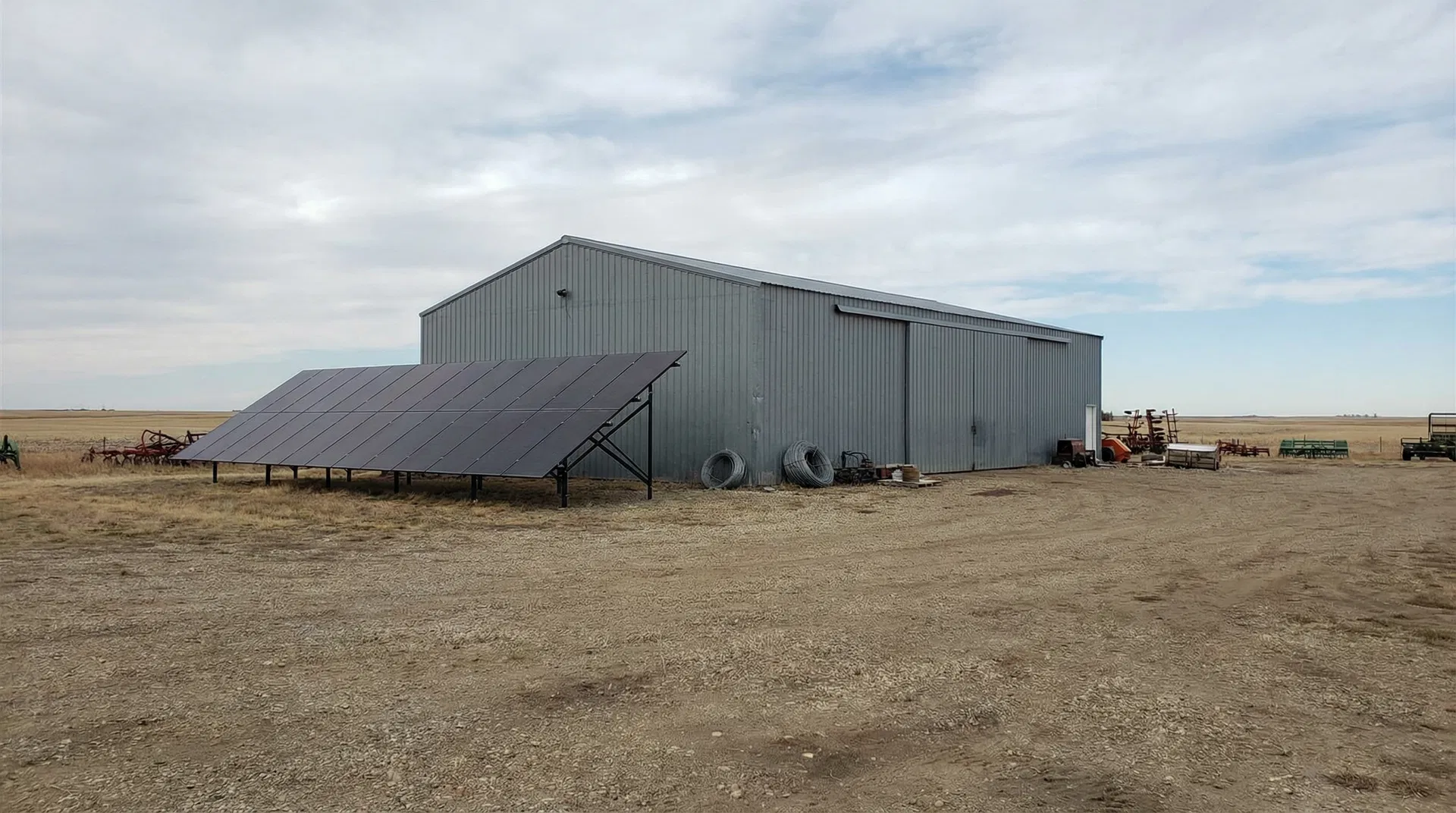
Rural properties around Eckville usually carry more than one load center: the house, plus a detached shop, plus outbuildings, and sometimes a well pump or grain handling equipment running on its own circuit. A battery storage system has to account for all of it, which is why systems out here tend to run larger than a single-load, in-town rooftop install, closer to the 8-20 kW range we see across this service area. Roof mount works fine on a lot of Eckville properties, but we look at ground mount when a roof has heavy shading from trees or a windbreak, when the pitch or orientation doesn't work for panel output, or when the yard has open space that makes a ground-mounted array easier to service and expand later. Neither option is automatically better: it comes down to what your roof and yard actually look like. We don't size a battery system off a rule of thumb like watts per square foot or a generic per-person estimate. We size it off the 12-month usage graph on your most recent power bill, which shows your actual monthly consumption pattern including any seasonal spikes from heating, a shop, or irrigation equipment. Combined with a site visit to confirm roof or ground conditions, that bill graph is what tells us whether a property needs storage closer to 8 kW or closer to 20.
Typical Load Profiles We Design For Near Eckville
Home + Heated Shop
This is the most common profile we design for around Eckville: a house plus a detached shop with electric heat, a compressor, or welding equipment that only runs part of the year. We size the battery and hybrid inverter around what needs to stay powered during an outage, which for this profile usually means the furnace fan, well pump, and a few shop circuits rather than the whole shop load. Your most recent power bill shows us how much that shop pulls relative to the house, which is what actually drives the sizing conversation.
Acreage with Well Pump and Outbuildings
Properties with a well pump and a couple of outbuildings need backup power planned around what fails first when the grid goes down, usually water pressure. We treat the well pump as a priority circuit on the backup subpanel and size battery capacity to run it along with the house essentials, rather than trying to back up every outbuilding at once. The site visit and your bill graph tell us how the well pump and outbuildings actually draw power across the year, not just in one season.
Grain Handling or Seasonal Equipment
Some properties near Eckville run grain handling or drying equipment that draws heavily for a few weeks a year and barely at all the rest of the time. That kind of seasonal spike shows up clearly on the 12-month usage graph on your power bill, and it's a major factor in whether we size the battery and hybrid inverter toward the peak load or toward year-round baseline use. We design around the pattern your bill actually shows, not an assumption about what a farm operation should use.
FortisAlberta Interconnection in Eckville
Eckville, Alberta is FortisAlberta territory, and that's the wire service every micro-generation application for a battery storage system in this area goes through. A battery system that connects to the grid, even one built mainly for backup power, still needs to go through FortisAlberta's interconnection process the same as a straight solar installation. Range Road Solar prepares and submits that application package for you: the electrical drawings, equipment specifications for the hybrid inverter and battery bank, and the paperwork FortisAlberta requires before a system can be energized. We don't guess at what FortisAlberta wants to see. We build the application the way their engineering team expects it, which is part of why we handle this step directly instead of leaving it to a homeowner to sort out alone. What FortisAlberta approves, how long their review takes, and how they handle any credits on your account are questions their current published rules answer, and we confirm those specifics with you during the design review rather than promising a number up front.
Project Economics and Design Review
| System Size | Annual Production | Year 1 Savings | Payback Period |
|---|---|---|---|
| 8-20 kW range, 12 kW typical |
Production, savings, and payback figures require a property-specific design review and your most recent power bill; we don't publish estimates without both.
How We Work in Eckville
Bill and Load Review
We review your power bill to understand your energy use in Eckville and size the system to your actual consumption, not a generic estimate.
Site Assessment
We assess your roof or ground area, south-facing exposure, electrical service, and utility interconnection requirements specific to your property.
Design and Utility Application
We produce a system layout, production estimate, and cost summary, then submit your micro-generation application to your utility on your behalf.
Installation and Commissioning
Our crew installs racking, panels, inverter, and electrical connections. All work is performed by licensed electricians. We commission and test before handoff.
Current Program and Interconnection Review
Utility connection review
FortisAlberta reviews every micro-generation application for a grid-connected battery storage system before it can be energized. Range Road Solar prepares the full design package, electrical drawings, and equipment specifications and submits it on your behalf so you're not navigating that process alone.
Current program review
Eligibility rules for residential, farm, and commercial solar and battery projects change, and we review your project against whatever rules are current at the time we design your system rather than assuming last year's rules still apply. This applies whether the property is a home, a farm operation, or a small business.
Frequently Asked Questions
Get a Solar Assessment for Eckville
Submit a recent power bill and we will review your consumption and provide an honest assessment for your Eckville property. No obligation.
(587) 330-7502 Book a CallMore Solar Services in Eckville