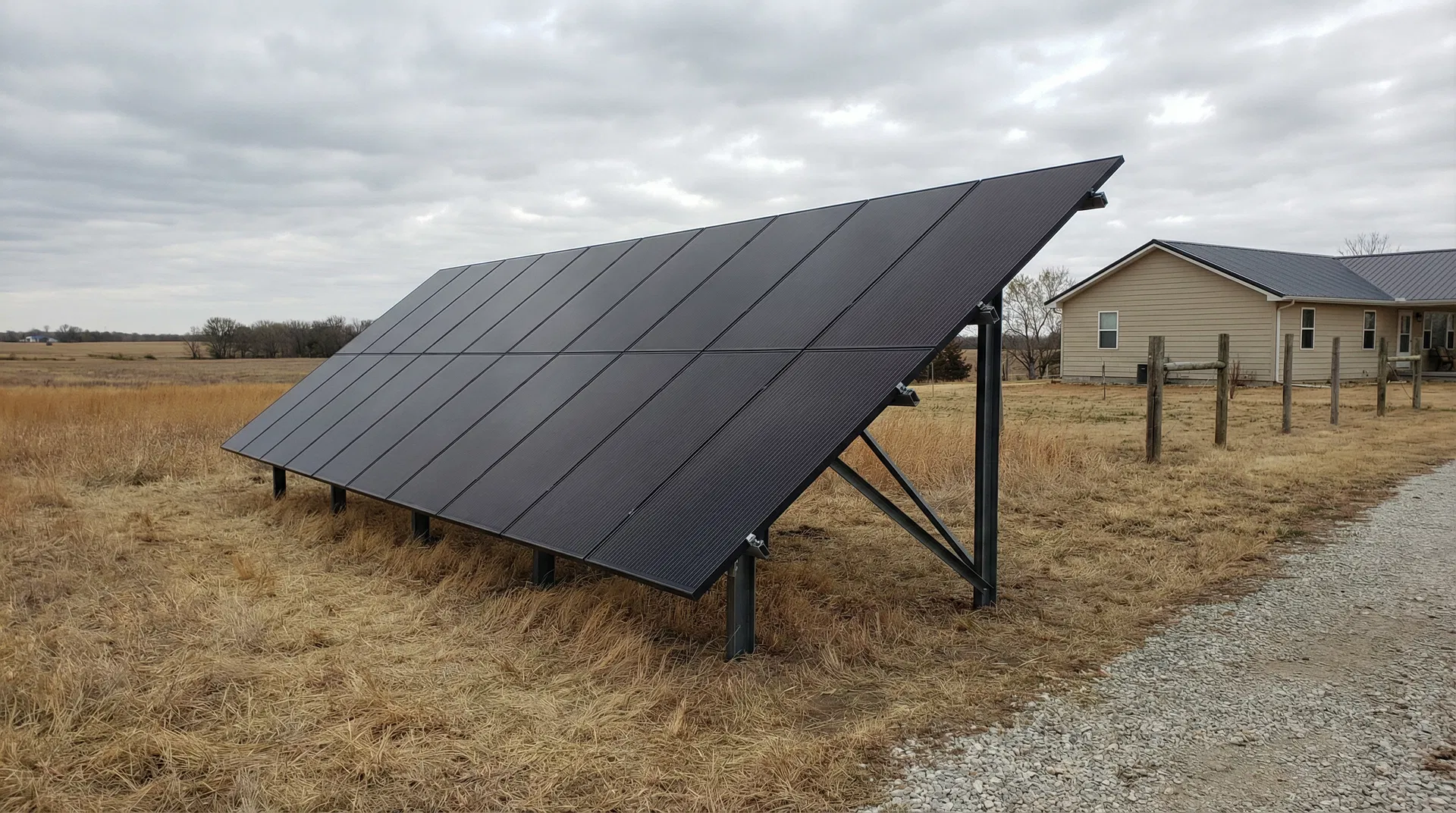
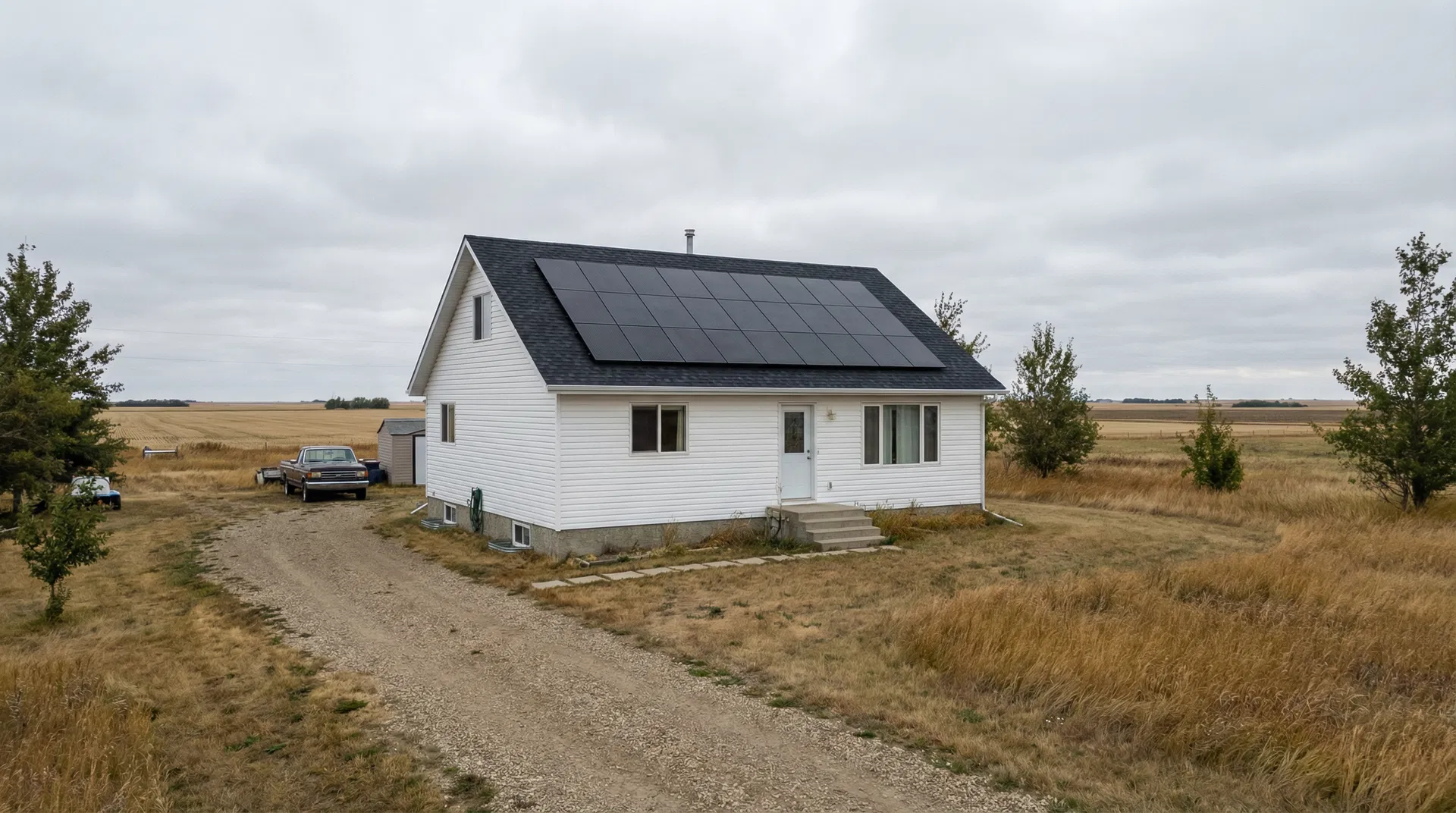
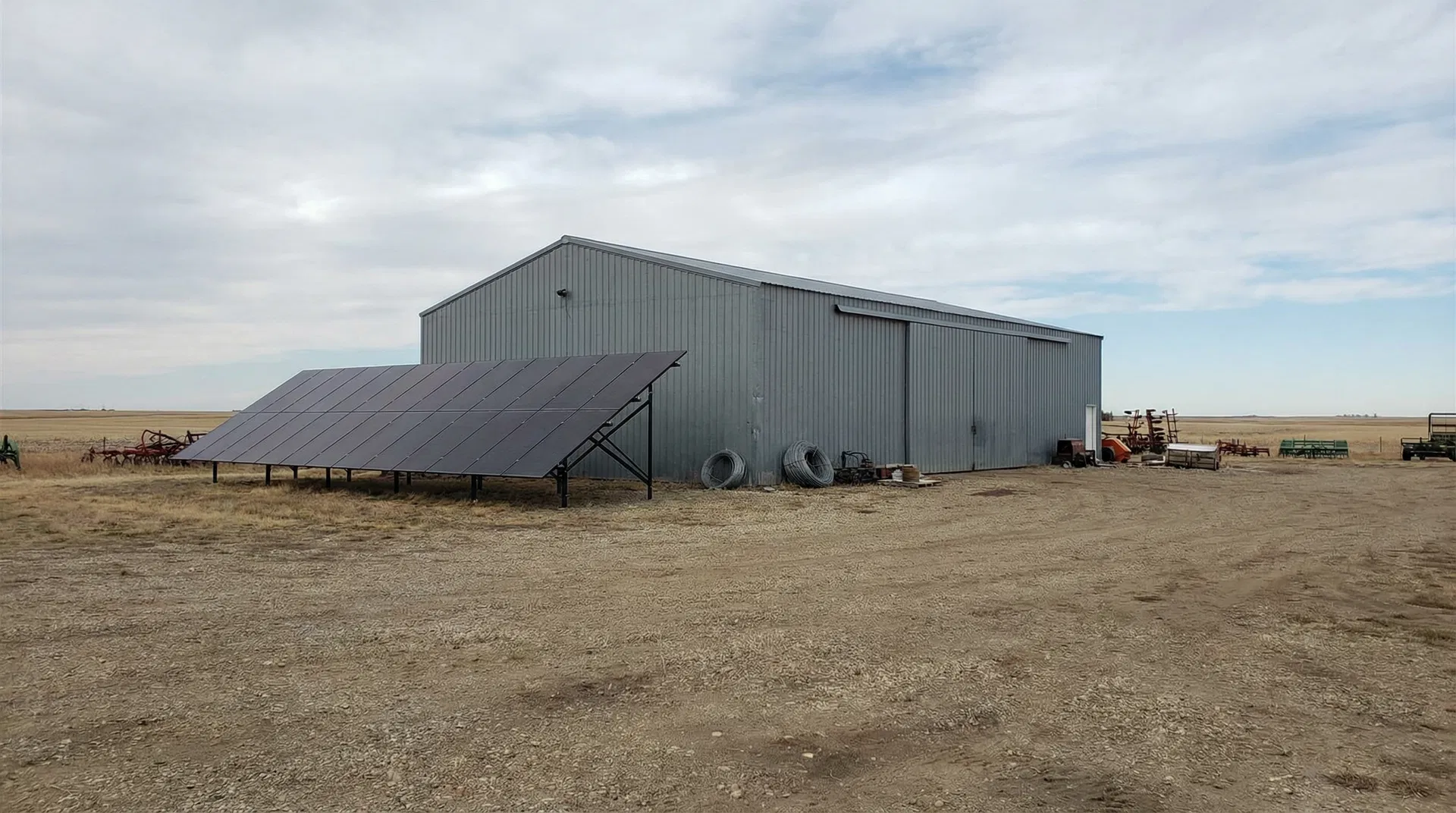
Solar eckville shop installs are a core part of what Range Road Solar does across central Alberta. We work with LONGi panels on both rooftop and ground-mount configurations, paired with APsystems microinverters. Microinverters matter on shop and outbuilding installs because these roofs often have mixed orientations, partial shading from grain bins or tree lines, or multiple roof sections that don't all face the same direction. With APsystems microinverters, each panel operates independently, so one shaded section doesn't drag down output across the whole array. Systems in the 8 to 20 kW range cover most shop and outbuilding scenarios we encounter. A smaller heated shop with lighting and basic power tools might sit toward the lower end of that range. A property with a large heated shop, a grain handling setup, and a connected home pulling off the same service point often needs to be designed at the higher end, or as two separate arrays. LONGi panels are our standard because they hold up well under the temperature swings common to Alberta rural settings, and they carry a solid manufacturer warranty. We don't upsell premium panels with inflated marketing claims. We spec what works for the application and the budget. Ground mounts are common on acreages and farmyards where roof pitch, age, or shading make the shop roof a poor candidate. A ground-mount array can be oriented for the best production angle and positioned where shading is minimal. We assess both options during the design review and show you the reasoning behind the recommendation.
Solar Planning for Eckville Properties
Rural properties around Eckville tend to carry electrical loads that urban installs don't see. A heated shop running year-round, a pressure washer, a welder, grain augers, or irrigation equipment can push annual consumption well beyond what a standard residential system is designed for. That's exactly why shop and outbuilding solar is a different exercise than putting panels on a house roof in the city. FortisAlberta serves this area, so any grid-tied system goes through their micro-generation application process. Range Road Solar handles that paperwork. What we need from you is your most recent power bill, which includes a 12-month usage graph. That graph tells us your actual seasonal load pattern, not a guess based on square footage or the number of bedrooms. Properties here often have multiple buildings spread across a yard, which changes the conversation about whether a rooftop install, a ground mount, or a combination of both makes the most sense. We don't sell you a system size based on a rule of thumb. We design from your real numbers, your roof or ground conditions, and the FortisAlberta interconnection requirements that apply to your service point.
Electrical Site Review for Eckville Properties
Voltage Rise
Voltage rise happens when a solar system pushes current back toward the grid and the local distribution line is already running near its upper voltage limit. In rural areas, long distribution lines and fewer connected loads can make voltage rise a real constraint on system sizing. If voltage rise at your service point is too high, the inverter will clip output or shut down to stay within allowable limits, which affects how much of your array's capacity actually produces usable power. We assess this during the design phase.
Single-Phase vs Three-Phase
Rural properties in central Alberta can be served by either single-phase or three-phase electrical service, and it's not always obvious which one you have until someone checks. This matters because the inverter selection and the maximum system capacity that can be interconnected are both tied to your service configuration. A property with three-phase service has more flexibility for larger systems and heavier loads like big motors or welding equipment, while single-phase service has its own design requirements that shape what we can install.
Panel Infrastructure
Older electrical panels on rural properties weren't designed with solar backfeed in mind, and some don't have the breaker capacity to accommodate a new solar circuit without an upgrade. We assess the panel age, the available breaker slots, and the main breaker rating as part of every site review. If the panel can't safely support the system, a panel upgrade is scoped into the project before we finalize the design, so the cost is clear from the start rather than showing up as a surprise during installation.
Service Entrance Review
The service entrance and meter base condition are reviewed as part of every FortisAlberta micro-generation application, and the utility can require upgrades before approving interconnection if the existing hardware doesn't meet current standards. We inspect the meter base and service entrance early in the design process to identify anything that could hold up the FortisAlberta application. If an upgrade is required, we include it in the project scope so the interconnection process moves forward without delays caused by infrastructure issues discovered after the application is submitted.
Right-Sizing Solar for Eckville Properties
Rural Alberta properties carry more electrical load than a city lot, and that changes how we size a solar system. It's not just the house. It's the heated shop running through winter, the grain auger or irrigation pump cycling seasonally, the compressors, the pressure washers, and sometimes a second outbuilding with its own panel. When all of those loads share one service point, or when they're spread across multiple meters on the same property, you need a sizing approach that accounts for all of it. The first thing we look at is the 12-month usage graph on your most recent power bill. Alberta utility bills show your monthly consumption across the last year on a single page. That graph tells us whether your load is flat year-round or whether you're pulling hard in winter and light in summer, which directly affects the system size that makes sense for your situation. We don't size from rule-of-thumb numbers or square footage estimates. Roof versus ground mount is a real decision on rural yards. If your shop roof has good pitch and faces the right direction with minimal shading, a rooftop array is often straightforward. But if there are trees to the south, a lean-to blocking part of the roof, or the roof is aging and due for work, a ground mount in an open part of the yard is usually the better call. We assess both options and show you the reasoning. We design systems from your actual power bill and your specific site conditions. That's how we avoid the mismatch of a system that's too small to offset your real loads or too large to get approved through FortisAlberta's interconnection process.
Typical Load Profiles We Design For Near Eckville
Heated Shop with Year-Round Operation
A heated shop running a 240V heating system, a welder, an air compressor, and lighting across all seasons is a substantial load on its own. We size these systems from the 12-month usage graph on the shop's power bill, which shows us whether the heating load dominates in winter or whether summer equipment like a spray rig or pressure washer adds to the shoulder months. A well-sized system for this profile typically sits in the 10 to 16 kW range, but the actual number comes from the design review.
Grain Handling and Seasonal Equipment
Properties with grain augers, grain dryers, or bin aeration fans have a strongly seasonal electrical profile, with heavy draws concentrated around harvest. When that seasonal load is the primary driver, the system sizing conversation is different than it is for a property with steady year-round consumption. We use the 12-month usage graph to map out when the heavy loads occur and design the array to offset as much of that peak seasonal consumption as the roof or ground area and the FortisAlberta interconnection limit will allow.
Multiple Outbuildings on a Single Property
Some properties near Eckville have a heated shop, a barn or livestock building, and a secondary storage structure all pulling from separate panels or sub-panels. If those buildings share a single utility service point, we can potentially serve all of them from one solar array sized to the combined load. If the buildings are metered separately, the design becomes a question of which service point offers the best return for the array size. We sort out the metering situation during the site review before recommending a design direction.
FortisAlberta Interconnection in Eckville
FortisAlberta is the wire service for Eckville and the surrounding area. Any grid-tied solar system installed here goes through FortisAlberta's micro-generation application process before it can be energized and connected to the grid. Range Road Solar prepares and submits the full interconnection application on your behalf. That includes the single-line electrical diagram, equipment specifications, and site design documentation that FortisAlberta requires to review the proposed connection. The application review process is managed by FortisAlberta, and the outcome depends on the specifics of your service point, the size of the proposed system, and current grid conditions at your location. We don't make promises about timelines or approval outcomes because those are determined by FortisAlberta, not us. What we do is make sure the application package is complete and accurate the first time. Incomplete submissions create delays. Our team knows what FortisAlberta's reviewers look for, and we don't send in paperwork that's missing information. If your service entrance or meter base needs attention before the application can proceed, we flag that early in the design process so there are no surprises later.
Project Economics and Design Review
| System Size | Annual Production | Year 1 Savings | Payback Period |
|---|---|---|---|
| 8-20 kW range, 12 kW typical |
Production, savings, and payback estimates require a property-specific design and your most recent power bill, which includes a 12-month usage graph.
How We Work in Eckville
Bill and Load Review
We review your power bill to understand your energy use in Eckville and size the system to your actual consumption, not a generic estimate.
Site Assessment
We assess your roof or ground area, south-facing exposure, electrical service, and utility interconnection requirements specific to your property.
Design and Utility Application
We produce a system layout, production estimate, and cost summary, then submit your micro-generation application to your utility on your behalf.
Installation and Commissioning
Our crew installs racking, panels, inverter, and electrical connections. All work is performed by licensed electricians. We commission and test before handoff.
Current Program and Interconnection Review
Utility connection review
FortisAlberta reviews grid connection applications for all solar systems installed in their service territory, including properties around Eckville. Range Road Solar prepares and submits the complete design package required for the application. We handle the process from initial submission through to approval so you don't have to navigate the utility paperwork on your own.
Current program review
Commercial, agricultural, and residential solar installations may be eligible for programs or incentives depending on the application type and current rules. Eligibility, program terms, and available options are reviewed against the rules in effect at the time of your design review. We don't quote program details that may have changed by the time your project is ready to proceed.
Frequently Asked Questions
Get a Solar Assessment for Eckville
Submit a recent power bill and we will review your consumption and provide an honest assessment for your Eckville property. No obligation.
(587) 330-7502 Book a CallRelated Resources
More Solar Services in Eckville