
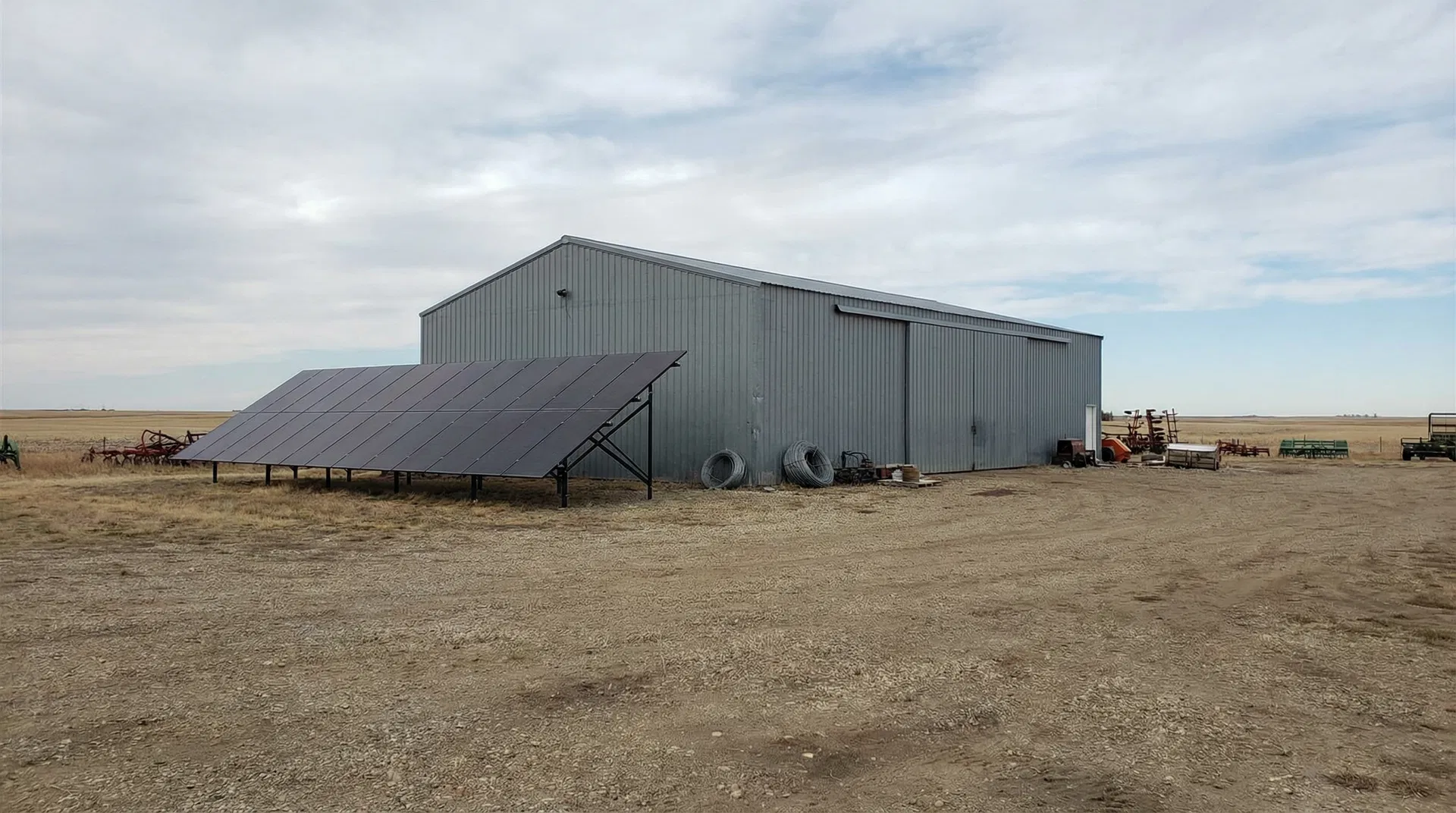
If you're looking for solar ground-mount-solar Sylvan Lake alberta, the first question we ask is how much open, unshaded ground you have. A ground mount array sits on engineered racking set in the yard or pasture, angled to face the sun and kept clear of the house, the shop, and the trees. On a rural property, that's often the cleanest option. A roof on an older outbuilding may have the wrong pitch, or a row of poplars may throw shade across the south face for part of every afternoon. A ground mount avoids both problems, and it leaves room to add panels later without rebuilding a roof. Our racking is engineered for the site conditions we see across rural properties, and we design it around the layout you already have, not the other way around. The modules are LONGi panels. Each panel runs through its own APsystems microinverter, so one shaded or underperforming module doesn't drag down the rest of the array. That also makes monitoring simpler, since you can check each panel's output through the monitoring app. Most ground mount systems we design for rural properties fall in the 10-30 kW range, with 15 kW as a common starting point. Where a system lands in that range depends on your loads, your available land, and the grid connection on your property, and we confirm all three before we commit to a layout. Cables run underground from the array to the building you're feeding, so trenching is part of the plan. If your yard is spread out and you have land to spare, ground mount is usually the right call. If your roof is clean and faces the right way, we'll tell you that too. We'd rather lose a sale than put a system somewhere it won't perform.
Solar Planning for Sylvan Lake Properties
Properties in this part of Alberta don't all look alike. Some sit close to the water and the traffic that comes with it, and others run out to larger acreages where the nearest neighbour is a long walk away. Sylvan Lake Provincial Park brings people through the region, and Tourism is one of the local economy's anchors, so the load on a property can swing a lot between a quiet winter month and a busy season. Electricity here runs through FortisAlberta, which reviews every micro-generation connection, so the design has to fit the wires and meter base that already exist on your property. We look at where panels can go, how much unshaded land you have, and how your loads run through the year. Then we check all of it against the 12-month usage graph on your most recent power bill. We don't hand you a number from a spreadsheet and call it done. Every property has its own mix of house, shop, and outbuildings, and that mix decides whether a ground mount or a roof makes more sense. Range Road Solar confirms production and payback through a site design and your most recent power bill, not a generic estimate. That's the honest way to start, whether you're on a half-acre lot or a quarter section.
Electrical Site Review for Rural Properties
Voltage Rise
Voltage rise happens when a solar system pushes power back onto the distribution line and the local voltage climbs above its normal range. Long rural feeders with a lot of distance between the transformer and the property are more sensitive to it, and that can change how much of the array's output your inverters can actually deliver. When voltage rises, inverters may clip output or back off, so we factor that into system size before we lock in the layout.
Single-Phase vs Three-Phase
Rural properties can have either single-phase or three-phase service, and the difference shapes which inverter setup and system capacity make sense. Single-phase service suits most homes and smaller shops, while three-phase service is common on larger farm operations with bigger motors and grain equipment. We confirm which one you have before we choose the inverter setup, because a mismatch can leave capacity on the table.
Panel Infrastructure
Older electrical panels on rural properties often predate the loads they now carry, so we check breaker capacity and panel age before we add anything. We look at the panel's rating, the main breaker size, open breaker slots, and any signs of wear or overheating. If the panel can't safely support a new system, the upgrade usually means a larger panel and new breakers, and we quote that separately before any work starts.
Service Entrance Review
We review the service entrance and meter base to confirm they're in good condition and rated for the system we're designing. The meter base and service conductors have to hold up for the micro-generation application to FortisAlberta, and a corroded or undersized base can stall that process. If an upgrade is needed, we tell you what's required, what it involves, and what it adds to the project before you commit.
Right-Sizing Solar for Rural Properties
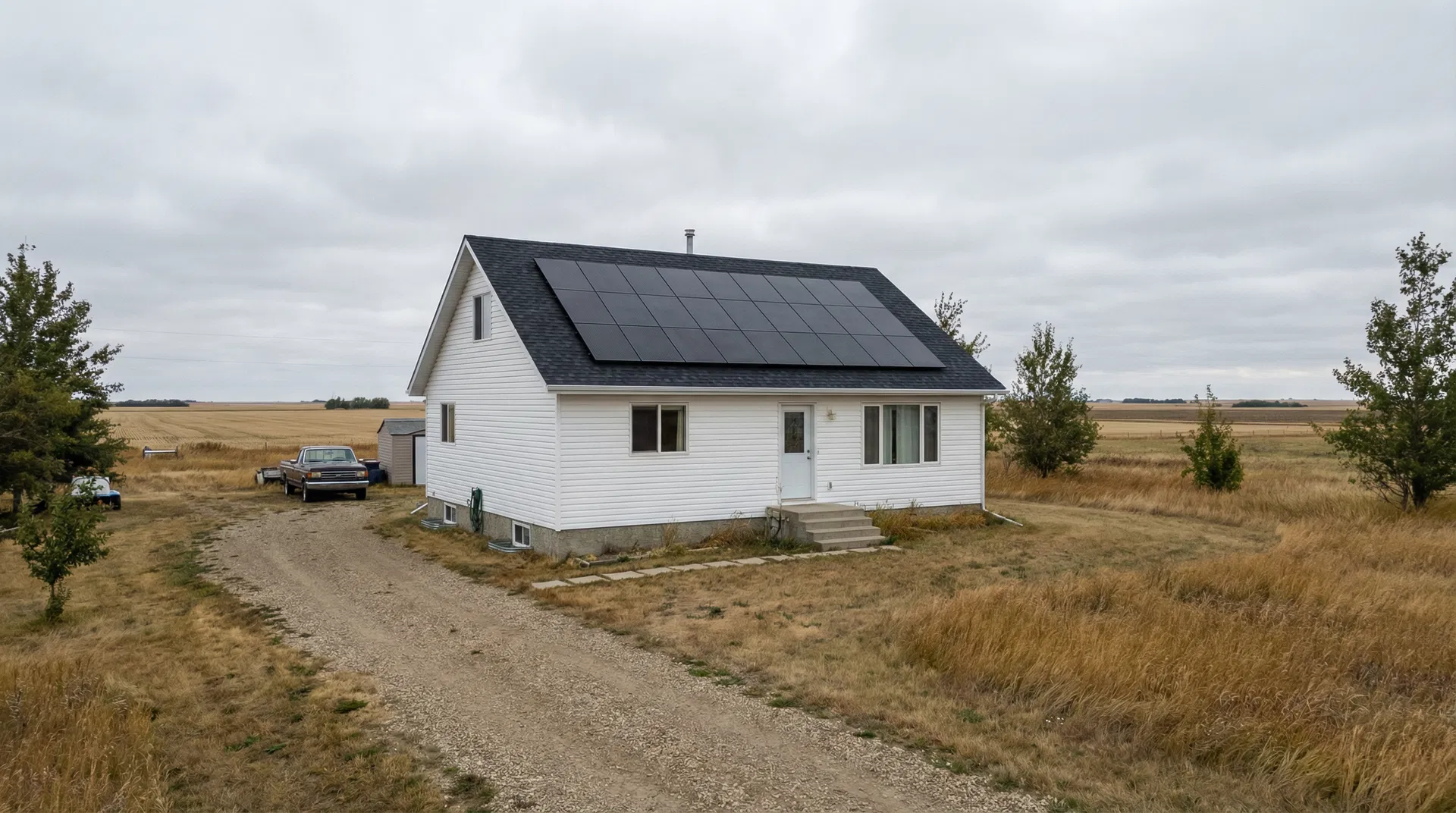
Rural properties rarely run on one load. A house might pull steady power all year, but add a heated shop, a well pump, a few outbuildings, and maybe an irrigation pivot or grain dryer, and the total demand looks nothing like a city lot. That's why a rural system is often larger than an urban rooftop install. Deciding between roof and ground mount comes down to the site. A roof works well when it's clear of shade, faces a useful direction, and has enough pitch and structural room. A ground mount makes more sense when trees or buildings shade the roof, the pitch is poor, or the yard is spread out with open land to spare. On many acreages, the ground is simply the better place for the array, and it leaves the roofs alone. Sizing starts with the 12-month usage graph on your most recent power bill. That graph shows the seasonal swings, the winter heating peaks, and the summer loads that show up when you're running equipment. We don't size from a rule of thumb or a square-footage guess. A current power bill tells us how your property actually uses electricity, and the site design tells us how much array the land can carry. Put those two together, and the system size comes out of your real loads. If the numbers come in above what you expected, we'll say so. Same if they come in below. You'll see the reasoning on paper before you sign anything.
Typical Load Profiles We Design For
Home + Heated Shop
A house and a heated shop on the same meter is one of the most common setups we see. The shop might run a 240-volt welder, a compressor, and shop heaters through cold months, while the house carries its normal daily load. We use your most recent power bill and the site design to size the array so the shop's winter draw doesn't leave the system underbuilt.
Acreage with Irrigation
A 160-acre quarter section with a well, a pivot, or a set of pumps adds large, seasonal loads that show up sharply on the usage graph. Irrigation runs through the growing season, so the summer peaks will sit well above the winter baseline. We size the array around those peaks, and we check the grid connection against the pump motor starting current before we commit.
Grain Handling and Outbuildings
Grain dryers, augers, and a row of outbuildings on a mixed farm create loads that come and go by season, often on three-phase service. During harvest, a 5 hp auger motor and a dryer can run for long hours, which is very different from a house that draws steady power. We match the harvest-season peaks on the usage graph to a design that doesn't overbuild for the quiet months.
FortisAlberta Interconnection for Your Property
FortisAlberta is the wire service for electricity on this property, which means your system connects to their grid under their micro-generation rules. That's where most of the paperwork lives, and it's the part most people dread. We handle it for you. Our team prepares the design package, including the site layout, equipment specifications, and the electrical details the utility needs, then submits the application to FortisAlberta on your behalf. Once it's in, FortisAlberta reviews it, and we answer their follow-up questions directly, so you aren't stuck passing messages between the utility and the installer. Your part is simple. We only need your most recent power bill to start. It gives us the service details and the 12-month usage graph we use to size the system. We don't guess at your loads, and we don't put a connection plan together until the bill and site design agree with each other. Utility requirements can change, so we confirm the current steps during your design review before any equipment is ordered or any work begins. You'll know what's happening at every stage, and you won't need to chase anyone down to find out.
Project Economics and Design Review
| System Size | Annual Production | Year 1 Savings | Payback Period |
|---|---|---|---|
| 10-30 kW range, 15 kW typical |
Production, savings, and payback require a property-specific design and your most recent power bill.
How We Work in Sylvan Lake
Bill and Load Review
We review your power bill to understand your energy use in Sylvan Lake and size the system to your actual consumption, not a generic estimate.
Site Assessment
We assess your roof or ground area, south-facing exposure, electrical service, and utility interconnection requirements specific to your property.
Design and Utility Application
We produce a system layout, production estimate, and cost summary, then submit your micro-generation application to your utility on your behalf.
Installation and Commissioning
Our crew installs racking, panels, inverter, and electrical connections. All work is performed by licensed electricians. We commission and test before handoff.
Current Program and Interconnection Review
Utility connection review
FortisAlberta reviews grid connection applications for systems on this property. Range Road Solar handles the design package, the application paperwork, and follow-up questions from the utility on your behalf.
Current program review
Commercial, farm, and residential eligibility is reviewed against current rules at design time. We check your property type and situation before we quote anything, so you know what applies to your project. Rules change, so we don't rely on old information.
Frequently Asked Questions
Get a Solar Assessment for Sylvan Lake
Submit a recent power bill and we will review your consumption and provide an honest assessment for your Sylvan Lake property. No obligation.
(587) 330-7502 Book a CallRelated Resources
More Solar Services in Sylvan Lake