
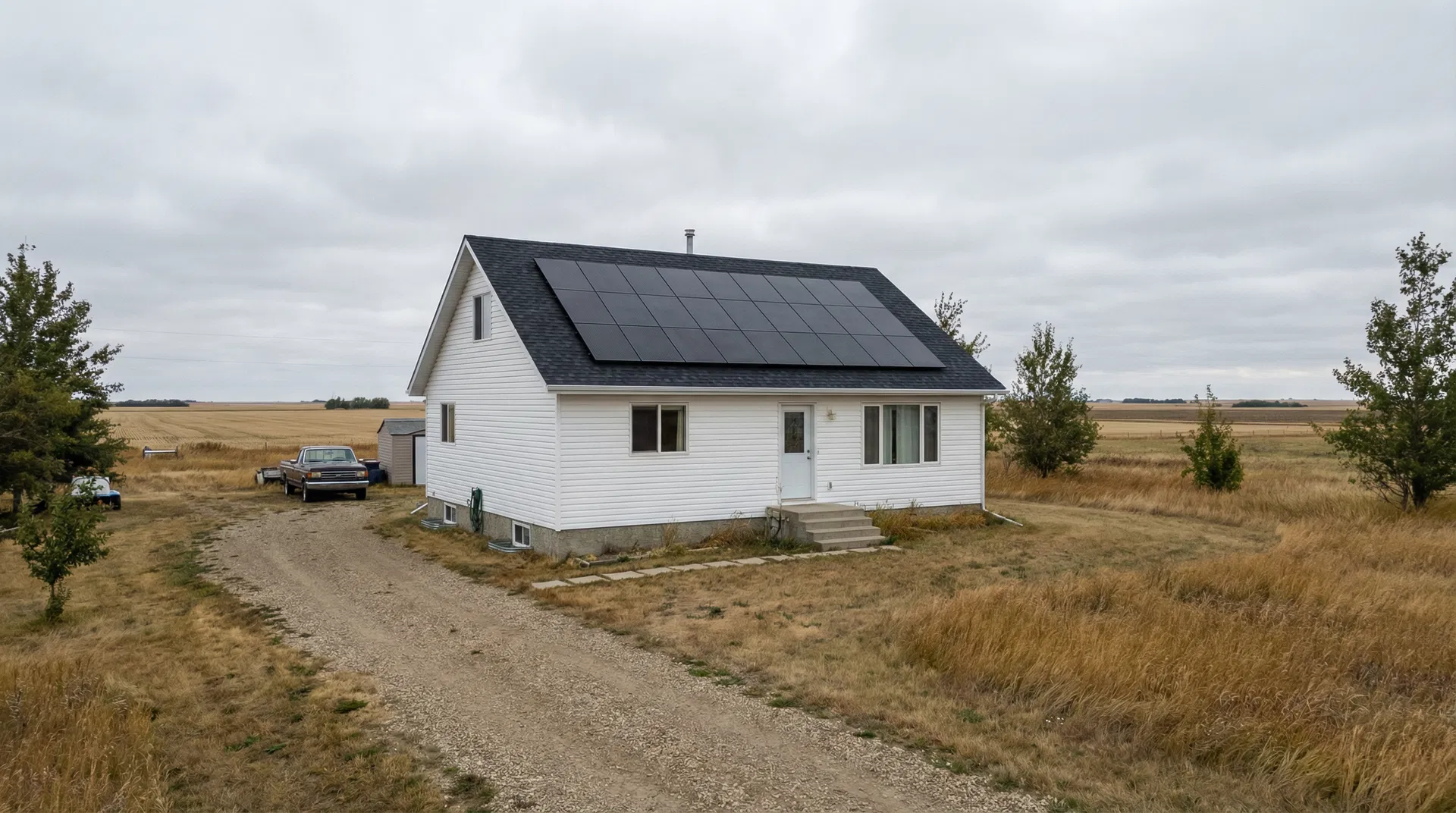
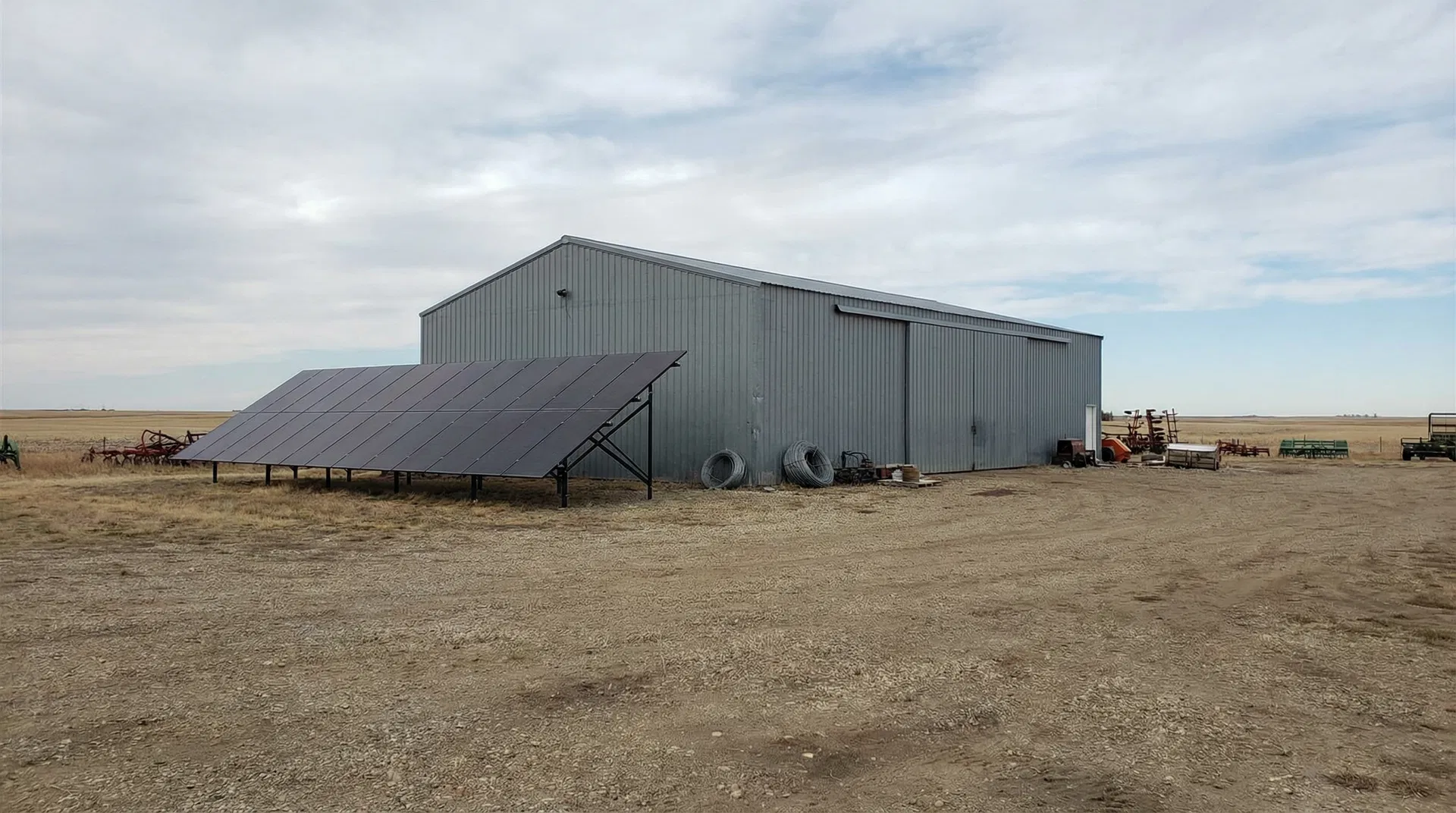
Acreage solar in Sylvan Lake starts with the property, not a standard rooftop kit: a home, a shop, and often a well or irrigation pump all drawing from one service. We install LONGi panels on both roof-mount and ground-mount racking, paired with APsystems microinverters so each panel's output is tracked and managed on its own rather than tied to the weakest panel in a string. That matters on acreages where a roofline runs east-west instead of south, or where a shelterbelt throws a shadow across part of an array for part of the day. For properties with a detached shop or a second building on the same yard, we design around where the loads actually sit, not just where the house happens to be. Ground-mount arrays make sense on a lot of local acreages: a spread-out yard with open land behind the shop or along a fence line, a roof pitch that doesn't favor solar, or a metal shop roof that isn't rated to carry racking. Roof-mount still works well on a house or shop with a clean, unshaded south or west face. We walk the property, check both roof and yard options, and build a system around whichever location and mounting type actually performs, not whichever is easiest to quote. Every design accounts for LONGi's panel specs and APsystems' microinverter limits so the system matches the service size and breaker capacity already on site.
Solar Planning for Sylvan Lake Properties
This community was incorporated as a town on May 20, 1946, and it's grown steadily since: Statistics Canada counted 14,816 residents in the prior census and 15,995 in the most recent one. A lot of that growth sits on acreages ringing the lake and the highway corridors leading into the area, properties with a house, a detached shop, and sometimes a barn or greenhouse sharing one electrical service. Sylvan Lake Provincial Park and the tourism economy built around the lake bring seasonal traffic and seasonal loads too: docks, pump houses, and guest cabins that sit quiet through winter and run hard in July. Environment Canada's climate normals put the area's annual bright sunshine at 2,125.3 hours, but we don't size a system off a weather table. We size it off the property: how the roof faces, whether trees or the shop itself throw shade, and what the most recent power bill says the property actually uses across a full year. Acreage properties around here rarely fit a one-size system, so every design starts with a site visit and that bill, not a rule of thumb pulled off a brochure.
Electrical Site Review for Sylvan Lake Properties
Voltage Rise
Voltage rise happens when a solar inverter pushes power back onto a line that's already running near the top of its allowable voltage range, which is more common at the end of a long rural distribution run. If voltage climbs too high, the inverter can throttle or clip its own output to stay within safe limits. We check line conditions at your service before finalizing inverter count and system size so the design accounts for it up front.
Single-Phase vs Three-Phase
Acreage properties in this area can have either single-phase or three-phase electrical service, and which one you have affects both inverter selection and how much system capacity the service can support. Three-phase service, more common where a shop runs larger motors or equipment, opens up different inverter options than a single-phase home service. We confirm which service type is on the property before we spec equipment, not after.
Panel Infrastructure
A lot of acreage properties in this area are running an older main panel that predates the breaker capacity a solar interconnection needs. We check the panel's age, its available breaker space, and its rated capacity as part of every site visit. If the existing panel can't support the system, an upgrade means a new panel sized to both the home's loads and the solar interconnection before installation moves forward.
Service Entrance Review
We inspect the service entrance and meter base condition on every property, because FortisAlberta's micro-generation application requires equipment that meets current standards. An older or deteriorated meter base can hold up that application until it's addressed. If an upgrade is needed, we scope it as part of the project so it's handled before the interconnection request goes in, not discovered partway through.
Right-Sizing Solar for Sylvan Lake Properties
Acreage systems in this area run larger than a typical in-town rooftop system because there's usually more than one load on the property: the house, a detached shop, maybe a well pump, an irrigation system, or grain handling equipment, all drawing off the same service. That's a big part of why our acreage systems land in the 12-18 kW range instead of the smaller systems typical of an in-town lot. Roof versus ground mount comes down to the property itself. If the house or shop roof has a clean, unshaded south or west-facing plane, roof-mount is usually the simpler and more cost-effective option. Ground mount becomes the right call when trees or outbuildings shade the roof for a chunk of the day, when the roof pitch or orientation doesn't favor solar, or when the yard is spread out enough that there's open land available near the electrical service. We don't size any of this off a rule of thumb. Every acreage design starts with the 12-month usage graph printed right on your most recent power bill, because that graph shows how the property's usage actually moves across a full year, including seasonal loads like irrigation or a heated shop in winter. That bill, combined with a site visit for shading, roof condition, and available ground space, is what actually determines system size.
Typical Load Profiles We Design For Near Sylvan Lake
Home + Heated Shop
A house paired with a detached shop that's heated through the winter is one of the most common load profiles we see on acreages here. The shop's heating and any equipment inside it (welders, compressors, block heaters) add a load the home alone doesn't have. We size for both buildings together using the usage graph on your most recent power bill, not the house load alone.
Home + Well or Irrigation Pump
Properties running a well pump or an irrigation system carry a load profile that spikes seasonally rather than staying flat year-round. That seasonal pattern shows up clearly on the 12-month usage graph on a power bill, and it changes how we approach system sizing compared to a flat, steady household load. We design around when that load actually happens, not just how big it is.
Home + Guest Cabin or Rental Suite
With the local tourism economy, a fair number of properties in the area have a guest cabin, bunkie, or rental suite on the same service as the main house. That adds an occupancy pattern that can be seasonal or intermittent rather than constant. We account for that combined load using your property's actual billing history rather than assuming a fixed year-round occupancy.
FortisAlberta Interconnection in Sylvan Lake
This property sits in FortisAlberta's service territory, so every grid-tied system we install here goes through FortisAlberta's micro-generation interconnection process. Range Road Solar prepares and submits that application package for you: single-line diagrams, equipment specs for the LONGi panels and APsystems microinverters, and the site details FortisAlberta needs to review before your system is connected. We handle the back-and-forth with FortisAlberta directly so you aren't the one tracking down paperwork or chasing a status update. Because approval timelines, credit settlement, and payout rules are set by FortisAlberta and can change, we don't quote a specific turnaround or a specific credit structure up front. What we can tell you is that we've built this application package before and know what FortisAlberta's reviewers are looking for. Your design review will lay out exactly what your acreage needs for the interconnection application before any equipment goes on order.
Project Economics and Design Review
| System Size | Annual Production | Year 1 Savings | Payback Period |
|---|---|---|---|
| 12-18 kW range, 15 kW typical |
Production, savings, and payback figures require a property-specific design and your most recent power bill before we can quote them.
How We Work in Sylvan Lake
Bill and Load Review
We review your power bill to understand your energy use in Sylvan Lake and size the system to your actual consumption, not a generic estimate.
Site Assessment
We assess your roof or ground area, south-facing exposure, electrical service, and utility interconnection requirements specific to your property.
Design and Utility Application
We produce a system layout, production estimate, and cost summary, then submit your micro-generation application to your utility on your behalf.
Installation and Commissioning
Our crew installs racking, panels, inverter, and electrical connections. All work is performed by licensed electricians. We commission and test before handoff.
Current Program and Interconnection Review
Utility connection review
FortisAlberta reviews every micro-generation grid connection application before a system is energized. Range Road Solar assembles and submits that design package, including equipment specs and single-line diagrams, on your behalf. We stay the point of contact with FortisAlberta through that review.
Current program review
Residential, farm, and commercial properties can fall under different eligibility rules depending on how the property is used and what's currently in effect. We check what applies to your specific property against current rules at the time of your design review, rather than assuming a status based on how the property looks.
Frequently Asked Questions
Get a Solar Assessment for Sylvan Lake
Submit a recent power bill and we will review your consumption and provide an honest assessment for your Sylvan Lake property. No obligation.
(587) 330-7502 Book a CallRelated Resources
More Solar Services in Sylvan Lake