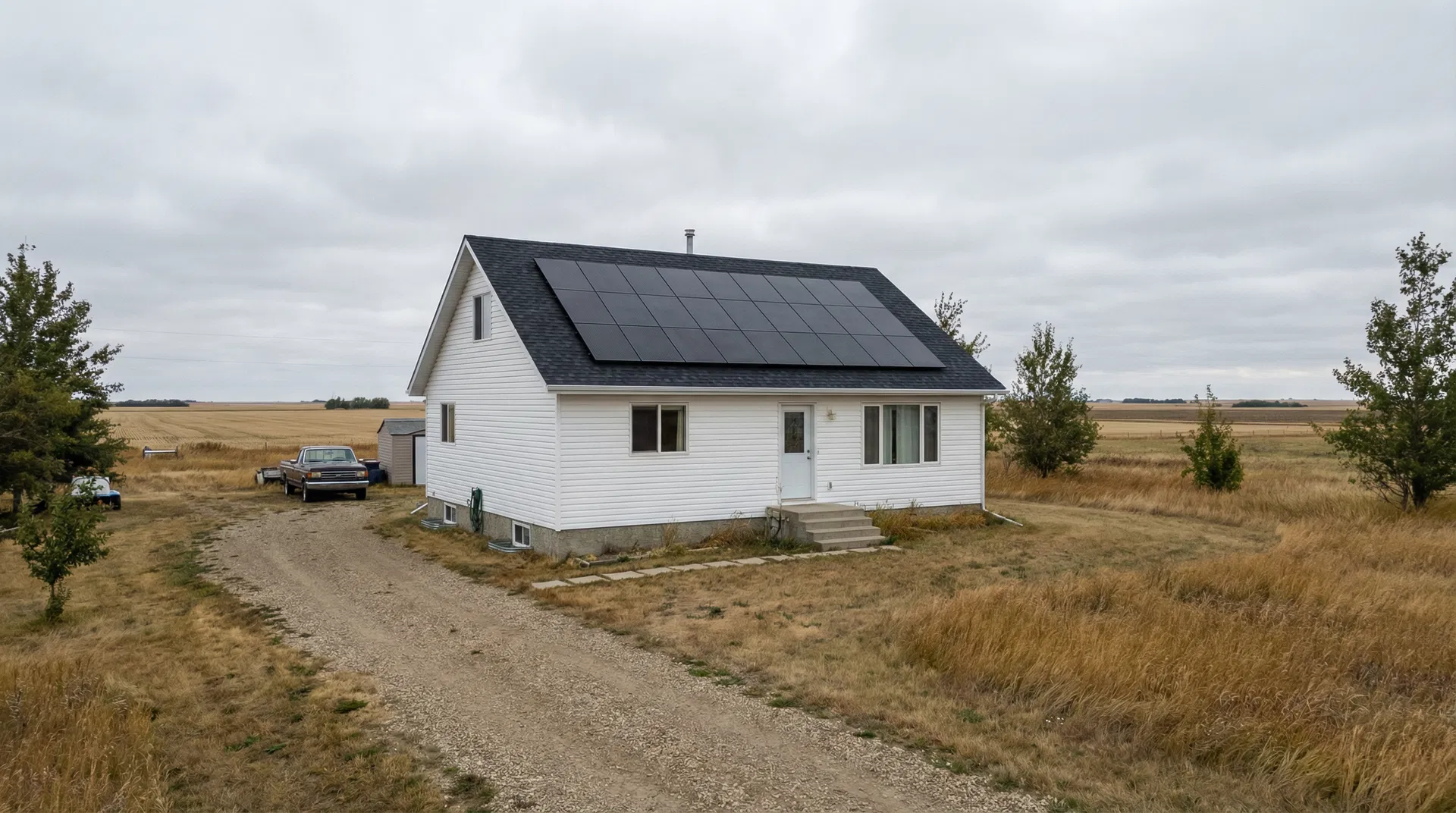
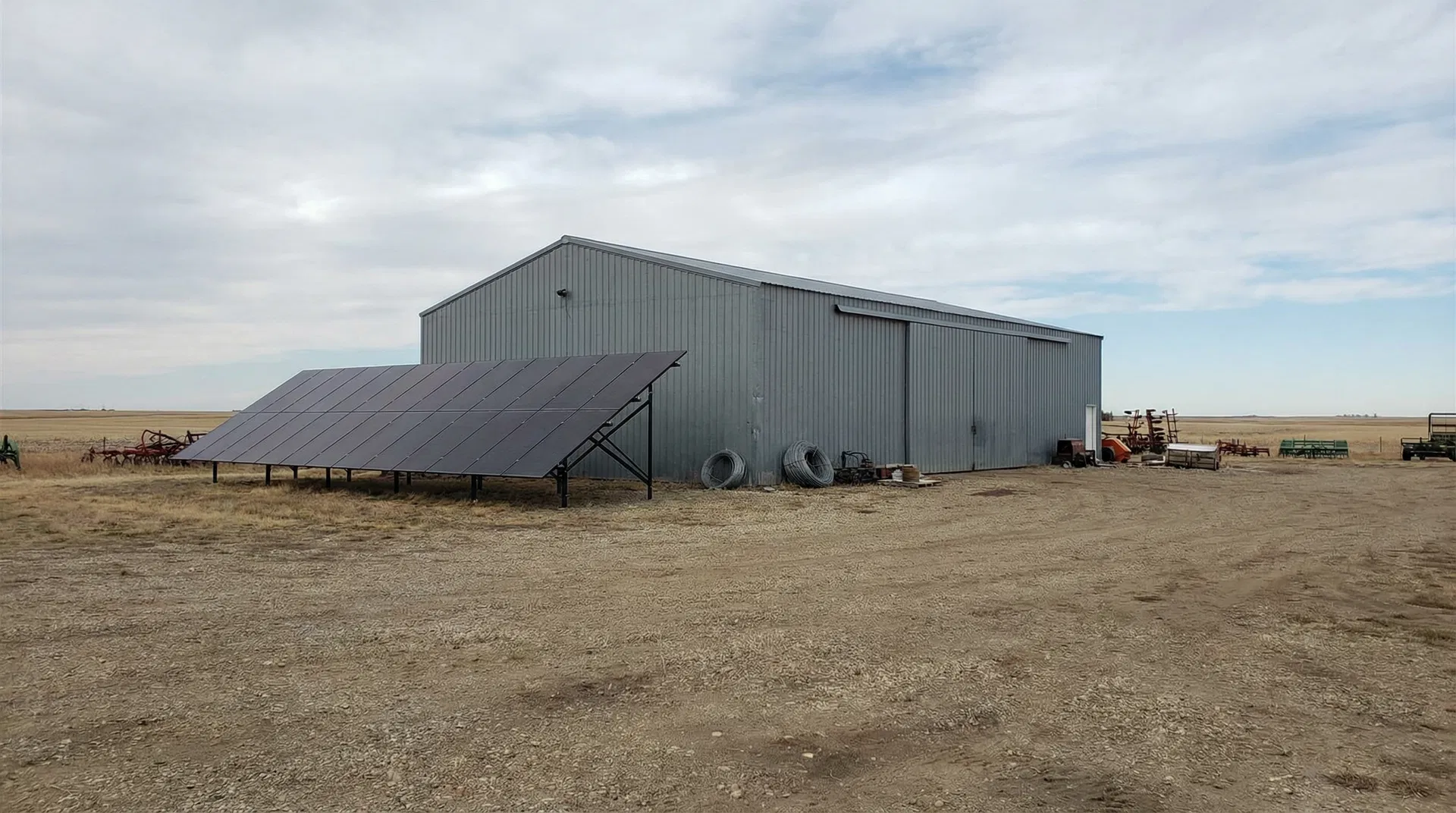
Farm solar in Sylvan Lake starts with the loads on the property, not a one-size roof kit. Range Road Solar installs farm and agricultural solar sized from 20 to 50 kW, with 25 kW as a common starting point for a property running a house plus a shop or grain handling equipment. We use LONGi panels paired with APsystems microinverters on most installs, since module-level conversion holds up well when one section of an array gets shaded by a bin, a tree line, or a building on the yard, without dragging down the rest of the system's output. Ground-mount is our default recommendation for larger farm systems here. Acreages and farm yards in the area tend to have open land away from the house, which usually beats a rooftop install when the roof has awkward pitch, shading from trees, or isn't oriented well. A ground-mount array also leaves room to expand later if a grain dryer or additional shop gets added down the road. Rooftop systems still make sense for smaller farm operations or where roof space is good and land near the yard is tighter. Either way, we design around the specific buildings and loads on your property, and the final layout comes out of a site visit and a look at your most recent power bill, not a standard template.
Solar Planning for Sylvan Lake Properties
This property sits in Central Alberta, within Red Deer County and Lacombe County, an area of acreages, farm parcels, and grain operations spread around the lake and the highway corridors that connect them. The town was incorporated on May 20, 1946, and the surrounding rural properties have grown alongside it, many running a house, a shop, and outbuildings off the same yard site. That mix of loads is exactly what farm solar has to account for: a single rooftop array sized for a bungalow won't touch what a working farm actually pulls off the grid. Every property is different. Some parcels run irrigation pumps or grain handling equipment seasonally, others carry a heated shop year-round, and the electrical service on the yard, whether single-phase or three-phase, changes what inverter setup makes sense. Range Road Solar doesn't quote a system off a postal code. We start with your most recent power bill, which carries a 12-month usage graph, and a site visit to look at roof condition, shading, and available ground space near the yard. From there we build a design that's sized to what the property actually uses, not a generic package. Sylvan Lake Provincial Park draws plenty of summer traffic through here, but the farm and acreage properties we work with are built for year-round operation, and that's what the design has to match.
Electrical Site Review for Sylvan Lake Properties
Voltage Rise
Voltage rise happens when the distance and wire gauge between a property's service and the nearest transformer cause voltage to climb as solar power flows back onto the line. On longer rural runs, that rise can push voltage toward the upper end of what an inverter will tolerate before it clips output or shuts down. We check the distribution conditions on your yard during the site review so the system is sized and the inverter set up to avoid running into that ceiling.
Single-Phase vs Three-Phase
Rural Alberta properties can have single-phase or three-phase electrical service, and acreages and farms in this area are no exception. Three-phase service typically opens up more inverter options and higher system capacity, which matters if a property is running larger shop or grain-handling loads. We confirm which service type is on your yard before we spec an inverter, since the wrong assumption here means re-designing the system later.
Panel Infrastructure
Older rural properties sometimes have a main electrical panel that's aged out or doesn't have the breaker capacity for a farm-sized solar system. We check the panel's age, its rated capacity, and how much room is left for a solar breaker as part of every site visit. If the panel can't support the system, an upgrade to a larger panel happens before or alongside the solar install, not as a surprise afterward.
Service Entrance Review
We review the service entrance and meter base condition on every property, since that's where the physical connection for a micro-generation system happens. A meter base that's outdated or rated too low can hold up the FortisAlberta application even if the rest of the property is ready. When an upgrade is needed, we scope and schedule it as part of the install plan so it doesn't stall the interconnection process.
Right-Sizing Solar for Sylvan Lake Properties
Rural properties in this area almost always carry more electrical load than a single-family home in town. It's not unusual for one yard site to run a house, a heated shop, and outbuildings, sometimes with irrigation or grain handling equipment layered on top. A system sized for a bungalow's rooftop won't come close to covering that, which is part of why farm and agricultural systems here run in the 20 to 50 kW range instead of a typical residential size. Roof versus ground-mount is a real decision, not a default. If a roof has good pitch, decent orientation, and isn't shaded by trees or nearby buildings, it can still be the right call, especially for a smaller operation. But a lot of farm yards have roofs that are shaded, awkwardly angled, or just too small for the array a property needs, and in those cases ground-mount on open yard land is usually the better fit, particularly when there's room to expand later. Either way, we don't size a system off a rule of thumb. We size it from the 12-month usage graph on your most recent power bill, combined with a site visit that looks at your roof or available ground space, shading, and orientation. That combination is what tells us whether you need 22 kW or 45 kW, not a per-acre guess.
Typical Load Profiles We Design For Near Sylvan Lake
Home + Heated Shop
This is one of the most common setups we see on acreages in this area: a house and a heated shop running off the same service, often with the shop pulling a big share of winter load. We size the system using the 12-month usage graph on your most recent power bill so the shop's seasonal draw is actually accounted for, not estimated. The design usually lands in the farm-scale range rather than a standard residential size.
Grain Handling and Bins
Properties running grain bins, augers, or drying equipment tend to have sharp seasonal spikes rather than steady year-round draw. We look at how those loads show up on your power bill's usage graph and design around the peak periods, not just the annual average. Ground-mount is common here since the equipment and yard layout often leave the roof shaded or awkwardly placed.
Livestock and Outbuilding Operations
A property running livestock operations often has multiple outbuildings, water pumps, and heat or ventilation equipment spread across the yard, each adding its own draw. We map out which buildings and equipment are on the meter before sizing anything, since a system built for the house alone would miss most of the actual load. Site design and your most recent power bill together tell us what the real number needs to be.
FortisAlberta Interconnection in Sylvan Lake
FortisAlberta is the wire service here, and any farm or agricultural solar system connects through FortisAlberta's micro-generation process. Range Road Solar prepares and submits the interconnection application as part of the install, handling the technical paperwork with FortisAlberta directly so you're not the one chasing forms. Every application is reviewed against FortisAlberta's current rules and requirements at the time it's submitted, since those requirements can change. We don't quote approval timelines or credit terms up front because those are set by FortisAlberta, not by us, and we'd rather tell you what's actually confirmed than guess. What we can tell you is that we manage the application from design through submission, and we'll walk you through what FortisAlberta requires for your specific system size and service entrance before we ever break ground.
Project Economics and Design Review
| System Size | Annual Production | Year 1 Savings | Payback Period |
|---|---|---|---|
| 20-50 kW range, 25 kW typical |
Production, savings, and payback figures are only meaningful once we've completed a property-specific design review using your most recent power bill.
How We Work in Sylvan Lake
Bill and Load Review
We review your power bill to understand your energy use in Sylvan Lake and size the system to your actual consumption, not a generic estimate.
Site Assessment
We assess your roof or ground area, south-facing exposure, electrical service, and utility interconnection requirements specific to your property.
Design and Utility Application
We produce a system layout, production estimate, and cost summary, then submit your micro-generation application to your utility on your behalf.
Installation and Commissioning
Our crew installs racking, panels, inverter, and electrical connections. All work is performed by licensed electricians. We commission and test before handoff.
Current Program and Interconnection Review
Utility connection review
FortisAlberta reviews every micro-generation grid connection application on its own merits, based on the system design and the property's service. Range Road Solar prepares and submits that design package on your behalf, working directly with FortisAlberta so the application reflects your actual system and service entrance.
Current program review
Farm, commercial, and residential solar projects are all reviewed against whatever program and eligibility rules are current at the time of design, since those rules change. We check what applies to your specific property type and system during the design review rather than assuming last year's rules still hold.
Frequently Asked Questions
Get a Solar Assessment for Sylvan Lake
Submit a recent power bill and we will review your consumption and provide an honest assessment for your Sylvan Lake property. No obligation.
(587) 330-7502 Book a CallRelated Resources
More Solar Services in Sylvan Lake