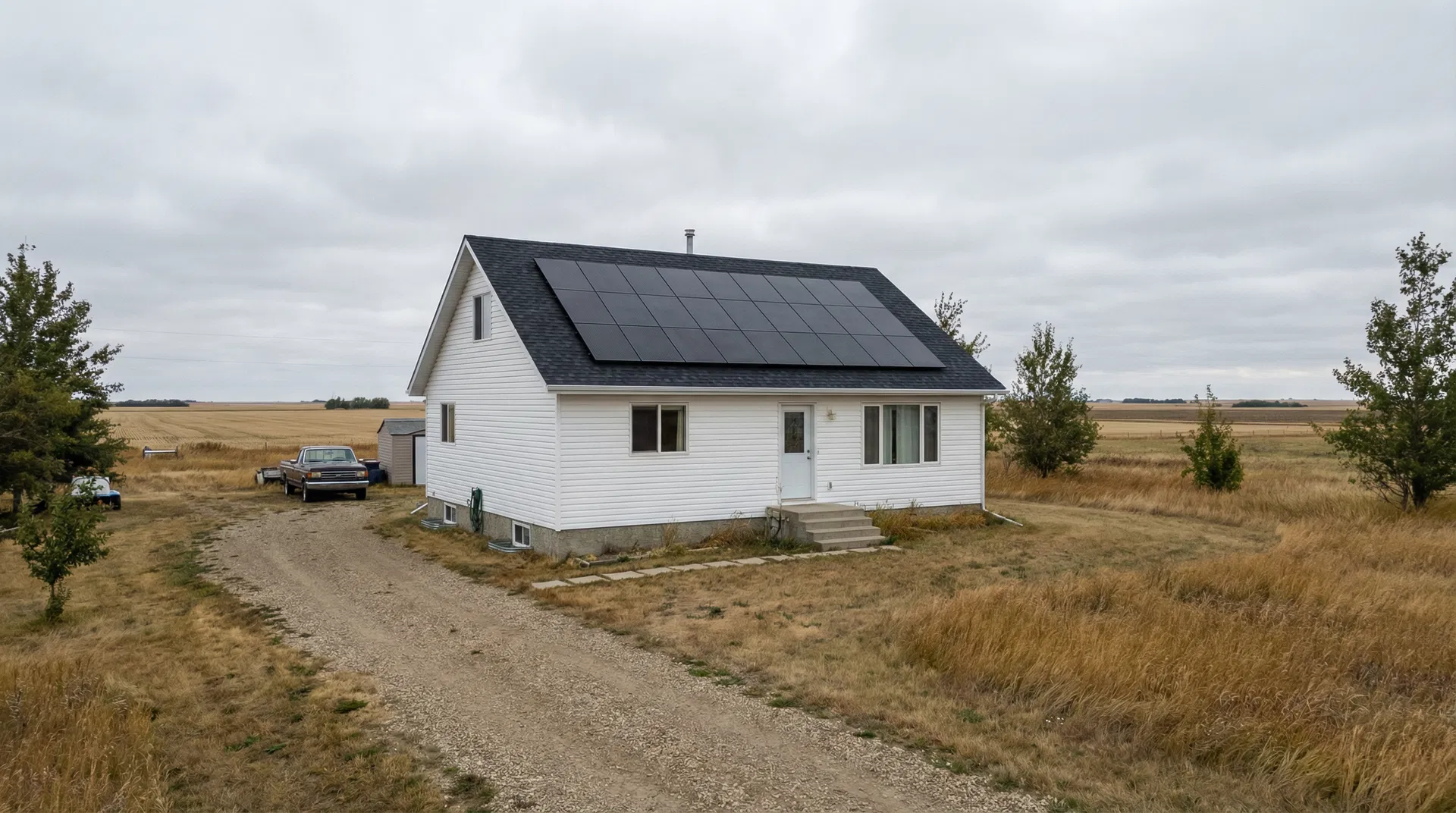
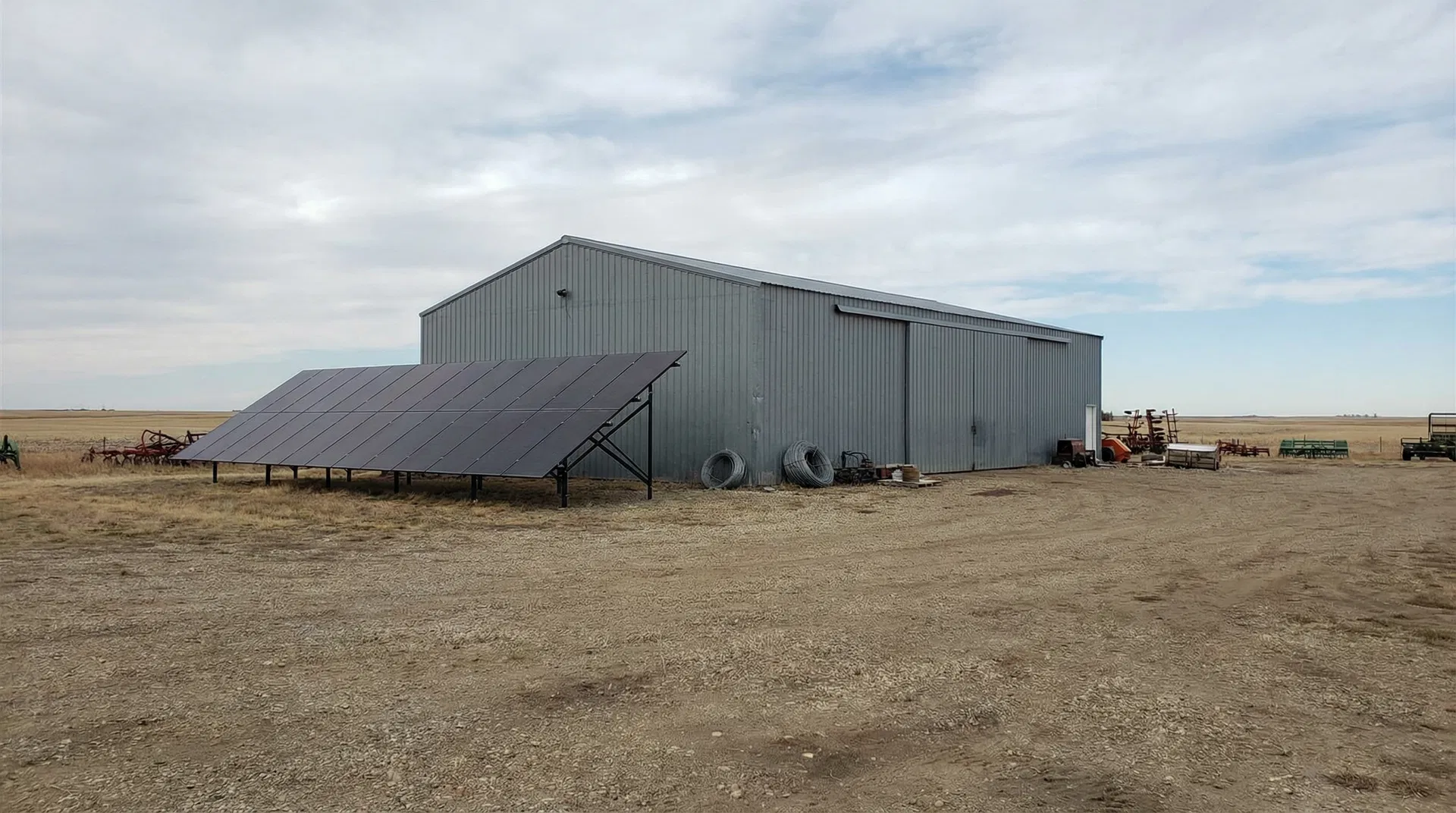
Farm solar in Rocky Mountain House starts with a walk around the yard, not a spec sheet. We install LONGi panels paired with APsystems microinverters, and for the size of system most farm and acreage properties need here, 20 to 50 kW, ground-mount is usually the better call. A ground array lets us orient panels for the site instead of working around whatever pitch and shading the roof happens to have, and it keeps wiring runs short when the array sits closer to the shop or main panel than the house roof does. That matters on a working yard where roof space is already taken up by vents, chimneys, or just isn't oriented the right way. Rooftop systems still make sense on some properties, especially where the shop or main barn has a clean, unshaded roof and the ground around it is tied up with equipment storage, corrals, or a driveway loop. Either way, APsystems microinverters mean the system keeps producing even if one panel gets shaded by a grain leg, a tree line, or a piece of parked equipment, since each panel operates on its own instead of the whole string dropping with it. We size these systems around actual farm loads: grain dryers, irrigation pumps, shop heaters, and livestock equipment all draw differently than a house does, and a system built for a home doesn't hold up under that kind of demand. LONGi panels come with a manufacturer warranty, and we back every install with a design built around the specific loads on your property, not a generic farm package.
Solar Planning for Rocky Mountain House Properties
This area was formally incorporated on August 31, 1939, and it's grown since then into a hub for the farms, ranches, and forestry operations spread across Clearwater County. The 2021 census put the population at 6,765, up from 6,635 five years earlier, and that growth has come alongside the working properties that surround it: grain and cattle operations, acreages, and a forestry sector anchored in part by West Fraser Mills. Solar planning here has to start from the property, not a brochure. A farmyard with a shop, grain bins, and an irrigation pivot pulls power differently than a home does, and the wire service, FortisAlberta, has its own interconnection process for anything feeding power back to the grid. We don't sell a standard package. We walk the property, look at what's actually drawing power (the shop heater, the grain dryer, the well pump), and size a system from that. On properties where tree lines or outbuildings shade part of the yard, or where the roof pitch isn't right, a ground-mount array is often the better fit than the roof. Every design starts with a site visit and your most recent power bill, not a rule of thumb.
Electrical Site Review for Rocky Mountain House Properties
Voltage Rise
Voltage rise happens when power runs a long distance down a rural distribution line before it reaches your property, and it's more common the farther a farmyard sits from the nearest transformer. On a line with a higher baseline voltage, an inverter can hit its upper voltage limit and clip output before the panels are done producing for the day. We measure voltage at the panel during the site visit and size the inverter and string configuration to work within what the line is actually delivering.
Single-Phase vs Three-Phase
Rural Alberta properties can have either single-phase or three-phase electrical service, and which one you have affects what inverter equipment we can use and how much capacity the system can support. Three-phase service, more common on larger farm operations with heavier equipment, generally supports a larger system than a single-phase service of the same size. We confirm which service type your property has before finalizing the system design, since it changes the equipment list.
Panel Infrastructure
Older rural properties often still run on a panel that was sized decades before the current shop, bins, or irrigation equipment were added, let alone a solar system on top of that. We check the panel's age, its rated capacity, and how much breaker space is left before we finalize a system design. If the panel can't support the additional circuit, an upgrade to a larger panel becomes part of the project scope, not a surprise after the fact.
Service Entrance Review
We check the condition of the service entrance and meter base as part of every site visit, since a worn or undersized meter base can hold up the micro-generation application FortisAlberta requires before a system is connected. This matters more on older farm properties where the service entrance hasn't been touched since the original build. If the meter base needs to be upgraded to meet FortisAlberta's current standards, we build that into the project plan before construction starts, not after.
Right-Sizing Solar for Rocky Mountain House Properties
A rural property in this area rarely has just one load to design around. There's the house, but there's usually a heated shop, grain bins with aeration fans, maybe an irrigation pump or a barn with its own panel, and each of those adds demand a suburban system was never built to cover. That's why farm and acreage systems here typically land in the 20 to 50 kW range instead of the smaller size that works for a house in town. Roof or ground-mount is a real decision, not a default. If the shop or house roof is clean, well-oriented, and unshaded, a rooftop array can work fine. But where trees or outbuildings throw shade for part of the day, where the roof pitch or orientation isn't right, or where the yard has open land and the array can be sited for full sun, ground-mount is usually the better call. It also keeps the array closer to whichever panel or shop is drawing the most power. We don't size a system off a rule of thumb like watts per square foot of roof or a flat percentage of your bill. We size it from the 12-month usage graph on your most recent power bill, which shows how demand shifts across the year (grain drying season looks nothing like January), combined with a site visit that maps out shading, orientation, and available space. That combination, your actual usage pattern plus the physical site, is what determines the final system size.
Typical Load Profiles We Design For Near Rocky Mountain House
Home Plus Heated Shop
This is the most common setup we see: a house and a heated shop or garage, each with a different draw depending on the season. We look at the usage graph on your most recent power bill to see how the shop's heating load stacks on top of the house's, then size around the combined draw rather than the house alone.
Grain Operation with Bins and Dryer
Grain bins with aeration fans and a dryer running through harvest create a load that spikes hard for a few weeks and drops off the rest of the year. We design around that seasonal peak using your bill's usage graph, since a system sized only for the quiet months would fall well short during drying season.
Cattle Operation with Barn and Water Systems
Livestock operations often run stock waterers, barn lighting, and equipment like a hay processor or auger, loads that run steady through the year rather than spiking seasonally. We size these systems from the year-round baseline shown on your power bill, then add capacity for equipment that only runs part of the year.
FortisAlberta Interconnection in Rocky Mountain House
FortisAlberta is the wire service here, and any farm or acreage system that connects to the grid goes through FortisAlberta's micro-generation application process. Range Road Solar prepares and submits that application as part of your project: the single-line diagram, equipment specifications for the LONGi panels and APsystems microinverters, and the interconnection paperwork FortisAlberta requires before a system can be energized. We coordinate directly with FortisAlberta on the technical review so you're not the one tracking down forms or chasing status updates. Farm properties often have larger service entrances and higher demand than a typical home, and a 20 to 50 kW system needs to be reviewed against the capacity of your existing service and transformer. We handle that review as part of the design, working with FortisAlberta's requirements rather than guessing at them. Current program rules, tariff structure, and any credit or billing arrangement are FortisAlberta's to set, and we confirm how they apply to your specific property during the design review rather than quoting a generic answer.
Project Economics and Design Review
| System Size | Annual Production | Year 1 Savings | Payback Period |
|---|---|---|---|
| 20-50 kW range, 25 kW typical |
Production, savings, and payback figures are provided only after a property-specific design review and a look at your most recent power bill.
How We Work in Rocky Mountain House
Bill and Load Review
We review your power bill to understand your energy use in Rocky Mountain House and size the system to your actual consumption, not a generic estimate.
Site Assessment
We assess your roof or ground area, south-facing exposure, electrical service, and utility interconnection requirements specific to your property.
Design and Utility Application
We produce a system layout, production estimate, and cost summary, then submit your micro-generation application to your utility on your behalf.
Installation and Commissioning
Our crew installs racking, panels, inverter, and electrical connections. All work is performed by licensed electricians. We commission and test before handoff.
Current Program and Interconnection Review
Utility connection review
FortisAlberta reviews every micro-generation application before a farm or acreage system can be connected to the grid. Range Road Solar prepares the full design package, including the single-line diagram and equipment specifications, and submits it on your behalf.
Current program review
Eligibility for commercial, farm, and residential solar programs changes and is reviewed against the rules in effect at the time of your design, not assumed in advance. We check what currently applies to your specific property type and system size during the design review.
Frequently Asked Questions
Get a Solar Assessment for Rocky Mountain House
Submit a recent power bill and we will review your consumption and provide an honest assessment for your Rocky Mountain House property. No obligation.
(587) 330-7502 Book a CallRelated Resources
More Solar Services in Rocky Mountain House