When we talk about solar battery storage Rocky Mountain House alberta properties actually need, the answer isn't one-size-fits-all. A small acreage home with a modest shop needs a different system than a property running grain handling, a heated commercial shop, or irrigation equipment. We size every system from your actual usage data, not a rule-of-thumb. Our battery storage installations pair LONGi solar panels with hybrid inverters and lithium battery banks. The hybrid inverter is the core of the setup: it manages input from the panels, charges the battery, and supplies your loads, all while staying connected to the FortisAlberta grid. If the grid goes down, the inverter detects the outage and switches to battery backup. Your critical circuits stay live. System sizes we install in this service area run from 8 kW on the smaller end to 20 kW for larger properties with significant loads. A 12 kW system with battery storage is a common configuration for a rural home plus heated shop, but that number comes from a site design and power bill review, not a guess. We look at your 12-month usage graph, your roof or ground-mount conditions, how your shop and home loads are timed, and what you want the battery to cover during an outage. We also confirm what FortisAlberta requires for the interconnection application before we finalize anything. No surprises on the paperwork side.
Solar Planning for Rocky Mountain House Properties
Properties in and around Rocky Mountain House tend to carry real electrical loads. Heated shops, well pumps, outbuildings, and sometimes agricultural equipment all draw from the same service. When the grid goes down, those loads go dark. That's the problem battery storage is built to solve. Adding storage to a solar system means your panels charge a battery bank during the day. When production drops or the grid fails, the battery covers your critical loads instead of leaving you without power. It's not a novelty feature. For properties that rely on well water, refrigeration, or shop equipment, backup capability is practical infrastructure. Storage also lets you keep more of what your panels produce. Without batteries, any solar generation you don't use in the moment goes back to the grid. With storage, that excess charges your battery first, and you draw from it later. How much that matters depends on your load profile, your usage timing, and your FortisAlberta billing structure, which is why we work through those details during the design review rather than quoting generic numbers.
Electrical Site Review for Rocky Mountain House Properties
Voltage Rise
Voltage rise happens when solar generation pushes voltage on the distribution line above the acceptable range, which can cause inverters to clip output or shut down temporarily to protect the grid. Rural distribution lines near Rocky Mountain House can carry more resistance than urban infrastructure, which makes voltage rise a real design factor rather than a theoretical one. We assess voltage rise conditions during the site review and size the system and inverter settings to stay within FortisAlberta's limits.
Single-Phase vs Three-Phase
Rural properties in this area can be served by either single-phase or three-phase electrical service, and the distinction matters when selecting hybrid inverters and sizing battery storage. Three-phase service allows for higher system capacity and more flexibility in load management, while single-phase systems have different inverter options and capacity ceilings. We confirm your service type during the electrical site review so inverter selection is matched to what's actually coming into your panel.
Panel Infrastructure
Older electrical panels on rural properties often don't have the breaker capacity to support a solar and battery storage system without some upgrades. We assess breaker availability, panel age, and total capacity during the site review to determine whether the existing panel can accommodate the system we're designing. If an upgrade is needed, we include it in the project scope upfront so there are no cost surprises after installation begins.
Service Entrance Review
The service entrance and meter base are the connection point between your property and FortisAlberta's distribution network, and their condition affects whether the micro-generation application can proceed without additional work. We inspect the meter base for age, condition, and compatibility with FortisAlberta's interconnection requirements before we submit the application. If an upgrade is required, we identify it during the design phase and include it in the project plan rather than discovering it partway through the installation.
Right-Sizing Solar for Rocky Mountain House Properties
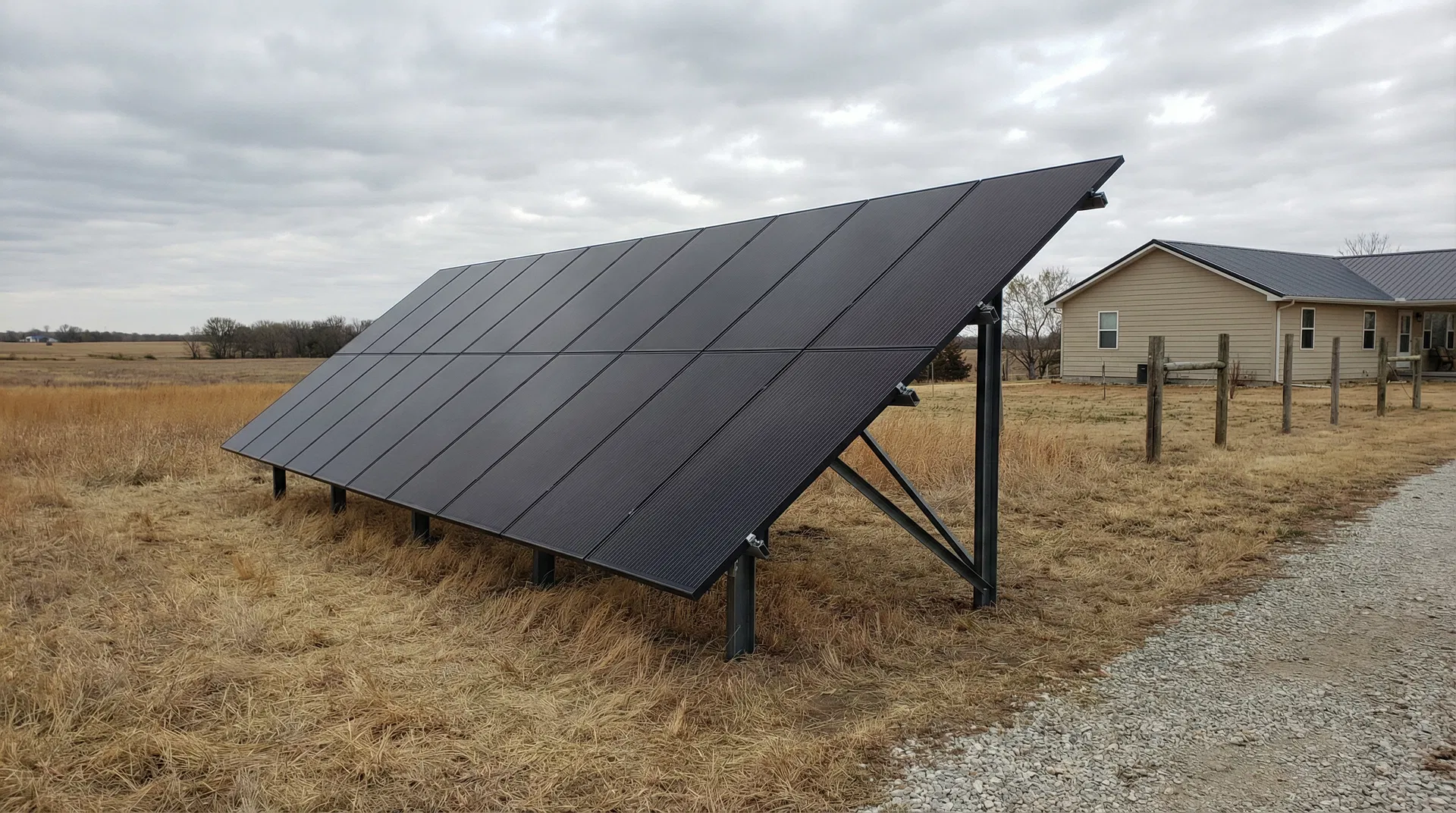
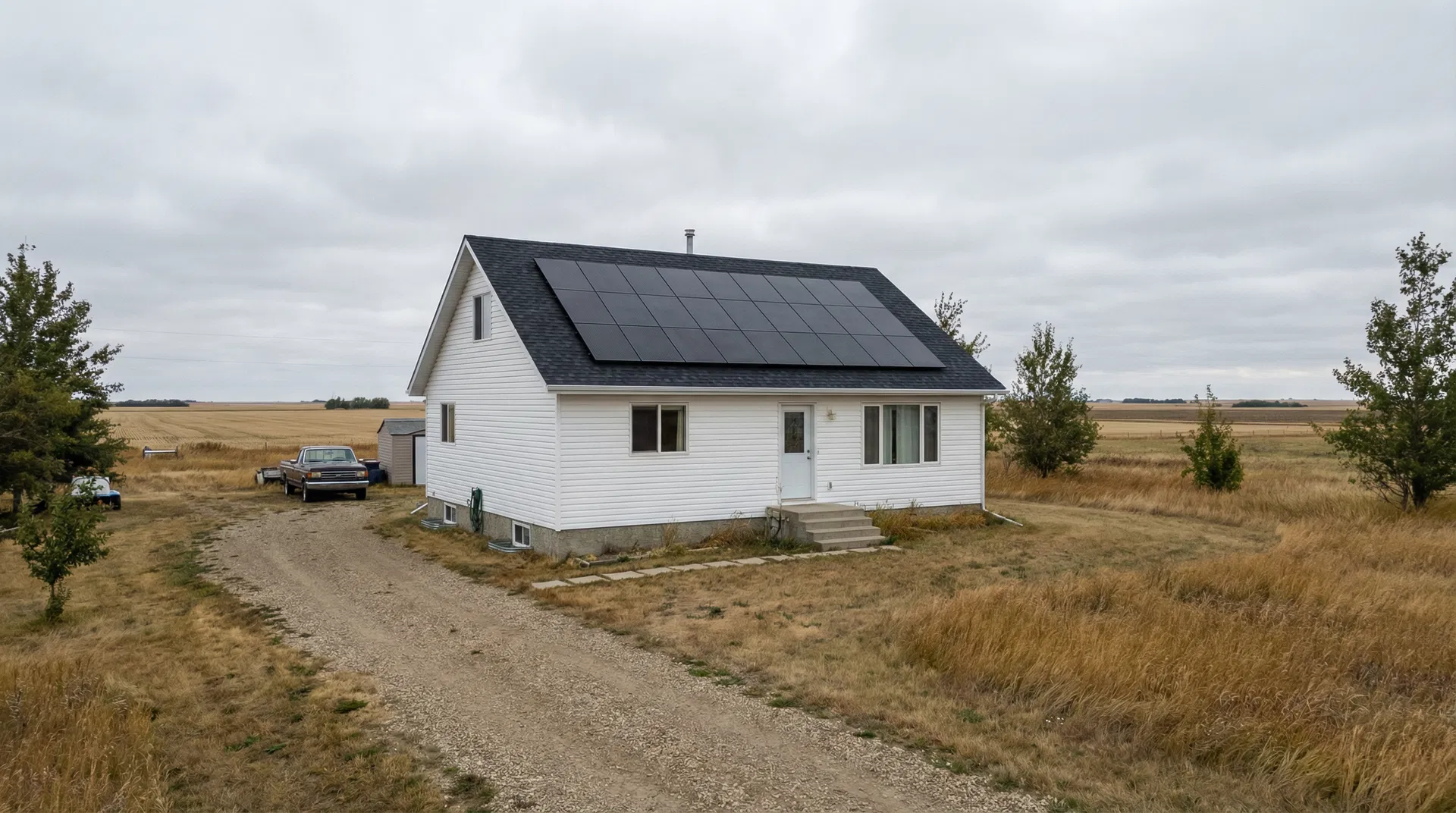
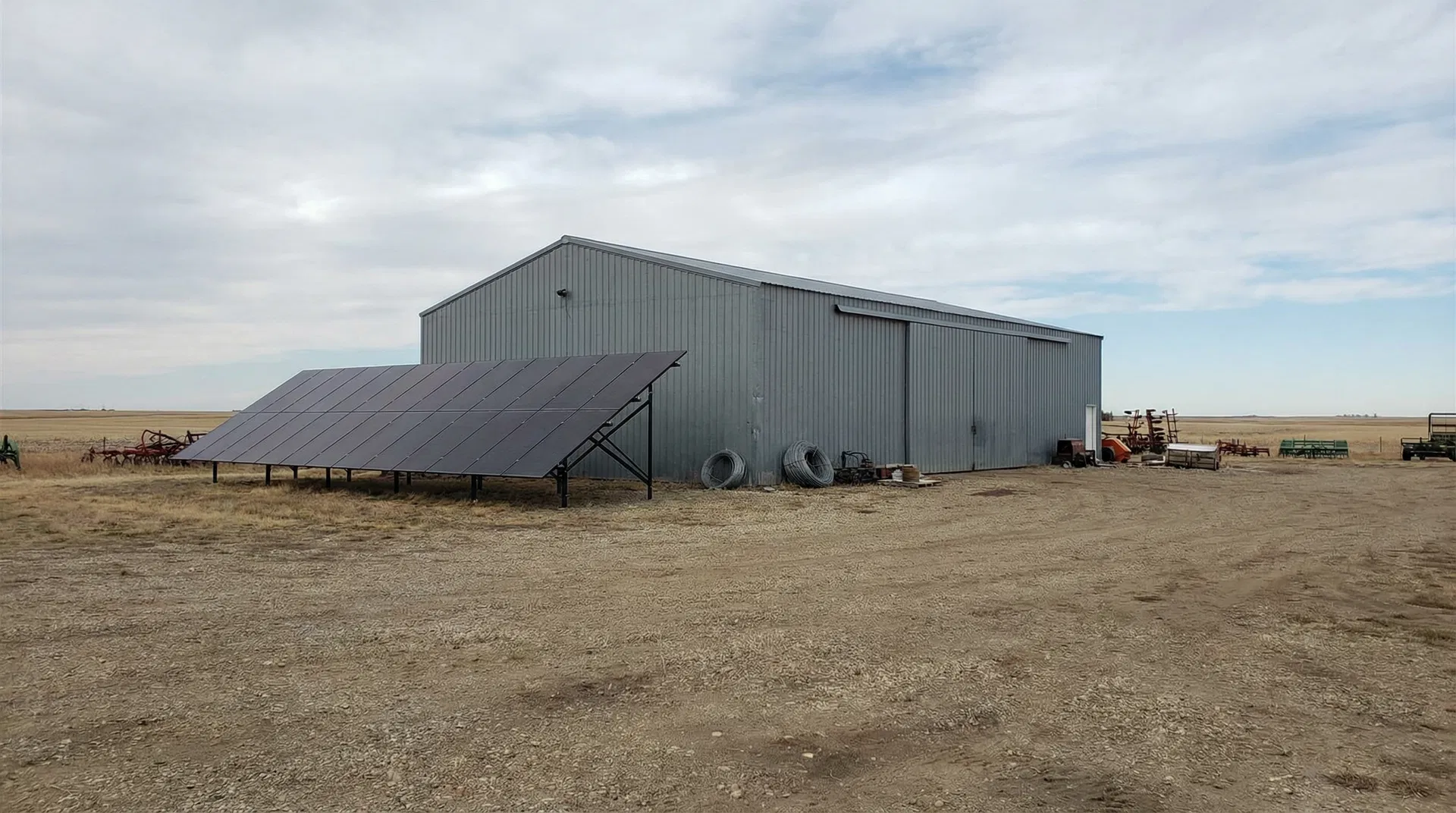
Rural properties carry more electrical load than a typical urban home, and that's exactly why we don't size systems off a rule of thumb. A property near Rocky Mountain House might run a house, a heated shop, a secondary outbuilding, and a well pump off the same service. Each of those loads has its own draw, its own timing, and its own priority during a power outage. When you're adding battery storage, knowing which loads matter most and when they run is critical to getting the battery capacity right. Roof mount versus ground mount is a real decision for acreage and farm layouts. Roof mount works well when orientation and pitch are good and shading from trees or adjacent buildings isn't a factor. When the roof faces the wrong direction, carries too shallow a pitch, or sits in the shadow of a shop or a tree line, ground mount is usually the better call. Ground mount also makes sense when the available land near the meter is better positioned than any roofline on the property. We size every system from the 12-month usage graph on your most recent power bill. That graph shows us how your consumption shifts across seasons, which tells us how large the solar array needs to be and how much battery capacity makes sense for your usage patterns. We don't ask you for multiple documents. Bring us your most recent power bill and we'll build the design from there. We provide honest production estimates based on your actual power bills and site conditions, not inflated projections.
Typical Load Profiles We Design For Near Rocky Mountain House
Home and Heated Shop
A house and a heated shop running off the same service is the most common configuration we see in this area. The shop load alone can spike significantly when a welder, compressor, or electric heater is running, and those spikes affect how we size both the solar array and the battery bank. We look at the 12-month usage graph on your most recent power bill to understand when peak loads occur and whether the battery needs to cover shop circuits or just the house during an outage.
Acreage Home with Well and Outbuildings
A property with a well pump, a garage, and one or two smaller outbuildings has a different load profile than a shop-heavy farm, and the battery storage design reflects that. Well pumps are often the top priority for backup power, since losing water pressure during an extended outage creates immediate problems. We size the battery to cover the well pump, refrigeration, and lighting as a minimum backup set, then build the solar array around the full 12-month consumption picture.
Small Commercial or Mixed-Use Property
Some properties near Rocky Mountain House run a home alongside a small commercial operation, whether that's a welding shop, a mechanical bay, or a refrigerated storage unit. Mixed-use loads are less predictable than residential-only loads, and the battery sizing has to account for commercial draw patterns that don't follow a standard daily curve. We review your power bill, walk the site, and confirm which circuits need backup coverage before we finalize the system design.
FortisAlberta Interconnection in Rocky Mountain House
Rocky Mountain House properties are served by FortisAlberta for wire service. Any solar system with battery storage that connects to the grid requires a micro-generation application through FortisAlberta before the system can be commissioned. Range Road Solar handles that application as part of the installation process. We prepare the design package, submit it to FortisAlberta, and coordinate the technical review. You don't need to navigate that process yourself. What we can't promise is approval timing or specific billing outcomes, because those depend on FortisAlberta's current queue, the specifics of your service connection, and the rules in effect at the time of application. What we can tell you is that we've been through this process with FortisAlberta properties before, we know what the application needs to include, and we don't leave customers managing the interconnection paperwork on their own. If your meter base or service entrance needs upgrading to meet FortisAlberta's connection requirements, we identify that during the site review, before any equipment is ordered.
Project Economics and Design Review
| System Size | Annual Production | Year 1 Savings | Payback Period |
|---|---|---|---|
| 8-20 kW range, 12 kW typical |
Production, savings, and payback estimates require a property-specific design and your most recent power bill, which includes a 12-month usage graph.
How We Work in Rocky Mountain House
Bill and Load Review
We review your power bill to understand your energy use in Rocky Mountain House and size the system to your actual consumption, not a generic estimate.
Site Assessment
We assess your roof or ground area, south-facing exposure, electrical service, and utility interconnection requirements specific to your property.
Design and Utility Application
We produce a system layout, production estimate, and cost summary, then submit your micro-generation application to your utility on your behalf.
Installation and Commissioning
Our crew installs racking, panels, inverter, and electrical connections. All work is performed by licensed electricians. We commission and test before handoff.
Current Program and Interconnection Review
Utility connection review
FortisAlberta reviews all micro-generation interconnection applications for properties in its service territory, including Rocky Mountain House. Range Road Solar prepares and submits the full design package on your behalf. We handle the technical documentation so the application is complete and accurate when it reaches FortisAlberta.
Current program review
Residential, acreage, and farm properties may have access to programs or incentives that apply to solar and battery storage installations. Eligibility rules and available programs change, so we review what's current at the time of your design rather than listing programs that may have ended or changed. We confirm what applies to your specific property type and usage during the design review.
Frequently Asked Questions
Get a Solar Assessment for Rocky Mountain House
Submit a recent power bill and we will review your consumption and provide an honest assessment for your Rocky Mountain House property. No obligation.
(587) 330-7502 Book a CallRelated Resources
More Solar Services in Rocky Mountain House