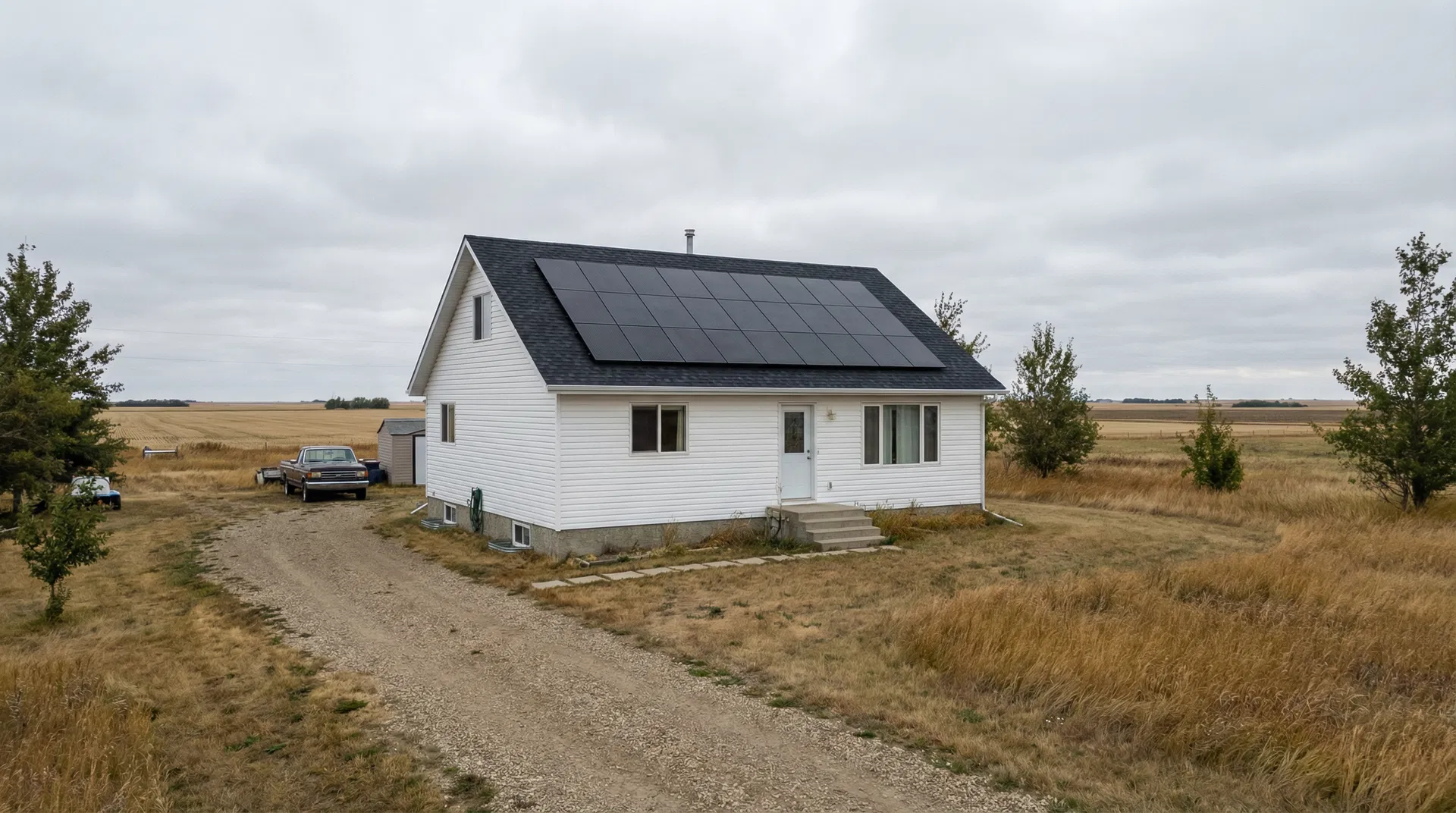
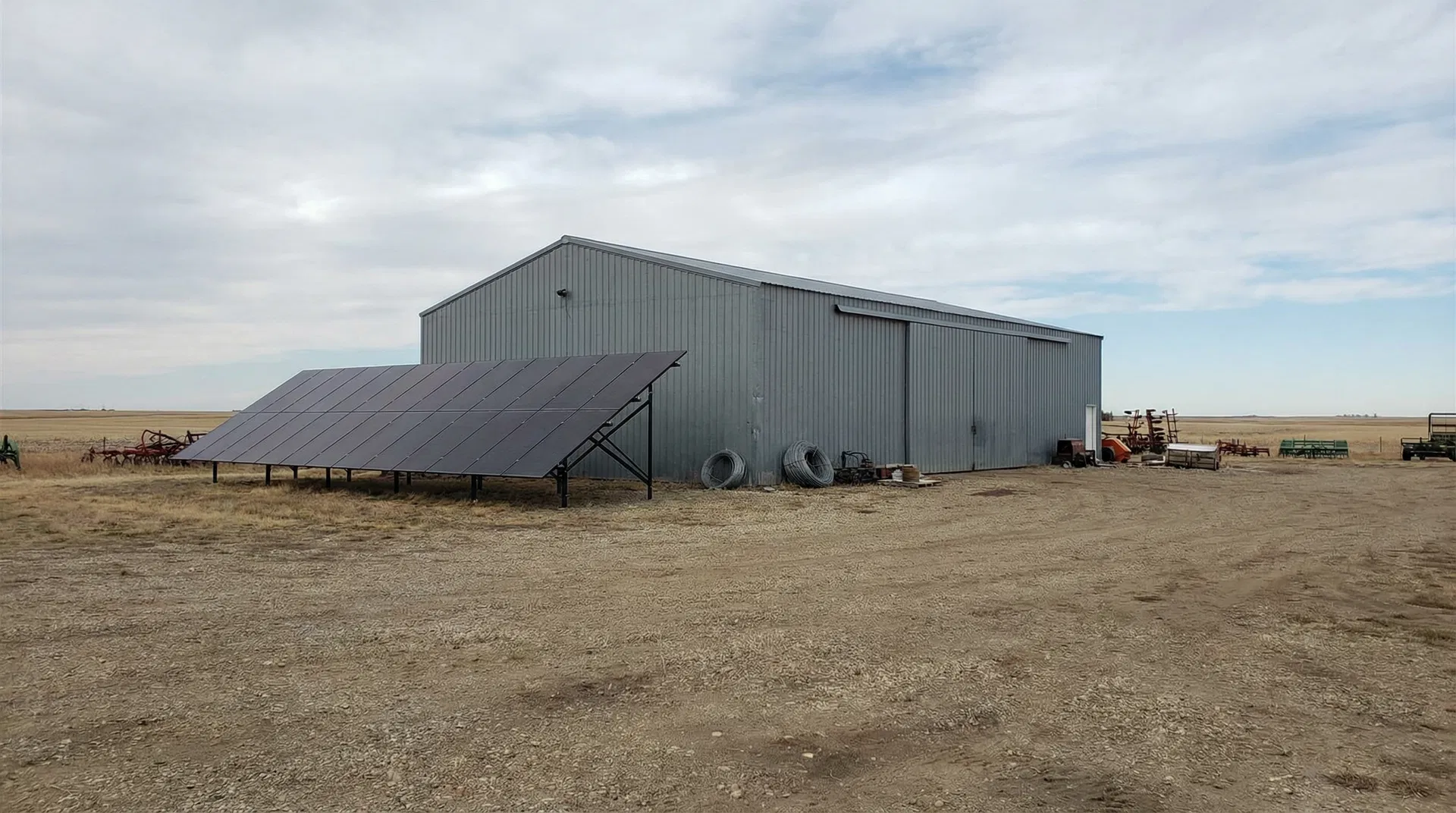
Solar Stettler County installations from Range Road Solar start with a licensed design built around the property, not a one-size package pulled off a shelf. We install LONGi panels paired with APsystems microinverters on every system we design here, whether that's a gable roof on a farmhouse, a pole barn, or a ground-mounted array on open acreage. APsystems microinverters work panel by panel, which matters on properties where a shop, a grain bin, or a shelterbelt casts partial shade across part of the array. LONGi panels are a standard, well-tested choice for the temperature swings and freeze-thaw cycles rural Alberta roofs and ground mounts see year-round. Most of the properties we work on in this area run an 8 to 15 kW system, sized to the house plus whatever else is drawing power: a shop, a well pump, grain handling equipment, or a second residence on the yard. Roof mount makes sense when the house or shop has clean south or west exposure and the roofing has enough life left in it. Ground mount comes into play when there's open land, a shaded roof, or a pitch that doesn't line up well with the sun's path. We walk every property before we quote anything, because a system that works on one yard here can be the wrong call on the next one a half mile over.
Solar Planning for Stettler County Properties
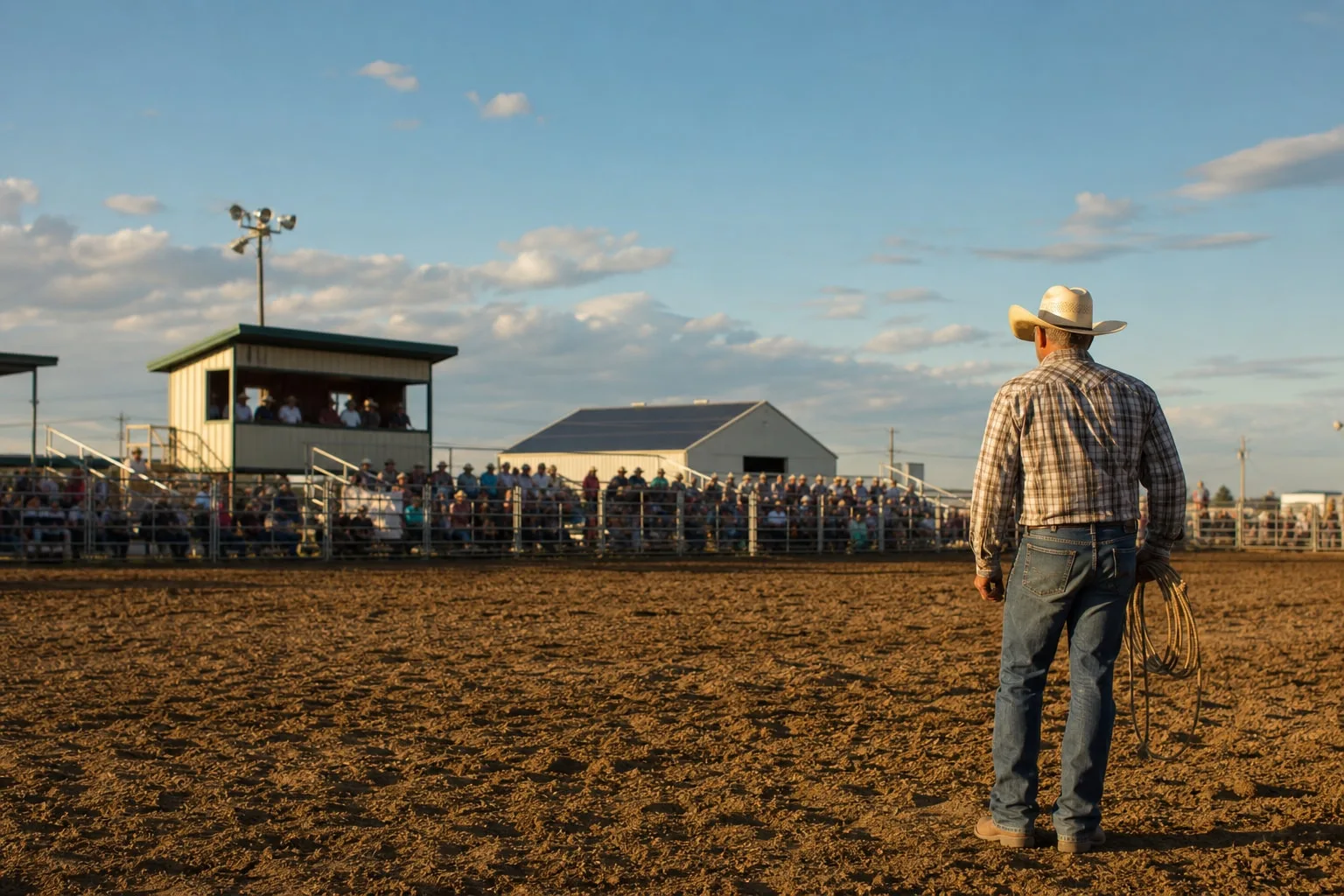
Stettler County, Alberta carries two regional economic anchors: an Agricultural Hub designation and an Oil and Gas Sector presence, both flagged by the province's own regional dashboard. That mix shows up directly in the properties we design for. These aren't suburban rooftops. They're acreages and farmyards with a shop, a grain dryer, or wellsite equipment drawing power alongside the house. The population has grown from 5,322 people in the 2,016 census to 5,666 today, and that growth tracks with more outbuildings and more total electrical load per property than you'd find in a subdivision. Environment Canada's climate normals for the nearby Red Deer A station list 2,125.0 hours of annual bright sunshine, and Natural Resources Canada's solar resource maps put specific photovoltaic yield for this region at 1,265 kWh/kWp. Those are regional reference points, not a promise of what your roof or yard will produce. We confirm actual output for a property through site design and a look at your most recent power bill, not a map. Range Road Solar sizes systems around what a property actually needs, whether that's a single acreage near the grounds that host the Stettler County Fair & Rodeo or a multi-building farm operation.
Electrical Site Review for Stettler County Properties
Voltage Rise
Voltage rise happens when a property sits far down a long rural distribution line, so the voltage measured at your panel ends up higher than what's measured back at the transformer. On properties like that, we have to account for voltage rise when sizing the inverter and setting its output limits, because an already-elevated voltage reading leaves less headroom before the inverter clips or shuts down to protect itself. We check this during the site visit so the system we design doesn't lose production to a voltage problem nobody caught.
Single-Phase vs Three-Phase
Rural properties in this area can have either single-phase or three-phase electrical service, depending on the age of the property and what's connected to it; grain handling motors and some shop equipment often call for three-phase. The phase configuration determines which inverters we can use and how much total solar capacity the service can support. We confirm your phase service during the site review before we finalize equipment selection.
Panel Infrastructure
Older rural properties sometimes have an electrical panel with limited breaker space or a service rated well under what a modern solar system plus existing loads will need. We check the panel's age, amperage rating, and available breaker slots as part of every site visit. If the panel can't support the added circuits, the fix is a panel upgrade or a dedicated load center, work we scope and quote before the solar installation moves forward.
Service Entrance Review
We inspect the service entrance and meter base on every property, checking for corrosion, loose connections, and whether the meter base itself is rated for the added solar circuit. A meter base in poor condition needs to be addressed before FortisAlberta will approve the micro-generation application, since the connection point is part of what they review. When an upgrade is needed, we fold it into the installation scope rather than leaving it as a surprise later.
Right-Sizing Solar for Stettler County Properties
A solar system sized for a property in this area almost always ends up bigger than what you'd see on a house in the city, because rural properties are rarely just a house. There's the home, and then there's a shop, maybe a well pump, grain handling equipment, or an irrigation system, all drawing from the same service. We size for all of it, not just the house load, which is why 8 to 15 kW is typical here instead of the smaller systems common in town. Roof mount works when there's clean, unshaded roof area facing a good direction and the roofing material has enough remaining life to outlast the panels. Ground mount becomes the better call when trees or outbuildings shade the roof, the pitch or orientation doesn't line up with the sun, or the yard has open land that makes a ground-mounted array easier to access and maintain than a roof job. Either way, we size the system from the 12-month usage graph on your most recent power bill, not a rule-of-thumb number based on square footage or guesswork. That graph shows us your actual seasonal load pattern, including shop heating in winter or irrigation pumps in summer, and we design around that pattern. Combined with a site visit to confirm roof or ground conditions, that's what determines the system size we recommend, not a generic formula.
Typical Load Profiles We Design For Near Stettler County
Home Plus Heated Shop
This is the most common profile we see on acreages in this area: a house plus a heated shop used for equipment storage, welding, or winter projects. The shop's heating and power tools create a load pattern that's different from the house alone, usually with a bigger winter spike. We read that pattern off the 12-month usage graph on your most recent power bill and size the system to cover both loads together.
Grain Operation with Handling Equipment
Properties running grain bins, augers, and dryers see short bursts of heavy power draw during harvest that a typical home never produces. Sizing for this load means looking at when those bursts happen and how they stack against everyday house usage over the year. We build the system around that seasonal pattern instead of a flat, year-round estimate.
Irrigation and Pump Loads
Acreages and farms with a well pump, livestock waterer, or irrigation system carry a steady background load that the house alone doesn't show. That load often runs hardest exactly when the panels are producing the most, which changes how we think about system size and orientation. We confirm the pattern from your power bill and site conditions before finalizing a design.
FortisAlberta Interconnection in Stettler County
Every grid-tied solar system here runs through FortisAlberta, the wire service for this area. Before your system goes live, Range Road Solar prepares and submits the micro-generation interconnection application on your behalf, along with the electrical drawings, equipment specifications for the LONGi panels and APsystems microinverters, and the site-specific documentation FortisAlberta requires to review a new connection. We handle the paperwork end to end so you're not stuck figuring out a utility application on top of a construction project. Because every property's electrical service, panel capacity, and meter base are different, FortisAlberta reviews each application on its own merits, and we don't promise a specific approval timeline or outcome before that review happens. What we can tell you up front is that we've built the application process into our standard installation workflow, so it moves forward as soon as the design and site review are done, not after.
Project Economics and Design Review
| System Size | Annual Production | Year 1 Savings | Payback Period |
|---|---|---|---|
| 8-15 kW range, 10 kW typical |
Production, savings, and payback figures are specific to your property and require a design review plus your most recent power bill before we can provide them.
How We Work in Stettler County
Bill and Load Review
We review your power bill to understand your energy use in Stettler County and size the system to your actual consumption, not a generic estimate.
Site Assessment
We assess your roof or ground area, south-facing exposure, electrical service, and utility interconnection requirements specific to your property.
Design and Utility Application
We produce a system layout, production estimate, and cost summary, then submit your micro-generation application to your utility on your behalf.
Installation and Commissioning
Our crew installs racking, panels, inverter, and electrical connections. All work is performed by licensed electricians. We commission and test before handoff.
Current Program and Interconnection Review
Utility connection review
FortisAlberta reviews every new grid-tied solar connection application for properties here before it goes live. Range Road Solar prepares the full design package, electrical drawings, and equipment specs that go into that application so you're not navigating it alone.
Current program review
Residential, farm, and commercial properties are each reviewed against whatever program rules and eligibility criteria are current at the time of your design, since those rules change. We check your project against the current requirements as part of the design review rather than assuming last year's rules still apply.
Frequently Asked Questions
Get a Solar Assessment for Stettler County
Submit a recent power bill and we will review your consumption and provide an honest assessment for your Stettler County property. No obligation.
(587) 330-7502 Book a CallRelated Resources