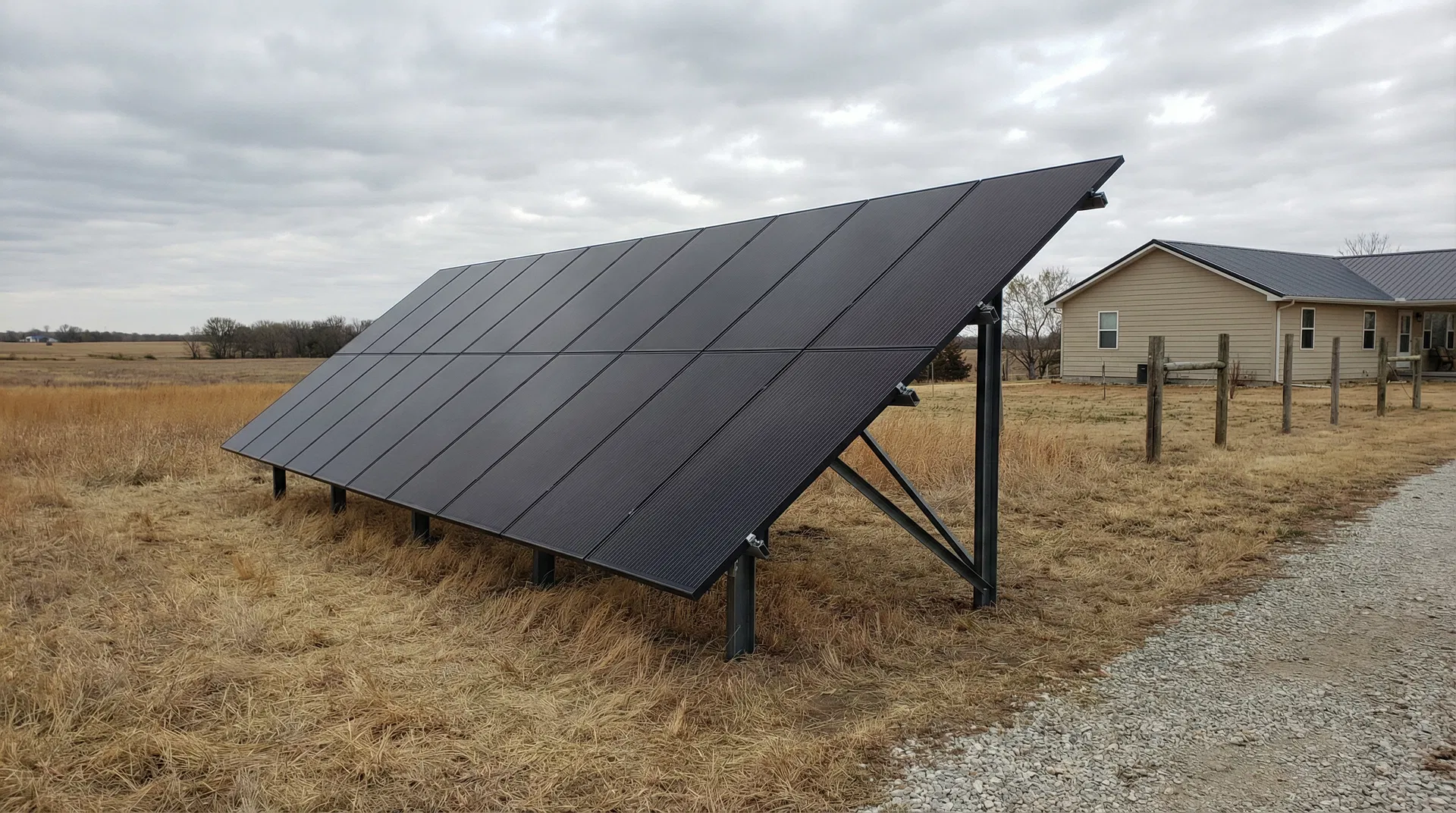
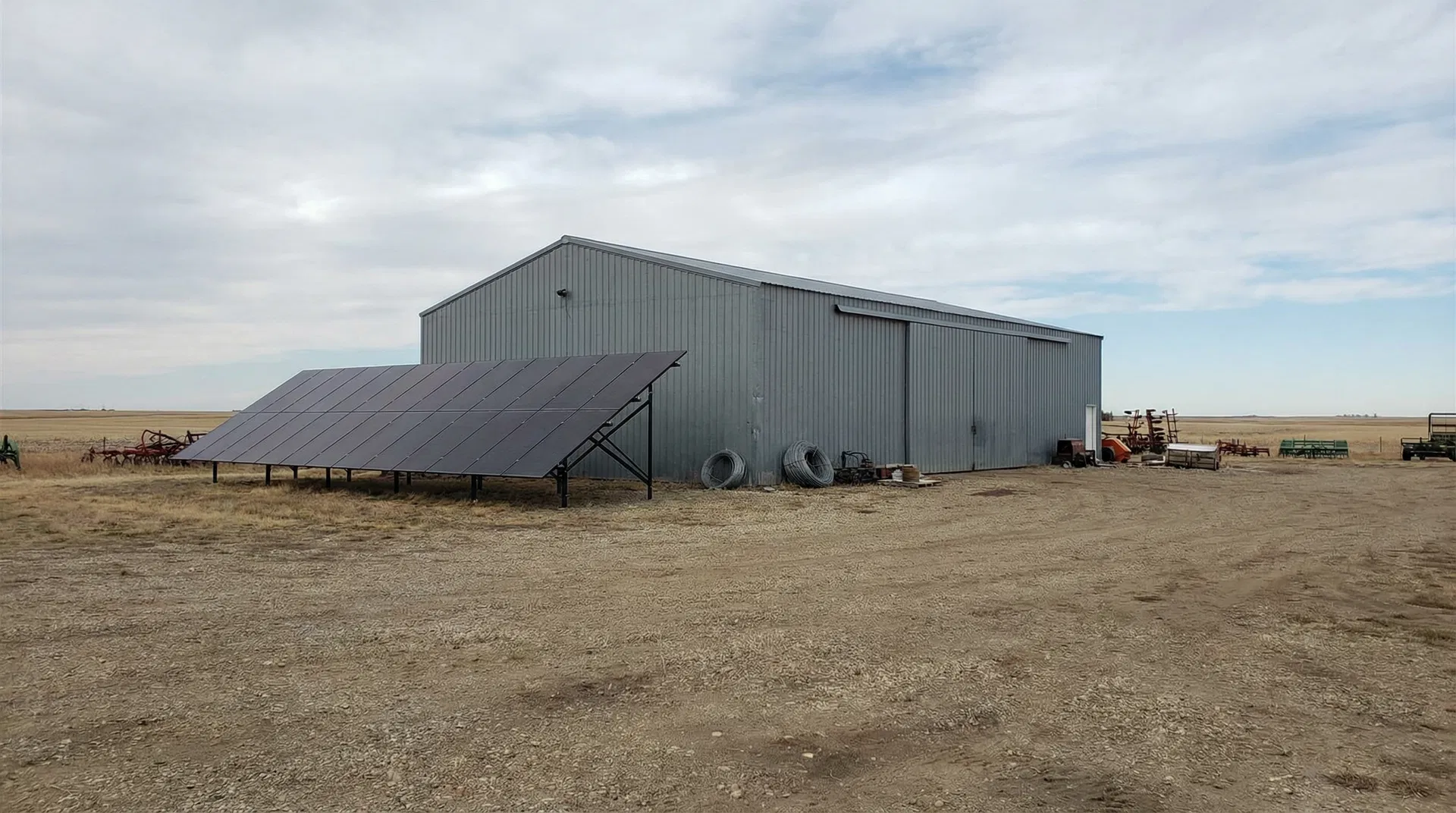
Solar stettler county properties need isn't always the same as what works on a city rooftop. Shops are often large, south-facing metal buildings with plenty of usable roof area. Barns vary more. Some have ideal pitch and orientation, others have shade from bins or trees that push the better panel real estate to a ground mount out in the yard. We handle both. For rooftop installs, we use LONGi panels on commercial-grade racking suited to metal or wood-framed roof structures. APsystems microinverters go on each panel individually, which means one shaded panel or one panel with a fault doesn't drag down the output of everything else on the roof. On a large shop with mixed shading conditions, that matters. Ground mounts work well on acreages and farms where the shop roof isn't ideal but there's open land nearby. We design the array, set the racking, and run the conduit back to your service entrance. The process is the same from an interconnection standpoint. Systems in the 8 to 20 kW range cover most shop and outbuilding scenarios we see. A single heated shop with a welder, compressor, and lighting might sit at the lower end of that range. A property with a shop plus an attached suite, irrigation controls, and grain drying equipment will push toward the top or beyond, depending on what the bill shows. We don't guess at system size. We pull the 12-month usage graph from your most recent power bill and design from real numbers.
Solar Planning for Stettler County Properties
Properties out here tend to run hard. A heated shop, a grain handling setup, a well pump, maybe a second outbuilding with its own panel. Those loads stack up on a single utility account, and the bill reflects it every month. That's the situation we design for. FortisAlberta serves properties in Stettler County, and grid-tied solar connects directly to that service under Alberta's micro-generation rules. When your system produces more than you're using at that moment, the surplus goes back to the grid. Your bill reflects that offset. It's not complicated, but the design work matters. A system that's undersized for your load profile or poorly oriented on your shop roof won't perform the way your bill suggests it should. We look at your most recent power bill, the 12-month usage graph it includes, your roof or ground-mount conditions, and the electrical infrastructure already on the property. From there we can tell you what size makes sense, where panels should go, and what the interconnection process with FortisAlberta looks like. No guesswork. No inflated numbers. Just a design that fits what's actually on your land.
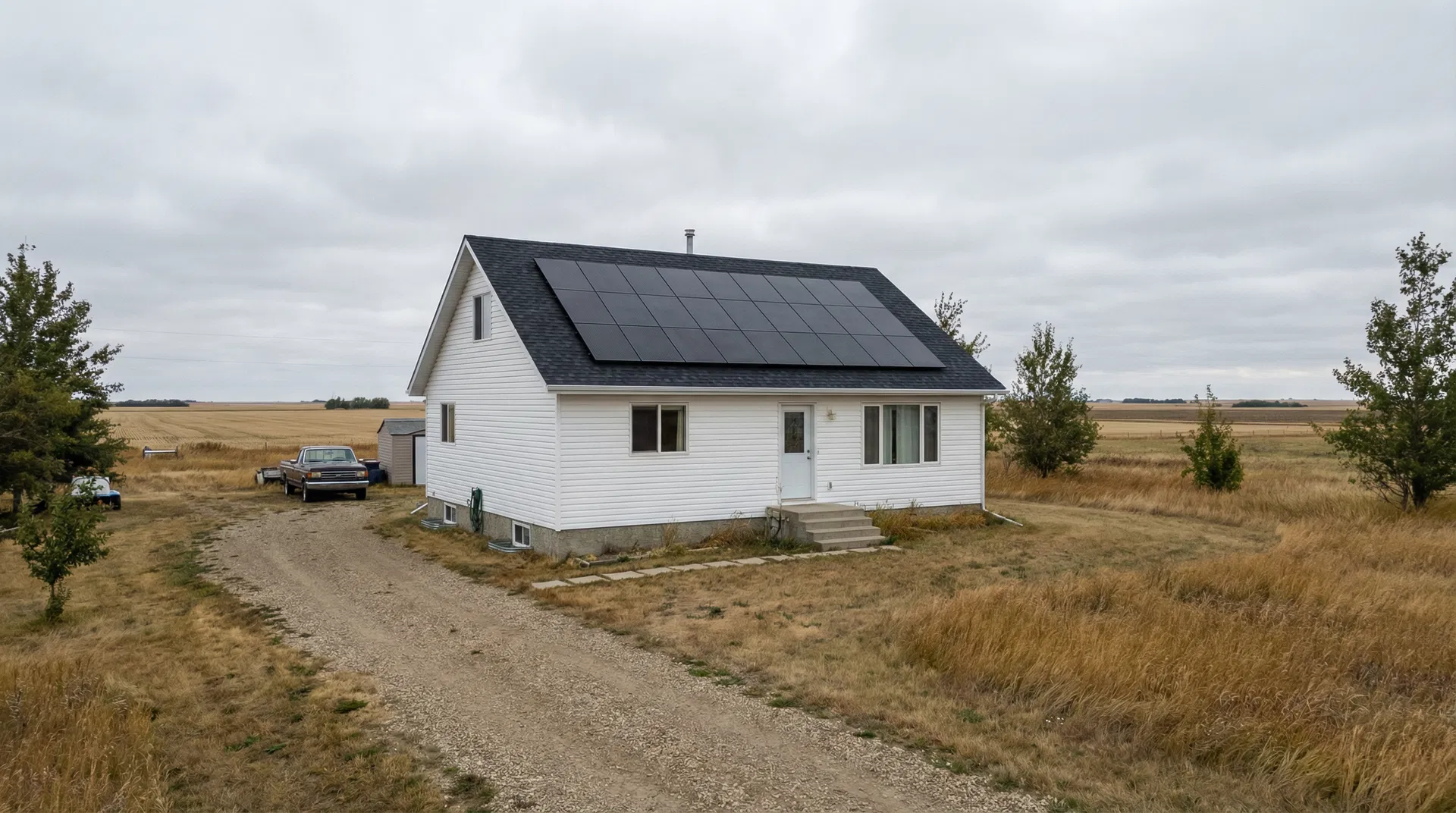
Electrical Site Review for Stettler County Properties
Voltage Rise
Voltage rise happens when a solar system pushes current back through distribution lines that weren't built to carry reverse flow. Rural distribution lines in Alberta can run long distances at lower conductor capacity, which makes voltage rise more likely than in urban settings. When voltage at the service entrance climbs above the inverter's upper limit, the inverter clips output or shuts down temporarily, and that affects real-world production.
Single-Phase vs Three-Phase
Rural properties in Alberta may have single-phase or three-phase service depending on the loads the property was built for. Shops with large three-phase motors, grain handling equipment, or irrigation pumps often have three-phase service, and the solar design needs to match. Inverter selection and system capacity are both affected by which service type is present, so we confirm this during the site review before any design work is finalized.
Panel Infrastructure
Older panels on rural properties were sized for the loads that existed when the building was wired, not for a solar system added decades later. We assess breaker capacity, available panel space, and panel age to confirm the existing infrastructure can support the system. If the panel is full or too old to safely accommodate the new breakers required, an upgrade is part of the project scope and we'll price it into the design review.
Service Entrance Review
The meter base and service entrance condition matter for FortisAlberta's micro-generation application. FortisAlberta reviews the meter base as part of their interconnection process, and a damaged, outdated, or non-compliant meter socket can stall or reject the application. We inspect the service entrance during the site review, and if an upgrade is required, we include it in the project plan before the application is submitted.
Right-Sizing Solar for Stettler County Properties
Rural properties carry more load than a city house, and that changes how we size a system. You might have a home, a heated shop, a quonset with its own sub-panel, an electric fence charger, and a well pump all on one account. Some properties add grain drying equipment or irrigation controls that draw heavily during specific seasons. When all of that shows up on a single utility bill, the system size needed to offset a meaningful portion of it is usually well above what a residential installer would quote for a house alone. Roof or ground mount is the next decision. A large south-facing shop roof with good pitch and no shading is often ideal. But if the shop faces the wrong way, has a low-slope roof, or sits in the shadow of bins and trees for part of the day, a ground mount in an open area of the yard will outperform it. We don't have a default preference. We look at the property and recommend what'll actually work. We don't size systems from rule-of-thumb watt-per-square-foot estimates. We use the 12-month usage graph on your most recent power bill. That graph shows seasonal variation, which matters on properties where summer irrigation or winter heating shifts your consumption significantly. A flat average number misses that completely. Your bill shows the real picture, and that's what the design reflects. You only need to provide one document: your most recent power bill. We take it from there.
Typical Load Profiles We Design For Near Stettler County
Heated Shop with Home on One Account
This is the most common profile we see: a house and an insulated, heated shop running on a single FortisAlberta account. Shop loads typically include in-floor heat or a unit heater, compressor, welder, and lighting. Combined with the home's baseload, total consumption can vary significantly by season. A system in the 12 to 16 kW range is a common starting point, but the 12-month usage graph on the power bill tells us whether that holds for a specific property.
Grain Farm with Drying and Handling Equipment
Grain handling properties often have large seasonal draw from aeration fans, auger motors, and drying systems that run hard in fall and sit idle the rest of the year. That seasonal spike shows clearly on a 12-month usage graph, and it changes how we size and orient the system compared to a flat-consumption property. Systems for this profile often sit in the 16 to 20 kW range, and three-phase service compatibility has to be confirmed before inverter selection.
Acreage with Shop, Suite, and Outbuildings
Some properties have a shop, a secondary suite or carriage house, a barn or implement shed, and a home, all under one account. Each structure adds baseload, and the suite or barn may have electric heat that drives winter consumption up sharply. We look at the full account usage, not just the house, and design a system that addresses the combined load rather than guessing from square footage.
FortisAlberta Interconnection in Stettler County
FortisAlberta is the wire service for properties in Stettler County. Any grid-tied solar system installed here connects under FortisAlberta's micro-generation program, which means the interconnection application goes through them before your system can be energized. We handle that application. You don't need to navigate FortisAlberta's process on your own. We prepare the design package, submit the interconnection request, and coordinate with FortisAlberta through the review process. What we won't do is promise you a specific approval timeline, because that's FortisAlberta's call, not ours. What we can tell you is that the application needs to reflect the actual system design, the correct meter base condition, and the right service entrance documentation. If something on your property needs to be brought up to standard before the application goes in, we'll flag that during the design review so there are no surprises mid-project. Getting the paperwork right the first time is faster than fixing a rejected application later.
Project Economics and Design Review
| System Size | Annual Production | Year 1 Savings | Payback Period |
|---|---|---|---|
| 8-20 kW range, 12 kW typical |
Production, savings, and payback estimates require a property-specific design and your most recent power bill.
How We Work in Stettler County
Bill and Load Review
We review your power bill to understand your energy use in Stettler County and size the system to your actual consumption, not a generic estimate.
Site Assessment
We assess your roof or ground area, south-facing exposure, electrical service, and utility interconnection requirements specific to your property.
Design and Utility Application
We produce a system layout, production estimate, and cost summary, then submit your micro-generation application to your utility on your behalf.
Installation and Commissioning
Our crew installs racking, panels, inverter, and electrical connections. All work is performed by licensed electricians. We commission and test before handoff.
Current Program and Interconnection Review
Utility connection review
FortisAlberta reviews grid connection applications for micro-generation systems installed in Stettler County. Range Road Solar prepares the full design package and submits the interconnection application on your behalf. We don't claim specific credit settlement rules or approval timelines, because those are set by FortisAlberta and subject to change.
Current program review
Commercial, agricultural, and residential property owners may have access to different programs depending on how their account is classified and what's currently available. We review your eligibility against current rules at the time of your design review. We don't name specific programs in advance because availability and rules change and we won't tell you something is available if we can't confirm it at the time.
Frequently Asked Questions
Get a Solar Assessment for Stettler County
Submit a recent power bill and we will review your consumption and provide an honest assessment for your Stettler County property. No obligation.
(587) 330-7502 Book a CallRelated Resources