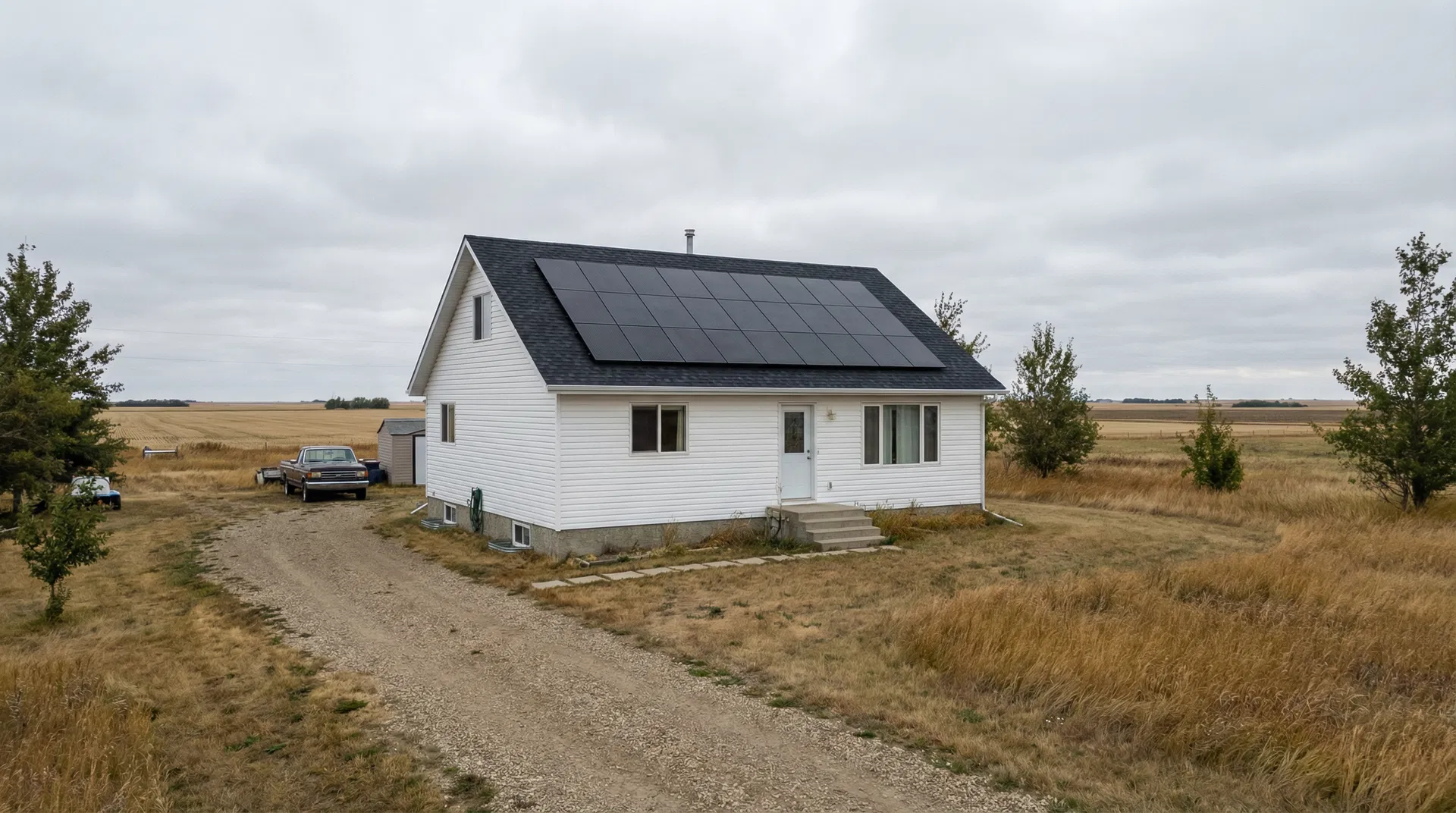
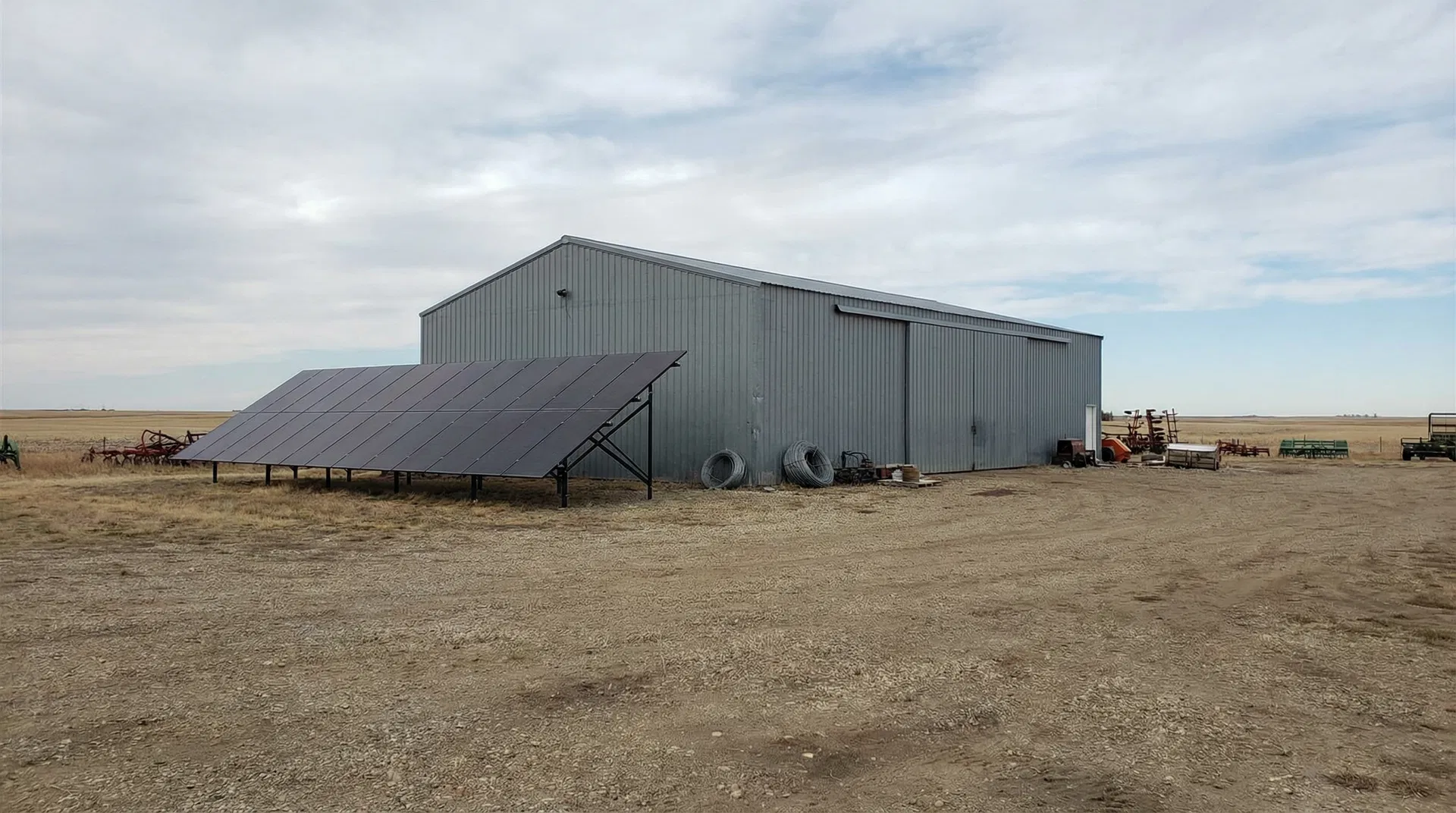
Solar Stettler shop and outbuilding projects start with the building itself, not a generic package: a heated machine shop draws differently than an unheated quonset or a barn running a water pump. We install LONGi panels because they hold up under the mix of dust, temperature swings, and occasional hail that rural outbuildings take over a long service life, and we pair them with APsystems microinverters so a single shaded panel, a tree line, or a satellite dish on the shop roof doesn't drag down the output of the whole array. For a steel-roofed shop or quonset, we mount directly to the standing seam or purlins where the structure allows it. For properties where the shop roof faces the wrong direction, sits in the shade of a grain bin, or just doesn't have enough clear surface, we design a ground-mount array instead, angled and oriented independent of any building. Microinverters also make a difference on outbuildings that get added onto over the years. A shop built in stages, with a lean-to or a second bay tacked on later, often ends up with uneven roof planes and odd shading patterns, and panel-level conversion handles that better than a single central inverter would. We size every system, whether it lands at 8 kW for a single shop or closer to 20 kW for a property running a shop plus grain handling equipment, from your most recent power bill and a site walk, not a rule-of-thumb per-square-foot number.
Solar Planning for Stettler Properties
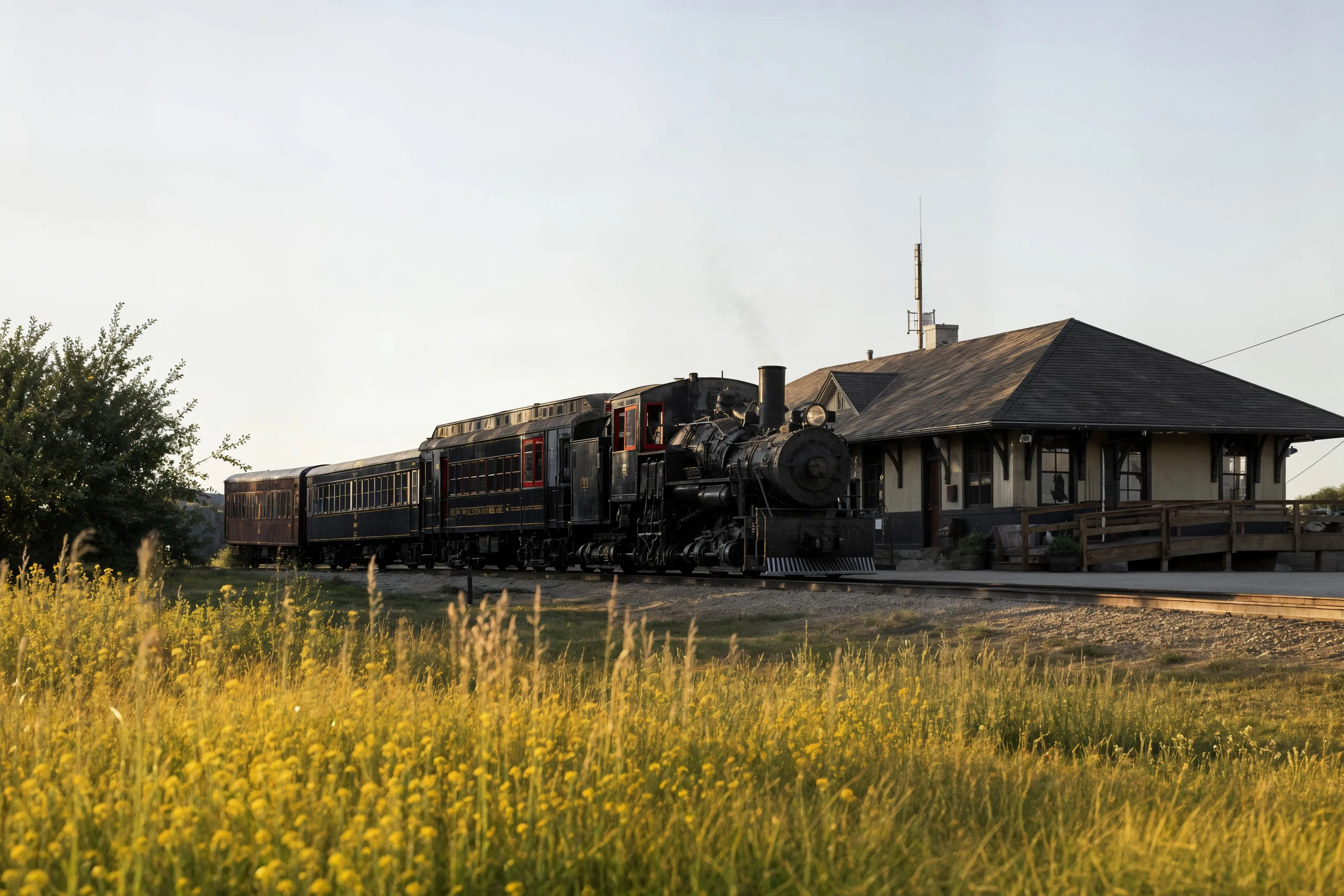
This part of Alberta runs on Agriculture and Oil & Gas, and that mix shows up in the outbuildings on local properties: heated shops for equipment repair, grain bins with aeration fans, and barns that carry their own subpanel. Statistics Canada counted 5,695 people here in the 2021 census, down from 5,952 in the prior count, and the working landscape just outside the core still centers on the same farm and energy operations that built it. Range Road Solar sizes shop and outbuilding systems to that mix of loads rather than guessing at it. We start with your most recent power bill, which carries the 12-month usage graph for the property, and we walk the site to check roof pitch, shading, and whether a ground-mount array fits a spread-out yard better than a roof. Properties within reach of the Alberta Prairie Railway Excursions grounds and the surrounding farmland often run equipment on a different schedule than a standard home, and that changes how we size the array and choose between single-phase and three-phase inverter setups. ATCO Electric is the wire service here, and every interconnection application we file reflects the specific loads we find on site, not a template built somewhere else.
Electrical Site Review for Stettler Properties
Voltage Rise
Voltage rise happens when a grid-tied inverter pushes power back onto a long or lightly loaded distribution line, and rural feeders can be especially prone to it. On some properties, that pushes line voltage high enough to make an inverter throttle its own output, a form of clipping that cuts into the generation you expected. We measure voltage conditions at the service entrance before finalizing system size, because an inverter spec that works fine on a tight suburban grid can behave differently out here.
Single-Phase vs Three-Phase
Shops and outbuildings in this area run on either single-phase or three-phase service, depending on the equipment the property was originally built to support. Three-phase service, common where there's a grain dryer, large motor, or heavy shop equipment, changes which inverter models are compatible and how much capacity we can put on that service. We confirm which type of service a property has before specifying equipment, since a single-phase inverter isn't interchangeable with three-phase gear.
Panel Infrastructure
A lot of shops and outbuildings on older rural properties still run on a panel that was sized for a smaller load decades ago. Before we finalize a system, we check the panel's age, its breaker capacity, and whether there's room for a new breaker or a feed-through arrangement. If the panel can't support the added capacity, an upgrade means a new panel sized for both the existing loads and the solar system, installed as part of the project rather than as a surprise later.
Service Entrance Review
We also check the condition of the service entrance and meter base, since ATCO Electric reviews that equipment as part of the micro-generation application. An older or damaged meter base can hold up the application or need replacement before the utility will approve the connection. When that's the case, we fold the upgrade into the project scope so it's addressed once, as part of the same installation.
Right-Sizing Solar for Stettler Properties
A system sized for a single rural property often ends up bigger than a typical in-town install, because it's rarely covering just a house. Add a heated shop, a couple of outbuildings, maybe an irrigation pump or grain-handling equipment, and the combined load looks nothing like a standard residential account. That's one reason the range for shop and outbuilding systems runs from 8 kW up to 20 kW instead of landing on one number. Roof or ground mount is a property-by-property call. A shop with a clean, south-facing roof and no shade from trees or neighboring buildings is often the simpler mount. But when the roof is shaded, pitched the wrong way, or the yard is laid out with buildings scattered across the property, a ground-mount array on open land is frequently the better option, since it can be oriented and angled independent of any roofline. We don't size a system off a square-footage rule. We pull the 12-month usage graph printed on your most recent power bill and look at how your load moves through the year, then combine that with what we find during the site walk: roof condition, shading, available ground space, and panel capacity. That combination, not a rule of thumb, determines whether a property needs an 8 kW system or one closer to 20 kW.
Typical Load Profiles We Design For Near Stettler
Home Plus Heated Shop
This is the most common profile we design for: a house plus a heated shop with a block heater, compressor, and shop lighting running through the colder months. The shop's heating and equipment loads usually push total usage well above what the house alone would need, so we size the system from the combined load on your most recent power bill rather than the house circuit alone.
Shop Plus Grain Handling
Properties running grain bins, aeration fans, and an auger or conveyor system see short bursts of heavy load during harvest that don't show up the rest of the year. We look at how that seasonal spike appears on the 12-month usage graph and size the system to the property's overall pattern, not just the quiet months.
Multiple Outbuildings Plus Irrigation
Some properties split load across several outbuildings plus an irrigation pump that only runs part of the season. That kind of spread-out, intermittent load is different from a single continuous draw, and it usually points us toward a ground-mount array sized from the full annual picture on your power bill rather than any single building's circuit.
ATCO Electric Interconnection in Stettler
ATCO Electric is the wire service for properties in this area, and that's the utility whose micro-generation application process governs every grid-tied shop or outbuilding system we install here. Range Road Solar prepares and submits the full interconnection package on your behalf: single-line diagrams, equipment specifications for the LONGi panels and APsystems microinverters, and the site-specific documentation ATCO Electric requires to review a new grid-tied system. We don't guess at what the application needs or submit a generic template. Every package reflects the actual equipment going on your shop or outbuilding, matched to the service entrance and panel capacity we find during the site review. We won't quote an approval timeline, a credit structure, or a payout rate here, because those are governed by ATCO Electric's current rules and your specific account, not by us. What we can tell you is that we've built the interconnection package before and know what ATCO Electric asks for, and we handle that paperwork so you're not learning the process from scratch.
Project Economics and Design Review
| System Size | Annual Production | Year 1 Savings | Payback Period |
|---|---|---|---|
| 8-20 kW range, 12 kW typical |
Production, savings, and payback figures require a property-specific design review using your most recent power bill and on-site conditions.
How We Work in Stettler
Bill and Load Review
We review your power bill to understand your energy use in Stettler and size the system to your actual consumption, not a generic estimate.
Site Assessment
We assess your roof or ground area, south-facing exposure, electrical service, and utility interconnection requirements specific to your property.
Design and Utility Application
We produce a system layout, production estimate, and cost summary, then submit your micro-generation application to your utility on your behalf.
Installation and Commissioning
Our crew installs racking, panels, inverter, and electrical connections. All work is performed by licensed electricians. We commission and test before handoff.
Current Program and Interconnection Review
Utility connection review
ATCO Electric reviews grid connection applications for every new micro-generation system, including shop and outbuilding installs. Range Road Solar prepares the full design package, including equipment specifications and site documentation, and handles the submission on your behalf so the application reflects your actual system.
Current program review
Eligibility for any current commercial, farm, or residential program is reviewed against the rules in place at the time of your design, since those rules change. We check what applies to your specific property and project during the design review rather than assuming a past program still applies.
Frequently Asked Questions
Get a Solar Assessment for Stettler
Submit a recent power bill and we will review your consumption and provide an honest assessment for your Stettler property. No obligation.
(587) 330-7502 Book a CallRelated Resources
More Solar Services in Stettler