Solar solar-battery Stettler Alberta is a search that captures a real need: properties here want solar generation paired with storage that can actually hold a load during an outage, not just a grid-tied array that goes dark the moment ATCO Electric's line goes down. That's the core difference between a standard grid-tied install and what we design for properties in this area. A solar plus battery system pairs your PV array with a storage unit sized to back up the loads that matter most. That might mean keeping the house lights, well pump, and chest freezer running through an overnight outage, or it might mean backing up a heated shop with three-phase equipment. Those are very different battery and inverter configurations, and we don't make that call until we've reviewed your panel, your service entrance, and your most recent power bill. On the solar side, we install LONGi panels and APsystems microinverters as our standard equipment. APsystems microinverters work at the panel level, which means partial shading from a grain bin, a shop roofline, or a row of trees doesn't bring down the output of the whole string. On a rural yard with outbuildings scattered around, that matters. Battery equipment and capacity are confirmed during the property-specific design, because the right battery for a home with a well pump and a shop heater is not the same as the right battery for a house on a town lot. Systems in the 8 to 12 kW range cover most residential and light acreage applications, with 10 kW being typical. Larger farm and commercial loads may require a different approach, which we work through during the design review.
Solar Planning for Stettler Properties
Properties in and around Stettler, Alberta tend to carry heavier electrical loads than a typical suburban lot. Heated shops, grain handling equipment, irrigation pumps, and large homes on acreages all push monthly consumption up well past what a standard residential system is designed for. That changes how you size a solar plus battery system, and it changes what backup you actually need when grid power drops. Atco Electric supplies the area, and their rural distribution lines cover a lot of ground. Longer lines mean outages happen, and when they do, a battery system without a well-sized solar array behind it runs out of capacity faster than most people expect. That's why the design conversation here starts with your most recent power bill and a site walkthrough, not a rule-of-thumb panel count. We're not in the business of selling the biggest system on paper. We're in the business of sizing a system that actually fits your property, your loads, and the interconnection rules that apply to your service. We provide honest production estimates based on your actual power bills and site conditions, not inflated projections. That approach takes a bit more work up front, but it means the numbers you see before you sign are numbers you can rely on.
Electrical Site Review for Stettler Properties
Voltage Rise
Voltage rise happens when solar generation pushes voltage on the local distribution line above the allowable threshold. Rural distribution lines that cover long distances between substations and service points can be more susceptible to voltage rise conditions. If voltage rise limits are reached, the inverter clips output or shuts down to stay within grid specs, which is why we assess line conditions and system size together before finalizing a design.
Single-Phase vs Three-Phase
Rural Alberta properties can be served by either single-phase or three-phase power depending on the loads the service was originally built for. Shops with larger motors, grain dryers, or three-phase irrigation equipment are often on three-phase service, while a residence on the same yard may be single-phase. The phase configuration of your service directly affects which inverters are compatible and what system capacity is achievable, so we confirm it during the site review.
Panel Infrastructure
Older electrical panels on rural properties weren't designed with solar backfeed in mind, and the breaker capacity available for a solar interconnection is tied to the panel's main rating and the existing load. We assess breaker capacity and panel age as part of every design review. If the panel can't safely support the system, we'll include a panel upgrade in the scope before any application goes to ATCO Electric.
Service Entrance Review
The meter base and service entrance are reviewed as part of the micro-generation application to ATCO Electric, and the condition of those components has to meet current standards before the application proceeds. We check the meter base for socket type, condition, and compatibility with bi-directional metering during our site review. If an upgrade is required, we identify it early so it's costed into the project and doesn't surface as a surprise after you've already committed.
Right-Sizing Solar for Stettler Properties
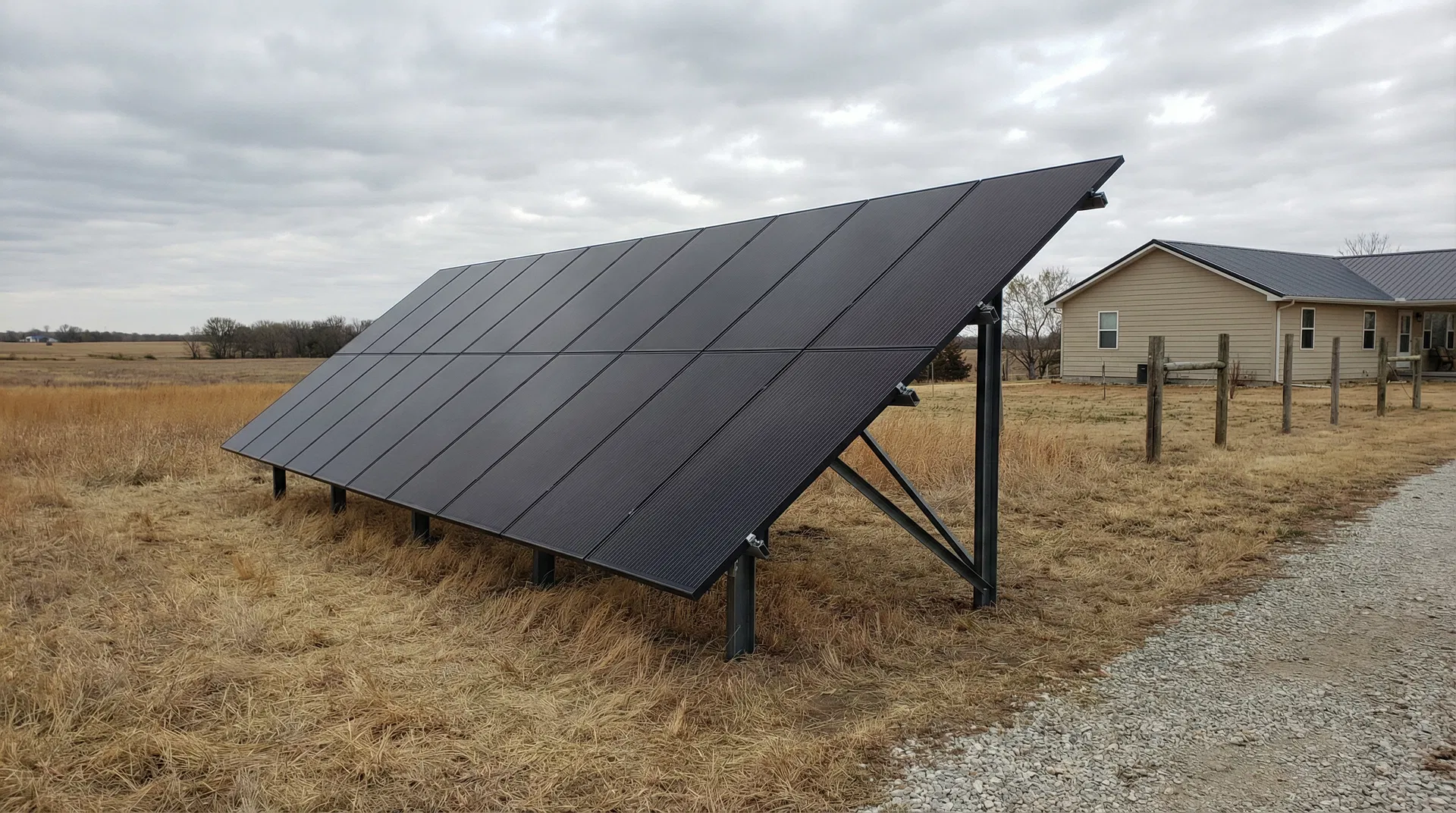
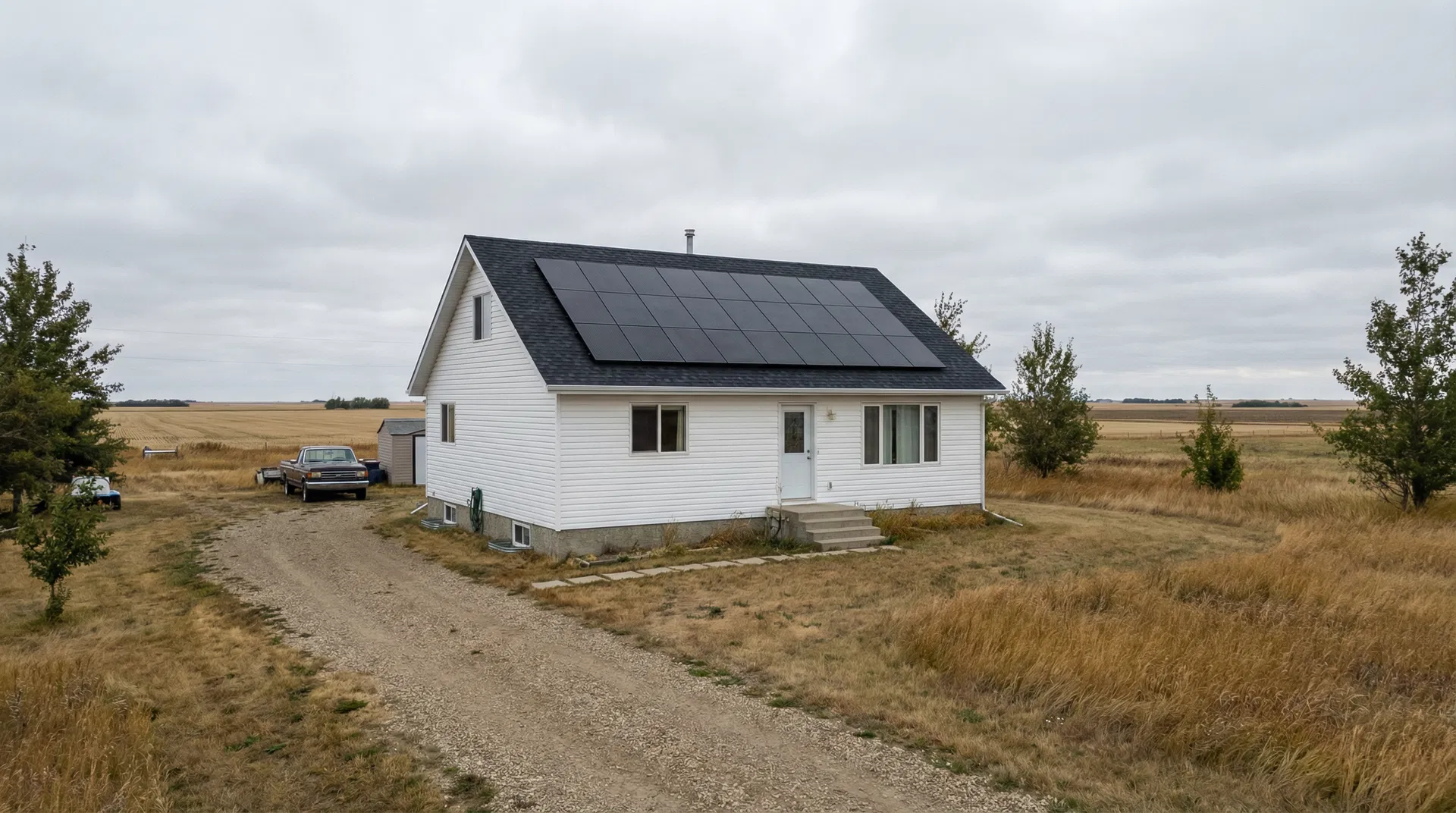
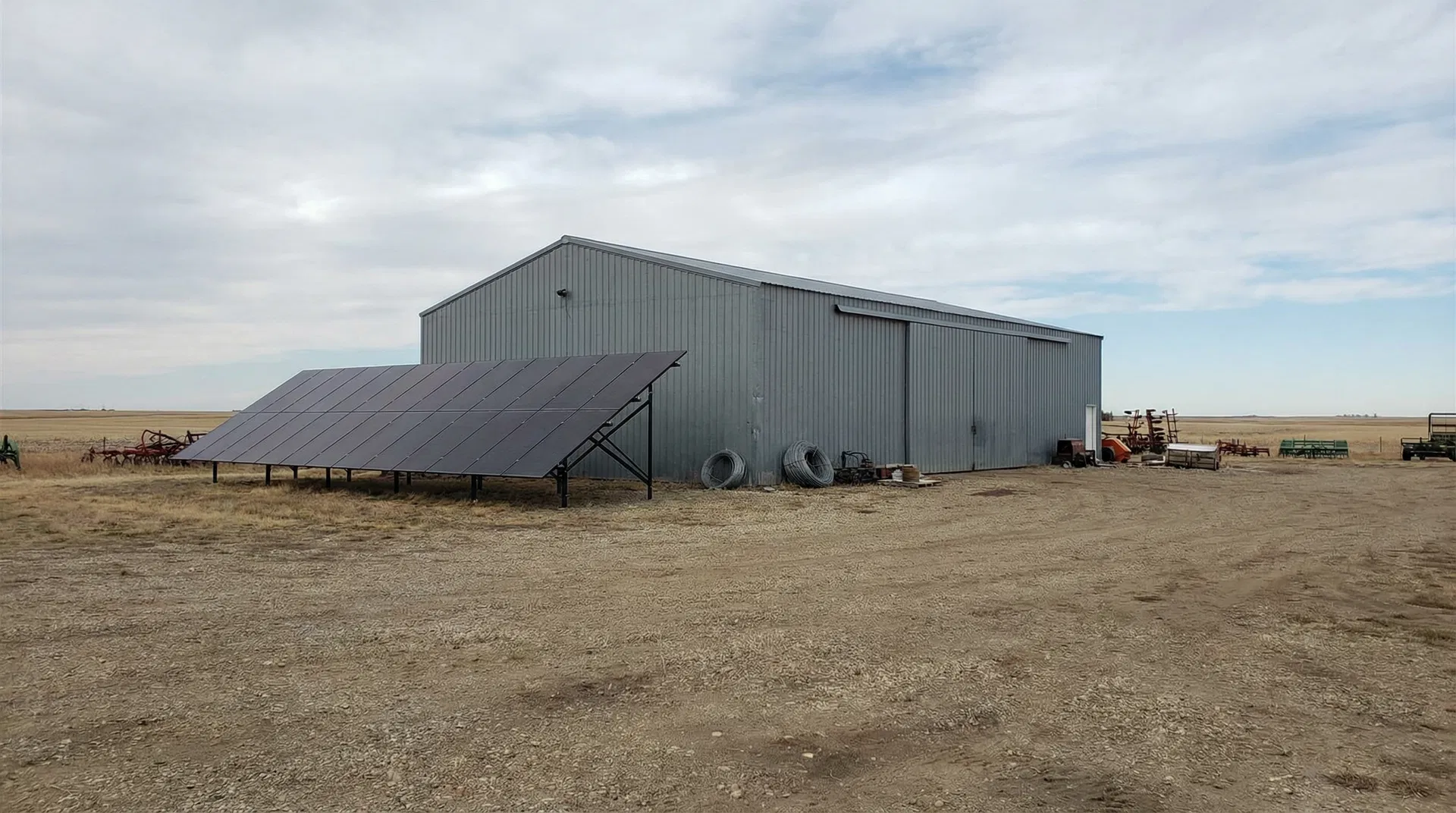
Properties outside a city core rarely have just one load to design around. A house in Stettler might sit on a yard that also has a heated shop, a grain bin with an auger motor, a water well, and a second building used for storage or livestock. Each of those loads shows up on your power bill, and the 12-month usage graph on that bill is the starting point for every sizing conversation we have. We don't size from a rule-of-thumb square footage estimate. Roof versus ground mount is a real decision on acreage and farm layouts. If your house roof has good orientation and minimal shading, rooftop is usually the simpler path. But if the shop is larger, faces a better direction, or the house roof has shading from trees or adjacent buildings, a ground mount array closer to the main load might produce better results. We look at both options during the site review and recommend based on what the layout actually supports. Ground mount also makes sense when the roof pitch isn't well suited to panel installation or when the yard has open land that's more practical to use than trying to work around roof obstacles. It's not a premium option, it's just a different mounting approach that fits some properties better. Battery sizing follows the same logic. We're not going to put a small battery behind a 12 kW array on a property with a shop heater and a well pump and tell you it'll cover an outage. The storage capacity has to match the backup loads you care about, and we confirm that during the design review.
Typical Load Profiles We Design For Near Stettler
Home and Heated Shop
A residence paired with a heated shop is one of the most common load profiles we see in this part of Alberta. The shop heat, lighting, and plug loads add meaningfully to total consumption, and the backup requirement during an outage usually includes keeping the shop above freezing as well as maintaining the house. We size the solar array and battery together from the 12-month usage graph on your most recent power bill to make sure both buildings are accounted for in the design.
Acreage with Well Pump and Outbuildings
An acreage with a drilled well, a detached garage, and one or two smaller outbuildings has a different backup priority than a house on a serviced lot: losing the well pump during a multi-day outage is a real problem. We identify the well pump load, the motor starting draw, and the other critical circuits during the site review, then size the battery to handle those loads through the backup window that matters to the property owner.
Grain Farm with Seasonal Handling Equipment
Grain farms near Stettler often have significant seasonal electrical demand tied to harvest, with auger motors, aeration fans, and bin heaters running for weeks at a stretch. That seasonal spike shows up clearly on the 12-month usage graph. We design the solar array to address the baseline consumption throughout the year while accounting for the seasonal pattern, and we confirm whether the handling equipment loads are candidates for battery backup or whether they're better left on grid supply given their motor sizes.
ATCO Electric Interconnection in Stettler
ATCO Electric is the wire service for Stettler and the surrounding rural area. Any solar plus battery system that connects to the grid here goes through ATCO Electric's micro-generation interconnection process, and the application has to be built around their current technical requirements. Range Road Solar handles the interconnection application on your behalf. That includes preparing the design package, confirming that your system configuration meets ATCO Electric's current specs, and submitting the paperwork so you don't have to navigate it yourself. The technical requirements cover things like inverter certification, protection settings, and the condition of your meter base, all of which we review before the application goes in. What we won't do is quote you an approval timeline, because that sits with ATCO Electric and it varies. What we will do is make sure your application is complete and technically correct the first time, which avoids the back-and-forth that slows things down. If your service entrance or meter base needs work before the application can proceed, we'll tell you that during the design review, not after.
Project Economics and Design Review
| System Size | Annual Production | Year 1 Savings | Payback Period |
|---|---|---|---|
| 8-12 kW range, 10 kW typical |
Production, savings, and payback figures require a property-specific design and the 12-month usage graph on your most recent power bill.
How We Work in Stettler
Bill and Load Review
We review your power bill to understand your energy use in Stettler and size the system to your actual consumption, not a generic estimate.
Site Assessment
We assess your roof or ground area, south-facing exposure, electrical service, and utility interconnection requirements specific to your property.
Design and Utility Application
We produce a system layout, production estimate, and cost summary, then submit your micro-generation application to your utility on your behalf.
Installation and Commissioning
Our crew installs racking, panels, inverter, and electrical connections. All work is performed by licensed electricians. We commission and test before handoff.
Current Program and Interconnection Review
Utility connection review
ATCO Electric reviews all micro-generation interconnection applications for properties in their service territory, including Stettler and the surrounding rural area. Range Road Solar prepares the full design package and submits the application on your behalf. We make sure the technical documentation meets ATCO Electric's current requirements before anything goes in.
Current program review
Residential, acreage, and farm solar installations may be eligible for programs or incentives depending on ownership structure, system type, and current rules. We review eligibility against the rules in effect at the time of your design, not against program details that may have changed. What's available when you start the conversation isn't always what's available when permits are pulled, so we confirm it at design time.
Frequently Asked Questions
Get a Solar Assessment for Stettler
Submit a recent power bill and we will review your consumption and provide an honest assessment for your Stettler property. No obligation.
(587) 330-7502 Book a CallRelated Resources
More Solar Services in Stettler