Solar rebates and incentives in Stettler, Alberta are only half the picture: the other half is the system itself, built from LONGi panels and APsystems microinverters sized to your property's load and your most recent power bill. Most of the systems we design for this area land somewhere in the 8 to 15 kW range, with 10 kW being a common starting point for a home with standard usage. Farms and acreages here often need more, once you add a shop, grain handling equipment, or irrigation pumps to the load. The rebate and incentive side changes depending on who's applying. Residential customers typically work through micro-generation credit rules with their retailer. Farms and small businesses may qualify for the federal Clean Technology investment tax credit, which is structured around commercial and agricultural operations rather than households. Municipal programs come and go, and eligibility depends on current rules at the time you apply, not on what applied last year. We review all three paths, micro-generation credits, the federal Clean Technology ITC, and any active municipal program, against your specific property and use case before we finalize a design. LONGi's panels and APsystems' microinverter architecture give us flexibility on roof layouts and ground-mount arrays alike, which matters on properties with multiple roof planes or shaded sections. We'll tell you plainly if a program doesn't apply to your situation instead of including it in a quote to make the numbers look better.
Solar Planning for Stettler Properties
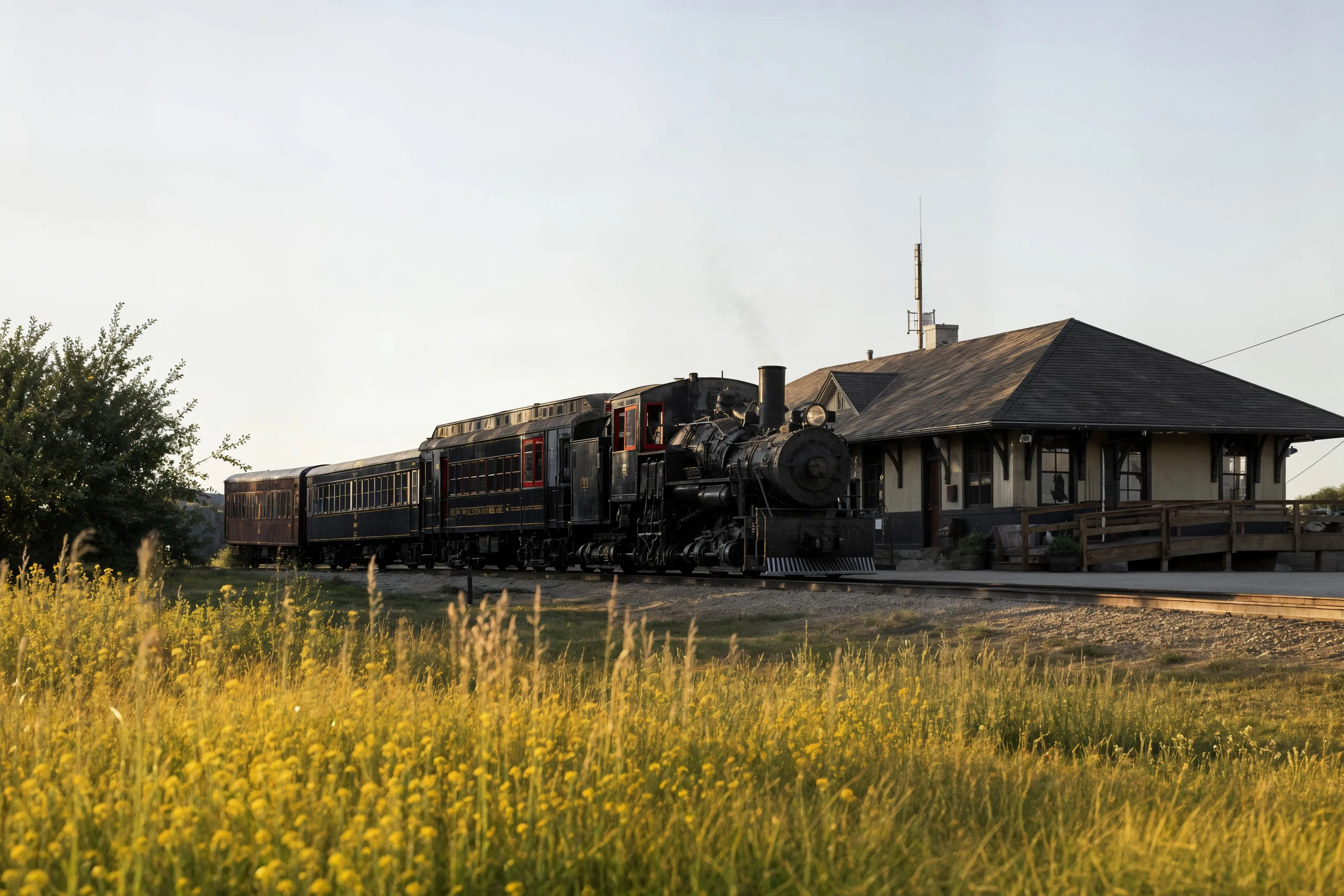
Stettler sits in a part of Alberta where the local economy runs on Agriculture and Oil & Gas, and that mix shows up in the kind of properties we design for: working farms, acreages with shops and outbuildings, and in-town homes on standard residential lots. Statistics Canada puts the town's population at 5,695, a working baseline that tells us the mix of rural and in-town properties we're sizing systems for, not a number that changes how a system is designed. What does change the design is the property itself: whether you're on ATCO Electric's wire service, what your roof or ground-mount site looks like, and what your most recent power bill shows for usage. Visitors come through for things like the Alberta Prairie Railway Excursions, and that tourism layer sits alongside the Agriculture and Oil & Gas base that drives a lot of the commercial and farm inquiries we get locally. We don't quote a system off population figures or town reputation. We quote it off your site conditions and your bill. If you're weighing solar rebates and incentives for a home, farm, or small business here, the first real answer comes from a design review, not a generic estimate.
Electrical Site Review for Rural Alberta Properties
Voltage Rise
Voltage rise happens when the distance and wire gauge between your inverter and the point of common coupling cause voltage to climb under load. Rural distribution lines in this area can run longer than in-town circuits, and that distance is exactly the kind of condition that makes voltage rise worth checking before we finalize inverter settings. If voltage rise is significant, it can push an inverter into clipping or trip its over-voltage protection, which is why we measure it on site rather than assuming a standard result.
Single-Phase vs Three-Phase
Properties in this area show up with either single-phase or three-phase electrical service, and which one you have changes what inverter hardware and system capacity are realistic. Three-phase service, common on larger farm operations and some commercial buildings, often supports a bigger system than a single-phase residential service of the same panel size. We confirm which service type you have early, since it narrows down the microinverter configuration before we finalize a design.
Panel Infrastructure
Older rural properties sometimes carry electrical panels that predate current breaker capacity standards or microgeneration equipment entirely. We check panel age, available breaker space, and busbar rating during the site visit to see whether the existing panel can support a new solar circuit. If it can't, a panel upgrade becomes part of the project scope before installation, not a surprise after the fact.
Service Entrance Review
The service entrance and meter base are part of what we inspect on every site visit, since their condition affects whether the micro-generation application to ATCO Electric can go through as-is. A damaged, outdated, or undersized meter base can hold up that application regardless of how the solar system itself is designed. When an upgrade is needed, we scope it alongside the solar installation so the whole project moves through ATCO Electric's review together.
Right-Sizing Solar for Stettler Properties
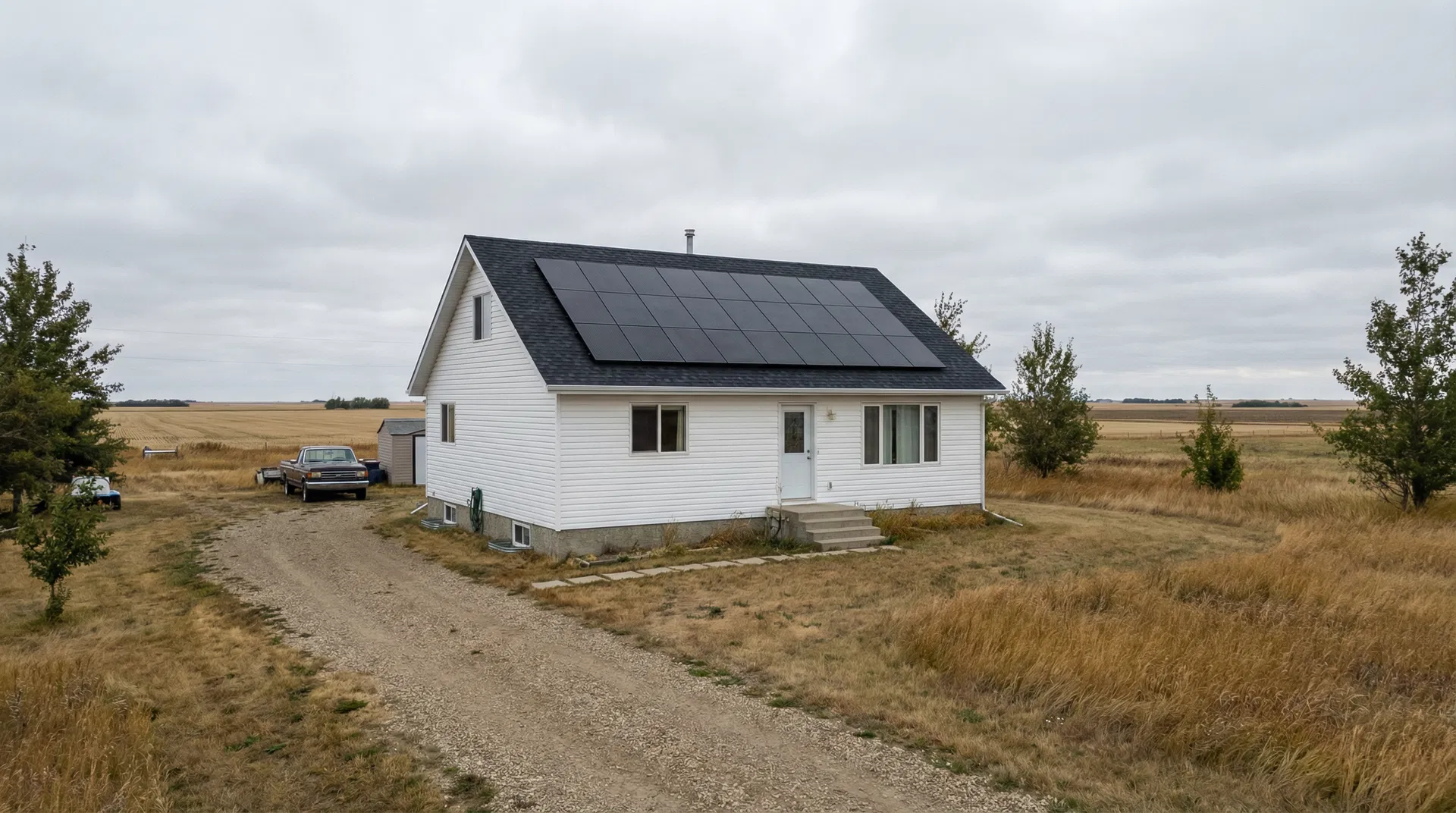
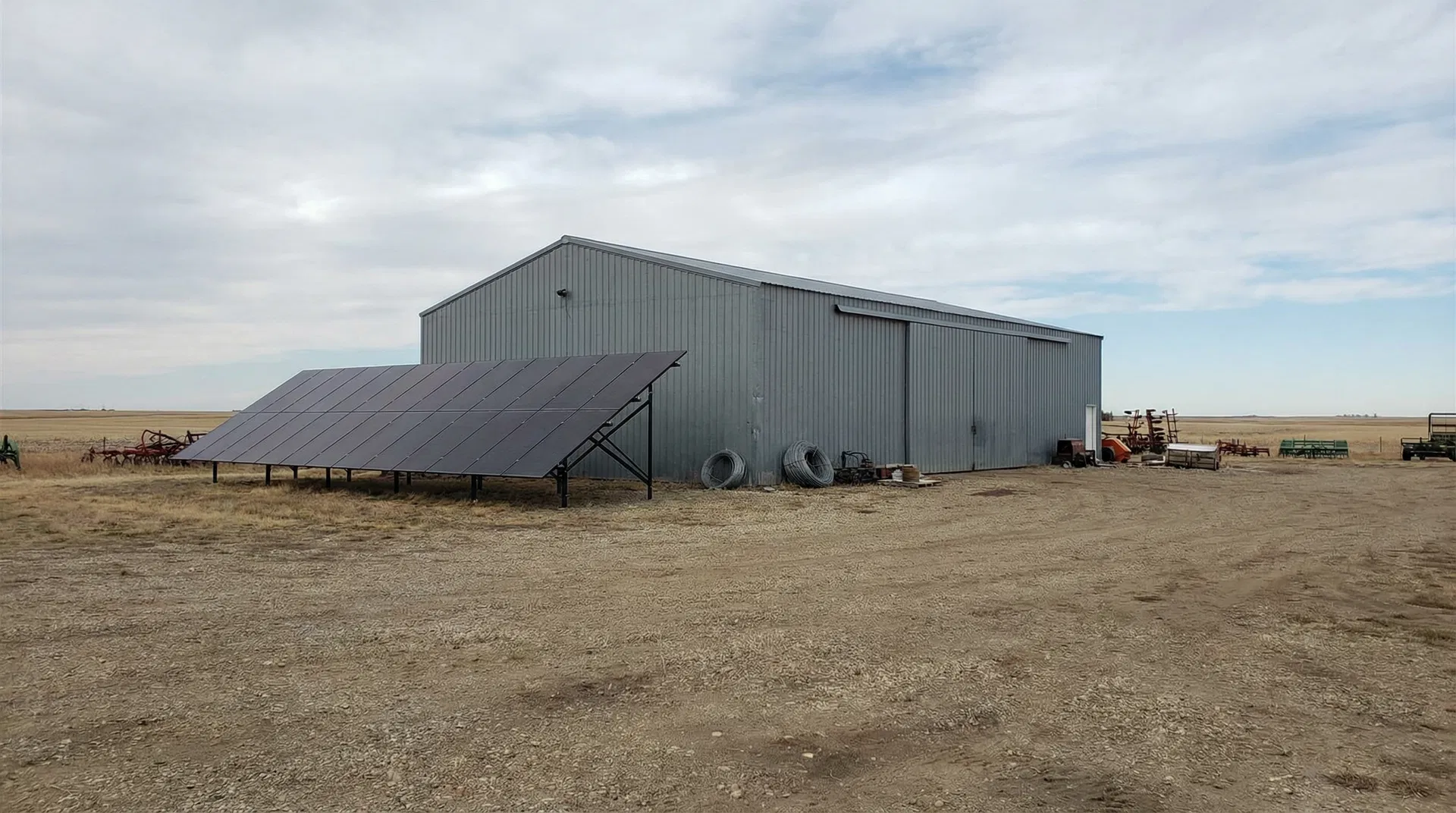
Rural properties around here often carry more electrical load than a typical in-town home, because the system has to cover a house plus a heated shop, outbuildings, and sometimes irrigation pumps or grain handling equipment. That's part of why systems in this area commonly land in the 8 to 15 kW range rather than the smaller systems you'd see on a standard urban rooftop. Roof mount works well when you've got good south or west-facing roof area that isn't shaded by trees or nearby buildings. Ground mount becomes the better call when roof pitch is poor, shading is a problem, or when a property has open yard space and the economics favor building a dedicated array instead of working around roof constraints. On acreages and farms, we see both: a roof-mount array on the house and a ground-mount array near the shop or yard, sized independently for each load. We don't size systems off rule-of-thumb numbers like square footage or a flat per-home estimate. The real input is the 12-month usage graph on your most recent power bill, which shows your actual consumption pattern across the year, paired with a site visit that covers roof or ground conditions, shading, and orientation. That combination, your bill and your site, is what determines whether a system closer to 8 kW or closer to 15 kW makes sense for your property.
Typical Load Profiles We Design For Near Stettler
Home + Heated Shop
This is one of the most common profiles we see on acreages in this area: a house plus a heated detached shop, each with its own panel and its own draw pattern. We size for both loads together, using the 12-month usage graph on your most recent power bill to see how shop heating affects winter draw differently than summer. Depending on that pattern, the system and inverter configuration we land on varies property to property.
Grain Handling and Farm Equipment
Grain dryers, augers, and other handling equipment create short, heavy draws that look different on a usage graph than steady household load. We look at how that equipment shows up on your most recent power bill before deciding whether the system needs a different inverter configuration to handle those load spikes. Farms with this profile often end up toward the higher end of the 8 to 15 kW range.
In-Town Home, Standard Residential
A standard in-town home in this area has a more even, predictable load profile than an acreage with outbuildings, which usually makes sizing more straightforward. We still pull the 12-month usage graph from your most recent power bill rather than assuming a flat number, since factors like electric heating, a hot tub, or an EV charger can shift what a 'standard' home actually needs. That review is what tells us whether a system sits closer to 8 kW or 15 kW.
ATCO Electric Interconnection in Stettler
ATCO Electric is the wire service for Stettler, Alberta, and that's the utility whose rules govern how a solar system here connects to the grid. Any grid-tied system needs a micro-generation application filed with ATCO Electric before it's energized, covering everything from the interconnection agreement to metering requirements. Range Road Solar handles that application as part of the project, from the technical drawings ATCO Electric asks for to the paperwork that confirms your system meets their interconnection standards. We don't guess at what ATCO Electric will require on a given property. Service entrance condition, meter base type, and existing panel capacity all factor into what the application looks like, and we check those during the site visit rather than assuming a standard setup will work. If ATCO Electric comes back with a requirement specific to your service, we handle that correspondence directly so you're not the one translating utility language back and forth. The application process is part of the project scope, not an add-on.
Project Economics and Design Review
| System Size | Annual Production | Year 1 Savings | Payback Period |
|---|---|---|---|
| 8-15 kW range, 10 kW typical |
Production, savings, and payback figures require a property-specific design review built from your most recent power bill, not a generic estimate.
How We Work in Stettler
Bill and Load Review
We review your power bill to understand your energy use in Stettler and size the system to your actual consumption, not a generic estimate.
Site Assessment
We assess your roof or ground area, south-facing exposure, electrical service, and utility interconnection requirements specific to your property.
Design and Utility Application
We produce a system layout, production estimate, and cost summary, then submit your micro-generation application to your utility on your behalf.
Installation and Commissioning
Our crew installs racking, panels, inverter, and electrical connections. All work is performed by licensed electricians. We commission and test before handoff.
Current Program and Interconnection Review
Utility connection review
ATCO Electric reviews every micro-generation grid connection application before a system is energized, and that review covers metering and interconnection requirements specific to your service. Range Road Solar prepares and submits that full design package on your behalf, including the technical documentation ATCO Electric asks for.
Current program review
Eligibility for commercial, farm, and residential incentive programs is checked against the rules in place at the time we design your system, not against what applied in a prior year. We review micro-generation credit structures, the federal Clean Technology ITC where a property qualifies as a farm or business, and any active municipal program during that same review.
Frequently Asked Questions
Get a Solar Assessment for Stettler
Submit a recent power bill and we will review your consumption and provide an honest assessment for your Stettler property. No obligation.
(587) 330-7502 Book a CallRelated Resources
More Solar Services in Stettler