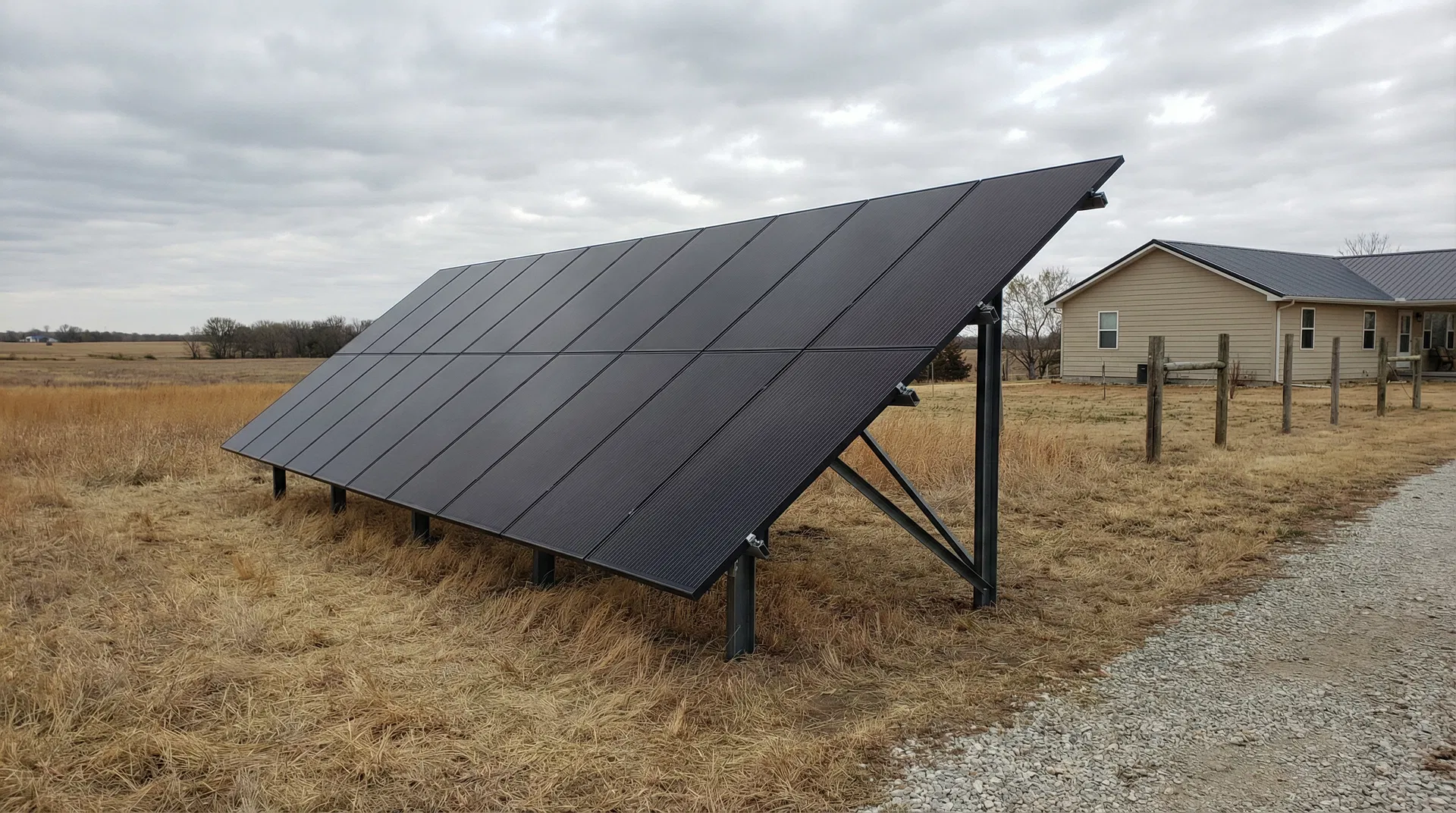
Commercial solar in Stettler, Alberta means systems built well past what a typical home needs, ranging from 15 kW up to 100 kW depending on load, with 30 kW being a common starting point for a mid-size operation. We install LONGi panels on every commercial project, paired with APsystems microinverters on smaller systems or string inverters once a project scales up toward the higher end of that range. The right inverter choice depends on system size, roof or ground-mount layout, and whether the property runs single-phase or three-phase service. Local commercial and farm buildings vary widely: a Main Street office or retail space has a steady, modest load, while a machine shop, grain facility, or oilfield service yard can pull hard and unevenly through the day. We design to that actual load rather than a generic commercial formula. Roof condition matters too. Older shop and warehouse roofs sometimes have shading, awkward pitch, or structural limits that make a ground mount the better call, especially on properties with open yard space to spare. We also plan for the CT ITC incentive eligibility built into this service, since commercial systems are often structured with that federal credit in mind, subject to your business's specific eligibility at the time of design. Every install gets scoped from a site walk and your most recent power bill, not a rule of thumb, so the panel count, inverter type, and mounting method all match what your property actually needs.
Solar Planning for Stettler Properties
The local economy here runs on Agriculture and Oil & Gas, and both sectors show up in the commercial buildings we assess: grain handling facilities, shops with welding and compressor circuits, and oilfield service yards running equipment around the clock. With a population of 5,695, this is a working commercial core, not a bedroom community, and that changes how a system gets sized. A retail storefront pulls a different load than a machine shop wired for three-phase equipment, and we don't guess at the difference. Every commercial design starts with your ATCO Electric account and your most recent power bill, because the 12-month usage graph on that bill tells us more about real demand than any assumption about business type ever could. We also look at roof structure, canopy potential over parking, or available yard space for a ground mount, since commercial sites in this area often have more flexibility than a residential lot. Range Road Solar confirms system size, panel layout, and inverter configuration through a site visit and that bill review, not a one-size formula. If your property has multiple meters or a mix of single-phase and three-phase service, we account for that before we ever put a number in front of you.
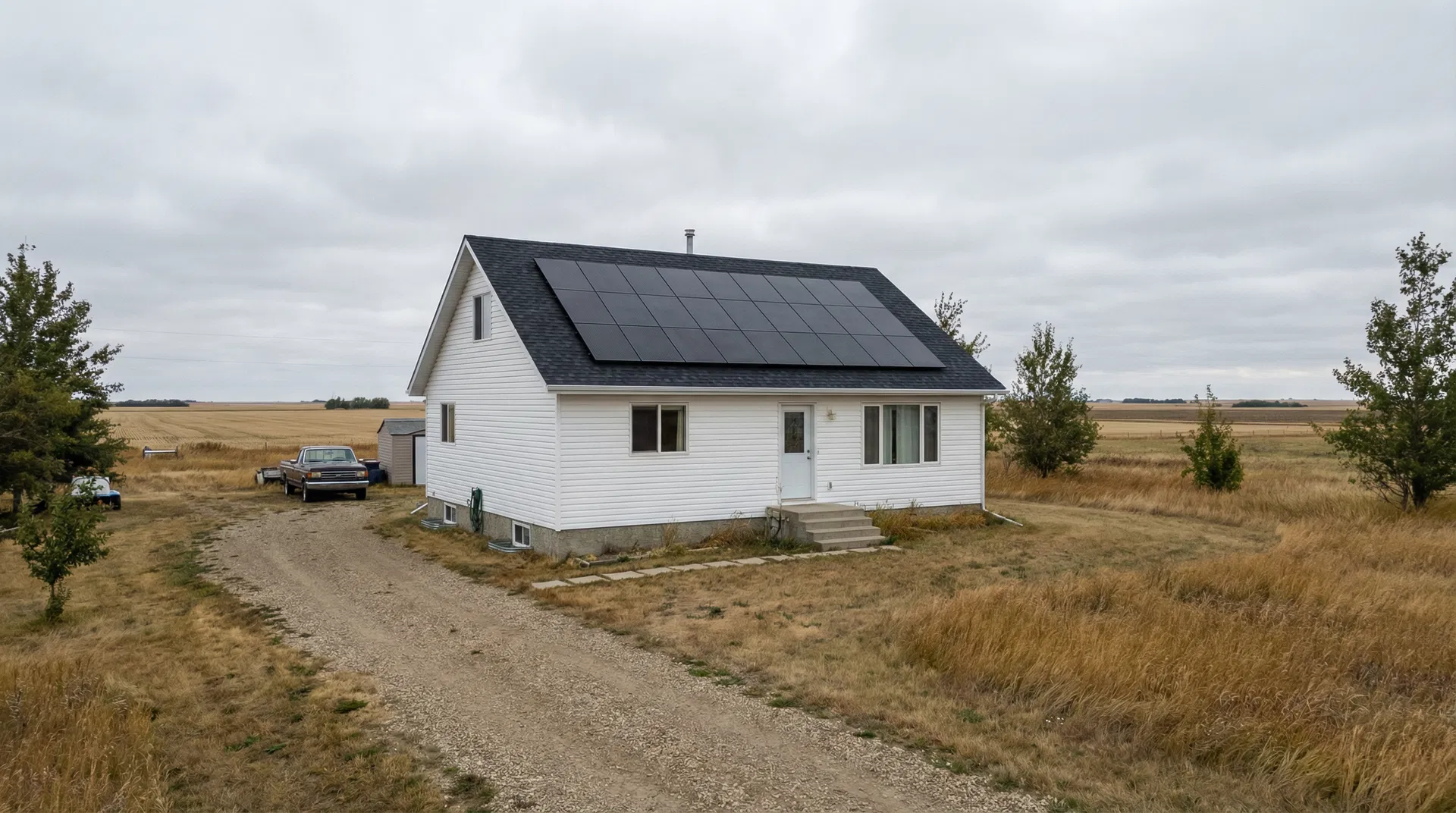
Electrical Site Review for Local Properties
Voltage Rise
Voltage rise happens when a solar inverter pushes power back through a long or lightly loaded stretch of distribution line, raising voltage at the point of interconnection. Properties on the far end of a rural feeder can see this more than those close to a substation, and it's a factor we check before finalizing a design. When voltage rise is a concern, we may adjust inverter settings or system size to keep the array within safe operating range and avoid nuisance clipping or shutdowns.
Single-Phase vs Three-Phase
Commercial properties in this area run on either single-phase or three-phase electrical service, and the difference matters for solar. Three-phase service, common on larger shops, grain facilities, and oilfield equipment, opens up inverter options and higher system capacity that single-phase service can't support. We confirm which service type a property has early in the design process, since it directly shapes which inverter models and system size are even possible.
Panel Infrastructure
Older commercial panels weren't built with solar backfeed in mind, so we check breaker capacity, panel age, and busbar rating before finalizing a design. A panel that's undersized or near the end of its service life can limit how much solar can be interconnected without an upgrade. When an upgrade is needed, that typically means a new panel or a supplemental subpanel sized to handle both existing loads and the new solar breaker.
Service Entrance Review
We inspect the service entrance and meter base condition as part of every commercial site visit, since a worn or outdated meter base can complicate the micro-generation application to ATCO Electric. A meter base that can't safely accommodate a solar interconnection needs to be addressed before ATCO will approve the connection. If an upgrade is required, we scope it into the project so there are no surprises once the application goes in.
Right-Sizing Solar for Local Commercial Properties
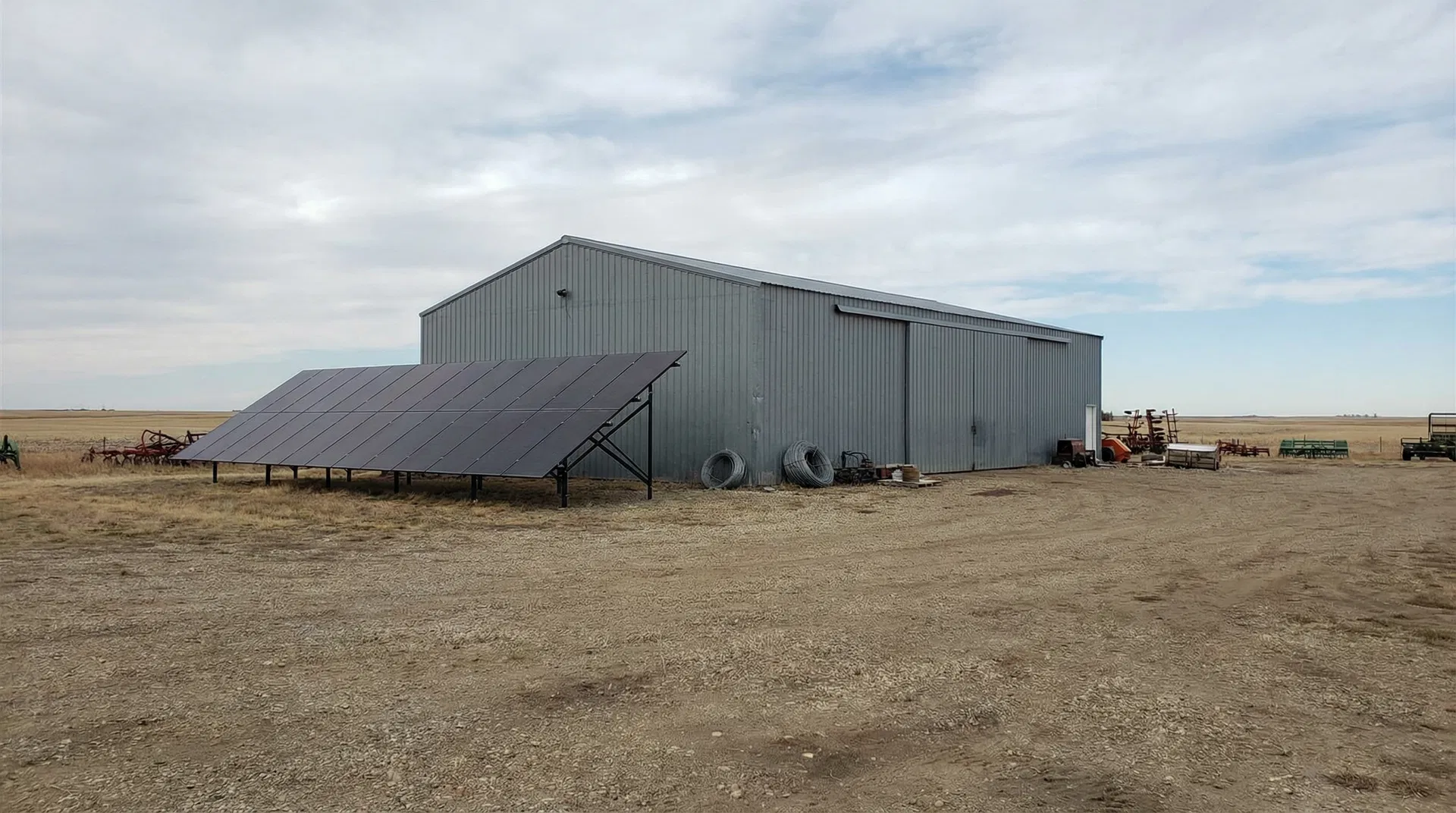
Commercial and farm properties in this area rarely run one load. A shop with welding and compressor circuits, a grain leg and augers during harvest, irrigation pumps, and an office or retail space out front can all draw from the same meter, and that's very different from sizing a rooftop system for a single household. Rural and commercial Alberta systems tend to run larger than a typical urban home installation simply because there's more equipment pulling from the grid. Roof mount isn't always the right call either. If a building has a steep or poorly oriented roof, shading from nearby trees or taller structures, or a roof that's too small for the load you're trying to offset, a ground mount on open yard space can make more sense. Farm-style layouts and larger commercial lots often have the room for it, and a ground mount also simplifies future maintenance access. We don't size a system off a rule of thumb or a rough estimate of square footage. We size it from the 12-month usage graph on your most recent power bill, which shows actual demand across the year, including seasonal spikes from irrigation or grain drying. That graph, combined with a site visit to assess roof condition, shading, and available ground space, is what determines final system size and layout, not a generic formula.
Typical Load Profiles We Design For Near Stettler
Retail Storefront with Office Space
A Main Street retail space or professional office typically runs lighter, steadier loads: lighting, HVAC, computers, and point-of-sale systems. We pull the 12-month usage graph from your most recent power bill to see how flat or seasonal that load really is, then size the array and inverter to match rather than assuming a standard commercial curve.
Machine Shop with Three-Phase Equipment
A machine shop running welders, compressors, and CNC equipment on three-phase service draws harder and less predictably than a storefront. We size these systems around peak demand periods shown on your power bill and confirm the panel's breaker capacity can handle the added solar circuit before finalizing equipment.
Farm Support Buildings and Grain Handling
Grain handling and general farm support buildings often see load spikes tied to harvest and drying season rather than a steady year-round draw. We design around that seasonal pattern using the usage graph on your most recent power bill, sizing the system so it offsets the heavy months without oversizing for the rest of the year.
ATCO Electric Interconnection Here
ATCO Electric is the wire service, and every commercial solar system here has to go through their micro-generation interconnection process before it can connect to the grid. Range Road Solar prepares and submits that application on your behalf, including the technical documentation ATCO requires for a commercial-scale system. We coordinate directly with ATCO Electric on the technical review so you're not stuck deciphering utility paperwork on top of running your business. We don't state an approval timeline or credit-settlement terms here, because those are set by ATCO Electric and can change, we confirm the current process and requirements as part of your design review. What we can tell you is that the application gets built around your specific system size and property, not a generic template, and we stay on it until the interconnection is approved.
Project Economics and Design Review
| System Size | Annual Production | Year 1 Savings | Payback Period |
|---|---|---|---|
| 15-100 kW range, 30 kW typical |
Production, savings, and payback figures require a property-specific design review and your most recent power bill, and we don't quote them before that.
How We Work in Stettler
Bill and Load Review
We review your power bill to understand your energy use in Stettler and size the system to your actual consumption, not a generic estimate.
Site Assessment
We assess your roof or ground area, south-facing exposure, electrical service, and utility interconnection requirements specific to your property.
Design and Utility Application
We produce a system layout, production estimate, and cost summary, then submit your micro-generation application to your utility on your behalf.
Installation and Commissioning
Our crew installs racking, panels, inverter, and electrical connections. All work is performed by licensed electricians. We commission and test before handoff.
Current Program and Interconnection Review
Utility connection review
ATCO Electric reviews every micro-generation interconnection application before a commercial system can connect to the grid. Range Road Solar prepares and submits the full design package on your behalf, so you're not the one deciphering the paperwork.
Current program review
Commercial, farm, and residential solar projects are each reviewed against whatever incentive and eligibility rules are active at the time of your design, since those rules change. We check what applies to your specific project type before finalizing pricing, rather than quoting off outdated assumptions.
Frequently Asked Questions
Get a Solar Assessment for Stettler
Submit a recent power bill and we will review your consumption and provide an honest assessment for your Stettler property. No obligation.
(587) 330-7502 Book a CallRelated Resources
More Solar Services in Stettler