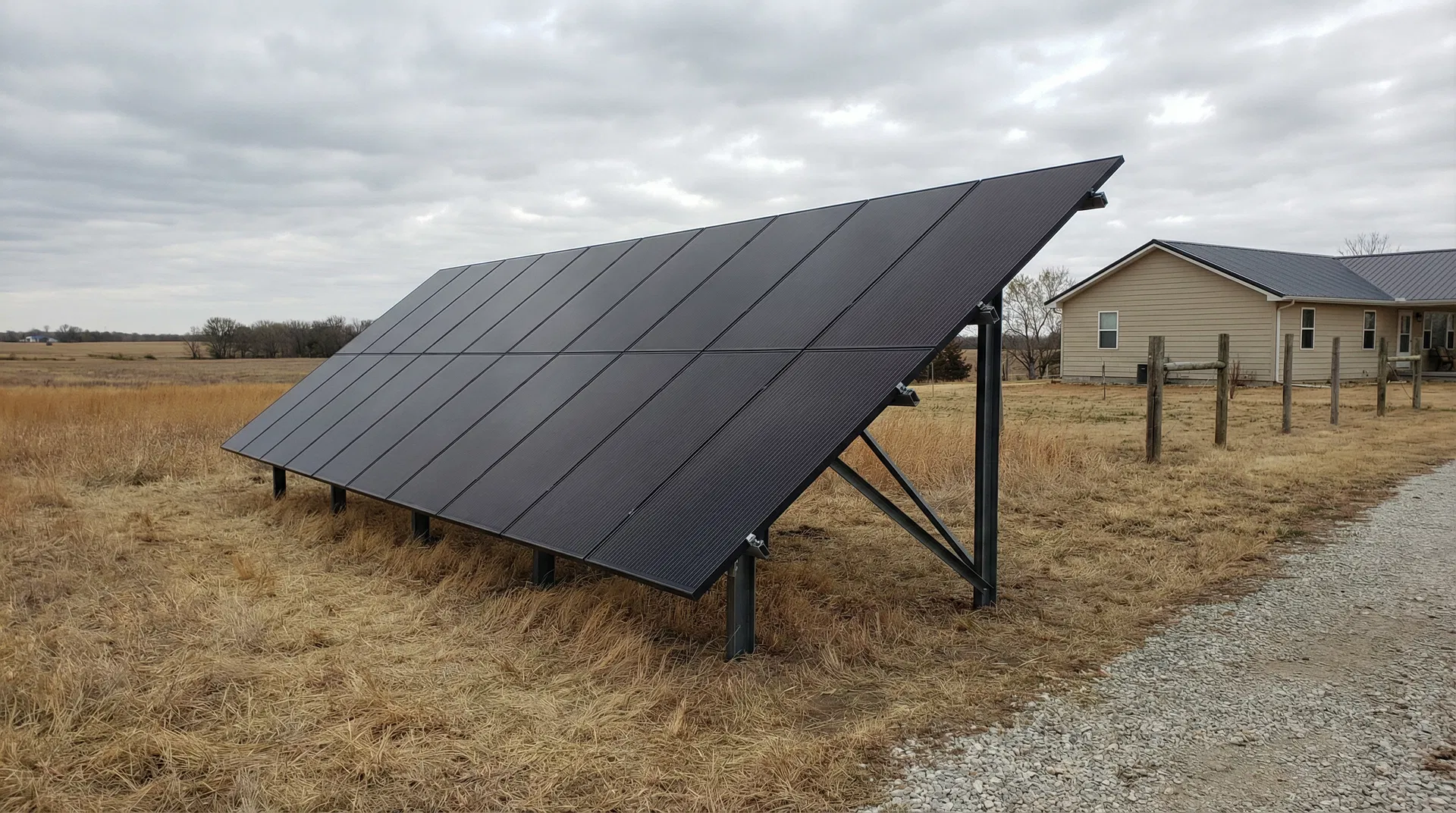
Farm solar stettler county projects run between 20 and 50 kW depending on the operation's load profile. A smaller mixed farm with a house and shop might land near the lower end of that range. A larger grain operation with aeration equipment, heated outbuildings, and continuous yard power can push well past 25 kW once the full load picture is on the table. We install LONGi solar panels on every farm project. They're a proven commercial-grade panel that holds up in agricultural environments without requiring exotic maintenance. For inverter technology, we use APsystems microinverters on rooftop configurations, which gives each panel its own inverter so shading from nearby buildings or trees doesn't drag down the whole string. On larger ground-mount systems, inverter selection is confirmed through the site design based on array size and service conditions. Ground-mount is the preferred configuration for farm-scale systems in this area. It puts the array where the sun hits it best, keeps it independent of aging roof structures, and makes future maintenance straightforward. We design the racking to suit your site, whether that's an open field corner, a laneway edge, or a cleared yard area near the service entrance. Every installation includes a full electrical site review before the design is finalized. On farm properties that means assessing the service entrance, panel capacity, phase configuration, and any infrastructure that touches the solar connection. We don't show up on install day with surprises.
Solar Planning for Stettler County Properties
Agricultural operations in this part of Alberta run loads that residential solar simply isn't built for. A grain farm with a heated shop, aeration fans, yard lighting, and a house can draw from multiple meters or a single large service entrance, and a system that doesn't account for all of it misses the point. That's why we start with your most recent power bill, not a rule-of-thumb number from a brochure. Farm properties here also tend to have the space to do this properly. Wide open yards, machine sheds with unobstructed south-facing rooflines, and available land around bins or along field edges all create real options for ground-mount installations. We look at what's actually on your property before we draw anything. FortisAlberta is the wire service for this area, and Alberta's micro-generation rules apply to systems tied to that grid. We handle the interconnection application and design package, so you're not navigating utility paperwork on your own. The goal is a system sized to what you use, built to what your site allows, and connected to the grid the right way.
Electrical Site Review for Stettler County Properties
Voltage Rise
Voltage rise occurs when a solar system exports power into a distribution line and the voltage at the point of connection increases. On rural distribution lines, which can be long and lightly loaded, this effect is more pronounced than in urban grid conditions. Excessive voltage rise causes microinverters to clip or shut down, which directly reduces system output and has to be addressed in the design before installation.
Single-Phase vs Three-Phase
Rural properties in Alberta can be served by either single-phase or three-phase power, and the distinction matters when sizing and configuring a farm solar system. Three-phase service is common where grain handling, large motors, or commercial-scale loads are present, and the inverter configuration needs to match the service type. We confirm phase service during the site review so the system design is built for what's actually at the meter.
Panel Infrastructure
Older electrical panels on farm properties often have limited breaker capacity or outdated components that weren't designed to accept a solar backfeed connection. We assess breaker availability, panel age, and bus bar rating as part of the site review to confirm whether the existing panel can support the system. If an upgrade is required, we include that scope in the project so there are no surprises during the interconnection inspection.
Service Entrance Review
The service entrance and meter base have to meet FortisAlberta's standards before a micro-generation application can be approved. We check the meter base condition, service entrance rating, and wiring configuration as part of our pre-design site review. If the meter base needs to be upgraded to support the interconnection, we identify that early and include the work in the project plan before the utility application is submitted.
Right-Sizing Solar for Stettler County Properties
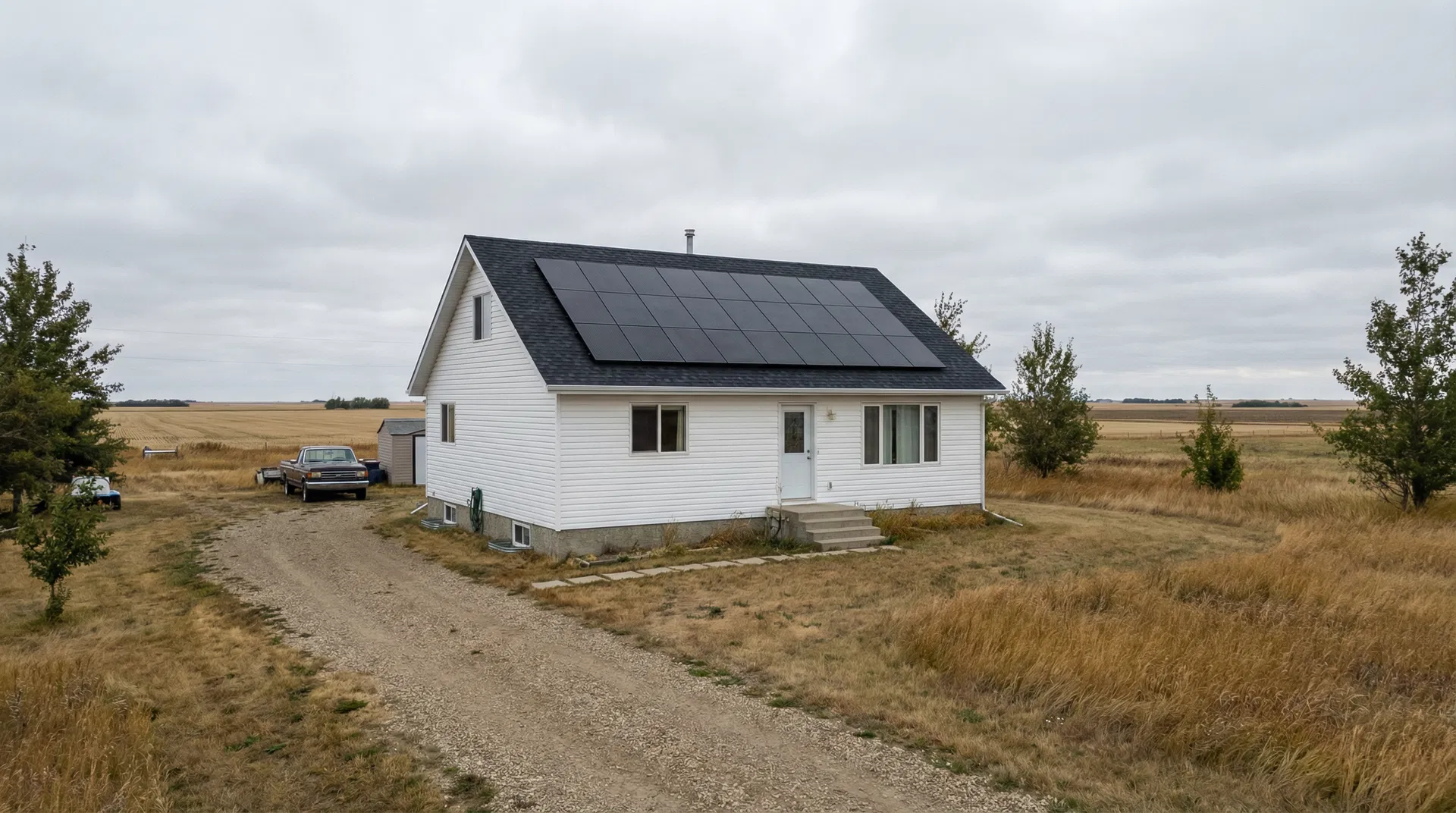
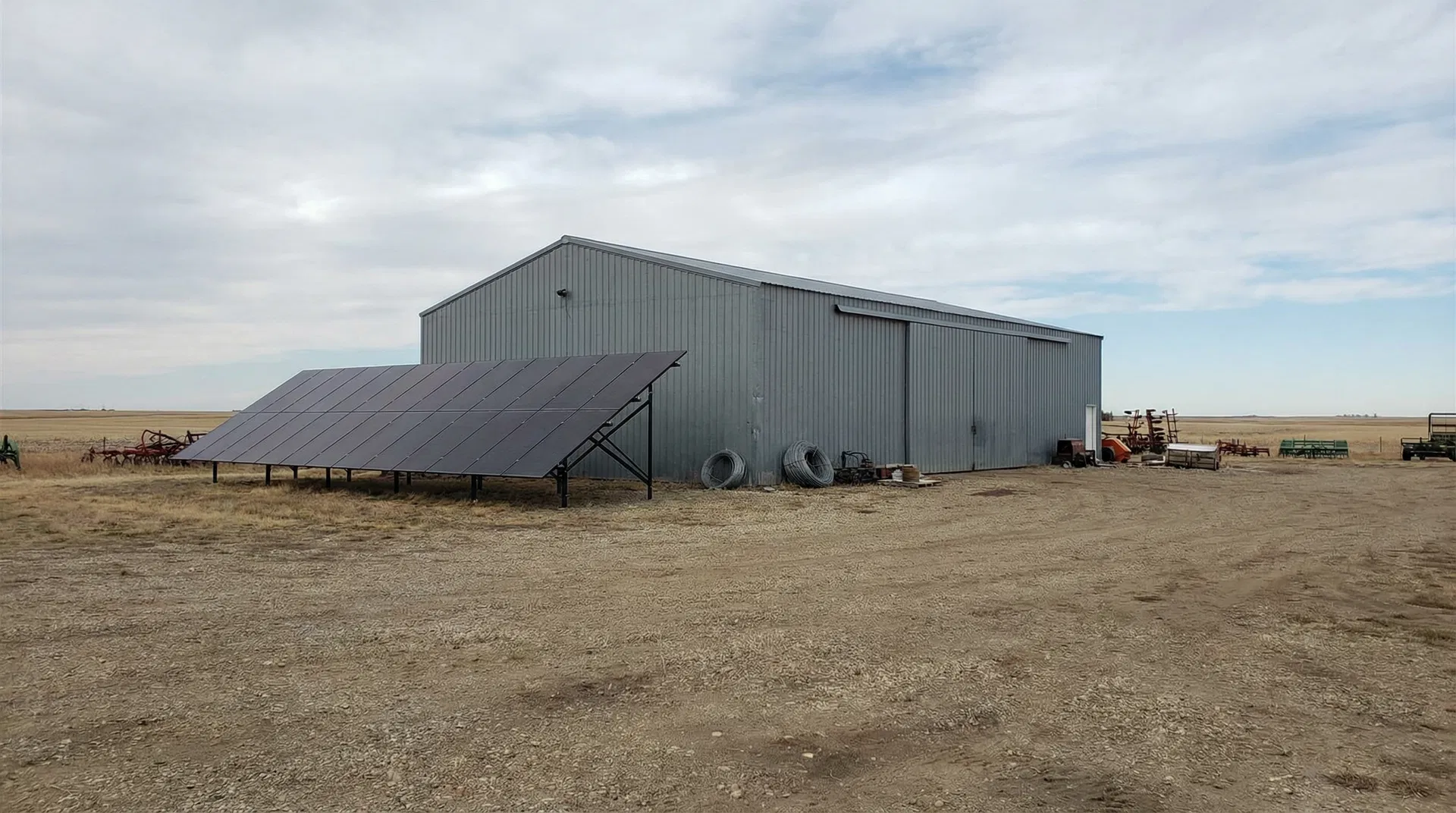
Farm properties here don't have a single load to design around. A typical operation might be running the house, a heated machine shop, grain bin aeration fans, perimeter lighting, and sometimes irrigation or processing equipment, often on the same bill. When you add those loads together, a 25 kW system is a reasonable midpoint, but some properties need more and some need less. We size to what's real, not what's convenient. The starting point is the 12-month usage graph on your most recent power bill. That graph shows seasonal swings in consumption, which matters a lot on grain farms where aeration and harvest season electricity use can be dramatically different from the shoulder months. A system sized only to the annual average can underperform in the months that cost the most. Roof versus ground-mount is a decision we work through with you based on actual site conditions. If your machine shed has a clean south-facing roofline with no shading from bins or shelterbelts, a rooftop array can work well and keeps the yard clear. If the roof is older, the pitch isn't right, or there's a better unobstructed area available in the yard, ground-mount puts the panels exactly where they need to be. We don't push one over the other. We look at what's on your property and recommend what makes sense. Both options are available for farm systems in this range. The right answer comes out of the site design, not a default preference.
Typical Load Profiles We Design For Near Stettler County
Grain Farm: Home, Shop, and Aeration
This profile combines a farmhouse, a heated machine shop, and grain bin aeration fans that run hard during harvest and into the fall. The seasonal spike in aeration load often pushes system sizing toward 30 kW or higher when the 12-month usage graph is reviewed. We design the array to address those high-use periods rather than just averaging across the year.
Livestock Operation: Continuous Barn Load
Heated barns, ventilation fans, water heating, and lighting create a consistent year-round base load that's well-suited to solar offset. A livestock operation running 24-hour ventilation on a 200-head facility can see relatively flat monthly usage with seasonal variation tied to heating, and a system in the 20 to 35 kW range is often the right fit. We confirm the load breakdown from the power bill before finalizing system size.
Mixed Farm: House, Shop, and Irrigation Pump
Properties that run both a heated shop and a seasonal irrigation pump have a load profile with a heavy summer peak layered on top of a steady base. That summer peak can push the optimal system size up compared to a property with flat year-round usage. Sizing from the 12-month usage graph on the power bill is the only way to capture that peak accurately and avoid under-building the system.
FortisAlberta Interconnection in Stettler County
FortisAlberta is the wire service provider for Stettler County, and any grid-tied solar system here goes through their micro-generation interconnection process. That process requires a design package that meets FortisAlberta's technical standards before approval is granted. Range Road Solar prepares and submits that application on your behalf. We know what FortisAlberta needs in the design documents, and we build the package to match their requirements from the start rather than chasing revisions. The interconnection application is part of what we deliver, not an afterthought. What we can't do is guarantee approval timing, credit settlement terms, or retailer policy details on FortisAlberta's behalf. Those are determined by the utility and Alberta's micro-generation regulations, and they can change. We confirm current interconnection rules and what they mean for your specific system during the design review, so you have an accurate picture before any equipment is ordered.
Project Economics and Design Review
| System Size | Annual Production | Year 1 Savings | Payback Period |
|---|---|---|---|
| 20-50 kW range, 25 kW typical |
Production, savings, and payback estimates require a property-specific design and the 12-month usage graph from your most recent power bill.
How We Work in Stettler County
Bill and Load Review
We review your power bill to understand your energy use in Stettler County and size the system to your actual consumption, not a generic estimate.
Site Assessment
We assess your roof or ground area, south-facing exposure, electrical service, and utility interconnection requirements specific to your property.
Design and Utility Application
We produce a system layout, production estimate, and cost summary, then submit your micro-generation application to your utility on your behalf.
Installation and Commissioning
Our crew installs racking, panels, inverter, and electrical connections. All work is performed by licensed electricians. We commission and test before handoff.
Current Program and Interconnection Review
Utility connection review
FortisAlberta reviews grid connection applications for all solar systems installed in their service territory, including farm properties in Stettler County. Range Road Solar prepares and submits the full design package to FortisAlberta on your behalf. We build the application to meet their technical requirements so the review process moves without unnecessary back-and-forth.
Current program review
Commercial and agricultural solar installations may be eligible under current provincial or federal programs, but eligibility rules and program availability change. We review what's currently in place at the time of your design review and confirm what applies to your specific operation. We don't design a project around a program that can't be verified.
Frequently Asked Questions
Get a Solar Assessment for Stettler County
Submit a recent power bill and we will review your consumption and provide an honest assessment for your Stettler County property. No obligation.
(587) 330-7502 Book a CallRelated Resources