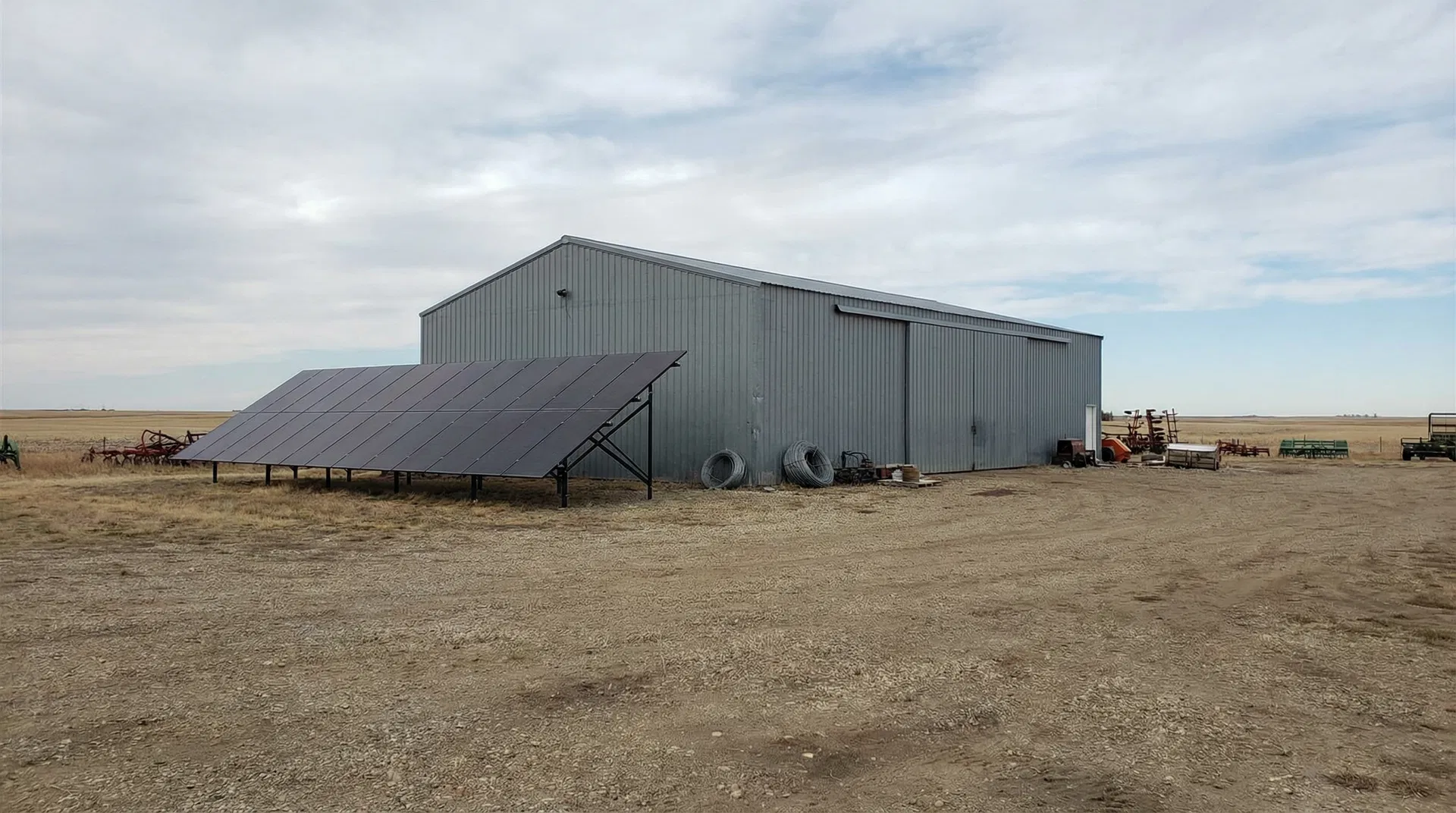
Solar Ponoka County shop and outbuilding projects start with the building that draws the most power, and that's often not the house. A heated shop with a welder, a compressor, and a bench grinder can pull more during a workday than the whole house does in an evening. We design for that load first, then fit the rest of the property around it. Most of the work falls into two configurations. Grid-tied systems connect to the existing service, so the building can draw from the array and the grid as needed. Standalone systems suit a detached building that isn't on the house service, such as a remote machine shed or a barn at the back of the quarter. Both run in the 8 to 20 kW range, and 12 kW is the typical size for a shop with a real workload. We install LONGi panels paired with APsystems microinverters, and we build both ground-mount and rooftop configurations. Ground mount makes sense when a roof faces the wrong way, sits under shade from a row of trees, or simply isn't built to carry an array. Rooftop works well on a newer metal shop with clear exposure and a structure that can take the weight. Microinverters work panel by panel, so one shaded panel doesn't pull down the rest of the array. Expect a site visit before anything gets designed. We check the roof or ground conditions, the building's electrical service, and what loads the building runs in a normal week. Then we confirm the design against your most recent power bill before you commit to anything.
Solar Planning for Ponoka County Properties
This is working rural land, and Agriculture is one of the area's economic anchors. Many properties here have more going on than a single house. A home, a shop, a machine shed, and sometimes a barn each run on their own schedule, so one roof rarely tells the whole story. Gull Lake and the Ponoka Stampede are part of local life, but the details that matter for solar are the buildings, the layout, and how each one uses power. Your wire service is FortisAlberta, and that shapes the paperwork more than the panels do. We don't guess at how a connection will go. We check the service at the property, confirm where a system would tie in, and prepare the application package before anything gets submitted. Every design starts with your most recent power bill. The 12-month usage graph on that bill shows when your property draws the most power, and that's the starting point for sizing. Pair it with a site visit or a site plan, and we can design a system that fits your yard and your buildings instead of a generic template.
Electrical Site Review for Ponoka County Properties
Voltage Rise
Voltage rise happens when a solar system pushes power back onto the distribution line and the voltage at the property climbs above its normal range. How far a property sits from the transformer and how loaded the line is both affect how much that happens. When voltage climbs high enough, the inverter can cut output, which looks a lot like clipping on the production data, so we account for it in sizing.
Single-Phase vs Three-Phase
Rural properties can have single-phase or three-phase service, and we confirm which one you have before anything is designed. Single-phase service is common on homes and many smaller outbuildings, while a larger shop with motors or a welder may run three-phase. The phase type determines which inverter configuration fits and how much capacity the connection can carry.
Panel Infrastructure
Older electrical panels on rural properties were often set up for a lighter load than a modern shop uses. We check the panel's age, its main breaker rating, and whether there's room for the breakers the system needs. If the panel can't support the array, the upgrade can mean a larger panel or a new subpanel for the shop, and we walk you through that before any work starts.
Service Entrance Review
We check the service entrance and the meter base as part of the site visit. FortisAlberta reviews the micro-generation application against the physical connection, so a corroded, undersized, or damaged meter base can hold up the application. If an upgrade is needed, we tell you what it involves before the application is submitted.
Right-Sizing Solar for Ponoka County Properties
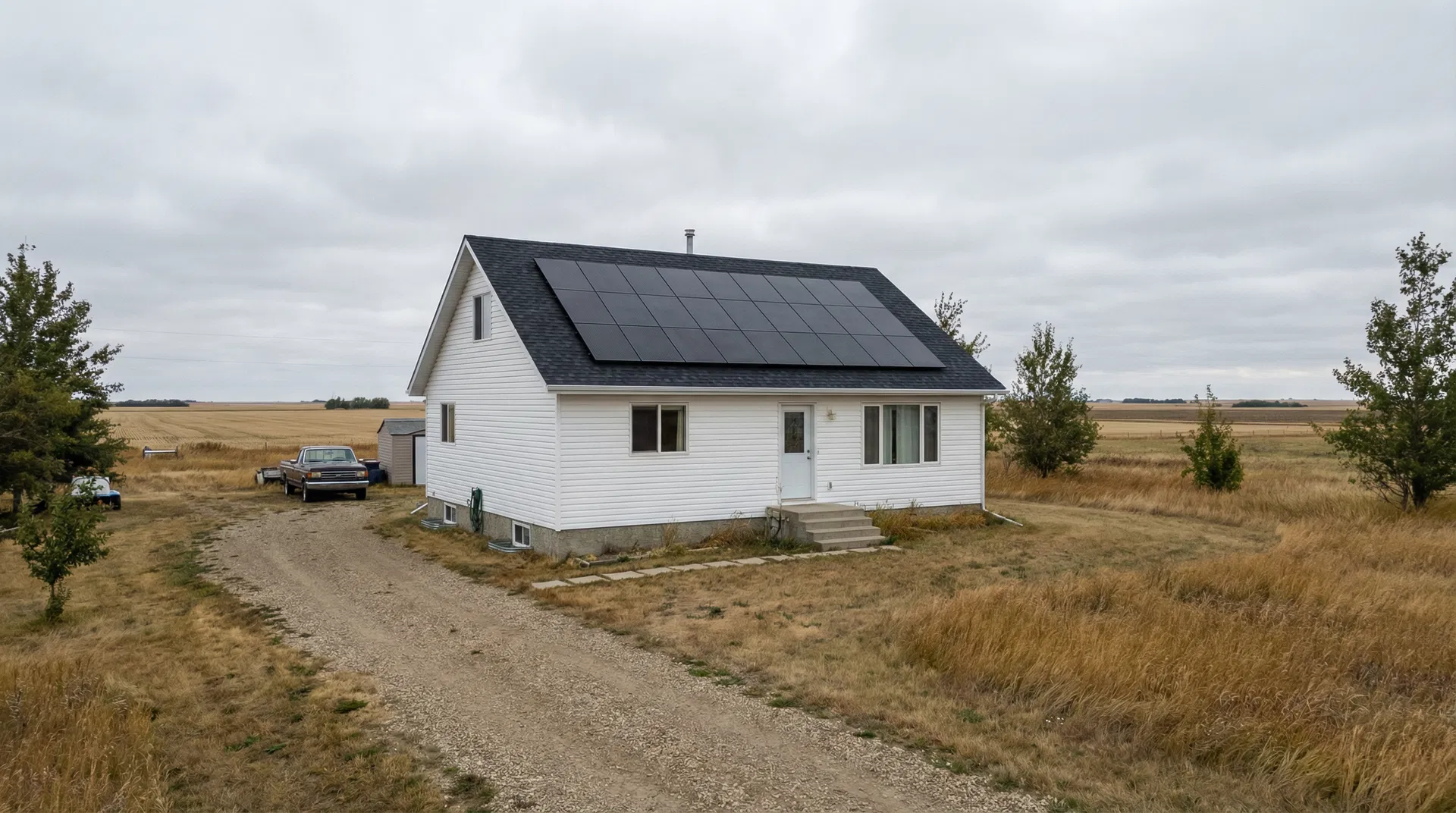
Rural Alberta properties tend to run more loads than a town lot, which is why their systems are usually larger. A home might be the smallest load on the land once a shop with a compressor and a welder, a machine shed, a livestock waterer, and an irrigation pump are counted. We size for the whole property, not the house alone. Roof or ground mount depends on the building and the land. A roof works when the pitch faces a usable direction, the structure can carry the array, and nothing blocks the sun. Ground mount makes sense when trees or neighbouring buildings shade the roof, the pitch is poor, or the yard has open space that isn't needed for anything else. On acreages and farms, ground mount often wins because the land is there and the roof is already doing a job. Sizing starts with the 12-month usage graph on your most recent power bill. That graph shows the seasonal swings, so a shop that runs heavy in January looks different from an irrigation pump that peaks in July. We use that pattern alongside the site design, not a rule-of-thumb number, so the system matches how the property actually uses power. You don't need to dig up older bills. Your most recent power bill is enough to start.
Typical Load Profiles We Design For Near Ponoka County
Home + Heated Shop
A house with a detached heated shop, running a 5 hp air compressor, a 240 V welder, and a shop heater on a 30 amp circuit. The shop's loads run in bursts during working hours, while the house draws steadily in the evening. We size from your most recent power bill and the site design, so the shop's workday doesn't get left out.
Machine Shed + Grain Handling
A machine shed with a 240 V welder and a 1.5 hp bench grinder, plus a grain auger that runs hard for a few weeks each fall. Motor starts draw a surge well above the running load, which is why we check inverter and breaker sizing against the motors on the property. The harvest peak shows up on the 12-month usage graph, so we size against the whole year, not just the quiet months.
Barn + Water Pump
A livestock barn with a 1 hp well pump, a heated waterer, and two 1/2 hp ventilation fans that run through the warm months. Long, steady run times make this profile easier to read on the usage graph than a shop's stop-and-start pattern. We compare that graph against the site design before we recommend a system size for the barn.
FortisAlberta Interconnection in Ponoka County
Properties here are served by FortisAlberta, so a grid-tied shop or outbuilding system goes through FortisAlberta's micro-generation application. You don't need to learn that process on your own. We prepare the design package, complete the application forms, and submit the paperwork on your behalf. On the grid side, FortisAlberta reviews the connection before a grid-tied system is approved to operate. The application covers the system size, the inverter equipment, and how the array ties into your existing service. Standalone systems skip that grid connection step, but they still need a clean electrical design on the building side. Our part is the design and the paperwork. The package includes the single-line diagram, the equipment specifications for the LONGi panels and APsystems microinverters, and the site details FortisAlberta asks for. You'll see the full package before it goes in, so there are no surprises about what's on file.
Project Economics and Design Review
| System Size | Annual Production | Year 1 Savings | Payback Period |
|---|---|---|---|
| 8-20 kW range, 12 kW typical |
Production, savings, and payback require a property-specific design and your most recent power bill.
How We Work in Ponoka County
Bill and Load Review
We review your power bill to understand your energy use in Ponoka County and size the system to your actual consumption, not a generic estimate.
Site Assessment
We assess your roof or ground area, south-facing exposure, electrical service, and utility interconnection requirements specific to your property.
Design and Utility Application
We produce a system layout, production estimate, and cost summary, then submit your micro-generation application to your utility on your behalf.
Installation and Commissioning
Our crew installs racking, panels, inverter, and electrical connections. All work is performed by licensed electricians. We commission and test before handoff.
Current Program and Interconnection Review
Utility connection review
FortisAlberta reviews grid connection applications for grid-tied systems before they're approved to interconnect. Range Road Solar handles the design package and the application paperwork for your property. Standalone systems don't go through that grid connection review.
Current program review
Commercial, farm, and residential eligibility is reviewed against current rules at design time. We check the property type and the system's purpose during that review, so you know where things stand before you commit. Rules change, so we don't base that check on older information.
Frequently Asked Questions
Get a Solar Assessment for Ponoka County
Submit a recent power bill and we will review your consumption and provide an honest assessment for your Ponoka County property. No obligation.
(587) 330-7502 Book a CallRelated Resources