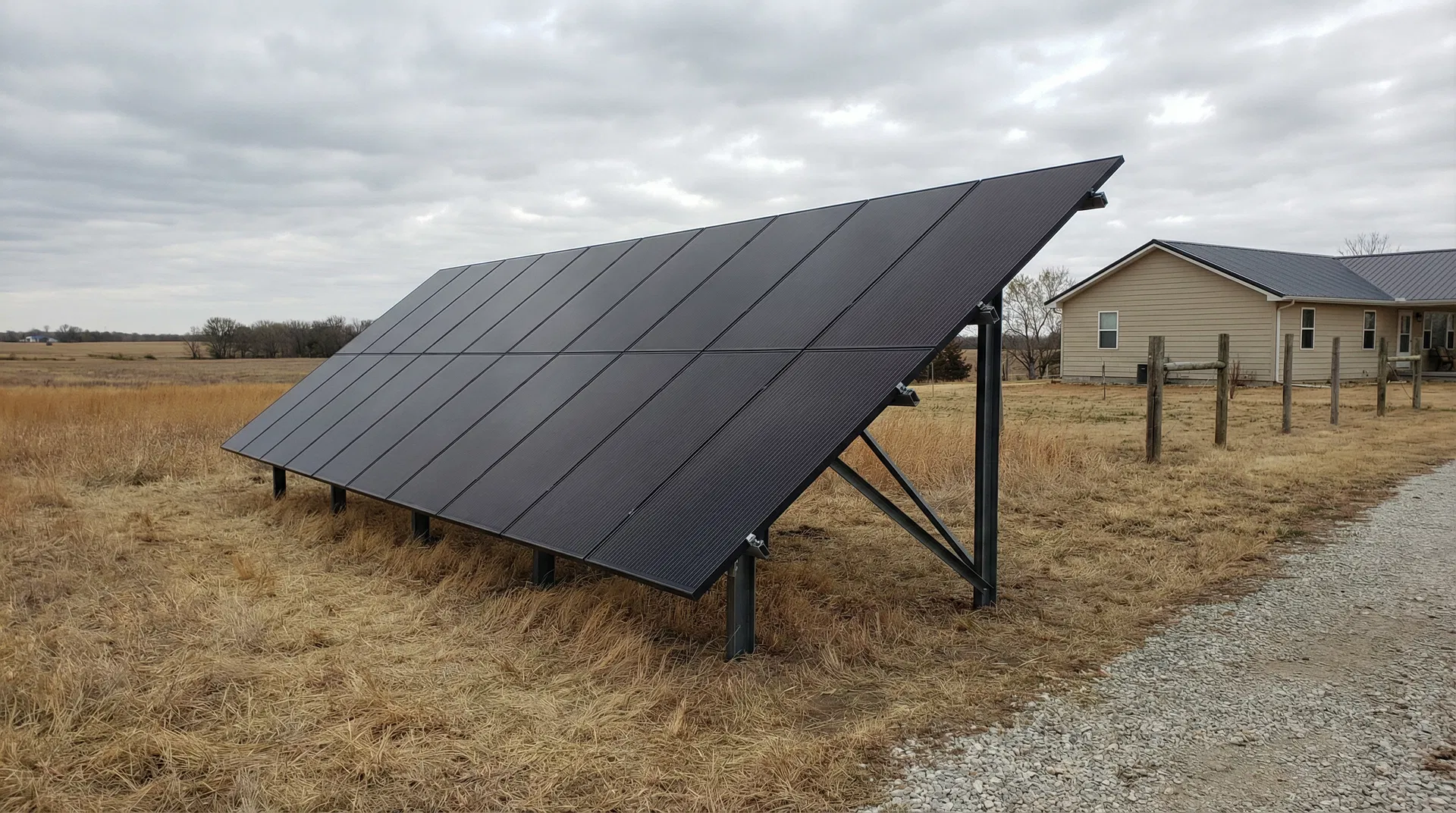
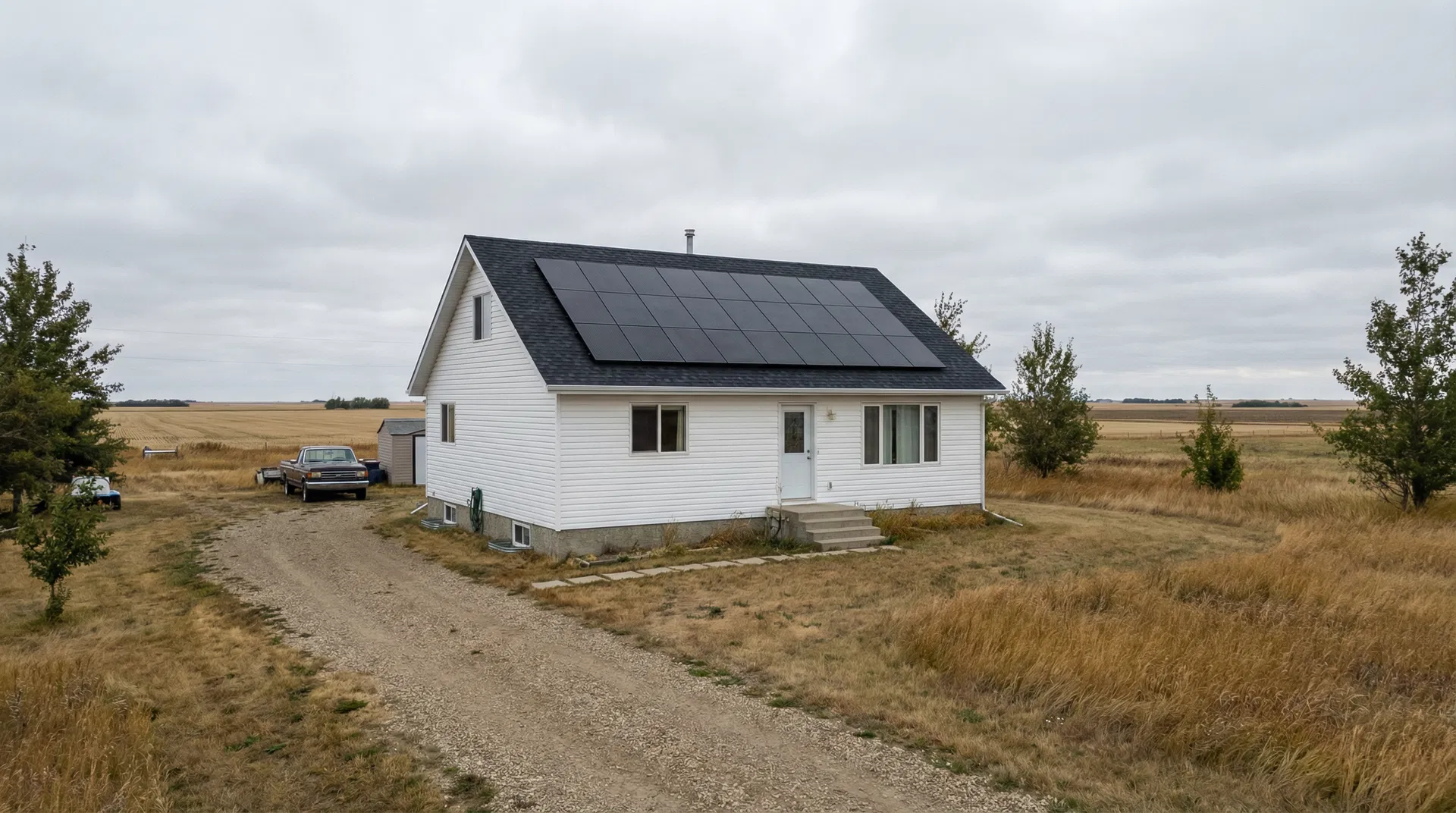
Acreage solar ponoka county properties typically fall into the 12-18 kW range, with 15 kW being a common landing point for a home plus heated shop combination. That said, system size is always driven by your load, not a package number. We start the design from the 12-month usage graph on your most recent power bill. LONGi panels are our standard choice for acreage installs. They're proven in Alberta conditions, hold up well over time, and deliver consistent output across a full range of orientations. On rooftop installs, we work with whatever pitch and exposure the structure provides. On ground mounts, we optimize tilt and azimuth from scratch. APsystems microinverters are our default inverter platform. Unlike string inverters, microinverters work at the panel level, which matters on acreage rooftops where shading from dormers, chimneys, or adjacent buildings can affect portions of the array differently. Each panel operates independently, so partial shading on one section doesn't drag down the rest of the system. Ground-mount systems on rural properties open up additional flexibility. If your shop roof faces the wrong direction or your house has significant shading from a treeline, a ground-mounted array in an open section of the yard can deliver better year-round output. We assess both options during the design review and recommend what actually makes sense for your property, not just what's easiest to install.
Solar Planning for Ponoka County Properties
Acreages run harder than city lots. You've got the house, possibly a heated shop, outbuildings, water systems, and maybe grain handling or livestock equipment all pulling from the same service. That kind of load profile is exactly what solar is suited for, because the bigger the bill, the more a well-designed system can offset. The challenge is that rural systems need more planning than a standard residential install. Shading from trees or adjacent buildings, roof orientation, available yard space, and the condition of your electrical infrastructure all affect what gets installed and how. FortisAlberta serves this area, and their micro-generation interconnection process has specific documentation and design requirements. We handle that application for you. What we need from you is straightforward: your most recent power bill. Alberta utility bills include a 12-month usage graph, and that graph tells us far more about your property's load pattern than any rule-of-thumb estimate. We size from actual data, not averages. That's how we keep design reviews honest and specific to your property.
Electrical Site Review for Ponoka County Properties
Voltage Rise
Voltage rise happens when a solar system pushes power back toward the grid and the voltage at the point of connection climbs above acceptable limits. On rural distribution lines, where properties are spread out and line conditions vary, voltage rise can be more pronounced than in dense urban grids. When rise is a concern, it can cause inverters to clip output or shut down temporarily, which affects how we size the system and configure the inverters.
Single-Phase vs Three-Phase
Rural Alberta properties can be served by either single-phase or three-phase electrical service, and it's not always obvious which one you have without checking. Three-phase service is common on properties with larger motors, grain handling equipment, or commercial-grade shop loads. The phase configuration affects which inverter models are compatible and how much capacity the system can realistically deliver, so we confirm your service type before the design is finalized.
Panel Infrastructure
Older acreage panels often weren't built with solar backfeed in mind, and breaker capacity can be a limiting factor. We assess the panel age, main breaker rating, and available breaker slots to confirm the system can be integrated without overloading the bus. If the panel isn't able to support the system as designed, we'll outline what an upgrade involves before any work begins.
Service Entrance Review
The meter base and service entrance are part of what FortisAlberta reviews when processing a micro-generation application for properties in this area. We check the meter base condition and service entrance components during the site visit to confirm they meet current standards. If an upgrade is required, we identify it early so it doesn't hold up the interconnection application later in the process.
Right-Sizing Solar for Ponoka County Properties
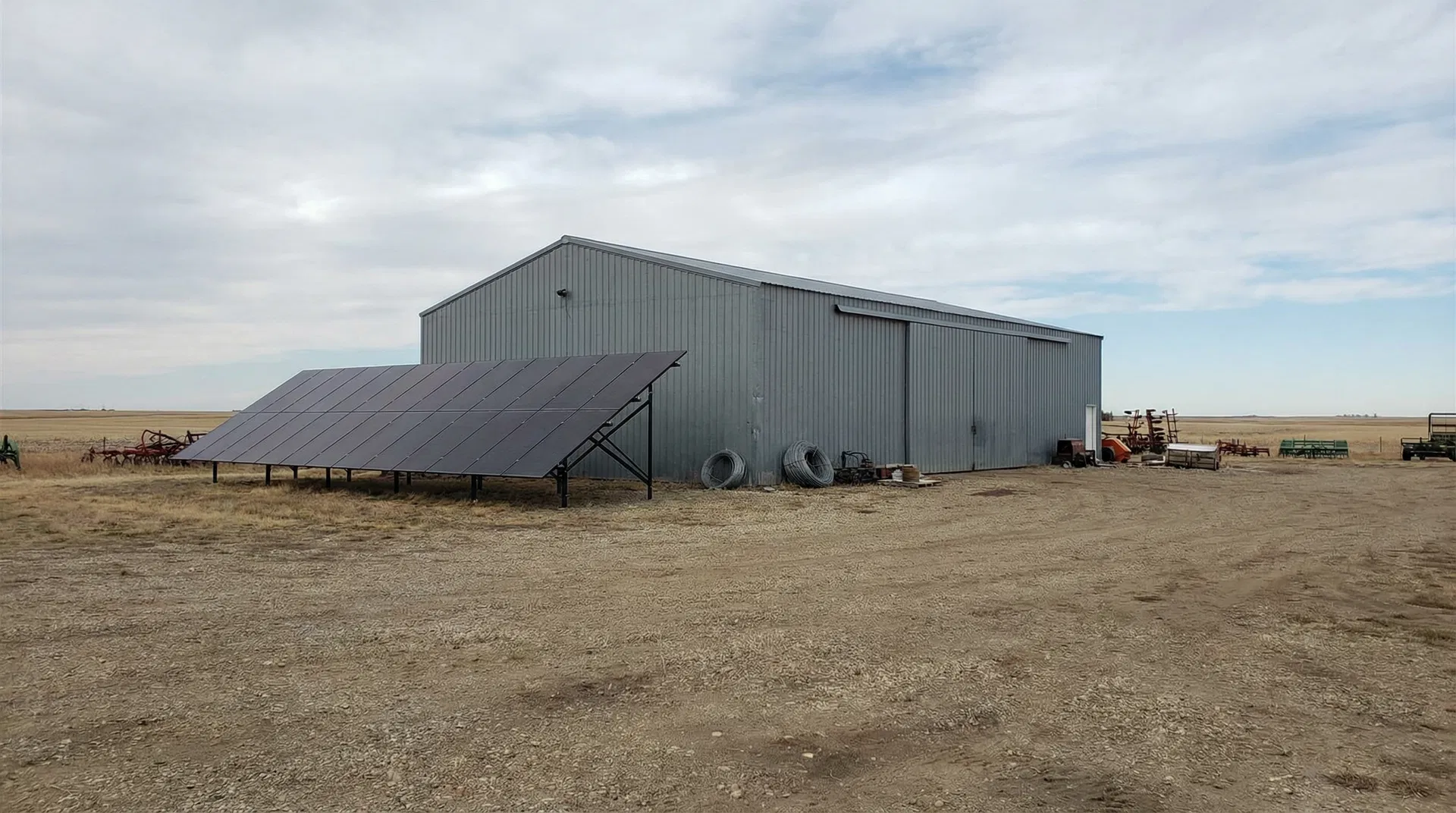
Acreage systems are larger than residential city installs for a straightforward reason: there's more running. A typical rural property might have the house itself, a heated shop with 240V equipment, a wellhouse or water system, outdoor lighting, and sometimes irrigation or grain handling loads on top of that. Each of those adds to annual consumption in ways that a simple square-footage estimate won't capture. That's why we size from the 12-month usage graph on your most recent power bill, not from a rule-of-thumb number. That graph shows your actual monthly consumption across all four seasons, which tells us where the peaks are and what size of system makes sense. The roof versus ground-mount decision is driven by your property layout, not a preference. If your house roof has good southern exposure and enough unshaded area, a rooftop array is usually the straightforward path. But on acreages, rooftops often have complications: steep or shallow pitches, dormers, chimneys, satellite dishes, or shading from a treeline that grows taller every year. When the roof doesn't work cleanly, a ground-mounted array in an open section of the yard gives us full control over tilt and orientation. We've also installed ground mounts on shop rooftops or standalone structures when the property layout made that the better option. The right answer depends on your specific site, not a general preference. We don't make that call until we've seen your bill and walked the property.
Typical Load Profiles We Design For Near Ponoka County
Home + Heated Shop
This is the most common acreage load profile we see. The house carries standard residential loads, and the heated shop adds electric heat, lighting, compressors, welders, and other 240V equipment that runs hard through the winter. Combined, these properties often land in the 15-18 kW system range once we've reviewed the 12-month usage graph. We design the array to offset as much of the combined load as the roof or yard will support.
Home + Livestock or Water Systems
Properties with livestock operations often run continuous loads: water heaters, heat lamps, ventilation fans, and pump systems that cycle around the clock. That consistent baseload is actually well-suited to solar because there's steady consumption throughout the day to absorb what the array produces. A property running a 5,000-watt water heating system alongside a standard home load will have a very different 12-month usage profile than a shop property, and we design accordingly.
Home + Grain Handling or Seasonal Processing
Grain dryers, augers, and processing equipment create large but seasonal load spikes, typically in fall. Properties with this profile tend to have high October and November consumption that dwarfs the summer months. When we review the usage graph, that seasonal pattern affects how we think about system sizing: we're designing around the annual total, not just the peak month. A 12-15 kW system on a property like this can offset a substantial portion of the annual load even if it doesn't cover the drying season completely.
FortisAlberta Interconnection in Ponoka County
FortisAlberta is the wire service for Ponoka County, Alberta. Any solar system installed here connects to the grid through FortisAlberta's micro-generation program, and the application requires a design package that meets their technical standards. We handle that package from start to finish. That includes the single-line diagram, equipment specs, and any site-specific documentation FortisAlberta requires to review the application. What you don't need to worry about is navigating their process yourself. We've worked through FortisAlberta interconnections before and know what the application needs to include. Your job is to give us your most recent power bill and let us know what you're running on the property. We take it from there. If your meter base or service entrance needs attention before the application can proceed, we'll flag that during the site review so nothing stalls the process mid-project.
Project Economics and Design Review
| System Size | Annual Production | Year 1 Savings | Payback Period |
|---|---|---|---|
| 12-18 kW range, 15 kW typical |
Production, savings, and payback estimates require a property-specific design and the 12-month usage graph from your most recent power bill.
How We Work in Ponoka County
Bill and Load Review
We review your power bill to understand your energy use in Ponoka County and size the system to your actual consumption, not a generic estimate.
Site Assessment
We assess your roof or ground area, south-facing exposure, electrical service, and utility interconnection requirements specific to your property.
Design and Utility Application
We produce a system layout, production estimate, and cost summary, then submit your micro-generation application to your utility on your behalf.
Installation and Commissioning
Our crew installs racking, panels, inverter, and electrical connections. All work is performed by licensed electricians. We commission and test before handoff.
Current Program and Interconnection Review
Utility connection review
FortisAlberta reviews micro-generation connection applications for properties in Ponoka County, Alberta. Range Road Solar prepares the full design package that application requires, including the single-line diagram and equipment documentation. We submit on your behalf and manage the back-and-forth with FortisAlberta so you don't have to track it yourself.
Current program review
Incentive eligibility for residential, acreage, and farm properties is reviewed against the rules in effect at the time of your design. Programs change, and we confirm what applies to your specific situation during the design review rather than assuming eligibility from the outset.
Frequently Asked Questions
Get a Solar Assessment for Ponoka County
Submit a recent power bill and we will review your consumption and provide an honest assessment for your Ponoka County property. No obligation.
(587) 330-7502 Book a CallRelated Resources