
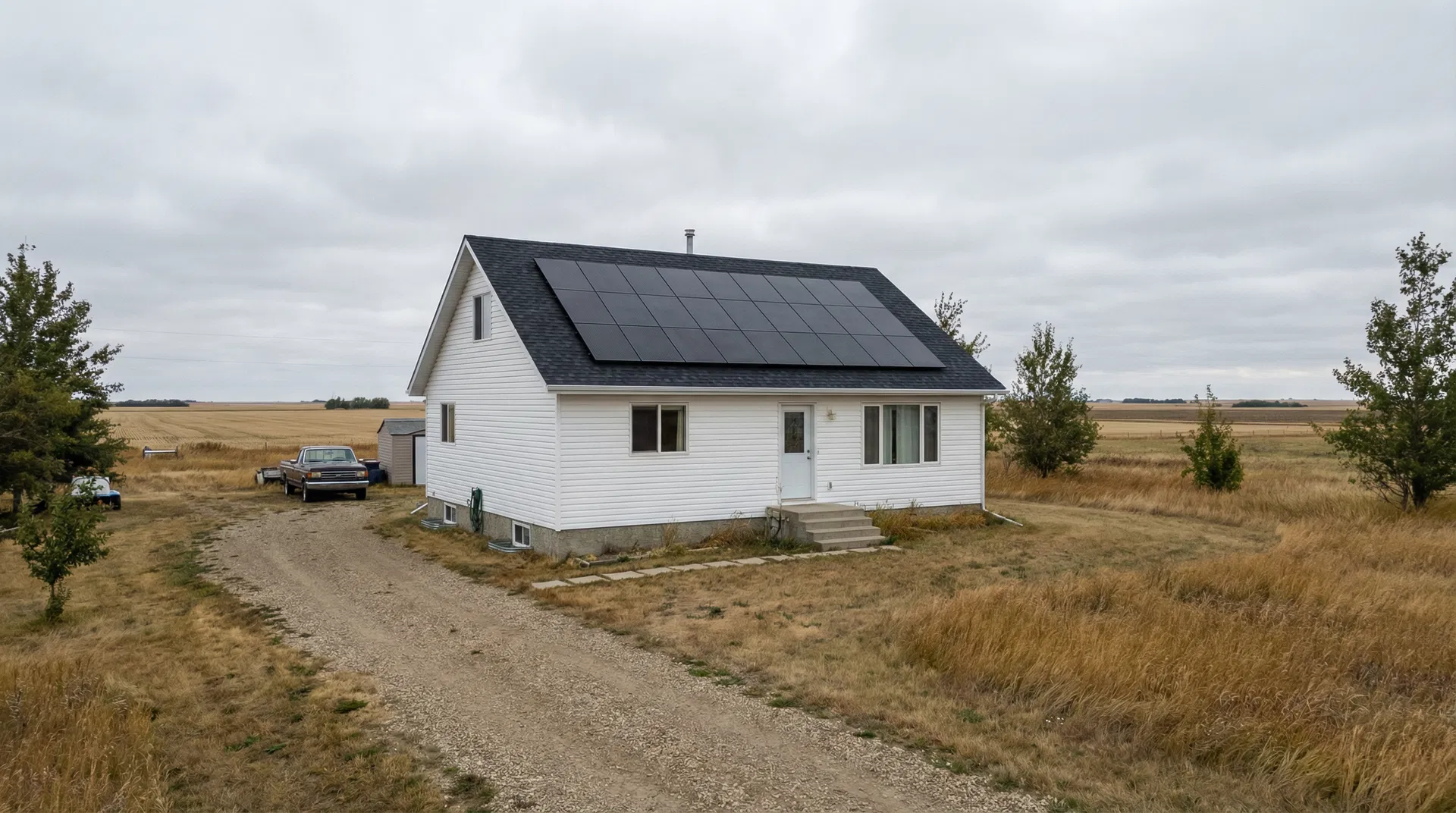
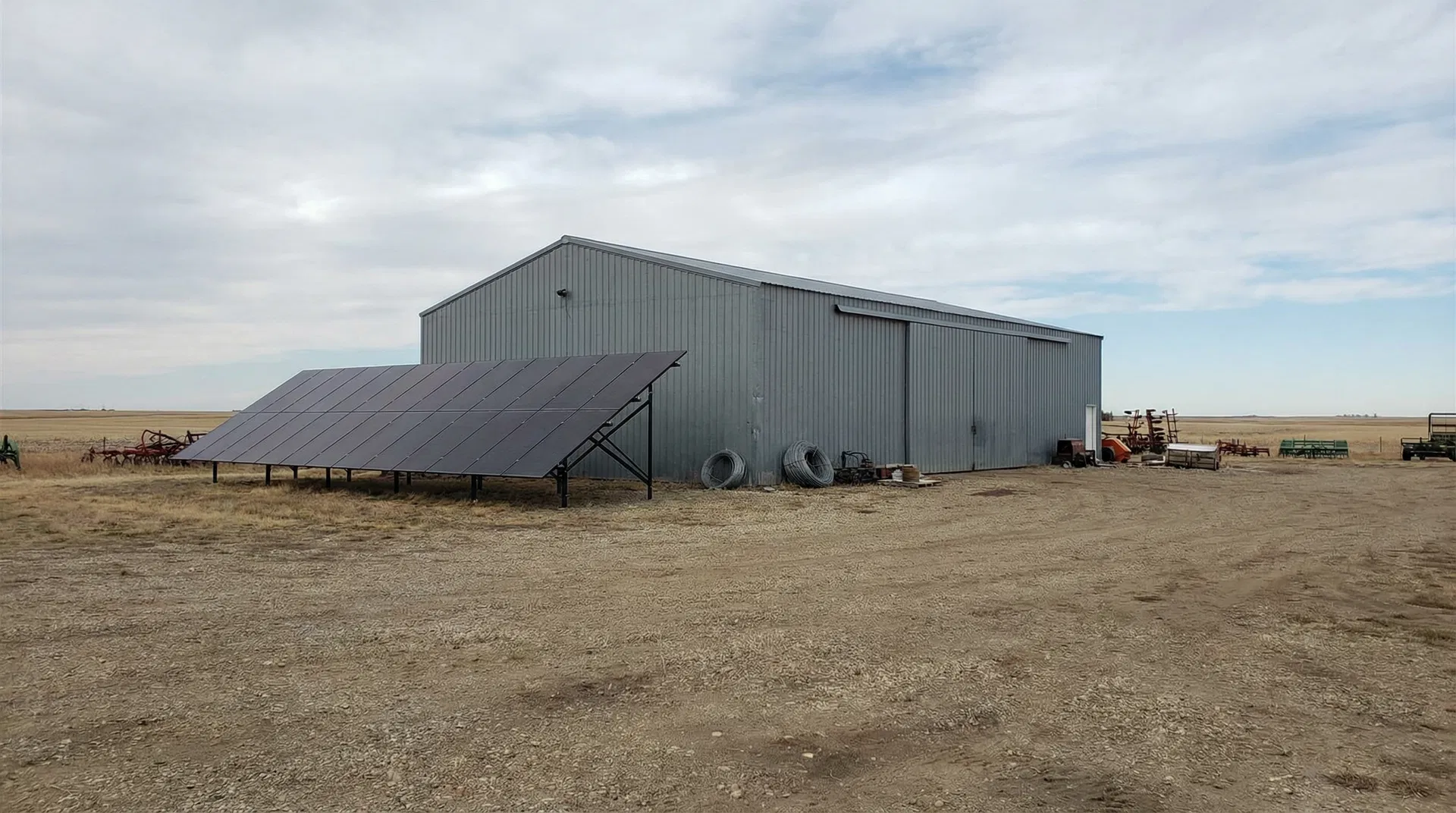
Solar Ponoka County properties call for installers who treat farms and acreages differently than a subdivision roof. We install LONGi panels paired with APsystems microinverters, a combination that handles partial shading well since each panel's output isn't tied to the one next to it, which matters when an array sits near a shelterbelt or outbuilding. Systems here typically run 8 to 15 kW, with most residential installs landing around 10 kW, though the final number depends on your loads and your roof or yard layout. On a property with a house and a detached shop, we'll often split the array or add a subpanel so both buildings draw cleanly from the same system. Roof mounts work when the pitch and orientation cooperate and there's enough uninterrupted surface area; ground mounts come into play when trees, grain bins, or an awkward roofline rule out a clean rooftop layout, or when there's open yard space that makes a ground array the simpler build. APsystems microinverters also make future expansion straightforward: if you add a shop or an irrigation pump down the line, we can often add panels to the existing system rather than redesigning it. Every install includes the interconnection paperwork for FortisAlberta, the utility that serves this area, so the system is tied in and metered correctly before we leave the property.
Solar Planning for Ponoka County Properties
Ponoka County, Alberta traces back to January 1, 1952, and its population climbed from 9,806 to 9,998 between the last two census counts, according to Statistics Canada. Agriculture still anchors the local economy, and that shows up in how properties here are wired: a house, a shop, a grain bin, maybe a pump near Gull Lake, all pulling from the same service. That's a different planning problem than a subdivision rooftop, and it's why we start with a site visit instead of a sketch. We walk the yard, check the panel and the service entrance, and look at whether a roof mount makes sense or if a ground mount sitting in open pasture is the better call. FortisAlberta is the wire service here, and the interconnection application has to match whatever we design, down to the inverter model. We don't hand you a production estimate off a map. We pull your most recent power bill, look at the 12-month usage graph on it, and size the system from what your property actually uses, not a rule of thumb. If your shop has a welder and a block heater circuit, that gets accounted for; if the house is the only load, the design looks completely different.
Electrical Site Review for Rural Properties
Voltage Rise
Voltage rise happens when power travels a long distance along a rural distribution line before it reaches your service, and the voltage at your panel can run a bit higher than it would closer to town. That matters for a grid-tied solar system because the inverter has to stay within a set voltage window to keep exporting power, and an elevated baseline voltage can push the inverter toward its clipping threshold sooner. We check this during the site review so the system is sized and configured for the conditions on your specific line, not a worst-case guess.
Single-Phase vs Three-Phase
Rural properties can have either single-phase or three-phase electrical service, and which one you have changes what equipment fits. Three-phase service, more common on larger operations with bigger motors or grain-handling loads, needs inverter hardware and a system design suited to that service type. We confirm which service type your property has during the site visit so the microinverter configuration matches what's actually feeding your panel, instead of assuming a single-phase default.
Panel Infrastructure
A lot of rural properties are still running an older main panel, and breaker capacity and panel age both affect whether it can safely add a solar interconnection breaker. We check the panel's rated capacity, its age and condition, and whether there's physical room for an additional breaker before we finalize a design. If the existing panel can't support the system, an upgrade means a new panel sized for both your current loads and the solar interconnection, which we scope and quote as part of the design review.
Service Entrance Review
We also look at the service entrance and meter base, since FortisAlberta's micro-generation application requires that equipment to be in good working condition before they'll approve the interconnection. That review covers the condition of the meter base, the service conductors, and the grounding setup. If the meter base is outdated or doesn't meet current standards, an upgrade has to happen before FortisAlberta will sign off, and we build that into the project timeline and quote upfront rather than surprising you partway through.
Right-Sizing Solar for Rural Properties
A rural property rarely has just one load. A house, a heated shop, a well pump, and maybe grain-handling equipment can all draw from the same service, which is why systems out here tend to run larger than a typical subdivision install. We don't size a system off a rule of thumb or a square-footage guess. We start with the 12-month usage graph on your most recent power bill, which shows how your usage actually moves through the year, including spikes from a shop heater in winter or an irrigation pump in summer. That graph, paired with a site visit, tells us what size system actually makes sense for your loads. Roof versus ground mount comes down to what your property offers. A roof mount makes sense when the pitch, orientation, and available surface area line up well and there isn't much shading. A ground mount becomes the better option when trees or outbuildings shade the roof, when the roofline is broken up by dormers or vents, or when the yard has open, unused space that makes a ground array the simpler build. Some properties end up with a combination of both. Either way, we design around your actual power bill and your actual yard, not a generic template, and we walk you through the tradeoffs before you commit to either approach.
Typical Load Profiles We Design For in Rural Alberta
Home + Heated Shop
This is the most common profile we see: a primary residence plus a detached shop with electric heat, often a block heater circuit, a welder, or shop lighting running through the colder months. We read the shop's draw separately from the house's draw on your power bill's usage graph, since a shop heater can spike usage in ways a house alone wouldn't. Systems for this profile often land in the 10-12 kW range, though we confirm the exact number against your specific loads.
Acreage with Well Pump and Outbuildings
Acreages with a well pump, a pump house, and a couple of outbuildings have loads spread across the yard instead of concentrated in one building. We look at whether those outbuildings can tie into one system or need separate consideration, and whether a ground mount near the pump house makes more sense than a rooftop array on the main house. These properties often sit toward the middle of our 8-15 kW range, depending on how many buildings are drawing power.
Grain Handling and Farm Operation
Grain dryers, augers, and other handling equipment create seasonal spikes that look very different from a steady household load. We size around the full-year usage graph on your power bill rather than just the peak harvest months, so the system reflects your year-round draw instead of overbuilding for a few weeks of heavy use. These operations tend to land at the higher end of the 8-15 kW range, sometimes with a design built to add capacity later.
FortisAlberta Interconnection in Ponoka County
FortisAlberta is the wire service here, and every grid-tied system we install goes through their micro-generation interconnection process. Range Road Solar prepares and submits that application as part of the install, including the single-line diagram and equipment specs FortisAlberta requires for the APsystems microinverters and LONGi panels we use. We coordinate the meter work and the inspection sign-off so the system is approved to operate, not just physically finished. Every property's service is a little different, so we confirm your specific service entrance, transformer, and panel setup before finalizing the interconnection paperwork; a property with three-phase service near a shop or irrigation setup gets reviewed differently than a single-phase home. We don't make claims about how long FortisAlberta's review will take or what happens to unused credits; those are questions we work through with FortisAlberta directly during your design review, using their current rules at the time of your application.
Project Economics and Design Review
| System Size | Annual Production | Year 1 Savings | Payback Period |
|---|---|---|---|
| 8-15 kW range, 10 kW typical |
Production, savings, and payback figures require a property-specific design review using your most recent power bill, not a generic estimate.
How We Work in Ponoka County
Bill and Load Review
We review your power bill to understand your energy use in Ponoka County and size the system to your actual consumption, not a generic estimate.
Site Assessment
We assess your roof or ground area, south-facing exposure, electrical service, and utility interconnection requirements specific to your property.
Design and Utility Application
We produce a system layout, production estimate, and cost summary, then submit your micro-generation application to your utility on your behalf.
Installation and Commissioning
Our crew installs racking, panels, inverter, and electrical connections. All work is performed by licensed electricians. We commission and test before handoff.
Current Program and Interconnection Review
Utility connection review
FortisAlberta reviews every micro-generation interconnection application before a grid-tied system can be turned on, and that review covers your equipment specs, your service entrance, and your meter base. Range Road Solar prepares and submits that full design package on your behalf as part of the install. We don't control FortisAlberta's review timeline or their credit-settlement rules, so we point you to FortisAlberta directly for anything specific to those.
Current program review
Residential, farm, and commercial properties can have different eligibility depending on current program rules, and those rules change. We check your property against whatever rules are in effect at the time of your design review rather than relying on what applied last year or what a neighboring property qualified for.
Frequently Asked Questions
Get a Solar Assessment for Ponoka County
Submit a recent power bill and we will review your consumption and provide an honest assessment for your Ponoka County property. No obligation.
(587) 330-7502 Book a CallRelated Resources