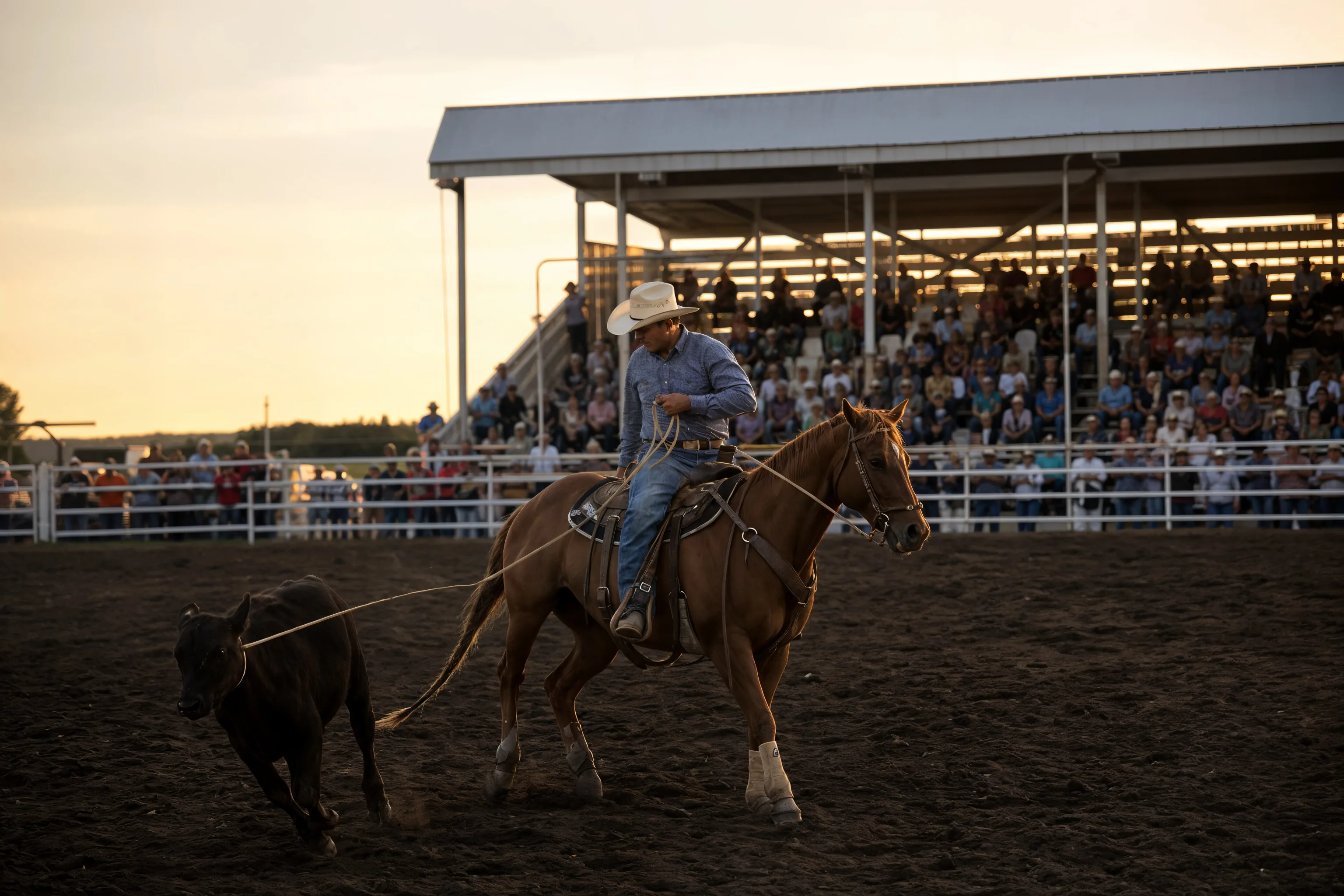
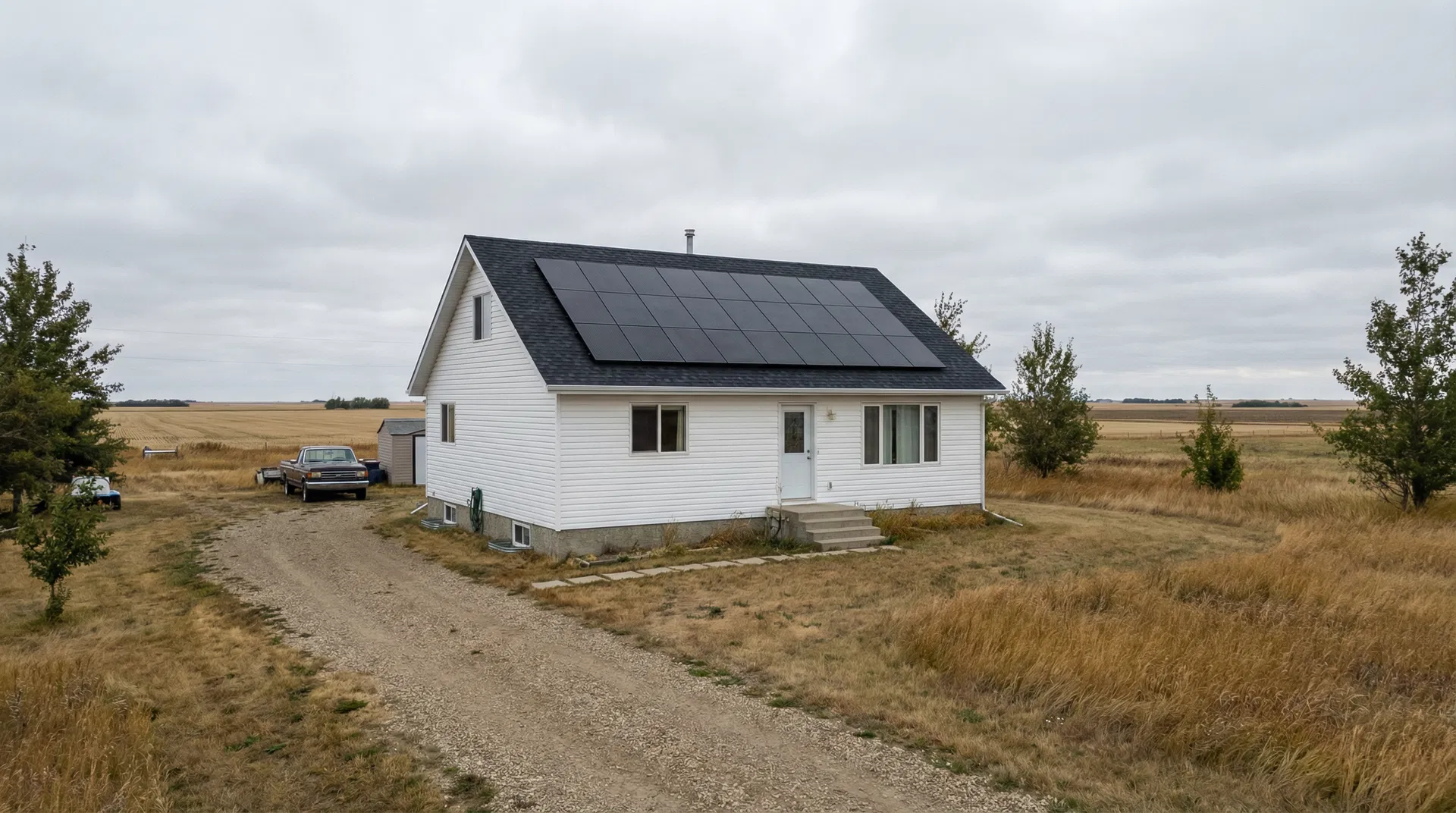
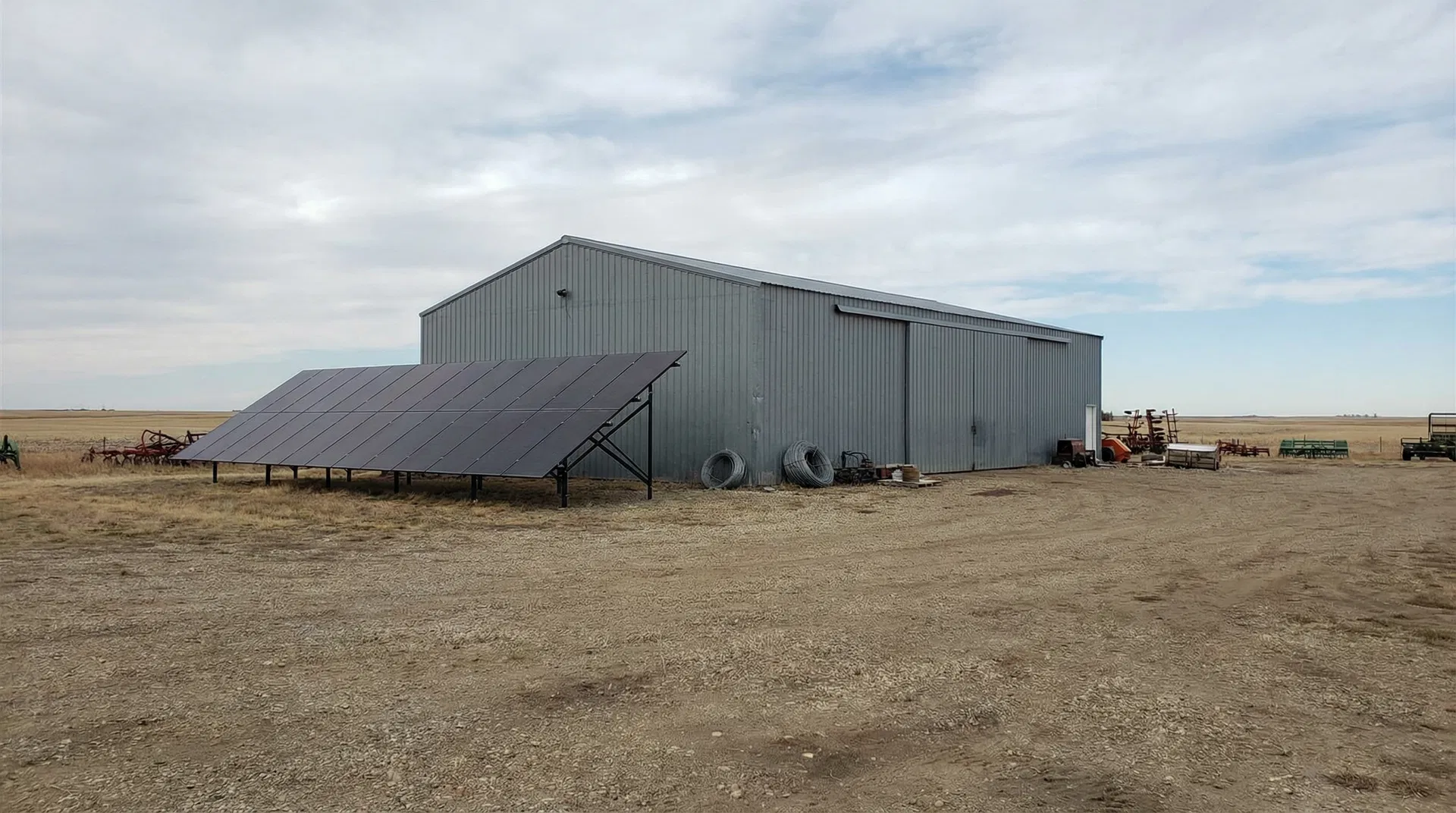
Solar installation in Ponoka County starts with a site visit and your most recent power bill, not a generic quote. We install grid-tied systems in the 8 to 12 kW range for most homes here, with 10 kW being the typical size once a shop or well pump is factored in. Every system uses LONGi panels, which hold up well on both pitched roofs and ground-mount racking, paired with APsystems microinverters. We prefer microinverters on rural properties because they let a system keep producing even if one panel is shaded by a grain bin, a shelterbelt, or an outbuilding roofline. That's a real factor on acreages where the house roof isn't always the cleanest, unobstructed surface on the lot. If your roof pitch, orientation, or shading doesn't work, we design a ground-mount array instead and size it the same way, from your usage and the available yard space. Installation covers the full scope: racking, panels, microinverters, conduit and wiring, and the utility interconnection paperwork. We handle permitting and the application so you're not the one tracking down forms. Whether it's a bungalow on an acreage, a two-story on a quarter section, or a farmhouse with a detached shop pulling its own load, we design the array and electrical tie-in around what your property actually needs, confirmed through a site review and your bill, not a rule-of-thumb estimate.
Solar Planning for Ponoka County Properties
This is agricultural country first. Agriculture anchors the local economy, and most of the properties we work with here are homes paired with a shop, a barn, or grain-handling equipment, not single-load city lots. That mix changes how a solar system gets sized. A house alone draws differently than a house running a shop, a well pump, and bin aeration fans through the same service. The population here sits at 9,998 people, up from 9,806 at the last count, spread across a lot of rural road and farmland rather than concentrated in a town core. That geography means most properties we assess have single-phase or three-phase rural service, and that distinction matters more here than it would on a city block, because it directly affects inverter selection. Properties near Gull Lake and out toward the acreages that ring the Ponoka Stampede grounds often have outbuildings competing for panel space and shading from shelterbelts planted decades ago. We don't guess at any of this. We look at your most recent power bill, walk the property or review satellite imagery for roof and ground conditions, and size the system from what we actually find, not from a generic template.
Electrical Site Review for Ponoka County Properties
Voltage Rise
Voltage rise happens when power travels a long distance along a rural distribution line before it reaches your service, and it can push the voltage at your panel higher than a tightly clustered subdivision would see. That matters for solar because an inverter has to stay within a set voltage window, and if the line voltage is already running high, the inverter may clip output or shut down to protect itself. We measure voltage at your service as part of the site review so the system is sized and configured around what your line is actually doing, not a textbook assumption.
Single-Phase vs Three-Phase
Rural Alberta properties can run on single-phase or three-phase service, and which one you have changes what inverter hardware fits the job and how much capacity the system can carry. A single-phase farmhouse and a three-phase shop on the same yard may need different equipment even though they share a property line. We confirm your phase configuration early, because it's one of the first things that determines which APsystems microinverter setup makes sense for your load.
Panel Infrastructure
A lot of rural electrical panels predate the loads they're now asked to carry, especially once a shop, well pump, or grain-handling equipment gets added over the years. We check your panel's age, its breaker capacity, and how much headroom is left before adding solar backfeed. If the panel can't support the added circuit safely, an upgrade comes first, sized to handle both your existing loads and the new system.
Service Entrance Review
We inspect the service entrance and meter base condition as part of every site visit, because the microgeneration application requires equipment that meets current standards before FortisAlberta will approve the interconnection. An older or deteriorated meter base can hold up that approval regardless of how well the solar system itself is designed. When an upgrade is needed, we scope it as part of the project so the interconnection application and the physical installation move forward together.
Right-Sizing Solar for Ponoka County Properties
Rural systems run bigger than a typical city installation, and it's rarely about the house alone. A property here might carry a home, a heated shop, a well pump, and seasonal loads like grain dryers or livestock equipment, all on one service. Sizing for just the house misses most of what the property actually draws. The roof versus ground-mount decision comes down to what the yard actually offers. A roof with good southern exposure and no shading from shelterbelts or outbuildings is often the simpler build. But a lot of acreages have mature trees, a cluttered yard, or a roof pitch that doesn't suit panels well, and a spread-out lot with open land available makes ground mount the more practical call. Neither option is automatically better, it depends on what's actually on the property. We size every system from the 12-month usage graph on your most recent power bill, not a rule-of-thumb per-square-foot estimate or a generic per-home average. That graph shows the real seasonal swings, winter heating loads, summer irrigation, whatever is actually driving your usage month to month. Combined with a site visit for shading, orientation, and roof or yard conditions, that bill becomes the starting point for a system that's sized to what the property actually needs, not what a formula says a house your size should need.
Typical Load Profiles We Design For Near Ponoka County
Home + Heated Shop
This is one of the most common setups we size for here: a house plus a detached shop with electric heat, often running welding equipment or an air compressor on top of normal household load. We look at the 12-month usage graph on your most recent power bill to see how much the shop's heating load shifts through winter versus summer before sizing the array.
Home + Grain Handling
Grain bins, aeration fans, and augers add short, heavy seasonal draws that don't show up every month but spike hard at harvest. We size around that seasonal pattern using your power bill's usage graph and a site review of the yard, rather than treating the property like a flat year-round load.
Home + Livestock Operation
Barns, waterers, and heated livestock equipment create a steadier baseline load than seasonal grain handling, but it still runs higher through the cold months. We factor that baseline into the system design from your most recent bill and a walk-through of the yard, so the array is sized for how the operation actually runs, not a generic acreage estimate.
FortisAlberta Interconnection in Ponoka County
FortisAlberta is the wire service across the area, and every grid-tied system we install here ties into their distribution network through a microgeneration interconnection application. We prepare and submit that application as part of your project, including the single-line diagram and equipment specifications FortisAlberta requires to review a connection. We don't guess at approval timelines or credit terms, because those details depend on current FortisAlberta rules at the time your application goes in, not on what applied last year. What we can tell you up front is that the interconnection process runs alongside the physical installation: while your system is being racked and wired, the utility paperwork is moving through FortisAlberta's review on its own track. You deal with one point of contact, us, instead of juggling a utility application on top of managing contractors and equipment orders yourself.
Project Economics and Design Review
| System Size | Annual Production | Year 1 Savings | Payback Period |
|---|---|---|---|
| 8-12 kW range, 10 kW typical |
Actual production, savings, and payback figures depend on a property-specific design review and your most recent power bill, and we provide those numbers only after that review.
How We Work in Ponoka County
Bill and Load Review
We review your power bill to understand your energy use in Ponoka County and size the system to your actual consumption, not a generic estimate.
Site Assessment
We assess your roof or ground area, south-facing exposure, electrical service, and utility interconnection requirements specific to your property.
Design and Utility Application
We produce a system layout, production estimate, and cost summary, then submit your micro-generation application to your utility on your behalf.
Installation and Commissioning
Our crew installs racking, panels, inverter, and electrical connections. All work is performed by licensed electricians. We commission and test before handoff.
Current Program and Interconnection Review
Utility connection review
FortisAlberta reviews every microgeneration application before a grid-tied system can be activated, checking the equipment and system design we submit against their current interconnection standards. Range Road Solar prepares and submits that full design package on your behalf, including the single-line diagram and equipment specifications FortisAlberta asks for.
Current program review
Eligibility for residential, farm, and commercial solar projects is reviewed against whatever rules are in effect at the time of design, since program details can change year to year. We check your property against current requirements as part of the design review rather than assuming last year's rules still apply.
Frequently Asked Questions
Get a Solar Assessment for Ponoka County
Submit a recent power bill and we will review your consumption and provide an honest assessment for your Ponoka County property. No obligation.
(587) 330-7502 Book a CallRelated Resources