Why Ponoka County Works for Solar
Ponoka County is cattle and grain country east of the QE2, sitting at roughly 52.6 degrees north latitude. The land is open, the farmyards are spaced out, and the sky is not crowded by anything taller than a grain bin. That matters for solar. A panel field behind a Ponoka County shop sees long, low-shadow summer days and cold, bright winter ones, which is exactly the mix that produces well year after year.
The numbers back it up. The nearest Environment Canada station with published bright-sunshine normals, Lacombe CDA, records about 2,156 hours of bright sunshine annually. Natural Resources Canada publishes a municipal solar potential for Ponoka of roughly 1,260 kWh per installed kW per year for a south-facing array at latitude tilt. On a 10 kW system, that is around 12,600 kWh a year of production working against your power bill.
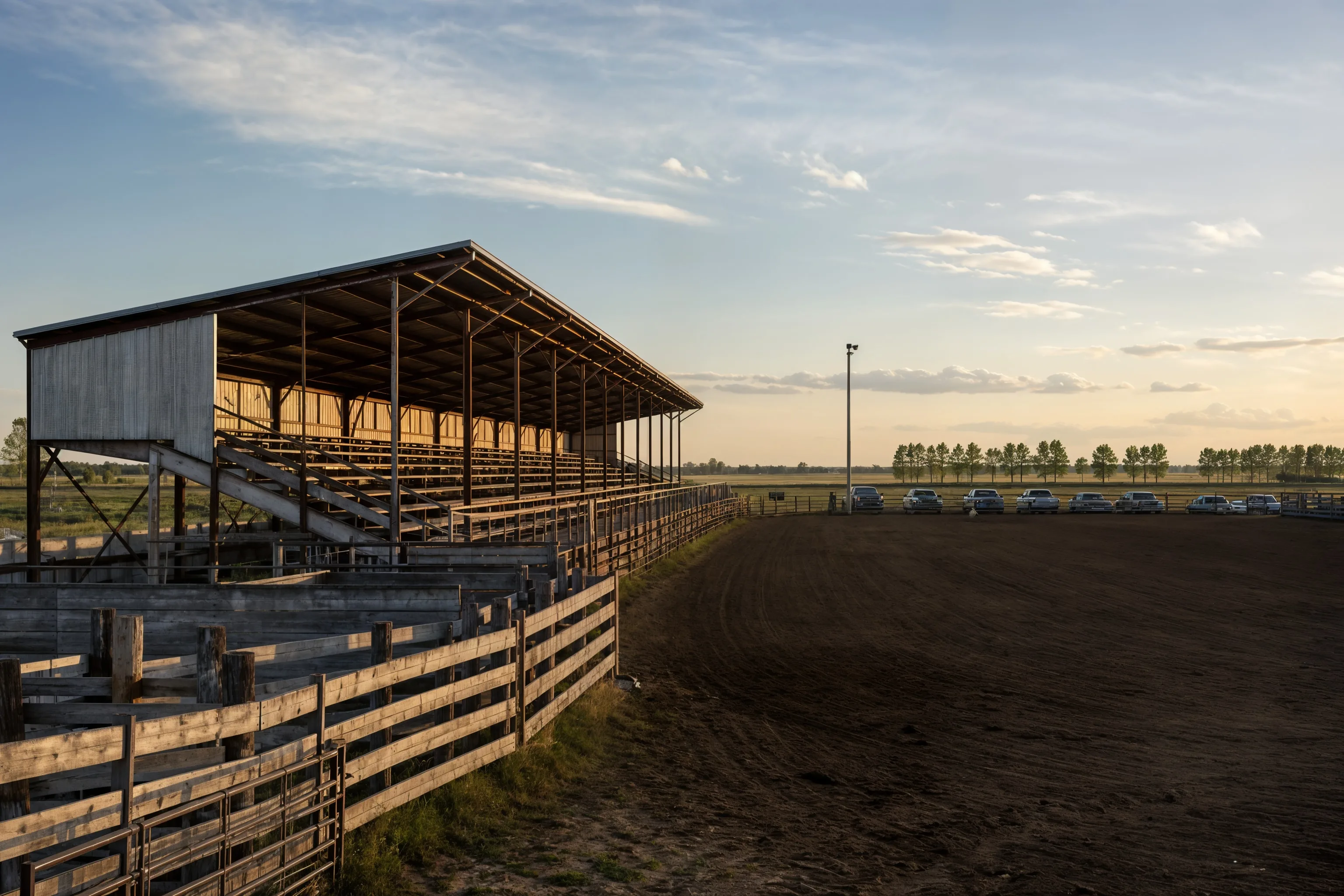
This is a county that understands long-term investment. The Ponoka Stampede, the summer rodeo the town bills as the Calgary Stampede of the North, has drawn people to the same grandstand for generations. Agriculture has anchored the county since the municipal district was incorporated on January 1, 1952. Solar fits that temperament: buy a productive asset once, collect the returns for twenty-five to thirty years, and watch the operating cost line on the farm account shrink while the panels quietly do their work.
County population
About 10,000 (2021 census: 9,998)
Municipal district incorporated
January 1, 1952
Wire service (rural)
FortisAlberta
Bright sunshine
2,156 hours per year (ECCC Lacombe CDA normals)
Solar yield
~1,260 kWh per kW (NRCan municipal potential)
From our Airdrie shop
~150 km up Highway 2
Who Owns the Wires in Ponoka County
Wire service is the detail that trips up most solar quotes in this county, so here it is plainly. Rural Ponoka County, including the farm country around Rimbey and the acreages along the Battle River, is FortisAlberta territory. Your micro-generation interconnection application goes to FortisAlberta, and approval typically comes back in two to six weeks. We prepare and submit that filing as part of every install.
The Town of Ponoka is the exception, and it is a genuine local quirk. The town runs its own municipal electric distribution system, one of only four Alberta municipalities that own and operate their own wires. If your meter is inside town limits, your solar application is reviewed by the Town of Ponoka rather than FortisAlberta. Same equipment, same code, different desk. Some far-western corners of the county fall under EQUS REA. We confirm your wire owner from your power bill before any paperwork starts, so nothing gets filed twice or filed wrong.
Under Alberta's micro-generation regulation, every system above a minimal size also needs a retailer agreement so surplus power earns a bill credit. If you do not have a retailer you like, we walk you through the options during design. You can choose your power retailer regardless of who owns the wires.
Where We Work in the County
We install across the whole county: the Town of Ponoka and the Town of Rimbey, the summer village of Parkland Beach on the west shore of Gull Lake, and the hamlets of Bluffton, Hoadley, and Leedale, plus the farm and acreage parcels between them. Most of what we build here is rural, and that is the work our crews are set up for, from single-phase acreage services to three-phase farmyard systems.
This is cattle, hay, and grain country, and the load profiles match: heated water bowls and calving barns, grain bins with aeration fans, shops with welders and compressors. The Ponoka Stampede grounds fill up every June, but the rest of the year the county runs on agriculture, and agricultural loads are exactly what we size systems for. Range Road Solar has completed hundreds of installs across Alberta, and county ground-mount and farm projects are core work, not a sideline.
Rough Math for a Ponoka County System
Every project gets its own model built from your actual bill, but the table below shows what the published inputs produce. Production uses the Natural Resources Canada figure of about 1,260 kilowatt-hours per installed kilowatt per year for this area, south-facing at latitude tilt. Pricing uses our standard ranges, roof at $2.25 to $2.85 per watt and ground mount at $2.50 to $3.50 per watt.
| System | Annual production | Installed cost range | Typical fit |
|---|---|---|---|
| 8 kW rooftop | ~10,100 kWh | $18,000 to $22,800 | Acreage home with shop heat |
| 12 kW rooftop | ~15,100 kWh | $27,000 to $34,200 | Farmstead or large family home |
| 16 kW ground mount | ~20,200 kWh | $40,000 to $56,000 | Grain or livestock operation |
Whether solar pencils out depends on the rate you currently pay and how much of your production you use on site versus export. That is a bill-by-bill question, and we answer it with your real numbers, not a brochure average.
Frequently Asked Questions
Get a Ponoka County Solar Assessment
Send your last power bill and we will tell you, honestly, whether solar pencils out for your farm, acreage, or Ponoka home. No pressure, no inflated projections.
Also Serving Nearby Communities