
The Sun Numbers Behind Clive
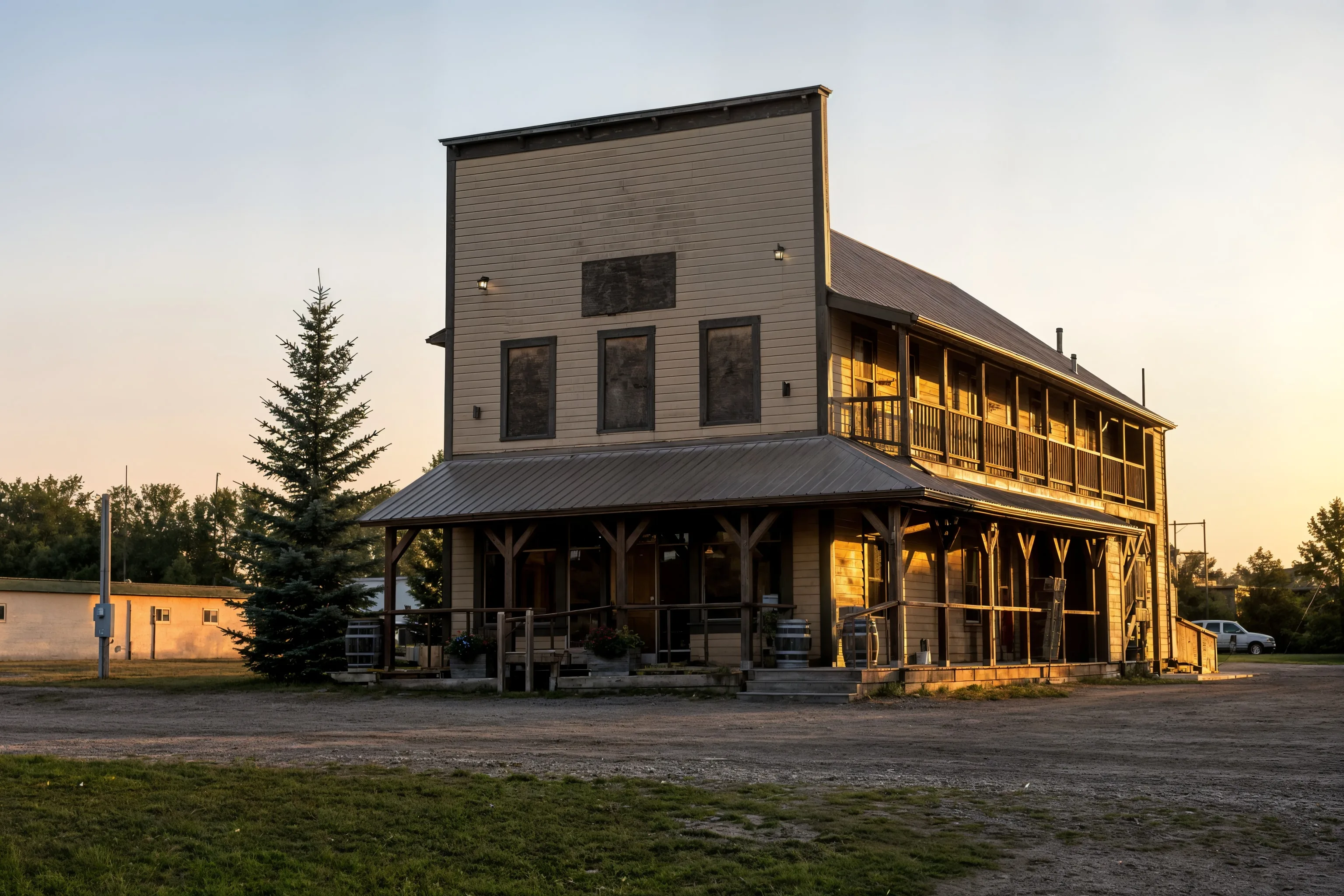
Clive was originally laid out as Valley City and renamed on May 1, 1909, in honour of Robert Clive, before the village was formally erected effective January 9, 1912. It has stayed a small, tight-knit place ever since: the 2021 Census counted 775 residents, up from 715 in 2016, and the CPR's Lacombe-Stettler branch line still runs through town, the same line that once brought railway trade to the Clive Hotel, a two-storey, false-fronted building from the 1920s that now operates as the Prairie Fire Bar. Every June the village turns out for Clive FunFest, a genuine local tradition built around a Saturday parade.
Clive sits at 52.463 degrees north. The nearest Environment Canada station with published bright-sunshine normals is Lacombe CDA, about 15 kilometres west, which recorded roughly 2,156 hours of bright sunshine a year across its 1971 to 2000 Climate Normals. That is a healthy solar resource for central Alberta, and Natural Resources Canada carries it further with a specific-yield figure calculated for Clive itself: a south-facing system at latitude tilt is estimated to produce about 1,269 kilowatt-hours per kilowatt of installed capacity per year.
That NRCan figure is not a regional guess, it is a direct row published for Clive, and it is the number we start from when we talk through a system size. A 7.6 kilowatt roof system works out to roughly 9,650 kilowatt-hours a year, and a 10 kilowatt system to roughly 12,700, both honestly labelled as estimates until we have your bill and a site visit in hand.
FortisAlberta Wires Clive, and We Speak Their Process
There is no ambiguity about wire service in Clive. The Village of Clive's own website answers the question for us: its power outage contact line reads simply "Fortis, 310-WIRE (9473)." That confirms Clive sits squarely in FortisAlberta's distribution territory, both in the village and across the surrounding Lacombe County countryside.
Under Alberta's Micro-Generation Regulation, systems up to 150 kilowatts can connect to the grid and earn credit for the power they export. Your bill has three parts: distribution, transmission, and the energy charge from whichever retailer you have chosen. Solar offsets the energy portion you would otherwise buy, and any surplus you send back is credited through the meter FortisAlberta installs.
We prepare and submit the FortisAlberta micro-generation application ourselves, along with the electrical permits and inspection scheduling. Approval typically takes two to six weeks. You sign a couple of forms, we handle the rest, and once the bidirectional meter is in place, the system starts working against your bill on the next sunny day.
Three Clive Load Profiles We See on Bills
Agriculture anchors the local economy around Clive. Lacombe County reported 1,010 farms in the 2021 Census of Agriculture, including 335 oilseed and grain operations, and more than 100,000 head of cattle across the county. That mix shows up clearly on the power bills we review, and the ranges below reflect what we actually see, not a national average.
The village home. A bungalow or family home on a Clive village lot, electric or gas heat, a fridge and a deep freeze, typical bills of $150 to $300 a month. A 6 to 8 kilowatt roof system, using the 1,269 kWh per kWp yield figure, covers most of that load across the year.
The acreage with a heated shop. Lacombe County acreages around Clive often carry a heated shop, a pressure system for the house, and sometimes a stock waterer for a few head of cattle. Bills of $350 to $600 a month are common, and a 10 to 12 kilowatt roof or ground system takes a real bite out of that.
The grain and cattle operation. With 335 grain and oilseed farms and well over 100,000 cattle across Lacombe County, augers, grain dryers, water pumping, and yard lighting push bills to $600 to $1,000 a month during a busy harvest or calving stretch. Ground-mounted systems from 12 kilowatts up, sited on open south-facing yard, are where the payback math tends to work hardest for these operations.
Snow, Frost, and What Holds the Panels Up
Clive sits out on open central Alberta farmland, the kind of ground that gets a real snow load and steady prairie wind with nothing to break it. We engineer racking to that moderate snow-load and wind design standard rather than treating Clive like a sheltered city lot, and we check roof structure before quoting because a village bungalow deck and a farm shop roof carry very different loads.
Frost runs deep in this part of Alberta. As a rule of thumb we set ground-mount piles and conduit below roughly 1.2 metres, about four feet, so freeze-thaw cycles never work anything loose over the years. Panels set at a steeper tilt shed snow on their own once the sun comes back out, and cold, clear air actually improves output per watt compared with a hot summer afternoon.
Across 218 or more installs in Alberta, many of them in exactly this kind of open farm country, we spec equipment to match: LONGi panels rated to withstand 35 millimetre hail at 97 kilometres an hour with a 25-year product warranty, and either APsystems microinverters for homes and acreages or Solis inverters for larger farm and shop strings, with racking rated to the load an engineer stamps.
What Solar Costs in Clive
Roof-mounted solar runs $2.25 to $2.85 per watt installed. A 6 to 8 kilowatt village home system runs roughly $13,500 to $22,800 installed depending on the roof and equipment chosen. Ground mounts run $2.50 to $3.50 per watt, reflecting the trenching, piles, and racking a farmyard install needs, and they are usually the right call for acreages and grain or cattle operations with open south-facing yard.
| Property profile | System size | Installed cost range | Est. first-year production |
|---|---|---|---|
| Village bungalow or family home | 6-8 kW roof | $13,500 to $22,800 | About 7,600 to 10,150 kWh |
| Larger home or acreage home | 10-12 kW roof | $22,500 to $34,200 | About 12,700 to 15,200 kWh |
| Acreage, grain, or cattle operation | 12-16 kW ground | $30,000 to $56,000 | About 15,200 to 20,300 kWh |
Production estimates use the NRCan specific-yield figure published for Clive, 1,269 kilowatt-hours per kilowatt per year on a south-facing system at latitude tilt, a place-specific number rather than a regional average. FortisAlberta interconnection and permitting are included in the installed price, and travel from Airdrie is grouped into scheduled Clive and Lacombe County trip windows rather than billed as a solo run.
Payback depends on your actual usage and your retailer's rate, but across the load profiles above, a typical honest range runs roughly 9 to 13 years, against panels warrantied for 25 years and shop-floor experience of them running well beyond that. Farm and acreage operations with heavier bills tend to pay back fastest, since every kilowatt-hour they generate is one they would otherwise have bought at full retail.
The Process, From a Bill to a Spinning Meter
Send Your FortisAlberta Bill
We start with the 12-month usage graph on your bill. It tells us your real consumption, your highs and lows, and the system size that actually fits your property.
Site Assessment in Clive
We walk the roof or the yard, check shading, panel space, and your electrical service, and talk through roof-mount versus ground-mount options on the spot.
Design, Quote, and Interconnection
You get an itemized quote with a production estimate built on the NRCan yield figure for Clive. We file the FortisAlberta micro-generation application and permits.
Install and Commission
Our crew installs racking, panels, inverter, and tie-in over one to three days. Inspection and the meter swap follow, and then your meter starts running backward.
The Drive Reality: Airdrie to Clive
Our shop is in Airdrie. Clive is roughly 170 kilometres away, about a 135-minute drive. That is too far to justify sending a crew out for a single job, so we do not do it that way.
Site assessments and installs around Clive are grouped into scheduled trip windows alongside other Lacombe County work. Several properties get seen on the same run, materials are staged ahead of time, and your install day gets booked around that plan rather than around a truck making a solo trip. From deposit to commissioning, the full process typically runs two to six weeks, and most of that time is spent in the FortisAlberta interconnection queue and permit approvals, not on labour at your property.
Whether you are in the village itself or out on a grain or cattle operation elsewhere in Lacombe County, we cover the area the same way: one visit, one plan, and a crew that already knows FortisAlberta's paperwork and this kind of open farmland roof and yard.
Frequently Asked Questions
Get a Solar Design for Your Clive Property
Send a recent FortisAlberta bill and we will come back with an honest assessment: system size, cost range, and what solar can realistically do for your property. No pressure, no brochure numbers.
Also Serving Nearby Communities