Municipal District of Bighorn No. 8 · Farm and agricultural solar
Farm Solar in Canmore, Alberta for Agricultural Properties
Range Road Solar designs and installs 20-50 kW farm solar systems for agricultural properties near Canmore. Sized from your actual loads, not rule-of-thumb estimates.
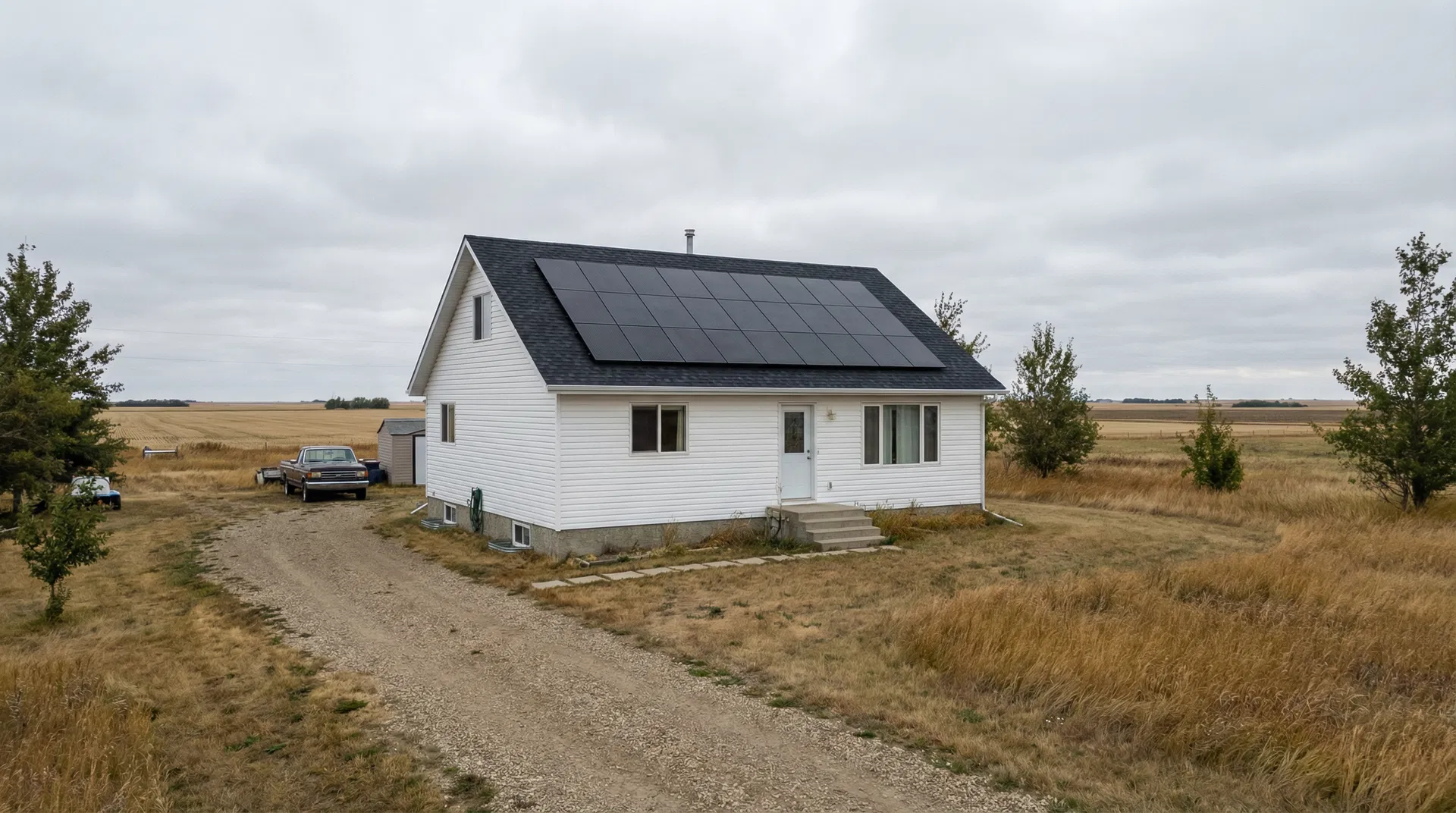
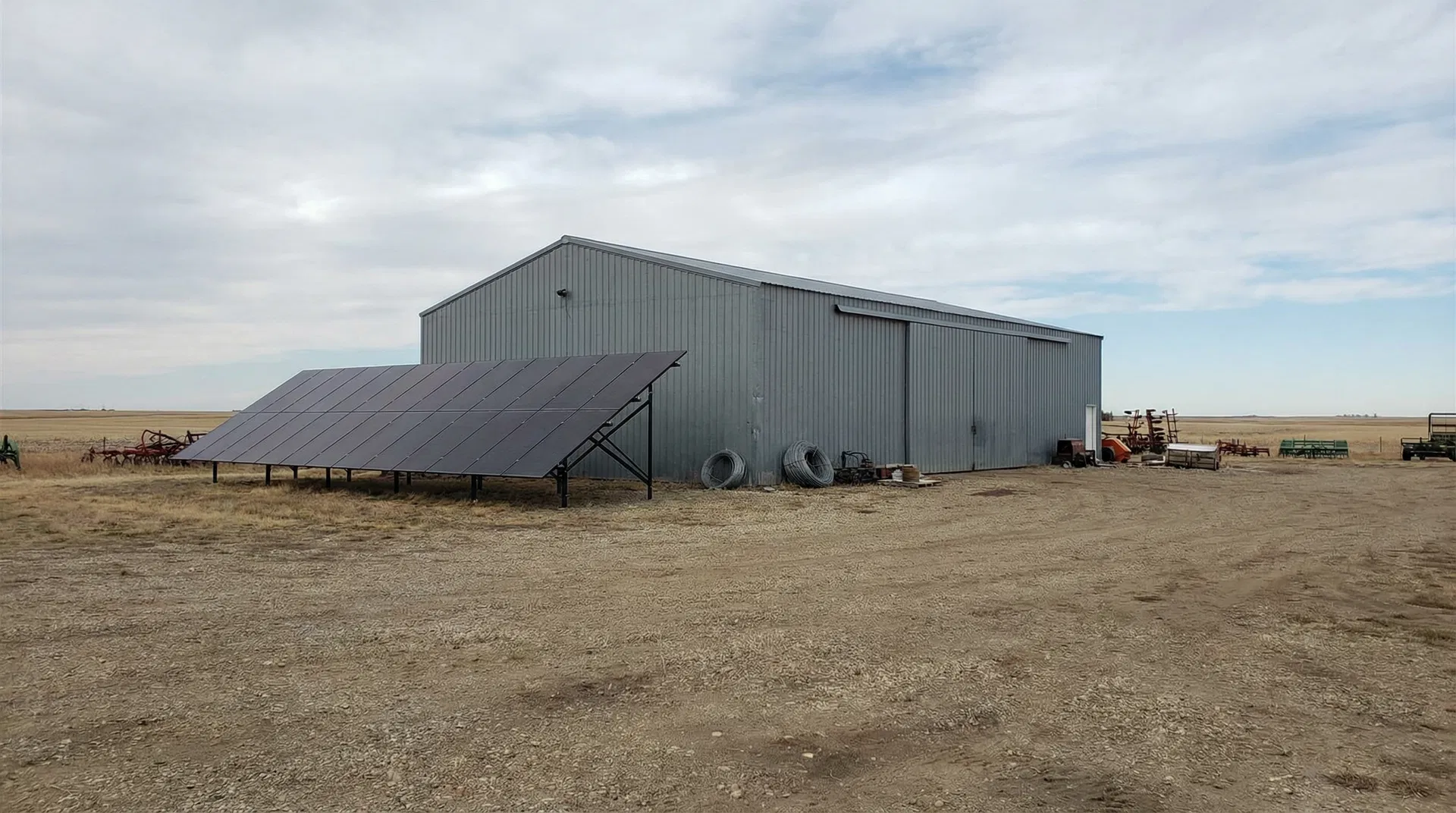
Solar farm solar Canmore Alberta properties demand equipment and design that holds up to real agricultural use. We install LONGi panels across all our farm builds. They're a straightforward, field-tested product with consistent output, and they don't require special handling to perform on a working property. For most farm systems in this size range, ground-mount racking is the right call. It keeps the array off a roof that may have aging steel or a pitch that doesn't favour a south-facing orientation, and it lets us position the panels where shading from buildings or tree lines won't cut into production. For systems where a barn or shop roof is structurally sound and well-oriented, rooftop installation is an option we'll assess during the site review. We don't default to one approach without looking at the property first. APsystems microinverters handle the DC-to-AC conversion on most of our farm builds. Unlike a string inverter setup, microinverters let each panel operate independently. On a farm property where a roof section might be partially shaded by a grain bin or a neighbouring structure at certain times of day, that independence matters. One shaded panel won't drag down the output of the whole array. Systems in the 20-50 kW range also involve a more involved interconnection package than a residential build. We prepare the design documentation, single-line diagrams, and application materials for FortisAlberta as part of the project. That's included, not billed separately.
Solar Planning for Canmore Properties
Agricultural properties in and around Canmore carry electrical loads that residential solar installers aren't set up to handle. A heated shop running alongside a home panel, irrigation controls, grain handling equipment, or outbuilding circuits adds up fast. That stacked demand is exactly why farm systems start at 20 kW and often run to 50 kW or more before a site is properly covered. FortisAlberta is the distribution wire owner serving this area, and the interconnection process for systems in this size range involves a more detailed application than a standard residential submission. We handle that process. You don't need to figure out the forms. We don't design from averages. Your most recent power bill includes a 12-month usage graph, and that graph tells us the actual shape of your consumption across seasons. We build the design from that data, layered with a site assessment of your roof condition, available ground space, shading, and panel orientation. Every design decision follows from what's actually on your property, not what a typical Alberta farm uses.
Electrical Site Review for Canmore Properties
Voltage Rise
Voltage rise happens when a solar system pushes power back onto the distribution line and raises the voltage at the point of connection. On rural distribution lines, where the wire may be serving a long run with few loads between properties, voltage rise can be more pronounced. If the rise exceeds FortisAlberta's limits, the inverters will clip or shut down to stay within allowable voltage, which reduces the effective output of the system. We account for voltage rise during the design phase and size the system and inverter configuration to stay within acceptable limits.
Single-Phase vs Three-Phase
Rural properties in Alberta may be served by single-phase or three-phase distribution depending on the loads the service was originally designed for. Three-phase service is common where large motors or grain handling equipment are present. The phase configuration of your service affects which inverter products are compatible and how the system capacity is distributed across the phases. We confirm the phase configuration during the site assessment and specify inverter products accordingly.
Panel Infrastructure
Older electrical panels on farm and agricultural properties often weren't sized for the backfeed current a solar system introduces. We assess the breaker capacity, panel age, and available space for a dedicated solar backfeed breaker during the site review. If the panel can't support the system safely, an upgrade is required before installation. That assessment happens at the start of the project so there are no surprises once installation is underway.
Service Entrance Review
The meter base and service entrance are reviewed as part of every farm solar application to FortisAlberta. The meter base needs to be in a condition that supports the bi-directional metering FortisAlberta installs for micro-generation accounts. If the existing meter base is outdated or doesn't meet current standards, it will need to be upgraded before the interconnection application can be approved. We identify that during the site assessment so the scope is clear before the project starts.
Right-Sizing Solar for Canmore Properties
Farm and agricultural properties carry a different kind of electrical load than a residential home in town. You're not just powering a house. You're often running a heated shop, outbuilding circuits, yard lighting, irrigation controls, and sometimes grain handling or processing equipment, all drawing from the same service. That stacked load is why we start farm system conversations in the 20 kW range. A residential-sized system won't make a meaningful dent in that kind of usage. The roof-versus-ground-mount decision comes down to what's actually on the property. If your barn or shop roof is structurally sound, south-facing, and clear of shading from silos, trees, or neighbouring buildings, it's worth considering. If the roof pitch is wrong, the steel is aging, or the layout of your yard puts available flat land closer to the meter than any usable roof surface, a ground-mount array is usually the better option. We don't pick one before we see the site. Sizing starts with your most recent power bill. Alberta utility bills include a 12-month usage graph, and that graph shows us not just your total consumption but how your demand shifts across seasons. An irrigation-heavy property uses power differently in summer than in winter. A shop with a heated floor draws more in January than in July. We build the system design from that seasonal shape, not a flat annual average. That's the difference between a system that fits your operation and one that fits a spreadsheet.
Typical Load Profiles We Design For Near Canmore
Home + Heated Shop
A residential home combined with a heated shop or garage is one of the most common agricultural load profiles we see. The shop heating system, compressors, welders, and lighting run independently of the house panel, and the combined draw often justifies a system in the 25-35 kW range. We size from the 12-month usage graph on your most recent power bill, which captures how heavily the shop is used through winter months versus summer.
Acreage with Irrigation and Outbuildings
Properties that run seasonal irrigation alongside multiple outbuildings have a load profile that spikes significantly in warmer months. A 30-40 kW system is often needed to offset meaningful consumption across the full year on this kind of property. The irrigation pump size and run hours factor into the design, and we confirm those details during the site visit rather than estimating from typical rural averages.
Equestrian or Hobby Farm Operation
Equestrian and hobby farm properties often include barn lighting, water heating, ventilation fans, and tack room or feed storage circuits that run year-round. Combined with a residential home load, a property like this typically needs a system in the 20-30 kW range to offset a meaningful portion of consumption. We design from your actual usage pattern rather than a generic farm profile, because the load mix on this type of property varies considerably from one operation to the next.
FortisAlberta Interconnection in Canmore
FortisAlberta is the distribution wire owner for Canmore, and any solar system connected to the grid here runs through their micro-generation interconnection process. For farm systems in the 20-50 kW range, that application involves more documentation than a small residential submission. Engineering drawings, a single-line diagram, equipment specifications, and a completed application package all need to go to FortisAlberta before installation can proceed. We handle the full application package. You don't need to contact FortisAlberta separately or figure out which forms apply to your system size. Once the application is submitted, FortisAlberta reviews it on their own schedule. We don't control that timeline, and we won't promise one. What we will do is make sure the submission is complete and correct the first time. Incomplete applications slow things down. A properly prepared package from the start is the best way to keep the project moving. We've done this with FortisAlberta before and know what the application needs to include.
Project Economics and Design Review
| System Size | Annual Production | Year 1 Savings | Payback Period |
|---|---|---|---|
| 20-50 kW range, 25 kW typical |
Production, savings, and payback estimates require a property-specific design and your most recent power bill before any figures can be confirmed.
How We Work in Canmore
Bill and Load Review
We review your power bill to understand your energy use in Canmore and size the system to your actual consumption — not a generic estimate.
Site Assessment
We assess your roof or ground area, south-facing exposure, electrical service, and utility interconnection requirements specific to your property.
Design and Utility Application
We produce a system layout, production estimate, and cost summary, then submit your micro-generation application to your utility on your behalf.
Installation and Commissioning
Our crew installs racking, panels, inverter, and electrical connections. All work is performed by licensed electricians. We commission and test before handoff.
Current Program and Interconnection Review
Utility connection review
FortisAlberta reviews micro-generation interconnection applications for all grid-tied solar systems in their service territory, including farm systems in the 20-50 kW range. Range Road Solar prepares the full design and application package required for the FortisAlberta submission. We handle the paperwork so you don't have to navigate the process yourself.
Current program review
Commercial, farm, and agricultural solar installations may be eligible for provincial or federal programs depending on system size, ownership structure, and current rules. Eligibility is reviewed against the programs that are actually available at the time of your design review, not programs that have expired or changed. We don't quote programs we can't confirm are active and applicable to your property.
Frequently Asked Questions
Get a Solar Assessment for Canmore
Submit a recent power bill and we will review your consumption and provide an honest assessment for your Canmore property. No obligation.
(587) 330-7502 Book a CallRelated Resources
More Solar Services in Canmore