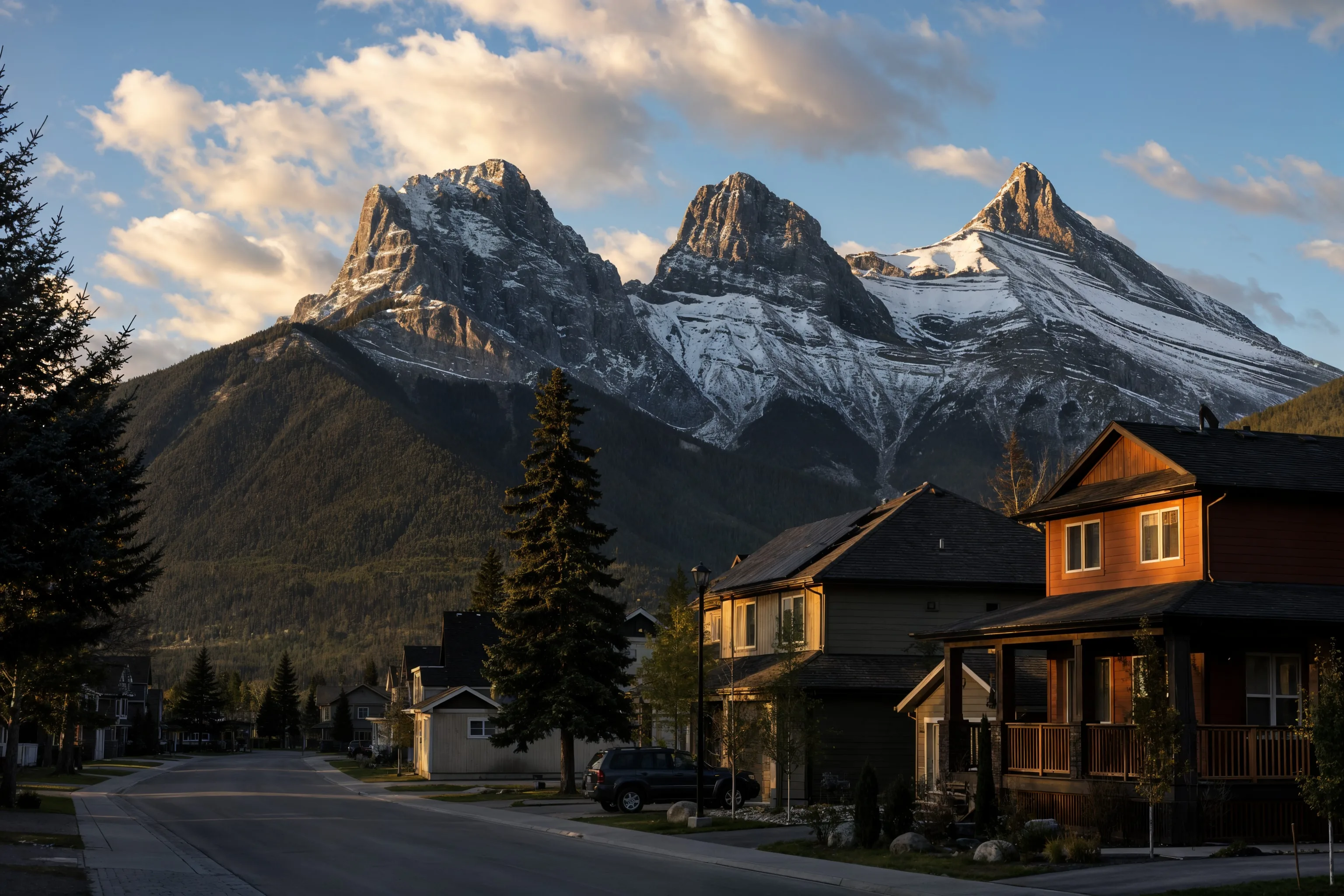
Off-grid solar in Canmore, Alberta means a complete power system with no utility connection at all: panels, batteries, and an inverter sized to run the property on its own, every day of the year. We build these systems around LONGi panels, paired with a hybrid inverter and lithium battery storage rather than the APsystems microinverter setup we use on a grid-tied home with a FortisAlberta connection. That's a deliberate equipment choice: a hybrid inverter manages the flow between panels, batteries, and your loads directly, and lithium storage gives you the depth of discharge and cycle life an off-grid property needs. Most of the off-grid work we see around here falls into two categories: remote cabins that never had a line run to them, and acreages where the cost of a FortisAlberta extension doesn't pencil out against building a self-contained system instead. Both need the same starting point, a realistic look at what you're actually running: lights, a fridge, a well pump, maybe a wood splitter or power tools in a shop. We size the battery bank and panel array to that load, not to a generic off-grid package. If your property has backup needs beyond what solar and batteries alone can carry through a long overcast stretch, we'll talk through whether a generator should back up the system, and how it integrates with the hybrid inverter. The goal is a system that matches how you actually use the property, not a one-size kit.
Solar Planning for Canmore Properties
This area has grown from 13,992 residents to 15,990 since the last census, and a lot of that growth sits on properties where the grid doesn't reach the whole lot, if it reaches it at all. The townsite has been incorporated since 1965, long enough that plenty of acreages, cabins near the Three Sisters peaks, and backcountry parcels were built before anyone thought about running power lines to every corner of them. Off-grid solar fits that pattern. Instead of waiting on a FortisAlberta line extension that could run into real money before a single panel goes up, you build a system sized to what your cabin, shop, or year-round home actually draws. Range Road Solar starts every off-grid project here the same way: a site visit, a look at your current power draw (or your best estimate of it if you've never had a meter), and a conversation about what you actually need powered, lights and a fridge, or a full household with a well pump and heat. From there we size the panel array, the battery bank, and the hybrid inverter to match. We don't guess at your loads and we don't borrow numbers from a different property. Every system design comes out of what's actually sitting on your land.
Electrical Site Review for Canmore Properties
Voltage Rise
Voltage rise happens when power has to travel a long distance over a distribution line, and line and transformer conditions on that stretch can cause the voltage at your property to drift from the FortisAlberta standard. For an off-grid system this mostly matters if the property later adds a grid-tied component or generator interconnection, since the battery and hybrid inverter otherwise set your voltage locally. We check for it during the site review so inverter clipping and output limits get accounted for in the design, not left to guesswork.
Single-Phase vs Three-Phase
Rural Alberta properties can have single-phase or three-phase electrical service, and which one you have affects what inverter capacity and configuration we can design around. A shop running larger motors or grain-handling equipment is more likely to need three-phase, while a cabin or home typically runs on single-phase. We confirm which service type your property has before finalizing the hybrid inverter and battery bank sizing.
Panel Infrastructure
Older rural panels weren't built with today's breaker capacity or load in mind, and an off-grid system still needs a main panel capable of handling the hybrid inverter's output and your battery charging circuits. We check the panel's age, amperage rating, and available breaker space during the site visit. If the existing panel can't support the system, an upgrade gets scoped into the project before installation, not discovered partway through.
Service Entrance Review
Even an off-grid system benefits from a service entrance review if the property has any existing meter base or point of attachment, since we need a clean, code-compliant tie-in for the hybrid inverter and any backup generator. We check the condition of the entrance and meter base, and note what a future FortisAlberta microgeneration application would require if the property ever adds a grid-tied piece. If the entrance needs upgrading to safely support the new equipment, that gets built into the project scope.
Right-Sizing Off-Grid Solar for Canmore Properties
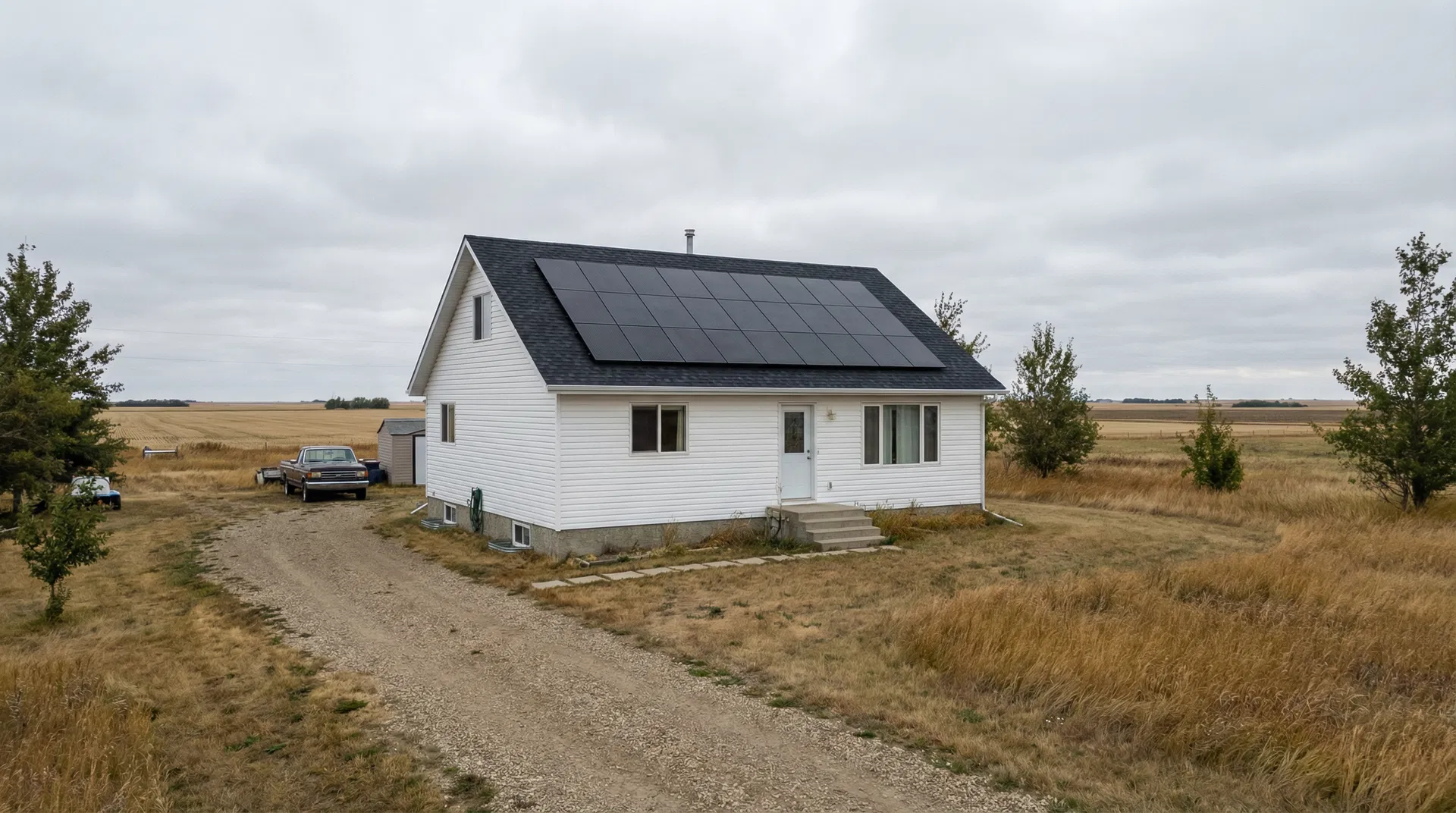
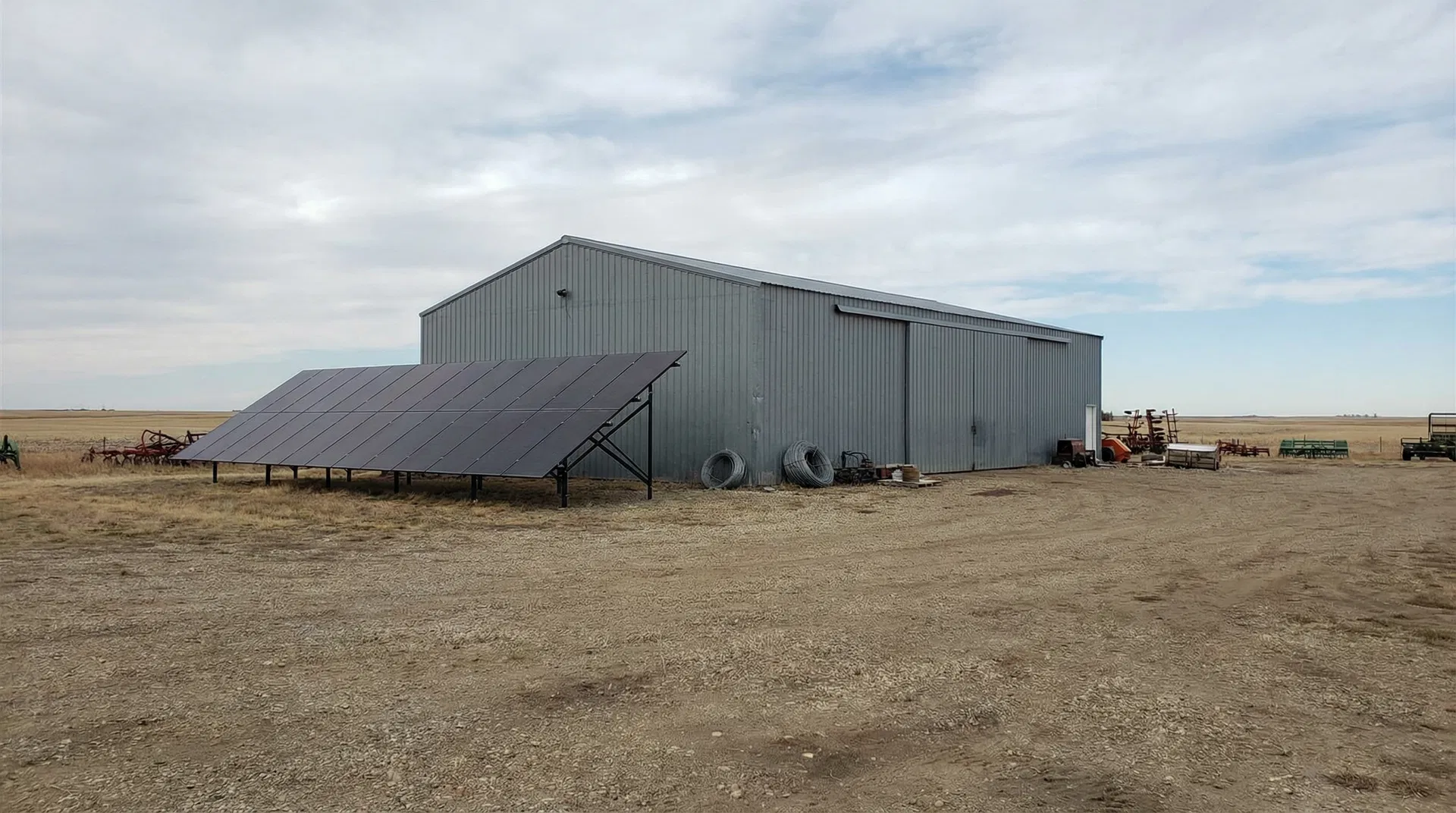
Off-grid properties in rural Alberta usually carry more than one load category: the home itself, plus a shop, a well pump, maybe irrigation or outbuilding power, and all of it has to run off the same battery bank without a utility to lean on if you draw more than expected. That's why off-grid systems tend to land on the larger end of the 5 to 15 kW range we work in, with 8 kW as a typical starting point before we've seen your specific loads. Roof versus ground mount comes down to the same site factors on every property: how much the roof is shaded by trees or the slope of the terrain, what pitch and orientation the roof actually offers, and how much open, unshaded land is available near the battery and inverter location. On a lot with heavy tree cover or a roof that doesn't face the right direction, ground mount is often the better call, especially if there's a flat, open spot close enough to keep wiring runs short. If you've already got a FortisAlberta account on the property, we size the system off the 12-month usage graph on your most recent power bill rather than a rule-of-thumb number. If you've never had a meter, we build the load profile from what you tell us you're running and verify it on-site. Either way, the number we land on comes from your property, not a generic package.
Typical Load Profiles We Design For Near Canmore
Cabin or Seasonal Retreat
A cabin used on weekends or seasonally usually needs the least: lighting, a fridge, maybe a small pump, and charging for whatever you bring in and out. We size the battery bank to carry you through stretches when nobody's there to top off power use, and keep the panel array modest since the draw itself is light. Your most recent power bill, if you have one, or a simple walk-through of what's plugged in tells us where to start.
Year-Round Home
A full-time off-grid home carries a steady daily draw: a well pump, a fridge and freezer, lighting, and often electric heat backup. That constant load needs a bigger battery bank and more panel capacity than a seasonal property, because there's no slow season to coast through on a smaller system. We build the load profile from your actual daily usage, not an assumption about what a typical house needs.
Home Plus Shop or Outbuildings
Add a heated shop, grain handling equipment, or an irrigation pump to a home's load and the system has to grow to match, sometimes into three-phase territory if the shop runs larger motors. We treat the shop and the home as one combined load when we size the array and battery bank, not as two separate systems bolted together. That's usually where off-grid properties land toward the top of our 5 to 15 kW range.
FortisAlberta Interconnection in Canmore
Properties here sit within FortisAlberta's service territory, but an off-grid solar system is built specifically to not need that connection. There's no microgeneration application to file with FortisAlberta because the system isn't tied to their lines at all: no net metering, no interconnection agreement, no inspection tied to their grid. That's one of the appeals of going off-grid on a remote parcel, you skip the utility paperwork entirely because you're not asking to connect to anything. Where it gets more involved is if your property already has a FortisAlberta meter and you're adding battery backup alongside it, or if you want the option to connect to the grid later. In those cases we design the system so the off-grid side stays electrically isolated from the utility side, and if a future grid-tied addition ever makes sense, Range Road Solar handles that application and the technical requirements it involves. Either way, we confirm your specific situation, current connection status included, during the site visit before we draw up a system design.
Project Economics and Design Review
| System Size | Annual Production | Year 1 Savings | Payback Period |
|---|---|---|---|
| 5-15 kW range, 8 kW typical |
Production, battery runtime, and payback for an off-grid system all depend on a property-specific design review, since there's no utility bill to benchmark against on a system with no grid connection.
How We Work in Canmore
Bill and Load Review
We review your power bill to understand your energy use in Canmore and size the system to your actual consumption, not a generic estimate.
Site Assessment
We assess your roof or ground area, south-facing exposure, electrical service, and utility interconnection requirements specific to your property.
Design and Utility Application
We produce a system layout, production estimate, and cost summary, then submit your micro-generation application to your utility on your behalf.
Installation and Commissioning
Our crew installs racking, panels, inverter, and electrical connections. All work is performed by licensed electricians. We commission and test before handoff.
Current Program and Interconnection Review
Utility connection review
FortisAlberta reviews grid connection applications for properties in its service territory, though an off-grid system by design doesn't require one. Range Road Solar still prepares the design package and handles any application if your project includes a grid-tied component or a future connection option. We don't guess at FortisAlberta's requirements, we confirm them against your specific property at design time.
Current program review
Commercial, farm, and residential eligibility for any current program gets checked against the rules in place at the time of your design review, not assumed from a past project. We look at your property type and intended use alongside whatever applies that month. This review happens before we finalize your system design, not after.
Frequently Asked Questions
Get a Solar Assessment for Canmore
Submit a recent power bill and we will review your consumption and provide an honest assessment for your Canmore property. No obligation.
(587) 330-7502 Book a CallMore Solar Services in Canmore