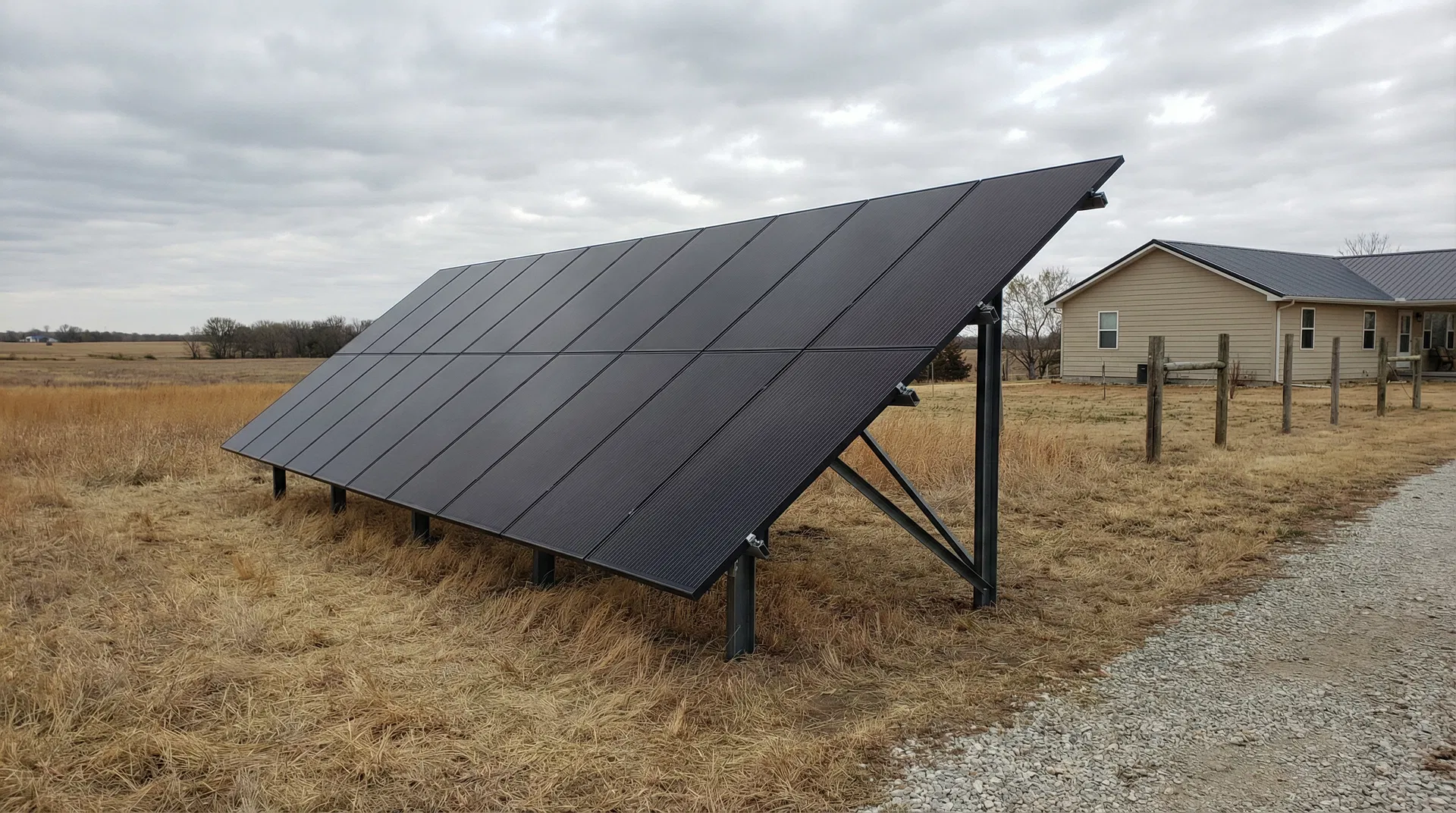
When we talk about solar ground mount solar Canmore Alberta properties need, the conversation starts with the land itself. Canmore area acreages and rural lots vary widely: some have clear south-facing slopes with no obstructions, others have rolling terrain, tree lines, or outbuildings that create shading at certain times of day. A ground mount lets us work with whatever the site offers instead of being locked into whatever angle the roof presents. We build ground mount systems using LONGi solar panels, which are well-suited to variable conditions and carry strong performance warranties. Every system uses APsystems microinverters, one per panel, which means a shaded or underperforming panel doesn't pull down the output of the entire array. On a ground mount where partial shading from a fence line or a tree can affect individual rows, that matters. The racking itself is engineered specifically for the installation site. We don't use off-the-shelf residential racking for ground mounts. The posts are sized for local soil conditions and load requirements, the rail layout is optimized for the number of panels in the design, and the whole structure is built to handle Alberta winters without movement or corrosion issues developing over time. System sizes for ground mounts run from 10 kW to 30 kW, with 15 kW being a common outcome for a home and shop combination. The final size always comes from your most recent power bill and a site-specific design, not an average.
Solar Planning for Canmore Properties
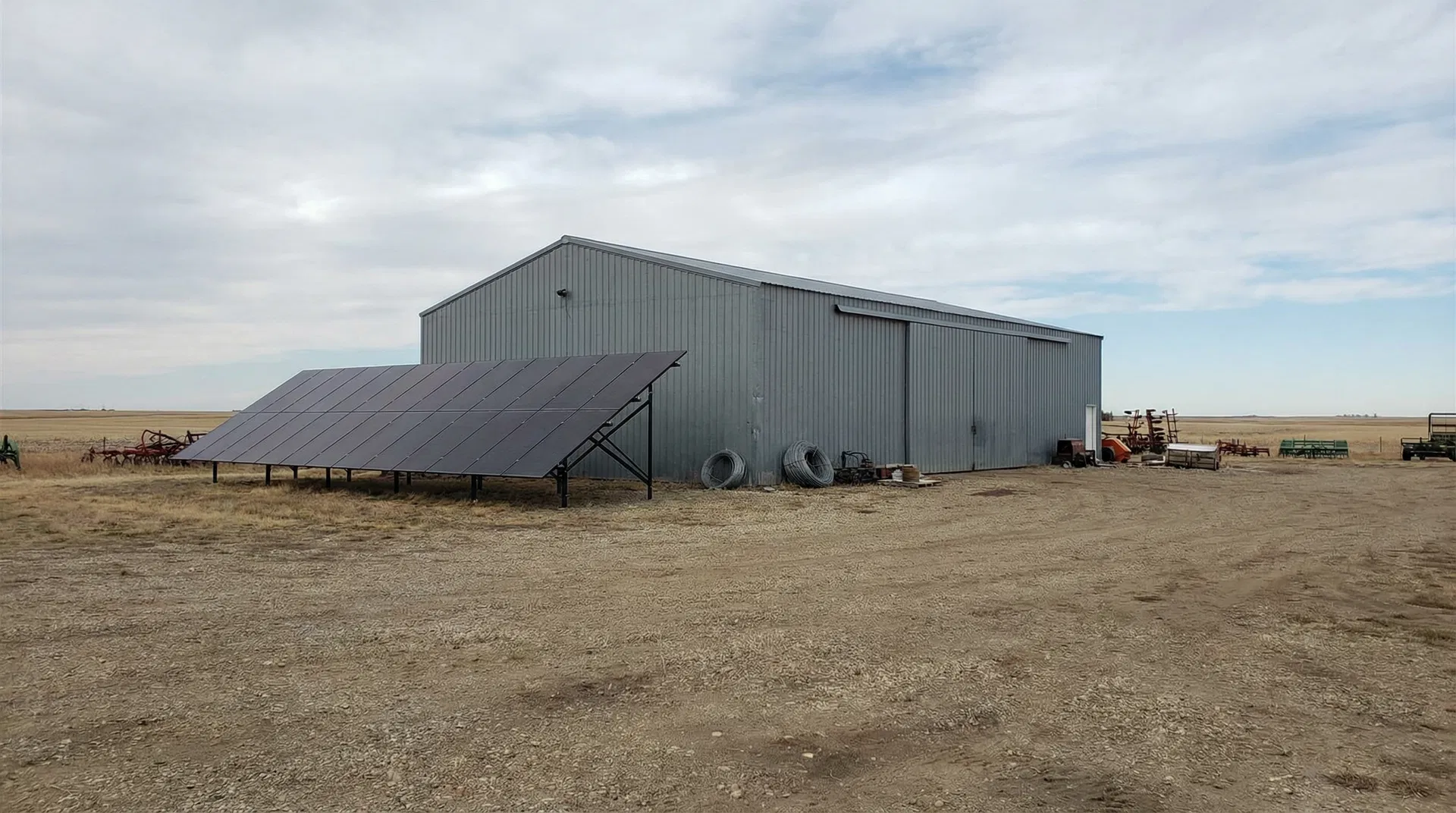
Properties around Canmore tend to sit on terrain that doesn't always cooperate with a rooftop array. Steep pitches, heavy roof loads from valley snowfall, or shading from mature trees and neighbouring structures can all limit what a rooftop system can actually produce. A ground mount sidesteps those constraints entirely. You pick the best patch of land available, we orient the array to match your consumption pattern, and nothing about your roof becomes a limiting factor. The FortisAlberta service territory covers Canmore, and any grid-tied ground mount system here requires a formal micro-generation application before it can export to the grid. That paperwork, the engineering drawings, and the interconnection package are all handled by Range Road Solar. You don't have to manage the back-and-forth with the utility. Ground mount systems in the 10 to 30 kW range suit a wide range of property types in this area, from acreages with a home and a heated shop to larger rural operations with multiple loads running year-round. The right size depends on your actual usage, not a rule-of-thumb estimate. We start every design with your most recent power bill and a physical site review.
Electrical Site Review for Canmore Properties
Voltage Rise
Voltage rise occurs when a solar system pushes power back toward the grid and the local distribution line isn't sized to absorb it cleanly, causing the voltage at the connection point to climb above acceptable limits. On longer rural distribution lines, which are common in areas outside the urban core, this effect is more pronounced and can force an inverter to clip its output or shut down temporarily to stay within FortisAlberta's voltage window. We assess voltage rise as part of every ground mount design so that system sizing decisions account for the actual grid conditions at the property.
Single-Phase vs Three-Phase
Rural Alberta properties can be served by either single-phase or three-phase electrical service depending on what the utility ran to that location historically. Three-phase service is common on agricultural operations with large motors or grain handling equipment, while single-phase is more typical for residential acreages. The phase configuration at the service entrance directly affects which inverter models are compatible and what the practical upper limit on system capacity looks like, so we confirm service type during the site review before finalizing the equipment list.
Panel Infrastructure
Older electrical panels on rural properties sometimes lack the breaker capacity to accommodate a solar back-feed circuit without modifications. We review the existing panel's amperage rating, the age and condition of the breaker bus, and whether the solar back-feed breaker can be installed within the panel's current configuration. If the panel can't safely support the system as designed, a panel upgrade becomes part of the project scope before the interconnection application is submitted.
Service Entrance Review
The meter base and service entrance are reviewed as part of every FortisAlberta micro-generation application, because the utility requires the meter socket to be in acceptable condition before approving interconnection. We check the meter base for corrosion, proper sealing, and compatibility with FortisAlberta's metering requirements for net-metering installations. If the meter base requires upgrading, we include that work in the project plan so there are no surprises when FortisAlberta's inspector reviews the site.
Right-Sizing Solar for Canmore Properties
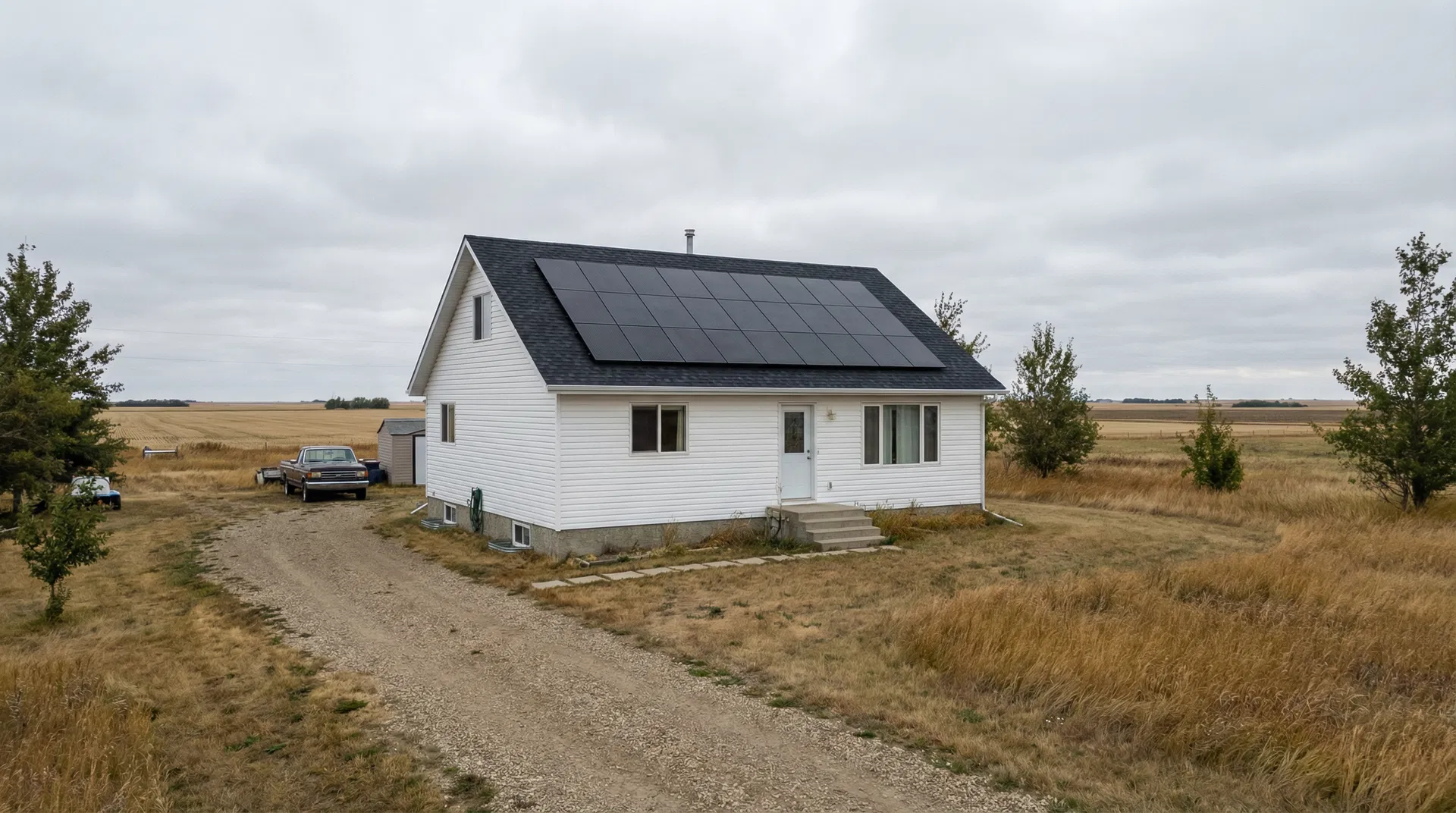
Rural properties typically carry more electrical load than a standard urban home, and that changes how we approach system sizing. A Canmore area property with a house, a heated shop, and a well pump is drawing from multiple circuits around the clock. Add in electric vehicle charging, a hot tub, or irrigation equipment and you're looking at a consumption profile that a 6 kW rooftop system won't touch. Ground mounts in the 10 to 30 kW range exist precisely because rural loads are larger and more varied. The roof versus ground mount decision usually comes down to three things: shading, roof condition, and available land. If the roof faces the wrong direction, has significant shading from trees or a ridgeline, or the pitch isn't well-suited to the array size the loads require, a ground mount is the better path. If there's a clear, flat, or gently sloped patch of land with good sun exposure, a ground mount often outperforms a rooftop option regardless of what the roof looks like. We don't size systems from averages or per-square-foot rules. We start with the 12-month usage graph on your most recent power bill. That graph shows seasonal variation clearly, which matters because a system sized only for summer consumption won't cover winter heating loads. Site orientation, shading analysis, and your actual consumption pattern together determine what size makes sense. We won't recommend a system that's too small to be useful or too large to ever earn back its cost.
Typical Load Profiles We Design For Near Canmore
Home + Heated Shop
A residential home paired with a heated shop or garage is one of the most common ground mount scenarios we see on Canmore area acreages. The shop load alone, including heating, lighting, and power tools, can rival the home's consumption. We size the system from the combined 12-month usage on the power bill, not just the home portion, so the array actually offsets both loads meaningfully.
Home + Short-Term Rental Unit
Some properties in this area include a secondary suite or a detached rental unit on the same meter or a shared service. Year-round occupancy in both structures drives consistent consumption across every month, which makes solar a strong fit because there's rarely a low-usage period where excess generation goes to waste. We account for both dwelling loads when sizing the array, and the ground mount location is chosen to avoid shading conflicts with either building.
Acreage with EV Charging and Domestic Well
Properties running a domestic well pump and one or more EV chargers carry a load that spikes unpredictably but averages out to a substantial monthly draw. A well pump typically runs on a dedicated 240V circuit, and a Level 2 EV charger adds another 7.2 kW of demand when active. We size around the full 12-month consumption picture so the ground mount array handles both loads rather than just the base home usage.
FortisAlberta Interconnection in Canmore
Canmore is served by FortisAlberta for wire service, which means any grid-tied solar installation here, ground mount or rooftop, goes through FortisAlberta's micro-generation interconnection process. That process involves submitting a formal application, supporting engineering documentation, and a single-line electrical drawing that meets FortisAlberta's current technical standards. Range Road Solar prepares and submits the full interconnection package on your behalf. We know what FortisAlberta's review team looks for, and we build the application to those specifications the first time. Incomplete or non-compliant submissions slow things down, so we don't cut corners on the paperwork. Once interconnection is approved, your system can operate as a net-metering installation under Alberta's micro-generation framework. How credits are settled and what retailer arrangements look like are details we walk through with you during the design review, because those rules are subject to change. We don't publish stale policy specifics here. What we can tell you is that we handle the application, you don't have to.
Project Economics and Design Review
| System Size | Annual Production | Year 1 Savings | Payback Period |
|---|---|---|---|
| 10-30 kW range, 15 kW typical |
Production, savings, and payback estimates require a property-specific design review and your most recent power bill.
How We Work in Canmore
Bill and Load Review
We review your power bill to understand your energy use in Canmore and size the system to your actual consumption, not a generic estimate.
Site Assessment
We assess your roof or ground area, south-facing exposure, electrical service, and utility interconnection requirements specific to your property.
Design and Utility Application
We produce a system layout, production estimate, and cost summary, then submit your micro-generation application to your utility on your behalf.
Installation and Commissioning
Our crew installs racking, panels, inverter, and electrical connections. All work is performed by licensed electricians. We commission and test before handoff.
Current Program and Interconnection Review
Utility connection review
FortisAlberta reviews all micro-generation interconnection applications for properties in its service territory, including Canmore. Range Road Solar prepares the complete design package, including the single-line diagram and supporting documentation, and submits it directly to FortisAlberta on your behalf. You don't need to navigate the utility's technical submission requirements on your own.
Current program review
Incentive and rebate programs for residential, farm, and commercial solar installations in Alberta change periodically, and eligibility depends on system type, property classification, and current program rules. We review whatever programs are active at the time of your design review and confirm what applies to your specific project. We won't quote you a program that's no longer accepting applications.
Frequently Asked Questions
Get a Solar Assessment for Canmore
Submit a recent power bill and we will review your consumption and provide an honest assessment for your Canmore property. No obligation.
(587) 330-7502 Book a CallRelated Resources
More Solar Services in Canmore