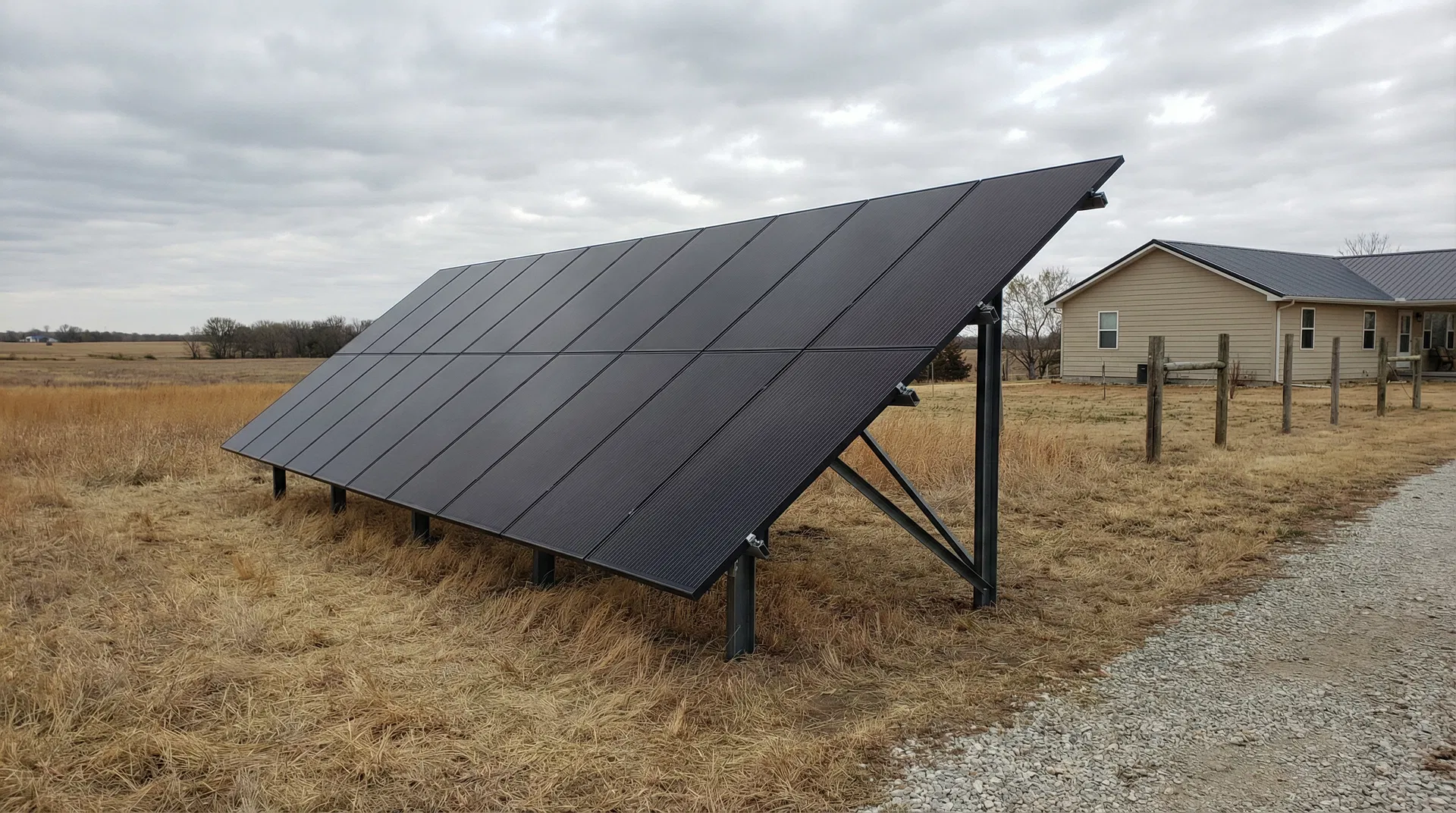
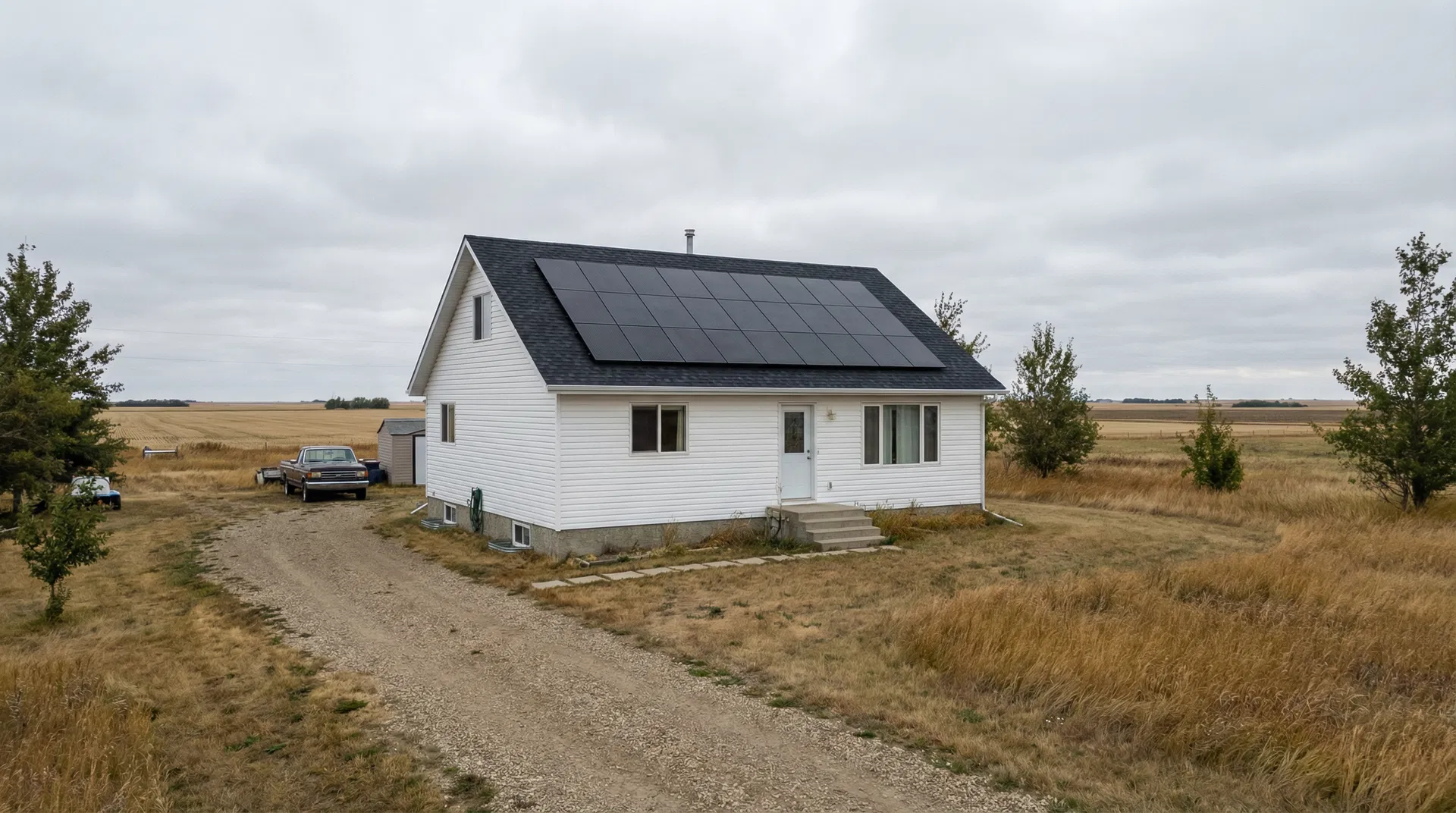
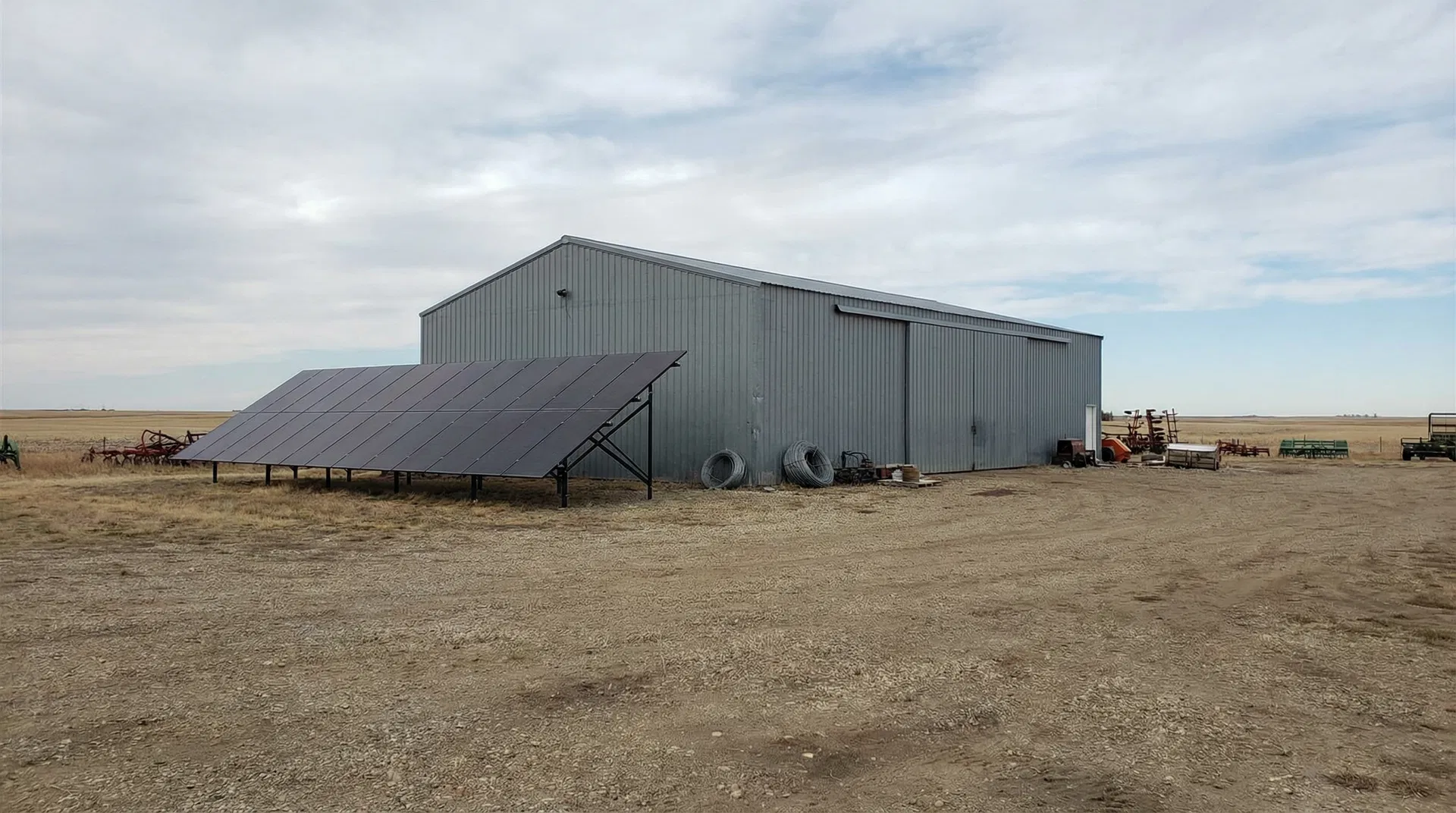
Acreage solar in Canmore, Alberta starts with understanding what's actually drawing power on your property. A home plus a heated shop plus outbuildings is a fundamentally different design problem than a single residential load, and the system we build reflects that. We install LONGi panels because they hold output well under real field conditions and carry a product warranty that holds up over the life of a 12 to 18 kW system. For inverter technology, we use APsystems microinverters across the array. Each panel operates independently, which matters on acreage rooflines that may have partial shading from ridgelines, adjacent buildings, or seasonal tree growth. If one panel is affected, the rest of the array keeps producing at full capacity. Rooftop installs work well when the pitch, orientation, and structural condition of the roof support the array size you need. On properties where the roof isn't the right fit, or where the load is spread across multiple buildings, a ground-mount array gives us more control over tilt, orientation, and future expansion. System sizes for acreage installations typically run between 12 and 18 kW, with 15 kW being a common starting point for properties with a home plus one major secondary load. We confirm the right size through your most recent power bill and a site design review, not by applying a generic formula. Every property near Canmore gets its own design.
Solar Planning for Canmore Properties
Acreages near Canmore aren't simple setups. You're often running a heated shop, a well pump, outbuildings, and a full residential load all on the same service. That combination pushes monthly consumption well past what a standard urban install is designed for, and it's exactly why system sizing matters so much here. FortisAlberta is the wire service for this area, and the interconnection process has specific steps that need to be handled correctly from the start. We prepare the full design package and submit it on your behalf so nothing stalls the application. The terrain around Canmore also means properties vary a lot. Tree lines, ridge orientation, and building placement all affect which roof faces get usable exposure and whether a ground-mount array makes more sense than a rooftop install. We don't guess at that. We assess it during the design review using your most recent power bill and a proper site evaluation. We provide honest production estimates based on your actual power bills and site conditions, not inflated projections. That's the only way to size a system that performs the way you expect it to.
Electrical Site Review for Canmore Properties
Voltage Rise
Voltage rise happens when solar generation pushes voltage at the point of interconnection above what the distribution line can comfortably handle. On rural distribution lines where service runs long distances, the line impedance is higher, which makes voltage rise more likely. When voltage rises beyond inverter tolerances, the inverters throttle output or trip offline, reducing what the system actually produces. System sizing and inverter configuration decisions account for this during the design phase.
Single-Phase vs Three-Phase
Rural properties in Alberta may be served by single-phase or three-phase power depending on the age and configuration of the local distribution infrastructure. The service type affects which inverter configurations are available and sets a ceiling on how much generation capacity can be connected without triggering additional utility review. We confirm your service type during the site assessment because it directly shapes the inverter selection and the upper bound of your system capacity.
Panel Infrastructure
Older electrical panels on acreage properties often weren't sized for the breaker additions a solar system requires. We assess panel age, breaker capacity, and available space as part of the site review because an undersized or outdated panel can limit what we can connect or create a safety concern. If the panel can't support the system, we'll identify what an upgrade involves before the design is finalized, so there are no surprises during installation.
Service Entrance Review
The service entrance and meter base are reviewed as part of the interconnection preparation because FortisAlberta's micro-generation application requires the meter base to meet current standards. A deteriorated or non-compliant meter base can hold up the interconnection approval regardless of how well the rest of the system is designed. If an upgrade is required, we identify it early so it can be planned into the project timeline.
Right-Sizing Solar for Canmore Properties
Acreage properties carry loads that a standard residential solar calculator doesn't account for. A home alone might justify a 6 or 8 kW system. Add a heated shop, a well pump that cycles year-round, a guest suite, or irrigation equipment, and you're looking at a fundamentally different load profile. That's why acreage systems near Canmore typically fall in the 12 to 18 kW range. Roof mount versus ground mount isn't a preference question. It's a site design question. If the best roof surfaces face north, have steep pitch variations, or are shaded by the ridge or adjacent outbuildings, the math on a rooftop install gets harder. A ground-mount array gives us full control over tilt and azimuth, and it's easier to expand later if your loads grow. For properties with a single large roof plane that faces the right direction, rooftop is often the cleaner solution. We size systems from the 12-month usage graph on your most recent power bill. Alberta utility bills include that graph, and it's the most accurate picture of how your property actually consumes power across seasons. We don't apply a per-square-foot formula or assume your usage based on property type. What you've actually used is the only reliable starting point. Once we've reviewed that bill and walked the site, we can tell you whether 12 kW covers your base load or whether 18 kW is the number that makes sense. That conversation happens during the design review, not before.
Typical Load Profiles We Design For Near Canmore
Home Plus Heated Shop
A residential load combined with a heated shop that runs year-round is one of the most common acreage configurations we see. The shop may include a natural gas or electric heater, a compressor, welding equipment, and lighting, and the combination pushes total consumption significantly above a home-only baseline. We pull the 12-month usage graph from your most recent power bill to capture the seasonal swing and size the array to offset as much of the combined load as the site design supports.
Home Plus Well Pump and Outbuildings
Properties running a well pump alongside residential and outbuilding loads have a usage pattern that stays elevated through all four seasons. A well pump cycling multiple times daily adds a consistent base load that doesn't drop off in summer the way heating loads do. A 14 to 16 kW system is a reasonable starting range for this profile, but the right number comes from the 12-month usage graph on your power bill and a review of how those outbuildings are metered.
Home Plus Short-Term Rental Unit
Acreages near Canmore with a secondary suite or guest cabin running as a short-term rental carry a variable but meaningful secondary load on top of the primary residence. Occupancy patterns affect when that load spikes, and the system needs to be sized with that variability in mind rather than assuming a constant secondary draw. We treat the rental unit as a separate load component during the design review and confirm how both meters or sub-panels are configured before finalizing the array size.
FortisAlberta Interconnection in Canmore
FortisAlberta is the wire service for Canmore and the surrounding area. Any solar system connected to the grid here goes through FortisAlberta's micro-generation interconnection process, and the application has to meet their technical requirements before the system can be commissioned. We handle the full interconnection package. That includes the single-line diagram, equipment documentation, and any site-specific technical requirements that FortisAlberta needs to review the application. You don't need to manage the paperwork or track down specification sheets. What we can't control is FortisAlberta's review timeline or their internal approval process. Those depend on their current queue and the specifics of your property's service connection. What we can tell you is that a complete, accurate application package is the best way to avoid back-and-forth delays. If your meter base or service entrance needs attention before the application can proceed, we'll identify that during the site review and walk you through what's required.
Project Economics and Design Review
| System Size | Annual Production | Year 1 Savings | Payback Period |
|---|---|---|---|
| 12-18 kW range, 15 kW typical |
Production, savings, and payback estimates require a property-specific design and your most recent power bill to be accurate.
How We Work in Canmore
Bill and Load Review
We review your power bill to understand your energy use in Canmore and size the system to your actual consumption, not a generic estimate.
Site Assessment
We assess your roof or ground area, south-facing exposure, electrical service, and utility interconnection requirements specific to your property.
Design and Utility Application
We produce a system layout, production estimate, and cost summary, then submit your micro-generation application to your utility on your behalf.
Installation and Commissioning
Our crew installs racking, panels, inverter, and electrical connections. All work is performed by licensed electricians. We commission and test before handoff.
Current Program and Interconnection Review
Utility connection review
FortisAlberta reviews grid connection applications for all solar installations in their service territory, including properties near Canmore. Range Road Solar prepares the full technical design package required for that review. We handle the submission so you don't need to navigate the utility's interconnection requirements on your own.
Current program review
Federal and provincial programs for solar installations change, and what you're eligible for depends on your property type, system configuration, and the rules in effect at the time of installation. We review current residential, acreage, and farm eligibility as part of the design process. We don't rely on program information that may be outdated.
Frequently Asked Questions
Get a Solar Assessment for Canmore
Submit a recent power bill and we will review your consumption and provide an honest assessment for your Canmore property. No obligation.
(587) 330-7502 Book a CallMore Solar Services in Canmore