Solar quotes in Ponoka, Alberta start with a real design, built from LONGi panels and APsystems microinverters sized to your property, not a generic online estimate. Every quote here begins the same way: we ask for your most recent power bill, because Alberta utility bills carry a 12-month usage graph that tells us far more than a drive-by guess ever could. From there we look at the roof or the yard, depending on whether the property is an in-town bungalow, an acreage with a shop, or a working farm with outbuildings. LONGi panels give us a dependable module to design around regardless of roof pitch or ground-mount layout, and APsystems microinverters let us build a system around partial shading or multiple roof planes without losing output across the whole array. A quote isn't a single number pulled from a chart. It's a proposed system size within the 8 to 15 kW range typical for this service, a panel and inverter layout, and a written explanation of why that design fits the property in front of us. We also walk through the electrical side before anything gets priced: panel capacity, service type, and what the meter base can support. That's the difference between a number on a page and a design you can actually build from.
Solar Planning for Ponoka Properties
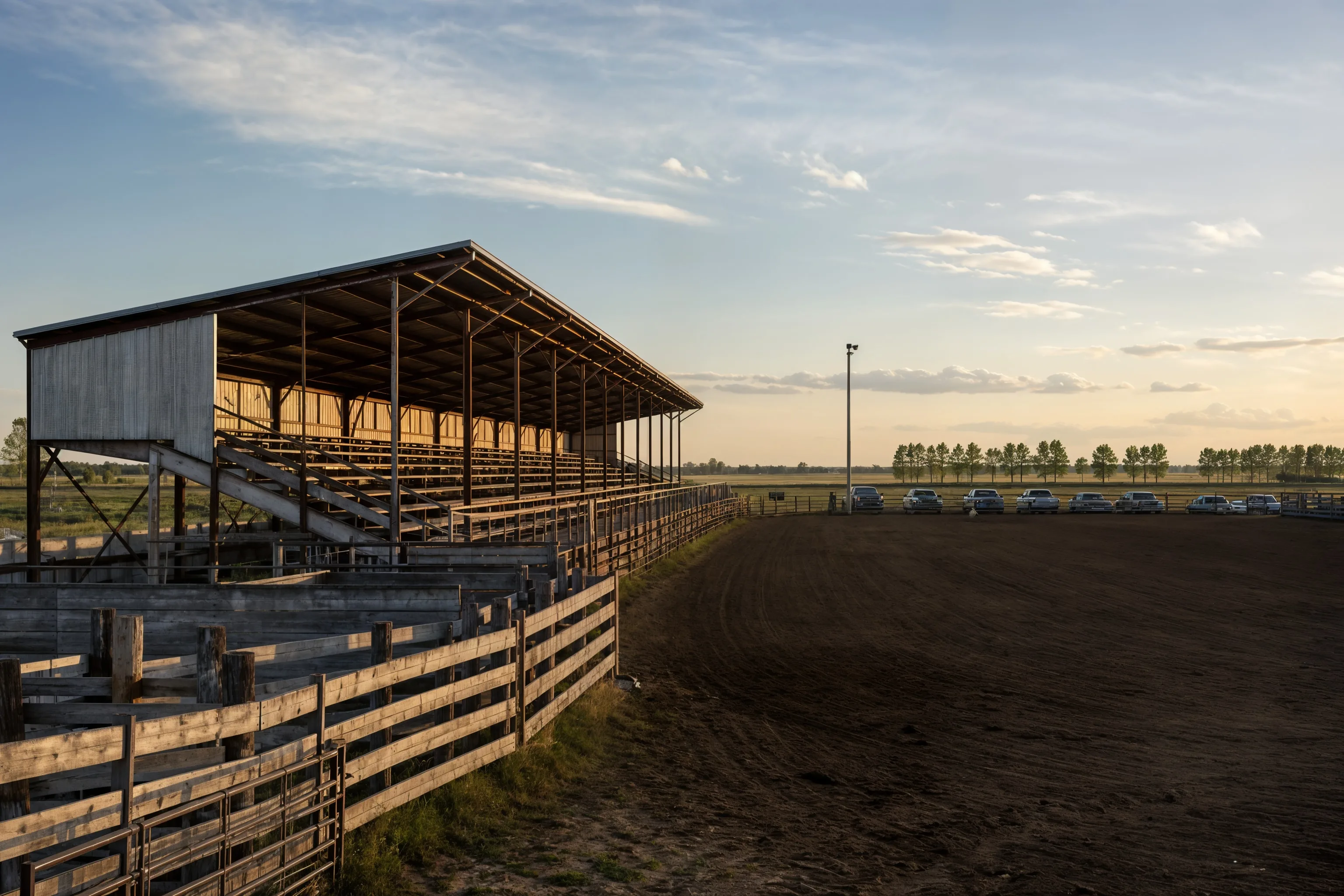
Ponoka, Alberta was incorporated as a town on October 19, 1904, and it's grown into a community of roughly 7,331 people inside Ponoka County, best known beyond its own borders for the Ponoka Stampede. The town's name comes from the Blackfoot word for 'Elk,' a detail that shows up on local signage more than once. None of that history changes the math on a solar design, but it does shape the kind of properties we see here: in-town residential lots, acreages on the edge of the area, and working properties tied to the agricultural economy around the county. What does change the math is the roof or ground space available, the shading from mature trees or outbuildings, and the wire service the property connects to, which here is the local electrical utility. We don't quote a system size off a drive-by look. We pull up the property in detail, look at how power is used across the year, and size a system against the panel, the wiring, and the load it actually has to carry. A planning conversation starts with your most recent power bill and ends with a design that's specific to the lot, not a regional average dressed up as a quote.
Electrical Site Review for Ponoka Properties
Voltage Rise
Voltage rise happens when power pushes back through a long or lightly loaded distribution line, raising the voltage at the point where your system connects. On rural feeders with longer spans between the transformer and the property, that rise can be more pronounced than on a short, dense run. We check for it during the site review because it affects how hard an inverter can push before it clips output, which shapes how we size the system relative to the panel array.
Single-Phase vs Three-Phase
Rural properties can have single-phase or three-phase electrical service, and which one you've got changes what inverter equipment fits and how much system capacity the connection can realistically support. A single-phase service caps the practical system size differently than a three-phase service does, especially once a shop or grain-handling motor load gets added to the picture. We confirm the service type early, since it's one of the first things that determines what we can design around.
Panel Infrastructure
A lot of rural electrical panels predate the loads we're now asking them to carry, and breaker capacity and panel age are two of the first things we check on-site. We're looking for available breaker space, the condition of the bus bar, and whether the panel's rating leaves enough headroom for a solar breaker alongside everything already running. If the panel can't support the addition, an upgrade means a new panel sized to both the existing loads and the solar system, installed before the solar equipment goes in.
Service Entrance Review
We check the condition of the service entrance and the meter base itself: the wire gauge coming in, corrosion or wear on the meter socket, and whether the base is rated for the added equipment. The meter base matters for the micro-generation application to Town of Ponoka, because the application describes the exact point of interconnection and the utility expects that equipment to be in good working order. If an upgrade is required, we fold it into the project plan up front rather than finding out mid-install.
Right-Sizing Solar for Ponoka Properties
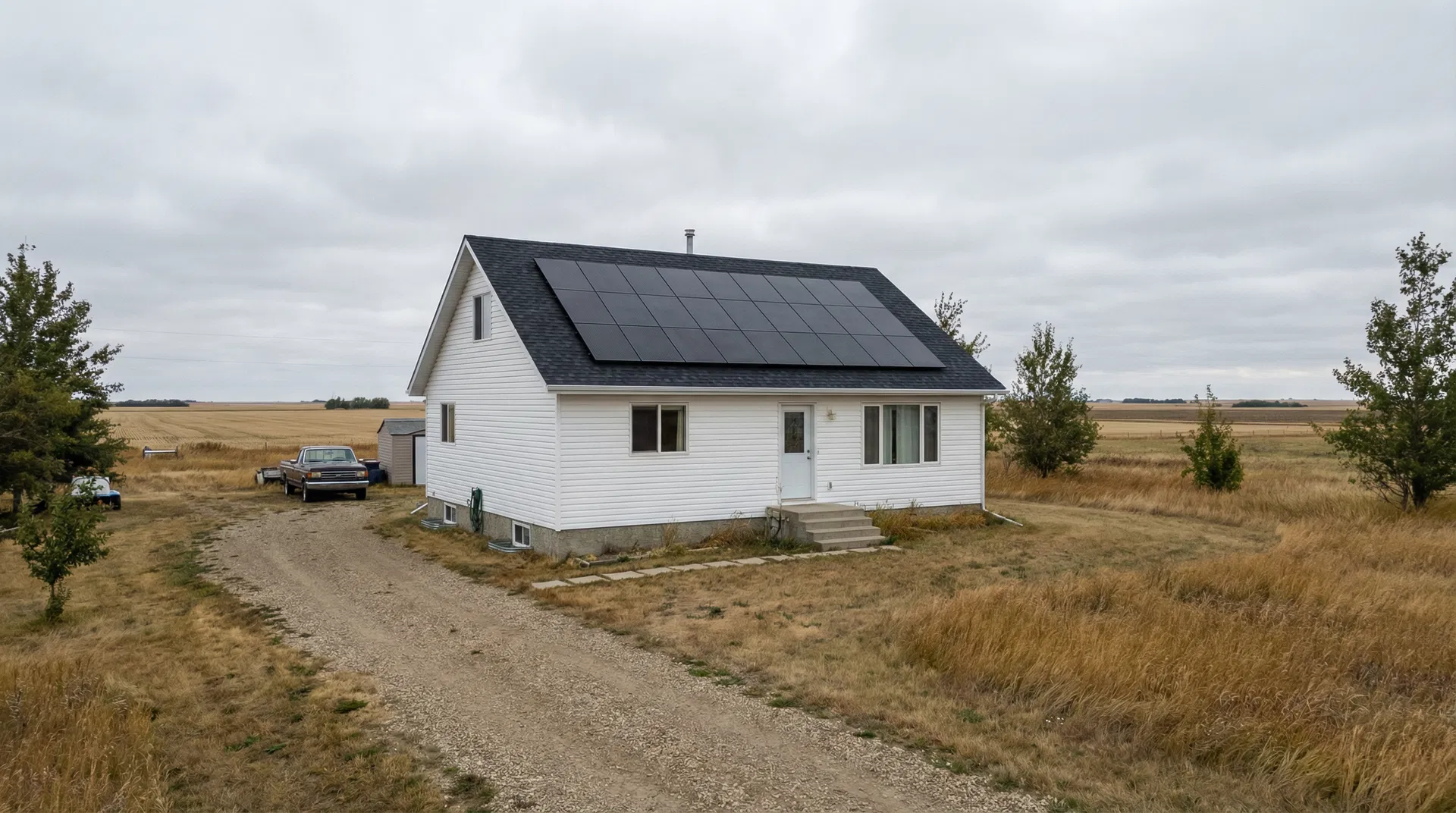
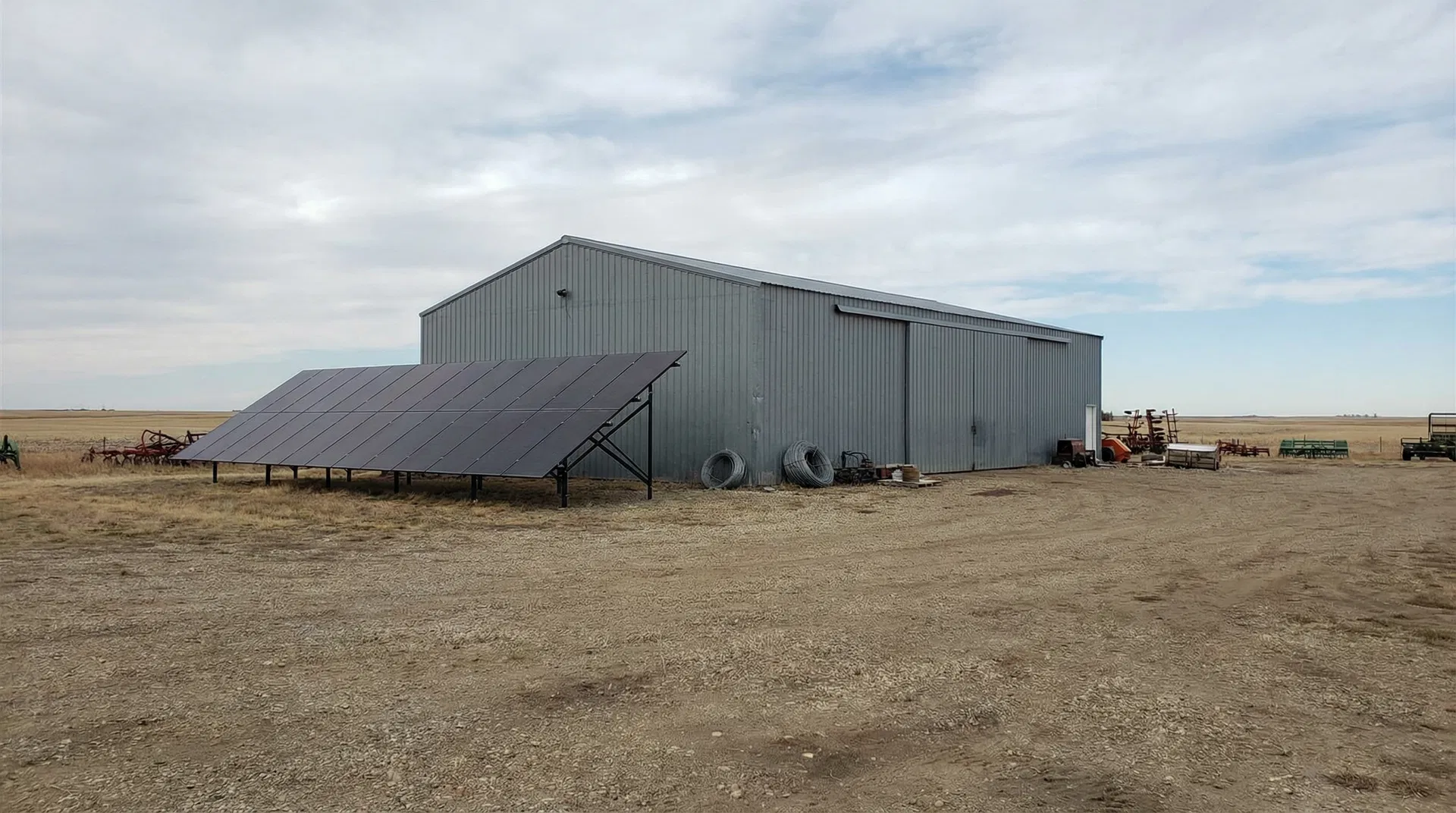
Rural properties almost always need a bigger system than a comparable in-town house, simply because there's more to run. A home on its own is one load. A home plus a heated shop, a water pump, or grain-handling equipment is a different load profile entirely, and the system has to be sized for all of it together, not just the house. That's one reason we don't start with a rule-of-thumb number. We start with the 12-month usage graph on your most recent power bill, because that graph shows the actual pattern of how power gets used across the year, including the spikes a rule of thumb would miss entirely. Roof or ground mount is a second decision point. A roof with clean southern exposure and no shading is often the simpler build. But if mature trees, outbuildings, or an awkward roofline block the best sun, or the roof pitch just isn't a good match for the array, a ground-mount system on open yard space can outperform a compromised roof install. Acreages and farms often have the land to make ground mount practical in a way a standard residential lot doesn't. Either way, the final system size comes out of two things: what your power bill shows about actual usage, and what the site design shows about available roof or ground space, shading, and orientation. We don't quote a size before we've looked at both.
Typical Load Profiles We Design For Near Ponoka
Home + Heated Shop
This load profile is common on acreages: a house plus a detached shop with electric heat, which adds a steady load that doesn't show up on a typical in-town residential bill. We look at how the shop's heat cycles across the year on your most recent power bill before sizing anything, since a shop heater running through a cold stretch can shift the usage pattern more than the house itself does. The system gets sized to cover the combined load, not just the home.
Home + Irrigation or Water Pump
Acreages with a well pump, cistern system, or irrigation setup have a load that spikes seasonally rather than running flat across the year. That seasonal pattern shows up clearly on the 12-month usage graph on a recent power bill, and it changes how we think about system size compared to a property with steady, even usage. We design around the actual pattern, not an assumption about what a pump load should look like.
Farm with Grain Handling or Shop Equipment
Working farms often run grain dryers, augers, or shop equipment on top of the house, and those loads can be some of the largest and most intermittent on the property. Because this equipment doesn't run constantly, the usage graph on the power bill tells us far more than a simple monthly total would. We size the system against the pattern that graph shows, including how it changes season to season.
Town of Ponoka Interconnection in Ponoka
Properties here connect to the town's own electrical system rather than a regional utility, which means the interconnection application for a solar system goes through Town of Ponoka directly. Range Road Solar prepares and submits that micro-generation application package on your behalf: single-line diagrams, equipment specification sheets for the LONGi panels and APsystems microinverters, and the site-specific paperwork the utility requires before a system can be energized. We don't guess at what the application needs. We build it to match current requirements and submit it as part of the design process, so you're not the one tracking down forms or chasing a missing signature. Timelines and the specifics of how the review is structured sit with the utility's current process, and we'll walk you through what to expect once your site design is in hand. What we can tell you now is that the application is handled as part of the quote, not left for you to figure out after a contract is signed.
Project Economics and Design Review
| System Size | Annual Production | Year 1 Savings | Payback Period |
|---|---|---|---|
| 8-15 kW range, 10 kW typical |
Production, savings, and payback figures depend on a property-specific design and your most recent power bill, and we provide those only after that review is complete.
How We Work in Ponoka
Bill and Load Review
We review your power bill to understand your energy use in Ponoka and size the system to your actual consumption, not a generic estimate.
Site Assessment
We assess your roof or ground area, south-facing exposure, electrical service, and utility interconnection requirements specific to your property.
Design and Utility Application
We produce a system layout, production estimate, and cost summary, then submit your micro-generation application to your utility on your behalf.
Installation and Commissioning
Our crew installs racking, panels, inverter, and electrical connections. All work is performed by licensed electricians. We commission and test before handoff.
Current Program and Interconnection Review
Utility connection review
Town of Ponoka reviews the grid connection application for any new solar system before it can be energized, and that review follows the utility's own process rather than a province-wide rule. Range Road Solar prepares the full design package, including single-line diagrams and equipment specifications, so the application reflects the actual system being installed. We submit it as part of the project, not as a separate step you have to manage.
Current program review
Eligibility for any commercial, farm, or residential program tied to a solar install can change, so we check current rules against your property type at the time we put the design together rather than relying on what applied last year. That review happens during the design phase, before a final proposal goes out. It covers whether the property qualifies as residential, farm, or commercial use for whatever currently applies.
Frequently Asked Questions
Get a Solar Assessment for Ponoka
Submit a recent power bill and we will review your consumption and provide an honest assessment for your Ponoka property. No obligation.
(587) 330-7502 Book a CallMore Solar Services in Ponoka