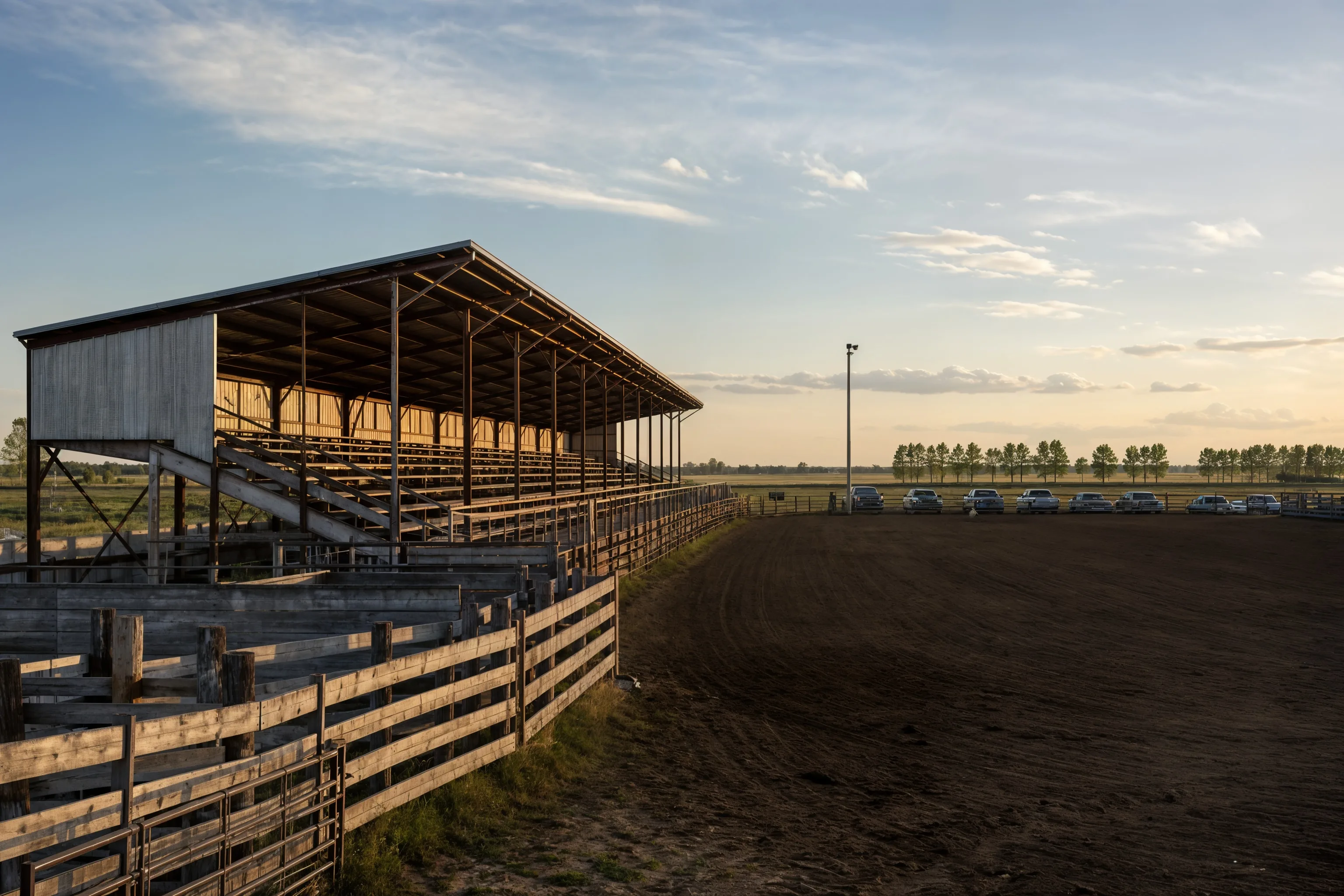
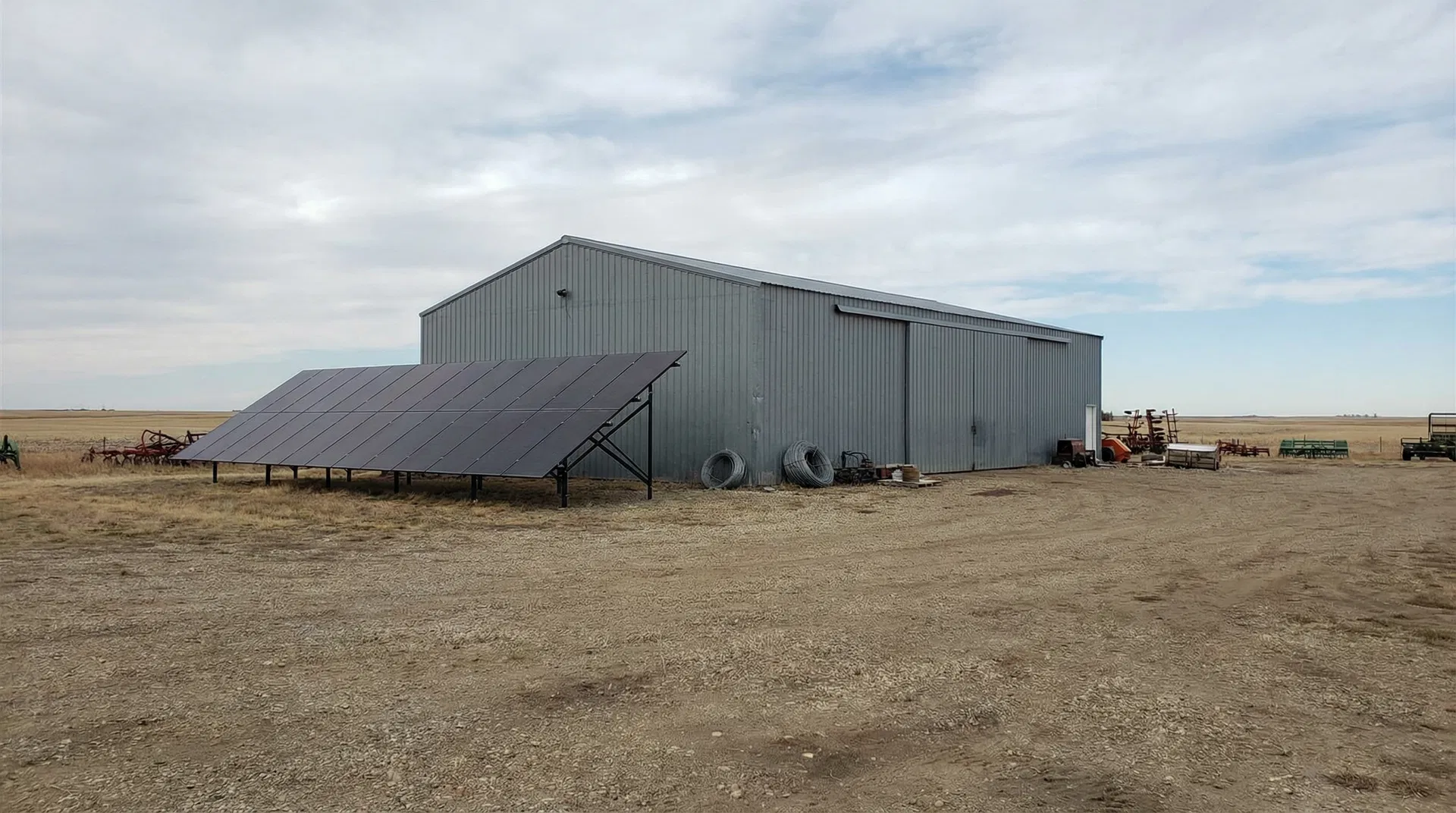
Farm and agricultural solar in Ponoka, Alberta means sizing a system for real loads, not a rooftop average built for a suburban house. We install LONGi panels paired with APsystems microinverters, and for farm-scale systems we usually recommend a ground-mount array over a full rooftop build. Ground-mount panels are easier to expand later, easier to clean, and they don't require touching an aging barn or shop roof that wasn't built to carry panel loads. A typical farm system we design runs in the 20 to 50 kW range, with 25 kW being a common starting point for a property running a house, a shop, and one or two outbuildings. Grain operations with dryers, augers, or bin-yard equipment often push toward the higher end of that range, while a smaller acreage with a single shop might land closer to 20 kW. Properties near the Ponoka Stampede Grounds and similar large-footprint sites often have exactly this profile: several structures, spread-out yards, and enough clear space for a ground-mount array instead of a rooftop system. APsystems microinverters let us group panels by string and building rather than forcing the whole array onto one central inverter, which matters when your loads are spread across a house, shop, and yard rather than concentrated under one roof. We finalize panel count, mount type, and array placement after a site visit and a look at your most recent power bill, not before.
Solar Planning for Ponoka Properties
Ponoka, Alberta was incorporated as a town on October 19, 1904, and the town's name means 'Elk' in Blackfoot. The Ponoka Stampede is still the area's best-known event each summer, and that same agricultural identity carries through to the farms and acreages around town today. As of the most recent census, the population sits at 7,331, up from 7,229 in the prior count, though a lot of the surrounding land is still zoned and used for grain, hay, and livestock operations rather than subdivided residential lots. That mix matters for solar planning. A farmyard usually has more than one building drawing power: a house, a heated shop, maybe a grain bin site or a barn with its own panel. Range Road Solar starts every project here by mapping those loads against the property, not by assuming a single rooftop array will cover everything. We also look at whether the site is better served by a roof-mount, a ground-mount array on unused yard space, or a mix of both, depending on shading, roof pitch, and where the equipment actually sits. Every recommendation comes out of a site visit and your most recent power bill, not a generic template with the town name swapped in.
Electrical Site Review for Ponoka Properties
Voltage Rise
Voltage rise happens when a property sits at the far end of a long distribution run, and the voltage measured at your panel drifts higher than what's measured back at the transformer. On rural feeders this can push an inverter to reduce output or clip production during peak sun rather than push power back that raises line voltage further. We check for this during the site review because it can change how we size the inverter and how many strings we put on it.
Single-Phase vs Three-Phase
Farm and acreage properties can have either single-phase or three-phase electrical service, depending on when the yard was built out and what equipment it was built to run. Three-phase service opens up a wider range of inverter and system capacity options, while single-phase service caps what we can install without an upgrade. We confirm which service type a property has before finalizing inverter selection, since it directly affects system size.
Panel Infrastructure
A lot of farmyards are running an electrical panel that's decades old, and breaker capacity that worked fine for a house and a single shop doesn't always leave room for a farm solar system. We check the panel's age, its rated capacity, and how much room is left in the breaker slots before we finalize a design. If the existing panel can't support the new system, an upgrade means a new panel and breakers sized for both current loads and the solar interconnection.
Service Entrance Review
We also check the condition of the meter base and service entrance, since a worn or outdated meter base can hold up the micro-generation application to Town of Ponoka even if the rest of the system is ready to go. This review looks at the physical condition of the meter socket, the entrance conductors, and whether the setup meets current code for a grid-tied system. If an upgrade is required, we fold it into the project scope before we submit the application.
Right-Sizing Solar for Ponoka Properties
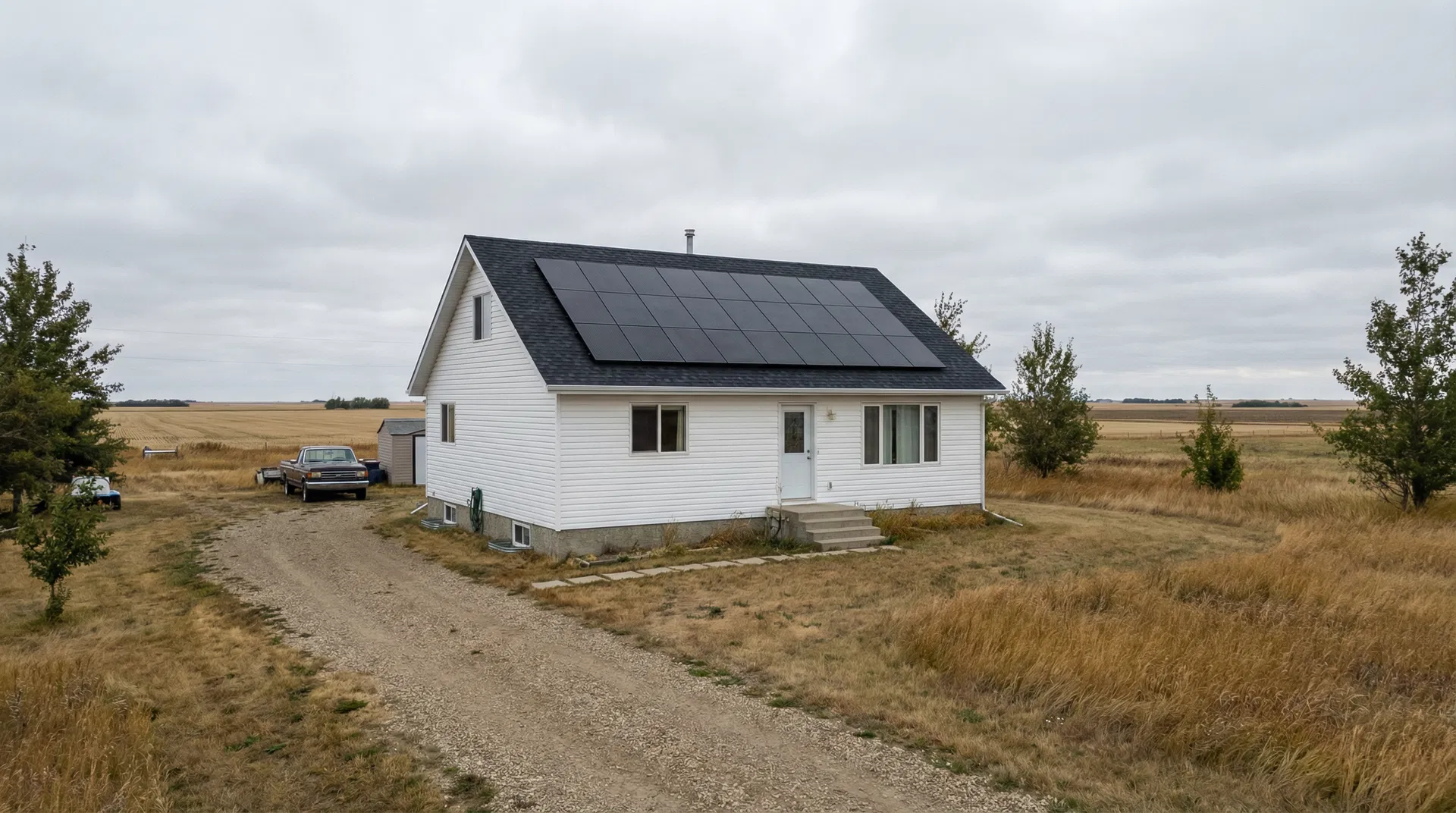
Rural properties almost always need a bigger system than a comparable house in town, because the load isn't just a house. A working farm might be running a home, a heated shop, a grain bin site, and an irrigation pump off the same yard, and each of those adds up on top of normal household use. That's why farm systems we design usually land somewhere in the 20 to 50 kW range instead of the smaller systems typical of an in-town rooftop. Roof versus ground-mount comes down to what the property actually looks like. A roof-mount can work when the house or shop roof has good southern exposure, a workable pitch, and no shading from trees or a neighboring building. Ground-mount makes more sense when the roof is shaded, poorly pitched, or when the yard has open land that's easier and cheaper to build on than a roof. Plenty of acreages and farms have exactly that kind of spread-out layout, which tips the decision toward ground-mount. Either way, we don't size a system off a rule of thumb per square foot or per building. We pull the 12-month usage graph off your most recent power bill and size the array against your actual usage pattern across the seasons, then confirm that against what the site can physically support. That combination, your bill and the site itself, drives the final system size, not a generic per-kW estimate.
Typical Load Profiles We Design For Near Ponoka
Home + Heated Shop
This is the most common profile we see: a house and a heated detached shop running welders, block heaters, and shop lighting through the colder months. We size the array against the combined usage shown on your most recent power bill rather than treating the shop as an afterthought, since a heated shop can pull as much power as the house itself.
Grain Handling and Bin Yard
Grain operations add augers, aeration fans, and sometimes a dryer to the load, and that equipment tends to run in short, heavy bursts during harvest rather than a steady draw. We look at how those seasonal spikes show up on the usage graph and size the system, and often the inverter configuration, to handle that pattern instead of just the average monthly draw.
Livestock and Irrigation
Cattle operations and irrigated acreages often run water pumps, waterers, and yard lighting across multiple structures rather than one central building. APsystems microinverters let us group those loads by building or circuit instead of forcing everything through one inverter, which fits a yard where the barn, the pump house, and the home aren't all in one place.
Town of Ponoka Interconnection
This property is served by the Town of Ponoka's own wire service rather than a provincial distribution utility. The town owns and operates the local electrical transmission system that your farm or acreage connects to, which means the micro-generation interconnection application goes through the town directly rather than a company like FortisAlberta or ENMAX. Range Road Solar handles that application on your behalf: the technical drawings, the equipment specifications for the LONGi panels and APsystems microinverters, and the paperwork the town needs to review before your system can be connected. We don't control how quickly the town processes an application or what its current interconnection rules say about credit handling, so we won't quote you a timeline or a payout figure here. What we can tell you is that we build the design package the same way for every farm system we submit to the town, and we walk you through what it requires before we submit anything.
Project Economics and Design Review
| System Size | Annual Production | Year 1 Savings | Payback Period |
|---|---|---|---|
| 20-50 kW range, 25 kW typical |
Production, savings, and payback figures are provided only after a property-specific design review that includes your most recent power bill.
How We Work in Ponoka
Bill and Load Review
We review your power bill to understand your energy use in Ponoka and size the system to your actual consumption, not a generic estimate.
Site Assessment
We assess your roof or ground area, south-facing exposure, electrical service, and utility interconnection requirements specific to your property.
Design and Utility Application
We produce a system layout, production estimate, and cost summary, then submit your micro-generation application to your utility on your behalf.
Installation and Commissioning
Our crew installs racking, panels, inverter, and electrical connections. All work is performed by licensed electricians. We commission and test before handoff.
Current Program and Interconnection Review
Utility connection review
Town of Ponoka reviews the interconnection application for any grid-tied solar system before it can be connected. Range Road Solar prepares the full design package, including equipment specifications for the LONGi panels and APsystems microinverters, and submits it on your behalf.
Current program review
Commercial, farm, and residential solar projects are each reviewed against whatever program and rate rules are in effect at the time of your design, and those rules can differ by property type. We check current eligibility at the design stage rather than relying on rules that may have changed since a neighboring system went in.
Frequently Asked Questions
Get a Solar Assessment for Ponoka
Submit a recent power bill and we will review your consumption and provide an honest assessment for your Ponoka property. No obligation.
(587) 330-7502 Book a CallRelated Resources
More Solar Services in Ponoka