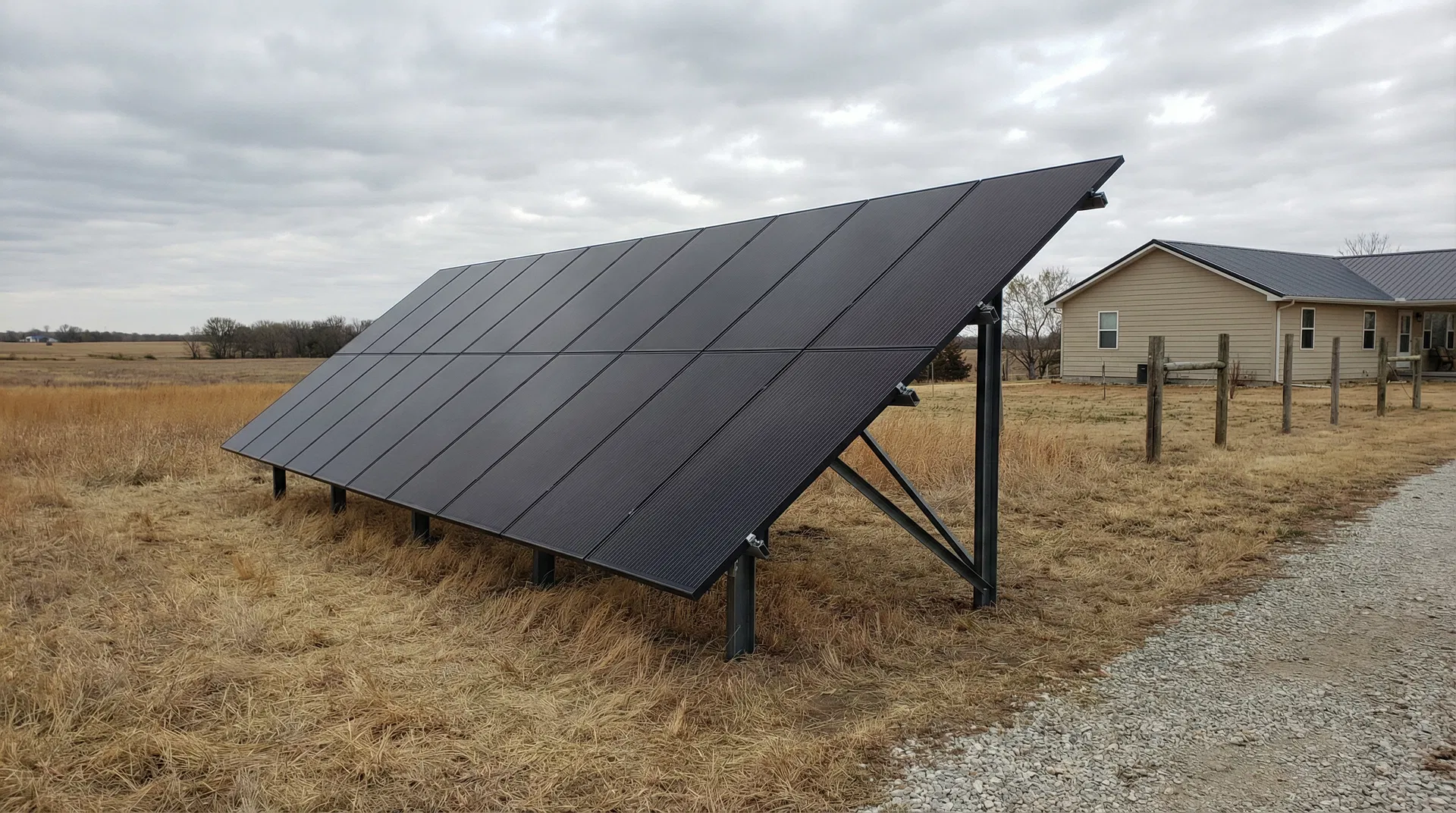
Solar battery storage in Ponoka, Alberta starts with a hybrid inverter and a lithium battery bank sized to your load requirements. Unlike a standard string inverter setup, a hybrid inverter manages power flow between your panels, your battery, and the grid simultaneously. When the grid goes down, it isolates your system and keeps your selected loads running without interruption. We pair lithium battery storage with LONGi solar panels on every build. LONGi panels are reliable, well-tested, and hold up in the conditions rural Alberta properties see year-round. The hybrid inverter handles the transition between grid-connected and backup modes automatically. There's no manual switching, no generator pull-cord. For properties with multiple structures, storage design gets more specific. A home with a heated shop needs a battery bank sized for the loads that actually matter during an outage: well pump, furnace controls, lighting, freezers. We don't pad that list. We build the backup load list with you during the design review so you know exactly what the system covers and for how long under your typical consumption pattern. System sizes for Ponoka installations typically run between 8 kW and 20 kW on the solar side, with a 12 kW system being a common fit for a home plus one outbuilding. Battery capacity is matched to the solar array size and your backup load requirements, both confirmed through the design process.
Solar Planning for Ponoka Properties
Properties in and around Ponoka cover a wide range of electrical setups. A single-family home on a town lot has a very different load profile than an acreage with a heated shop, or a farm operation running grain handling equipment and irrigation. That spread of use cases is exactly why a one-size number doesn't work here. Battery storage adds a layer of planning that a standard grid-tied system doesn't require. You're not just sizing panels to offset consumption. You're also deciding which loads the battery covers during an outage, how many hours of backup capacity you actually need, and whether your existing electrical infrastructure can support a hybrid inverter setup. We start every Ponoka project with your most recent power bill and a site assessment. The 12-month usage graph on that bill tells us your seasonal consumption pattern. The site visit tells us what your roof, yard, and service entrance can support. From there, we build a design that reflects your actual property, not a template pulled from a regional average. We provide honest production estimates based on your actual power bills and site conditions, not inflated projections.
Electrical Site Review for Ponoka Properties
Voltage Rise
Voltage rise happens when a solar system pushes power back onto the distribution line and raises the local voltage above acceptable limits. Distribution line conditions in any service territory can affect how much rise a given system produces, and excessive rise causes the inverter to clip output or shut down to protect the grid. We assess voltage rise as part of every design to make sure the system size and inverter settings are matched to what the local line can absorb.
Single-Phase vs Three-Phase
Properties in and around Ponoka can have either single-phase or three-phase electrical service depending on when the property was developed and what loads it was originally built to support. The service type matters for inverter selection because hybrid inverters are configured differently for each, and three-phase service opens up higher system capacity options. We confirm your service type during the site assessment before finalizing the inverter specification.
Panel Infrastructure
Older electrical panels on rural properties sometimes don't have the breaker capacity to safely support a hybrid inverter and battery system without upgrades. We assess panel age, available breaker slots, and total amperage rating during the site review. If the panel needs an upgrade to support the system, we identify that in the design phase so it's part of the project scope, not a surprise at installation.
Service Entrance Review
The meter base and service entrance condition affect whether the Town of Ponoka will approve a micro-generation interconnection application without requiring additional upgrades. We inspect the meter base, the condition of the service entrance conductors, and the overall setup before submitting the application. If an upgrade is required, we coordinate that work as part of the project so the application moves forward cleanly.
Right-Sizing Solar for Ponoka Properties
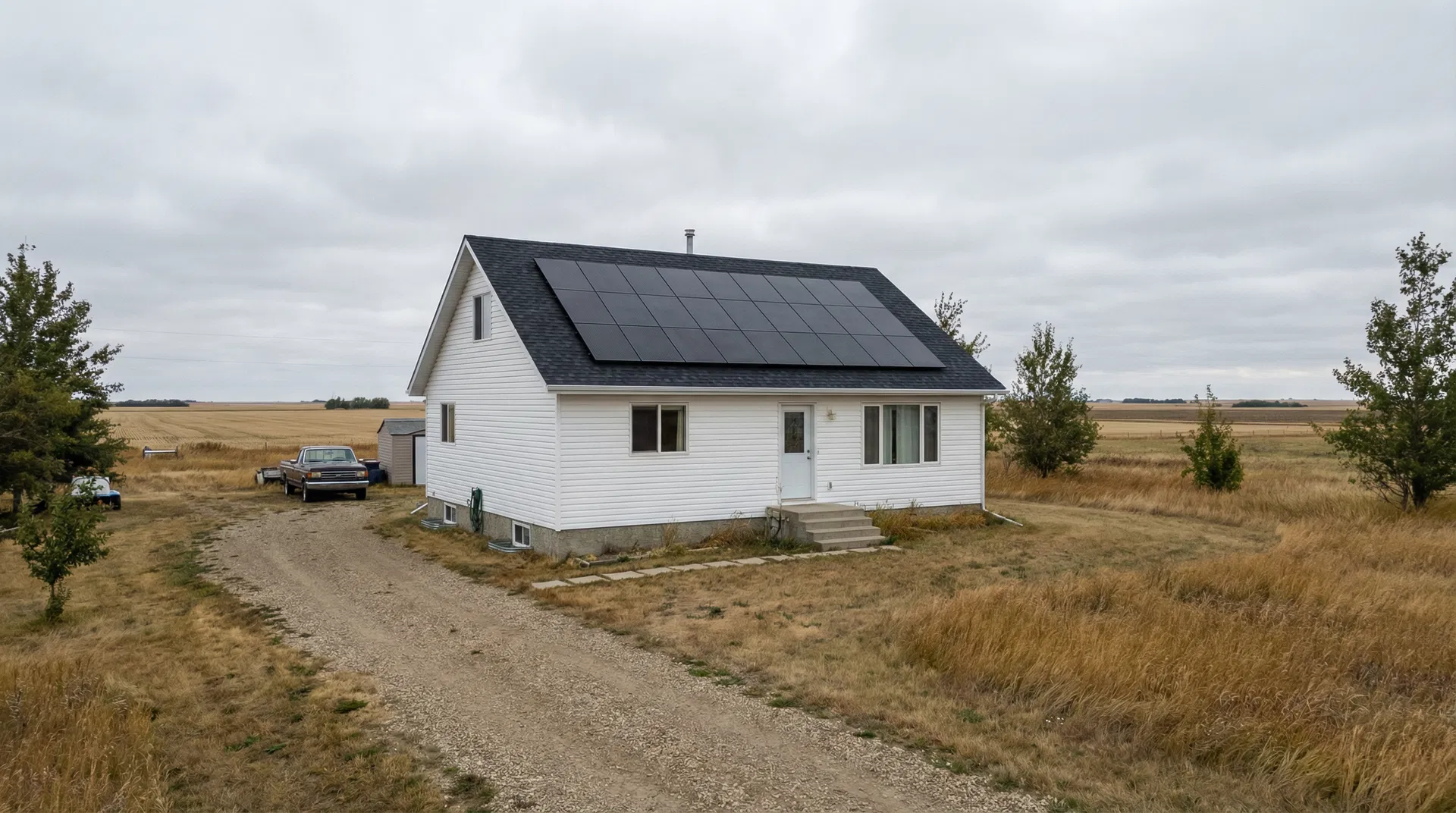
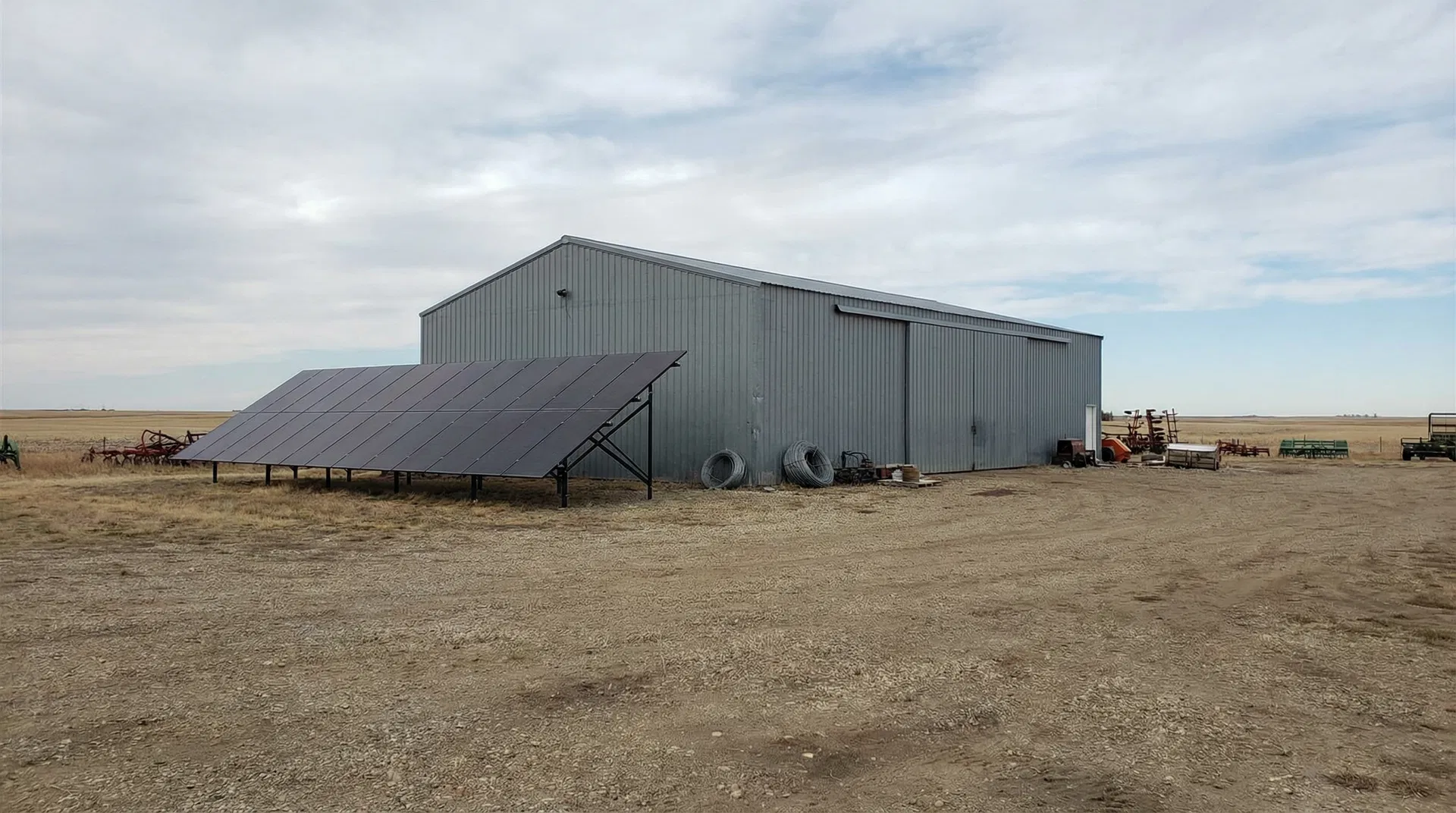
Rural and acreage properties near Ponoka often carry more electrical load than a standard in-town home. A property with a heated shop, a well pump, exterior lighting, and a main residence is running four or five distinct load sources that all show up on the same bill. Add grain handling equipment or irrigation and the annual consumption profile looks very different from a 1,200-square-foot bungalow. That's why systems in this area tend toward the larger end of the 8-20 kW range rather than the smaller. Roof mount works well when you've got a south-facing roof section with minimal shading and a pitch that doesn't fight the panels. Ground mount is often the better call on acreage layouts where the house roof is shaded by trees or outbuildings, where the pitch is too shallow or too steep, or where there's open yard space closer to the shop or well house. We don't default to one or the other. We design for what the property actually offers. Sizing starts with the 12-month usage graph on your most recent power bill. That graph shows us how your consumption varies across seasons, which is critical for a storage system because winter backup requirements and summer self-consumption goals pull in different directions. We don't size from a rule-of-thumb number. The design comes from your bill, your site, and the loads you want the battery to cover.
Typical Load Profiles We Design For Near Ponoka
Home Plus Heated Shop
A residential property with a heated detached shop adds a significant base load from the shop heater, compressors, and lighting on top of the home's normal consumption. A storage system for this profile is sized to keep the furnace controls, well pump, and critical shop circuits running during an outage, with the solar array sized to the combined annual consumption of both structures. Your most recent power bill and a site walk are what we use to confirm the right array and battery capacity.
Farmstead With Grain Handling
A farmstead running grain augers, aeration fans, and a heated grain bin alongside a main residence has a highly seasonal load pattern, with peak consumption concentrated in harvest months. Battery storage for this profile focuses on backup for the residence and well pump, while the solar array is sized to offset the year-round base load. We build the design from the 12-month usage graph on your most recent power bill so the seasonal spike doesn't distort the annual sizing.
Acreage With Electric Heat
An acreage relying on electric baseboard heat or an electric boiler carries a heavy winter load that shapes the entire system design. Storage capacity for this profile is typically focused on backup for critical circuits rather than full whole-home coverage, since the heating load alone can be too large to run economically from a battery. The solar array is sized to offset as much of the annual consumption as the roof or ground-mount site allows, confirmed through your most recent power bill and a shading assessment.
Town of Ponoka Interconnection in Ponoka
The Town of Ponoka serves as the wire service for properties within Ponoka. That means your micro-generation application goes through the Town of Ponoka, not a provincial wire service. The process and documentation requirements can differ from what applies in surrounding rural areas, so it's worth knowing that distinction before you commit to a system design. Range Road Solar handles the interconnection application on your behalf. We prepare the design package, submit it to the Town of Ponoka, and coordinate any follow-up requests. You don't need to manage the paperwork side of this. Battery storage systems connected to the Town of Ponoka grid require the same interconnection review as a standard solar installation. The hybrid inverter configuration is included in the application documentation. We don't start construction until the application is in and the process is moving. If there are any infrastructure conditions at your meter base or service entrance that affect the application, we flag those during the site assessment so there are no surprises later.
Project Economics and Design Review
| System Size | Annual Production | Year 1 Savings | Payback Period |
|---|---|---|---|
| 8-20 kW range, 12 kW typical |
Production, savings, and payback figures require a property-specific design and your most recent power bill to calculate accurately.
How We Work in Ponoka
Bill and Load Review
We review your power bill to understand your energy use in Ponoka and size the system to your actual consumption, not a generic estimate.
Site Assessment
We assess your roof or ground area, south-facing exposure, electrical service, and utility interconnection requirements specific to your property.
Design and Utility Application
We produce a system layout, production estimate, and cost summary, then submit your micro-generation application to your utility on your behalf.
Installation and Commissioning
Our crew installs racking, panels, inverter, and electrical connections. All work is performed by licensed electricians. We commission and test before handoff.
Current Program and Interconnection Review
Utility connection review
The Town of Ponoka reviews grid connection applications for properties within its service area. Range Road Solar prepares the full design and documentation package for the interconnection application and submits it on your behalf. We handle the back-and-forth with the Town so you don't have to.
Current program review
Residential, acreage, and farm properties may have access to programs that affect the economics of a storage installation. Eligibility rules and program availability change, so we review what's current at the time of your design rather than listing programs that may no longer apply. We confirm what you qualify for during the design review.
Frequently Asked Questions
Get a Solar Assessment for Ponoka
Submit a recent power bill and we will review your consumption and provide an honest assessment for your Ponoka property. No obligation.
(587) 330-7502 Book a CallMore Solar Services in Ponoka