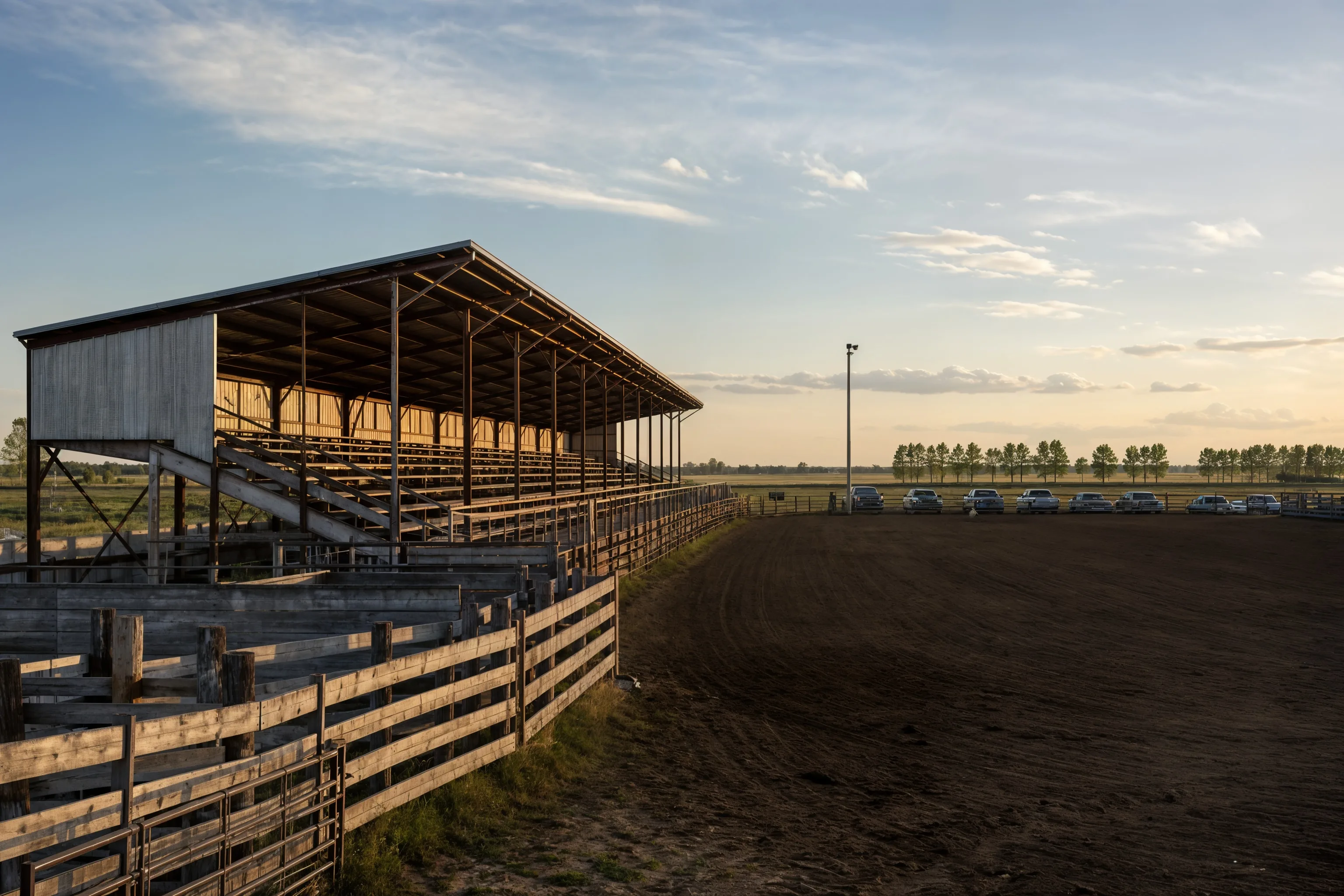
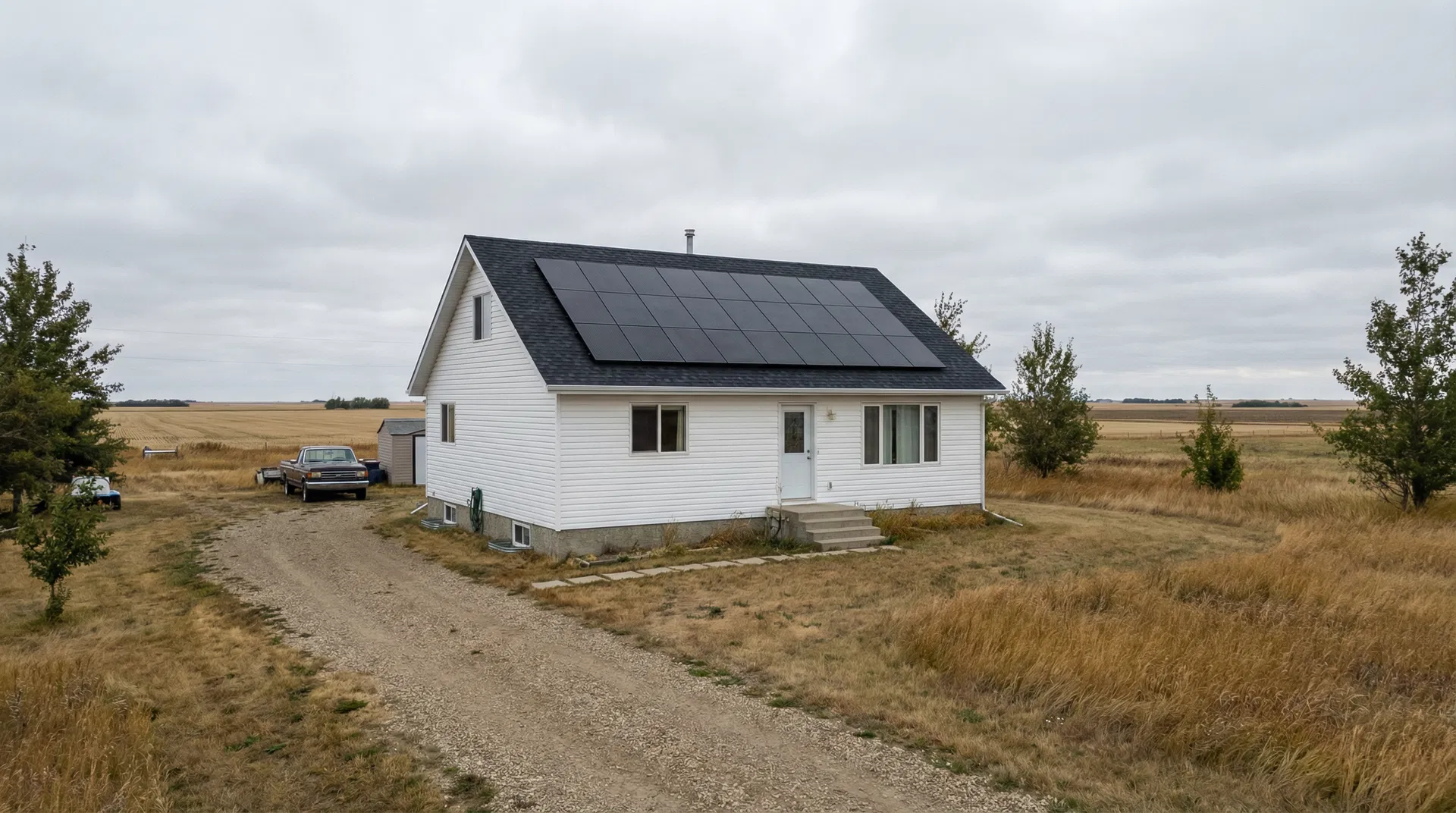
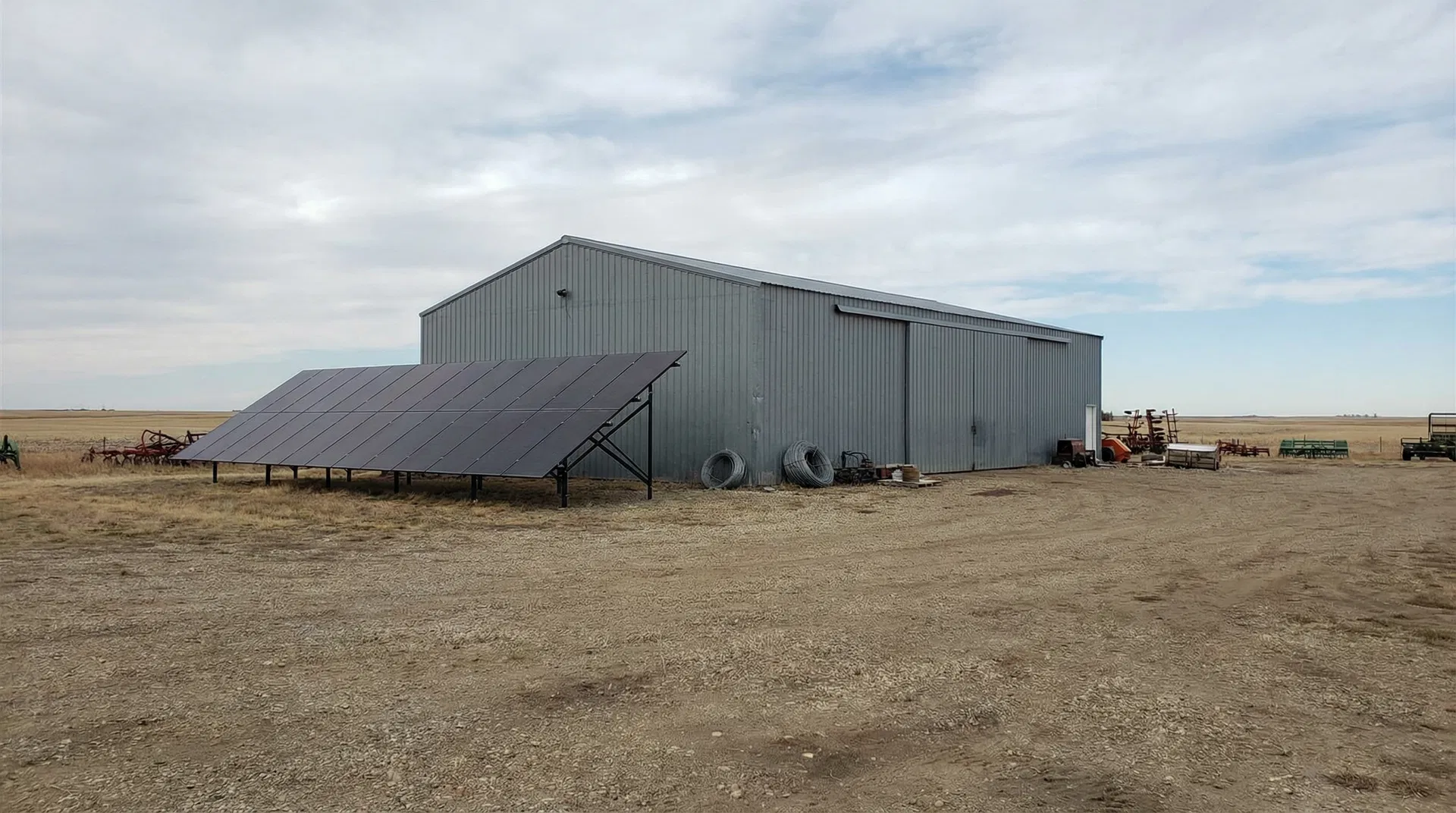
Off-grid solar in Ponoka, Alberta starts with a system that has to run a property with no backup from a utility line at all, so every component has to pull its weight. We build these systems around LONGi panels for the array, paired with a hybrid inverter and lithium battery storage rather than the grid-tied APsystems microinverters we use on standard grid-connected installs, since a pure off-grid build needs the inverter and battery working together to carry the property through the night on their own. System size runs in the 5 to 15 kW range, with 8 kW as the typical build for a cabin or full-time acreage home. A weekend hunting cabin with lights, a fridge, and a water pump sits toward the smaller end of that range. A full-time home with a well pump, a heated shop, or outbuildings running off the same system sits toward the larger end, with a bigger battery bank to match. Mounting comes down to the property. Some roofs face the right direction with clear exposure and enough area for the array the loads call for. Others don't, whether that's shading from trees or an outbuilding, a steep or oddly pitched roof, or simply not enough usable roof area, and ground mount on open yard space ends up being the better call. We walk the property before we commit to either approach, and the battery bank, panel count, and mounting method all come out of that site visit together with a review of how the property is actually used, not a standard package applied the same way to every lot.
Solar Planning for Ponoka Properties
Ponoka was incorporated as a town on October 19, 1904, and the surrounding area has grown into a mix of in-town lots, acreages, and working farms, each with a different relationship to the grid. The local utility owns and runs the electrical transmission system here directly, and for properties sitting a long way from existing line, a new connection can cost more than going without one entirely. That's the gap off-grid solar is built for. The population here grew from 7,229 to 7,331 between the last two census counts, and a good share of that growth sits on acreages and rural parcels rather than in-town lots. Those are exactly the properties where a well pump, lights, a fridge, and maybe a shop all have to run on a system with no utility backup at all. We don't size that kind of system off a rule of thumb or a brochure number. We walk the property, look at how the loads actually run through a day and a season, and build the battery bank and panel count around that. This isn't a one-size system. It's a design exercise specific to the site, the structure, and how the property actually gets used.
Electrical Site Review for Ponoka Properties
Voltage Rise
Voltage rise happens when voltage at the far end of a circuit climbs above what the inverter expects, which gets more likely the longer the wire run between the array, the inverter, and the battery bank on a spread-out rural property. If voltage rise pushes past the inverter's tolerance, the inverter clips output rather than pass through, which cuts into usable production from the array. We check wire run length and gauge during the site visit so the system is sized and wired to avoid that clipping before it's installed, not after.
Single-Phase vs Three-Phase
Rural properties in this part of Alberta run on either single-phase or three-phase service depending on the site and how it was originally built out, and an off-grid system has to be designed around whichever one is actually there. The hybrid inverter and battery setup that works for a single-phase cabin isn't necessarily the right fit for a three-phase shop or farm operation. We confirm which service type is on site early, since it affects inverter selection and how much capacity the system can realistically carry.
Panel Infrastructure
Older rural properties often have an electrical panel that predates the loads we're asking it to carry, so we check breaker capacity and panel age as part of every site visit. We're looking for whether the panel has room for the new breakers an off-grid or hybrid setup needs, and whether the panel itself is still rated for the job. If the panel can't support the system, an upgrade means a new panel sized to the property's full load, inverter included, before the off-grid system goes in.
Service Entrance Review
We check the condition of the service entrance and meter base as part of the same site visit, looking for wear, corrosion, or outdated components that could be a problem down the line. For any property keeping a utility tie alongside an off-grid or hybrid setup, the meter base condition matters because it's part of what gets reviewed in the interconnection application. If an upgrade is needed, we fold it into the project scope rather than treating it as a surprise after the fact.
Right-Sizing Solar for Ponoka Properties
Off-grid properties out this way rarely run just a house. A lot of the acreages and farms we work with are running a home plus a heated shop, a well pump, a bank of outbuildings, or in some cases irrigation or grain-handling equipment that spikes well above normal household draw. Any one of those loads can double what a system needs to carry, so a system sized only for the house ends up undersized the first time the shop heater and the well pump run at the same time. Roof mount works fine on a lot of properties, but it isn't always the right call. If the roof faces the wrong direction, has heavy shade from trees or an adjacent building, or just doesn't have enough clear area for the array the loads call for, ground mount on open yard space is often the better option, and a lot of acreages have the room for it. We don't size a system off a rule of thumb like watts per square foot or a flat multiple of square footage. We start with the 12-month usage graph on your most recent power bill, which shows how your draw actually moves through the year, then combine that with a site visit, a shading check, and a roof or ground-mount layout to land on a battery and panel count that matches how the property is actually used.
Typical Load Profiles We Design For Near Ponoka
Cabin with Seasonal Use
A hunting or recreation cabin out this way often only needs power on weekends or during a few months of the year: lighting, a fridge, maybe a water pump. These systems can run a smaller battery bank since the loads are light and intermittent, but we still size the array and battery off how the cabin is actually used across the season rather than guessing at a flat number. The lower end of our 5 to 15 kW range often fits this kind of load.
Off-Grid Acreage Home
A full-time acreage home has to carry everyday household loads around the clock: fridge, well pump, lighting, and whatever heating or cooking loads run on electricity. This is where the 8 kW typical build usually lands, paired with a lithium battery bank sized to carry the home through a full day and into the next one without sun. We confirm the exact number from your most recent power bill and a site walk, not a standard package.
Home Plus Shop or Outbuildings
Add a heated shop, a second outbuilding, or equipment that draws a heavy load when it's running, and the system has to carry two or three structures instead of one. These builds tend to sit at the higher end of our 5 to 15 kW range, with a larger battery bank to absorb the shop or equipment draw without starving the house. We look at how the shop and house loads overlap through the day before we settle on a final battery and panel count.
Town of Ponoka Interconnection
The local utility here is unusual among Alberta towns: Town of Ponoka owns and runs the electrical transmission system directly, rather than a private distribution company having that role. For a fully off-grid system with no utility tie at all, that doesn't come into play: the system runs the property independently and there's nothing to interconnect. Where a property keeps an existing connection, or adds a hybrid setup that stays tied to that power as backup, Range Road Solar prepares the application package and handles the submission on your behalf. We don't quote approval timelines, credit settlement terms, or payout rules for that connection, since those are set by the utility and confirmed when the application goes in. What we can tell you up front is whether your project needs an interconnection application at all, which depends on whether the system stays fully independent or keeps a grid tie as backup, something we work out together in the design review.
Project Economics and Design Review
| System Size | Annual Production | Year 1 Savings | Payback Period |
|---|---|---|---|
| 5-15 kW range, 8 kW typical |
Production, savings, and payback figures depend on a property-specific design and your most recent power bill, and aren't quoted before that review.
How We Work in Ponoka
Bill and Load Review
We review your power bill to understand your energy use in Ponoka and size the system to your actual consumption, not a generic estimate.
Site Assessment
We assess your roof or ground area, south-facing exposure, electrical service, and utility interconnection requirements specific to your property.
Design and Utility Application
We produce a system layout, production estimate, and cost summary, then submit your micro-generation application to your utility on your behalf.
Installation and Commissioning
Our crew installs racking, panels, inverter, and electrical connections. All work is performed by licensed electricians. We commission and test before handoff.
Current Program and Interconnection Review
Utility connection review
The utility reviews grid connection applications for properties that keep or add a utility tie alongside an off-grid or hybrid system. Range Road Solar prepares the design package and submits it on your behalf. We don't quote approval timelines or credit terms here, since those are set by the utility and confirmed at application time.
Current program review
Residential, farm, and commercial off-grid projects are each checked against whatever current program rules apply at the time of design, not whatever was in place a year or two ago. We review eligibility for your specific property type during the design process rather than assuming a blanket answer. Any program details that apply to your project come from that review, not from a generic list.
Frequently Asked Questions
Get a Solar Assessment for Ponoka
Submit a recent power bill and we will review your consumption and provide an honest assessment for your Ponoka property. No obligation.
(587) 330-7502 Book a CallMore Solar Services in Ponoka