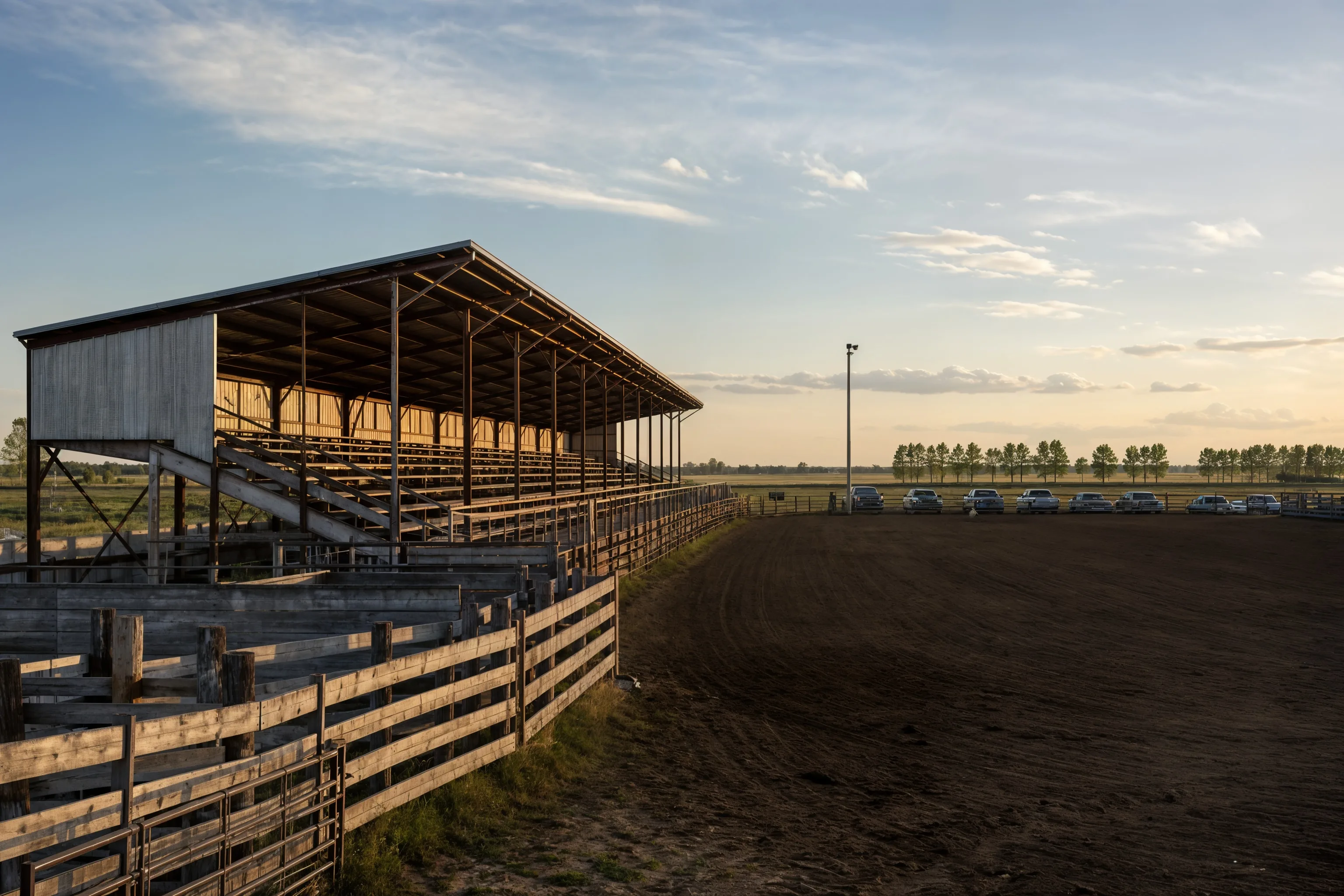
Solar rebates in Ponoka, Alberta start with knowing which programs actually apply before you sign anything. The micro-generation credit is the piece most people ask about first, but there's also the federal Clean Technology ITC for farm and business properties, and municipal programs that shift from year to year. We walk through all three at the design stage, because what applies to a residential property doesn't apply to a grain operation on the edge of town, and what applies to a farm doesn't always apply to a small commercial shop. Every system we design uses LONGi panels and APsystems microinverters, regardless of which rebate or incentive applies. APsystems microinverters let us build a system module by module, which matters where roof sections face different directions, or where a shop roof and a house roof both need coverage. For a mix of in-town lots and acreage-style properties just outside town, that flexibility is often the difference between a system that fits the available roof and one that doesn't. For farm and commercial properties, the federal Clean Technology ITC can change the math on system size considerably, since it's structured differently than a residential credit. We review eligibility against current rules at the time of your design, not against last year's program details, because these rules move. A 10 kW system sits in the middle of the typical range for properties in the area, but we've designed smaller and larger depending on what the most recent power bill shows.
Solar Planning for Ponoka Properties
Ponoka's wire service is run by the town itself, not a private utility, which means the micro-generation paperwork for solar rebates and incentives goes through the local utility office instead of FortisAlberta or ENMAX. That's a different process than most Alberta towns, and it changes who you're dealing with from application to inspection. Properties here range from in-town lots to acreages just outside the boundary in the surrounding county, and that split matters for how we scope a system. We don't start with a sales pitch. We start with your most recent power bill and the layout of your roof or yard. A compact in-town bungalow and a shop-and-house setup on the edge of town need different system sizes, different mounting decisions, and different conversations with the utility. The town's been incorporated since October 19, 1904, and a lot of the housing stock reflects decades of additions, panel upgrades, and electrical work that varies lot to lot. That history is exactly why we do a site visit before we quote a number. What a property qualifies for in rebates and incentives depends on whether it's residential, farm, or commercial, and that gets confirmed against current program rules at design time, not guessed at over the phone.
Electrical Site Review for Rural and In-Town Properties
Voltage Rise
Voltage rise happens when the voltage at your service point sits higher than what the distribution line was designed to carry comfortably, and rural feeders can run closer to that edge than in-town service. We measure it on-site because a system sized without that number can push an inverter into clipping or shut it down on a sunny afternoon. It's one of the first checks we run before we finalize how many kilowatts a property can actually support.
Single-Phase vs Three-Phase
Properties around here show up with both single-phase and three-phase service, and which one you have changes which inverters are even an option. Three-phase service generally opens up more inverter capacity and better balance across a larger system, while single-phase service caps what we can install without an upgrade. We confirm which one you've got before we spec any equipment, not after.
Panel Infrastructure
A lot of older properties are still running panels installed decades ago, and breaker capacity hasn't always kept pace with what a solar system plus existing loads needs. We check panel age, available breaker space, and busbar rating as part of every site visit. If the panel can't support the added circuits, that means a panel upgrade before or alongside the solar install, not a surprise change order after.
Service Entrance Review
We check the service entrance and meter base condition on every site visit, because the town's micro-generation application depends on that infrastructure being able to support a grid-tied system. A corroded, undersized, or outdated meter base can hold up an application regardless of how well the solar system itself is designed. When an upgrade is needed, we scope it as part of the project so it doesn't become a separate surprise.
Right-Sizing Solar for Acreage and In-Town Properties
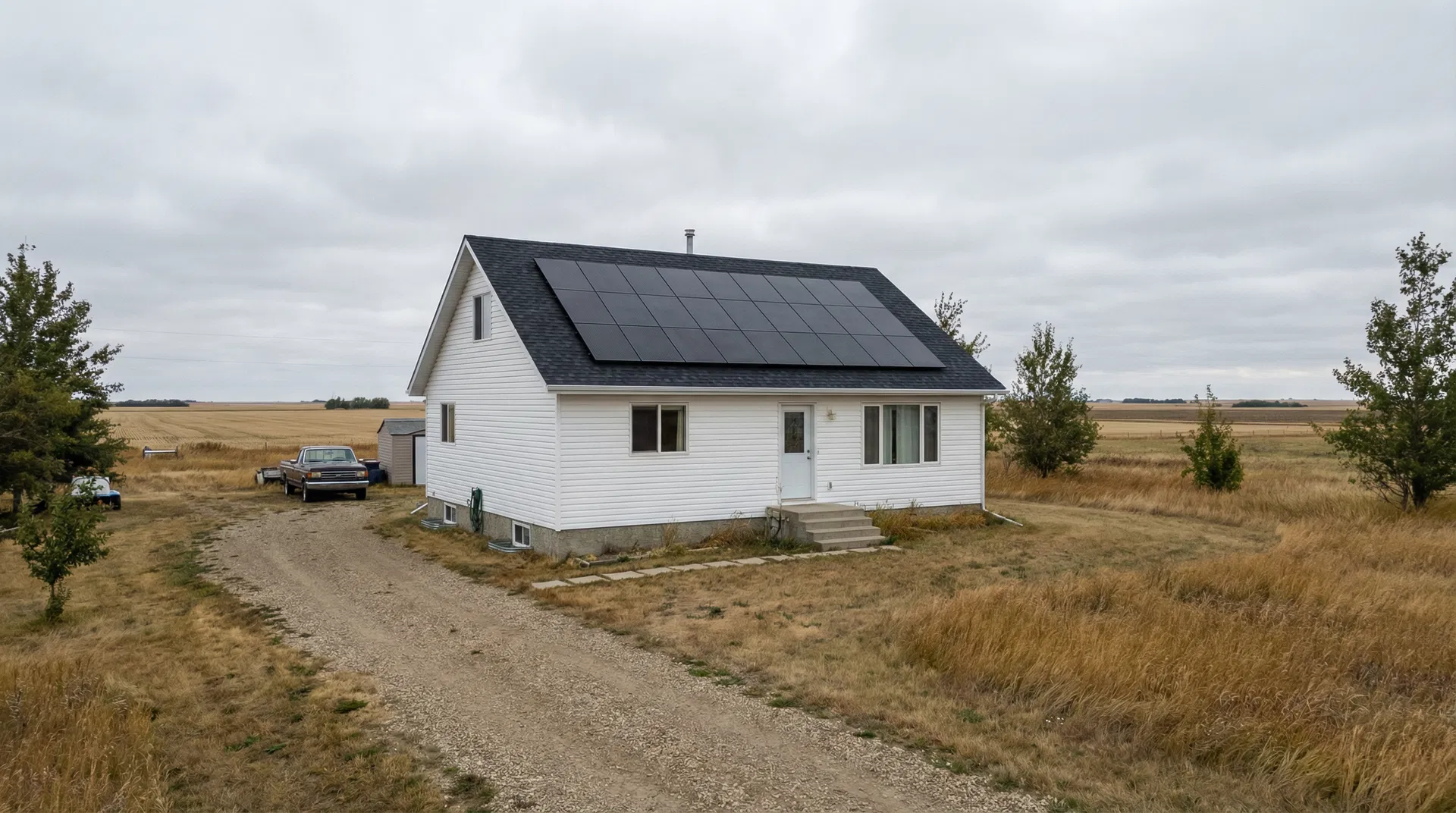
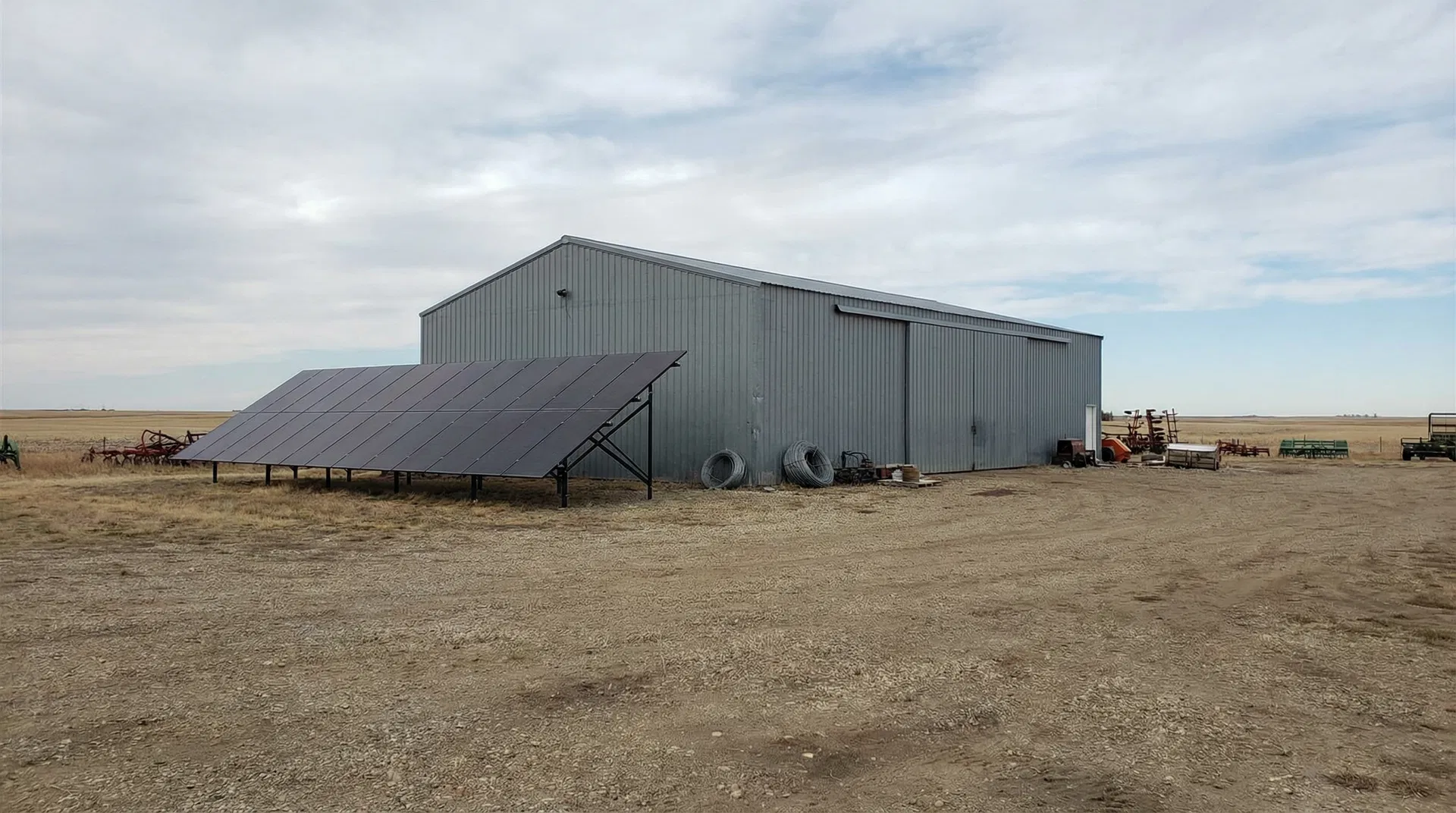
Rural Alberta systems tend to run larger than a typical city install, and it's usually because there's more than one load to cover. A house alone is one thing, but a house plus a heated shop, plus a well pump, plus grain-handling equipment during harvest, adds up to a very different system than a single-family home in town. That's why we don't size off a rule of thumb per square foot. Roof versus ground mount is its own decision. A roof mount makes sense when the roof has clear southern or western exposure and enough usable area. Ground mount becomes the better call when trees or outbuildings shade the roof, when the roof pitch or orientation works against the system, or when there's open yard space on an acreage that makes a ground array easier to service than a roof array. Neither option is automatically right, it depends on the layout. What actually drives the number we land on is the 12-month usage graph printed on your most recent power bill. That graph shows the real seasonal pattern, irrigation spikes, grain-dryer loads, shop heating in winter, all of it, which tells us far more than an average monthly number ever could. Combine that with the site design and the roof or ground conditions, and we get to a system size that matches how the property actually uses power, not a generic estimate.
Typical Load Profiles We Design For on Nearby Properties
Home Only
A straightforward single-family home with no shop, barn, or irrigation load. We size these off the 12-month usage graph on the most recent power bill alone, and they usually land toward the lower end of the 8-15 kW range. Roof orientation and shading decide whether it's a roof mount or a small ground array.
Home Plus Heated Shop
Adding a heated shop changes the load profile noticeably, especially through winter months when the shop heater and the house are both drawing at once. We look at the combined usage pattern on the power bill rather than treating the shop as an afterthought, which usually pushes the system toward the middle or upper end of the typical range. Panel capacity and service type both get checked before we finalize a number.
Acreage With Outbuildings and a Water Pump
Acreages with multiple outbuildings and a well pump have load spikes that a simple monthly average completely misses, which is exactly why we work from the 12-month usage graph instead. Ground mount often makes more sense here if the yard has open space and the roof lines are broken up across several buildings. These setups tend to need a full site visit before we'll commit to a system size.
Town of Ponoka Interconnection
The Town of Ponoka is one of the handful of Alberta communities where the town itself owns the wire service, rather than a private utility like FortisAlberta or ENMAX. That means your micro-generation application for solar rebates and incentives goes to the town's own utility department, not a third-party retailer. We handle that application as part of every project: load calculations, single-line diagrams, equipment specs for the LONGi panels and APsystems microinverters, and whatever inspection paperwork the town requires. Because the town runs its own wire service, the process can differ in small but real ways from towns served by FortisAlberta, which is why we don't reuse a generic application package. We build the submission around the town's specific requirements and your property's electrical service. We won't promise a specific approval window or credit structure here, because those details come from the town's current utility rules, not from us. What we can tell you is that we've done this application before, and we know which pieces the utility office wants to see on the first pass.
Project Economics and Design Review
| System Size | Annual Production | Year 1 Savings | Payback Period |
|---|---|---|---|
| 8-15 kW range, 10 kW typical |
Production, savings, and payback figures require a property-specific design review and your most recent power bill.
How We Work in Ponoka
Bill and Load Review
We review your power bill to understand your energy use in Ponoka and size the system to your actual consumption, not a generic estimate.
Site Assessment
We assess your roof or ground area, south-facing exposure, electrical service, and utility interconnection requirements specific to your property.
Design and Utility Application
We produce a system layout, production estimate, and cost summary, then submit your micro-generation application to your utility on your behalf.
Installation and Commissioning
Our crew installs racking, panels, inverter, and electrical connections. All work is performed by licensed electricians. We commission and test before handoff.
Current Program and Interconnection Review
Utility connection review
The town's own utility department reviews grid connection applications for micro-generation systems. Range Road Solar handles the full design package, load calculations, and equipment specs that go into that application, so the submission matches what the town expects to see.
Current program review
Residential, farm, and commercial properties can qualify for different programs, including the federal Clean Technology ITC for farms and businesses, and we review eligibility against current rules at the time of your design, not against outdated program details. Municipal programs change year to year, so this gets checked fresh for every project.
Frequently Asked Questions
Get a Solar Assessment for Ponoka
Submit a recent power bill and we will review your consumption and provide an honest assessment for your Ponoka property. No obligation.
(587) 330-7502 Book a CallRelated Resources
More Solar Services in Ponoka