
A Town Built by Settlers, Sugar Beets, and the Highway 3 Corridor
Coaldale sits about 11 kilometres east of Lethbridge along the Crowsnest Highway, geographically surrounded by Lethbridge County but administratively its own town, and functionally close to Lethbridge in day-to-day life. Lethbridge even supplies Coaldale's municipal water. The community was incorporated as a village on December 27, 1919, and became a town on January 7, 1952. A large part of the district was settled by Mennonite immigrants who arrived from Russia between 1923 and 1930, and that settlement history still shapes the surrounding farmland today.
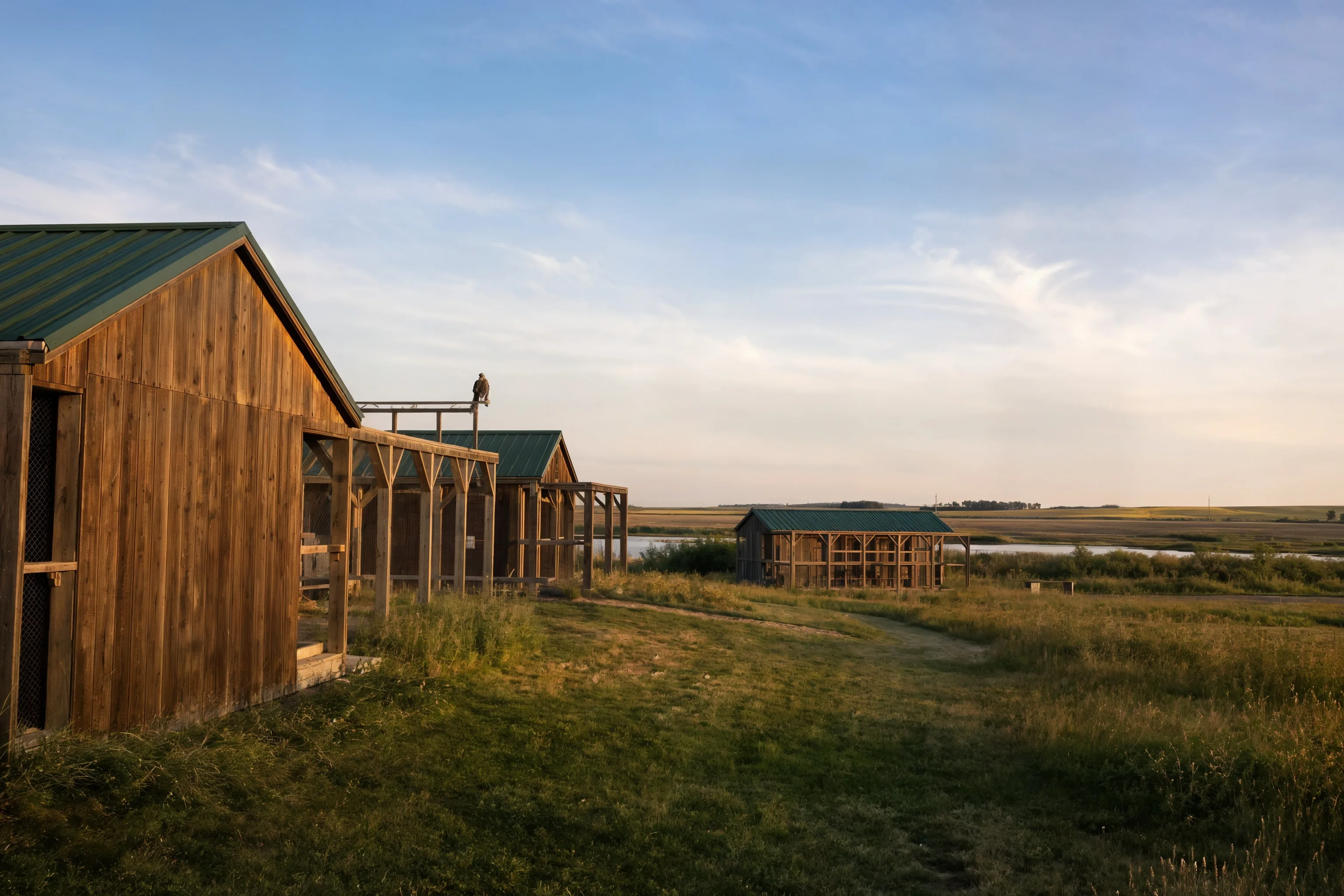
The town's best-known landmark is the Alberta Birds of Prey Centre, run by the Alberta Birds of Prey Foundation on a wetland site northeast of Lethbridge. It is Canada's largest facility of its kind, built around rescuing, rehabilitating, and releasing injured hawks, falcons, eagles, owls, and vultures, with flying demonstrations that draw visitors from across the region. It is a fitting symbol for a town that sits on open, sun-exposed prairie: this is big-sky country, and it is good country for panels.
Coaldale sits inside a southern Alberta irrigation district, with a farm economy that has long mixed grain, dairying, and sugar beet production. McCain Foods has operated a food processing plant in Coaldale since 2000, anchoring the agri-food side of the local economy alongside the farms that supply it. The population grew from 8,331 in the 2016 Census to 8,771 in the 2021 Census, a town that is filling in steadily rather than booming or shrinking.
FortisAlberta Wires Coaldale, and We Speak Their Process
Unlike Lethbridge itself, which runs its own municipal utility, Coaldale's poles, transformers, and meters belong to FortisAlberta. We confirmed this three separate ways before quoting a single job here: the Town of Coaldale's own utilities page names FortisAlberta directly, FortisAlberta's AUC-approved franchise fee rider schedule lists Coaldale by name, and every competitive retailer you might see advertised in town is exactly that, a retailer selling energy on Fortis-owned wires, not the company that owns the infrastructure.
Under Alberta's Micro-Generation Regulation, systems up to 150 kilowatts can connect to the grid and earn credit for the power they export. Your bill breaks down into distribution, transmission, and an energy charge from whichever retailer you have chosen, and a solar system offsets the energy portion first while exported kilowatt-hours are credited back through your meter. There is no residential solar rebate in Alberta right now, but an incorporated farm or business can claim the federal 30 percent Investment Tax Credit on the equipment.
We file the FortisAlberta micro-generation application, the electrical permits, and the inspection paperwork on every Coaldale install. Approval through FortisAlberta typically takes two to six weeks depending on their current queue. You sign a handful of forms, we handle the correspondence, and once the bidirectional meter goes in, the system starts earning its keep.
Three Coaldale Load Profiles We See on Bills
Coaldale's mix of Highway 3 commuter homes and working irrigation-district land means we design for two very different bill shapes here. The ranges below are honest estimates drawn from bills we see across southern Alberta. Your own 12-month history is what we actually size a system from.
The in-town home. A bungalow or two-storey off the Highway 3 corridor or one of Coaldale's newer subdivisions, central air running through summer, a garage freezer, maybe electric heat backup. Typical bills run roughly $150 to $300 a month, and a 7 to 9 kilowatt roof system covers most of that across the year.
The irrigation-district acreage or grain farm. Pivot pumps, an auger or two, a heated shop, and yard lighting push bills to roughly $400 to $700 a month for a lot of properties in the district around Coaldale. A 10 to 14 kilowatt system, roof or ground depending on the site, is where most of these land.
The dairy or sugar beet operation. Barn ventilation, milking equipment, cold storage, and seasonal processing loads add up fast, with bills of $600 to $1,000 a month or more not unusual during peak season. Ground-mount systems from 15 kilowatts up, run through Solis inverters, tend to be the right fit here.
Open Prairie Wind, and a Snow Load You Design For, Not Guess At
Coaldale sits on open southern Alberta prairie close enough to the foothills that wind is a real factor in how we rack a system, alongside a moderate but genuine winter snow load. This is not the same design problem as a sheltered river-valley town further north, and we do not treat it that way. Racking is engineered to the site's actual snow and wind numbers, roof mounts are checked against the structure underneath before we ever quote, and ground mounts get footings and bracing sized for open-field exposure.
Every panel we install, LONGi, is hail-rated to withstand 35 millimetre stones at 97 kilometres an hour, which matters just as much as wind rating out here given the summer storm risk this part of the province is known for. Steeper tilt angles let panels shed snow on their own once the sun is back, and cold, clear winter days actually push output per watt higher than a hot summer afternoon.
We have completed 218 or more installs across Alberta, plenty of them on this kind of open prairie exposure, and we spec equipment accordingly on every Coaldale job: LONGi panels, APsystems microinverters on homes and acreages or Solis inverters for larger farm strings, and racking rated to what the site actually sees.
What Solar Costs in Coaldale
Roof-mounted solar runs $2.25 to $2.85 per watt installed, so a 7 to 9 kilowatt in-town home system runs roughly $15,750 to $25,650 installed depending on the roof and equipment. Ground mounts run $2.50 to $3.50 per watt, reflecting trenching, piles, and heavier racking, and they are common on irrigation-district acreages and farms with open south-facing yard.
| Property profile | System size | Installed cost range | Est. first-year production |
|---|---|---|---|
| In-town bungalow or family home | 7-9 kW roof | $15,750 to $25,650 | About 9,400 to 12,000 kWh |
| Larger home or acreage home | 10-12 kW roof | $22,500 to $34,200 | About 13,400 to 16,000 kWh |
| Irrigation farm or dairy operation | 14-18 kW ground | $35,000 to $63,000 | About 18,700 to 24,000 kWh |
Production estimates use NRCan's published specific yield for Coaldale of 1,337 kilowatt-hours per installed kilowatt per year on a south-facing, latitude-tilt system, a figure that sits above the provincial average and reflects the region's strong sunshine numbers. FortisAlberta interconnection and permitting are included in the installed price, and travel from Airdrie is grouped into scheduled trip windows rather than billed as a solo run.
Payback depends on your usage and your retailer's rate, but for the load profiles above, a typical honest range is roughly 8 to 12 years, on panels rated for 25 to 30 years of service. Coaldale's above-average solar yield tends to push payback toward the faster end of that range compared to towns further north, and higher-use farm properties often pay back fastest because every kilowatt-hour they generate is one they would otherwise have bought at full retail.
The Process, From a Bill to a Spinning Meter
Send Your FortisAlberta Bill
We start with the 12-month usage graph on your bill. It tells us your real consumption, your highs and lows, and the system size that actually fits.
Site Assessment in Coaldale
We walk the roof or the yard, check shading, panel space, wind exposure, and your electrical service, and talk through roof-mount versus ground-mount options on site.
Design, Quote, and Interconnection
You get an itemized quote with an honest production estimate built from NRCan's Coaldale yield data. We file the FortisAlberta micro-generation application and electrical permits.
Install and Commission
Our crew installs racking, panels, inverter, and tie-in over one to three days. Inspection and the meter swap follow, and then the meter starts running backward on sunny days.
The Drive Reality: Airdrie to Coaldale
Our shop is in Airdrie, just north of Calgary. Coaldale is roughly 250 kilometres away, about a 190 minute drive south down Highway 2 and across on Highway 3 into the Lethbridge area. That is a real trip for a single service call, so we plan around it rather than pretend it away.
Site assessments and installs around Coaldale are grouped into scheduled trip windows. Several properties in the area get seen on the same run, materials are staged before we roll, and your install day is booked around that plan rather than around one truck driving down alone. From deposit to a commissioned, grid-connected system, the full process typically runs several weeks, and most of that time sits in permitting and the FortisAlberta interconnection queue, not labour at your property.
Whether you are in town near the Highway 3 corridor or out on irrigation-district land toward the Birds of Prey Centre, we cover the area the same way: one visit, one plan, and a crew that already knows FortisAlberta's paperwork and southern Alberta wind and hail exposure.
Frequently Asked Questions
Get a Solar Design for Your Coaldale Property
Send a recent FortisAlberta bill and we will come back with an honest assessment: system size, cost range, and what solar can realistically do for your property. No pressure, no brochure numbers.
Also Serving Nearby Communities