
Farmland, Lakes, and a Petrochemical Complex
Lacombe County wraps around the City of Lacombe on the Highway 2 corridor between Red Deer and Edmonton, and it also surrounds the towns of Blackfalds and the village of Clive. It was formed in 1944 as the enlarged Municipal District of Lacombe No. 398, folding together the old MDs of Lamerton, Crown, and Lorne, reorganized as the County of Lacombe No. 14 in 1961, and renamed Lacombe County in 1995. The population sat at 10,283 in the 2021 Census, essentially flat from 10,343 in 2016, which tells you this is settled farm and acreage country, not a growth boomtown.
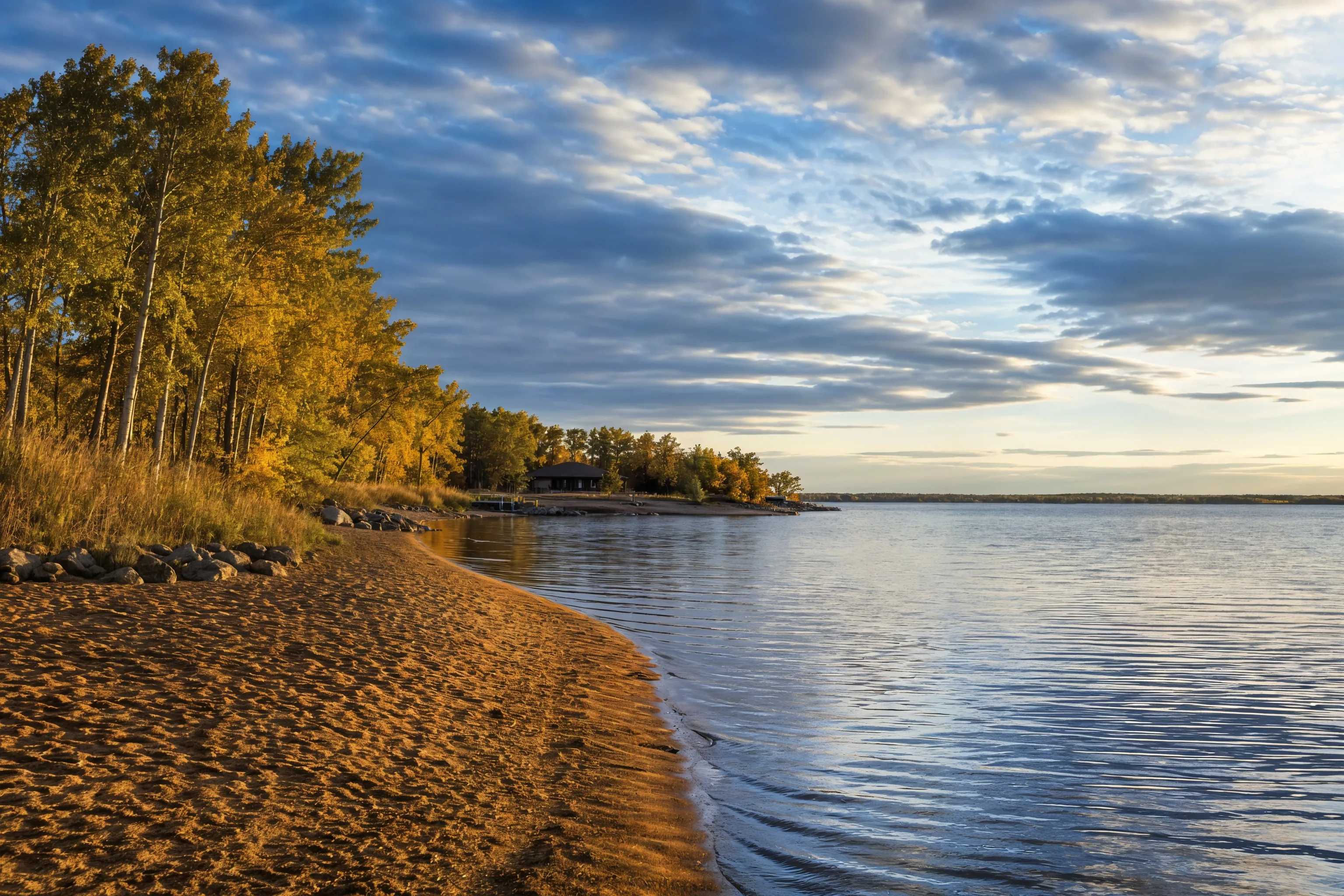
Aspen Beach Provincial Park on Gull Lake, 17 kilometres west of the City of Lacombe, was established on November 21, 1932, and it holds the distinction of being Alberta's first provincial park. Agriculture is still the county's predominant land use, with over 1,000 farms on the books, and Gull Lake and Buffalo Lake, alongside nearby Sylvan Lake, anchor a real recreation and cabin economy. On the industrial side, NOVA Chemicals runs its Joffre petrochemical complex on Highway 815 south of the Hamlet of Joffre, a 900-acre world-scale ethylene and polyethylene operation that has run for over 50 years and employs 800-plus permanent staff, one of the largest employers in central Alberta.
That mix, working farms, lake properties, and acreages near a major industrial employer, means power bills across the county vary a lot more than in a typical town. A quarter-section grain operation and a Gull Lake cabin on the same road can have wildly different loads, which is exactly why we size every system from your actual bill history instead of a generic county average.
Four Utilities Wire This County, and We Check Which One Wires You
This is a detail a lot of installers gloss over, and it matters. Lacombe County does not have one blanket power company. FortisAlberta serves large stretches of the county's rural roads, but ATCO Electric, Battle River Power Co-op, and EQUS, a rural electrification association, also own lines in other parts of the county. Two acreages a few kilometres apart can genuinely be on different distributors, and the micro-generation interconnection application has to go to the right one or your project stalls in someone else's queue.
We do not assume FortisAlberta and hope for the best. Confirming your exact wire owner is part of every free assessment, before we design a single panel layout. Once we know who owns your service, we prepare and file that specific micro-generation application, along with the electrical permits and inspection paperwork. Under Alberta's Micro-Generation Regulation, systems up to 150 kilowatts qualify, and approval typically runs two to six weeks once the application is in, regardless of which of the four distributors it lands with.
Alberta currently offers no residential solar rebate, so this paperwork step is about getting your system connected and earning credit for exported power through the meter, not chasing a grant. Incorporated farms and businesses in the county can claim the federal 30 percent Investment Tax Credit on equipment, which is worth confirming with your accountant if your operation is incorporated.
Three Load Profiles We See on County Bills
Acreage and farm bills in Lacombe County rarely look like a subdivision bill. A well pump, a heated shop, and seasonal grain handling all add load in bursts rather than a flat daily pattern. These ranges are honest estimates from bills we see across similar central Alberta properties; your 12-month history is what actually sizes your system.
The acreage home with a well pump. A single-family acreage running a submersible well pump, a pressure tank, and normal household loads typically bills $200 to $400 a month. A 7 to 9 kilowatt roof system usually covers most of that draw across the year.
The property with a heated shop. Add a 30 by 40 or larger shop with overhead heat, welding equipment, and yard lighting, and bills commonly climb to $400 to $650 a month. A 10 to 14 kilowatt system, roof or ground mount depending on the buildings involved, is the typical fit.
The farmstead with grain drying. Grain drying fans, augers, and a full yard of outbuildings push bills to $600 to $1,000 a month during a busy fall, sometimes higher. Systems of 15 kilowatts and up, usually ground mounts sited on open south-facing yard, are where the payback math works hardest for an operation like this.
Piles, Snow Load, and Why Ground Mounts Suit Acreages
Open central Alberta farmland is a moderate snow-load and wind design zone, real winter wind events across flat, exposed acreage, so racking is engineered to that standard rather than assumed. On a shop roof or ground mount, that means attachment points and pile depths sized for the actual load, not a shortcut spec.
Acreages are where ground mounts on driven or augered steel piles really earn their keep. Piles are set below frost depth so freeze-thaw cycles do not work anything loose over the years, and because you are not constrained by an existing roof pitch, we can angle the array to the tilt that sheds snow fastest once the sun returns. That is a real advantage over a roof mount on a shop with a shallow pitch, where snow can sit longer after a storm.
Cold, clear winter days are not a downside for solar, panels actually produce more per watt in the cold than in summer heat, so the snow-covered days are the only real production loss, and they clear fast in this climate. We spec LONGi panels, hail-rated to 35 millimetre stones at 97 kilometres an hour with a 25-year product warranty, paired with APsystems microinverters on homes and Solis inverters on larger farm and shop strings, and racking rated to the load an engineer stamps for your specific site.
What Solar Costs on a Lacombe County Acreage
Roof-mounted solar runs $2.25 to $2.85 per watt installed. A 7 to 9 kilowatt acreage home system typically runs $15,750 to $25,650. Ground mounts, the more common choice for shops and farmsteads with open yard, run $2.50 to $3.50 per watt, reflecting the piles, trenching, and racking involved.
| Property profile | System size | Installed cost range | Est. first-year production |
|---|---|---|---|
| Acreage home with well pump | 7-9 kW roof | $15,750 to $25,650 | About 8,800 to 11,400 kWh |
| Acreage with heated shop | 10-14 kW roof or ground | $22,500 to $49,000 | About 12,600 to 17,700 kWh |
| Farmstead, grain drying and yard load | 15-18 kW ground | $37,500 to $63,000 | About 18,900 to 22,700 kWh |
Production estimates use 1,262 kilowatt-hours per kilowatt per year, the verified NRCan figure for the Blackfalds and Lacombe County area, since no county-specific NRCan row exists and Blackfalds sits inside the same county and climate zone. Interconnection paperwork with whichever of the county's distributors serves your property is included in the installed price, and travel from Airdrie is grouped into scheduled Lacombe County trip windows rather than billed as a solo run.
Payback depends on your usage and your retailer's rate, but across the profiles above a typical honest range runs roughly 8 to 12 years, against 25 to 30 years of expected panel life. Higher-draw properties, the shops and farmsteads, generally pay back fastest because every kilowatt-hour produced is one that would otherwise have been bought at full retail rate.
The Process, From a Bill to a Working System
Send Your Power Bill
We start with the 12-month usage graph, whichever distributor's name is on it. It shows your real consumption and the load pattern that sets system size.
Confirm Your Wire Owner
Before we design anything, we confirm whether your property is served by FortisAlberta, ATCO Electric, Battle River Power Co-op, or EQUS.
Site Assessment on Your Property
We walk the shop roof or the yard, check shading, panel space, and your service, and talk through roof-mount versus ground-mount options on site.
Design, Quote, and Interconnection
You get an itemized quote with a production estimate built on real NRCan data. We file the correct micro-generation application and the electrical permits.
Install and Commission
Our crew installs racking, panels, inverters, and tie-in, typically over one to three days depending on system size and site.
The Drive Reality: Airdrie to Lacombe County
Our shop is in Airdrie, just north of Calgary. Lacombe County is roughly 155 kilometres away, about a 125-minute drive up the QEII corridor. That covers most of the county whether you are near the Gull Lake shoreline, out toward Joffre, or off a grid road further from the highway, so we do not treat any part of the county as an add-on.
Site assessments and installs across Lacombe County are grouped into scheduled trip windows. Several properties get seen on the same run, materials are staged ahead of time, and your install day gets booked around that plan rather than a one-off truck roll. From deposit to a commissioned, grid-connected system, the full process typically runs two to six weeks, and most of that stretch is permitting and the utility interconnection queue, not labour time on your roof or yard.
Curious what solar could do for your specific bill before you book a site visit? Our solar ROI calculator gives a first-pass estimate, and our acreage solar guide covers the ground-mount and well-pump questions we get most from rural Alberta properties.
Frequently Asked Questions
Get a Solar Design for Your Lacombe County Property
Send a recent power bill and we will confirm your wire owner and come back with an honest assessment: system size, cost range, and what solar can realistically do for your acreage or farm. No pressure, no brochure numbers.
Also Serving Nearby Communities