
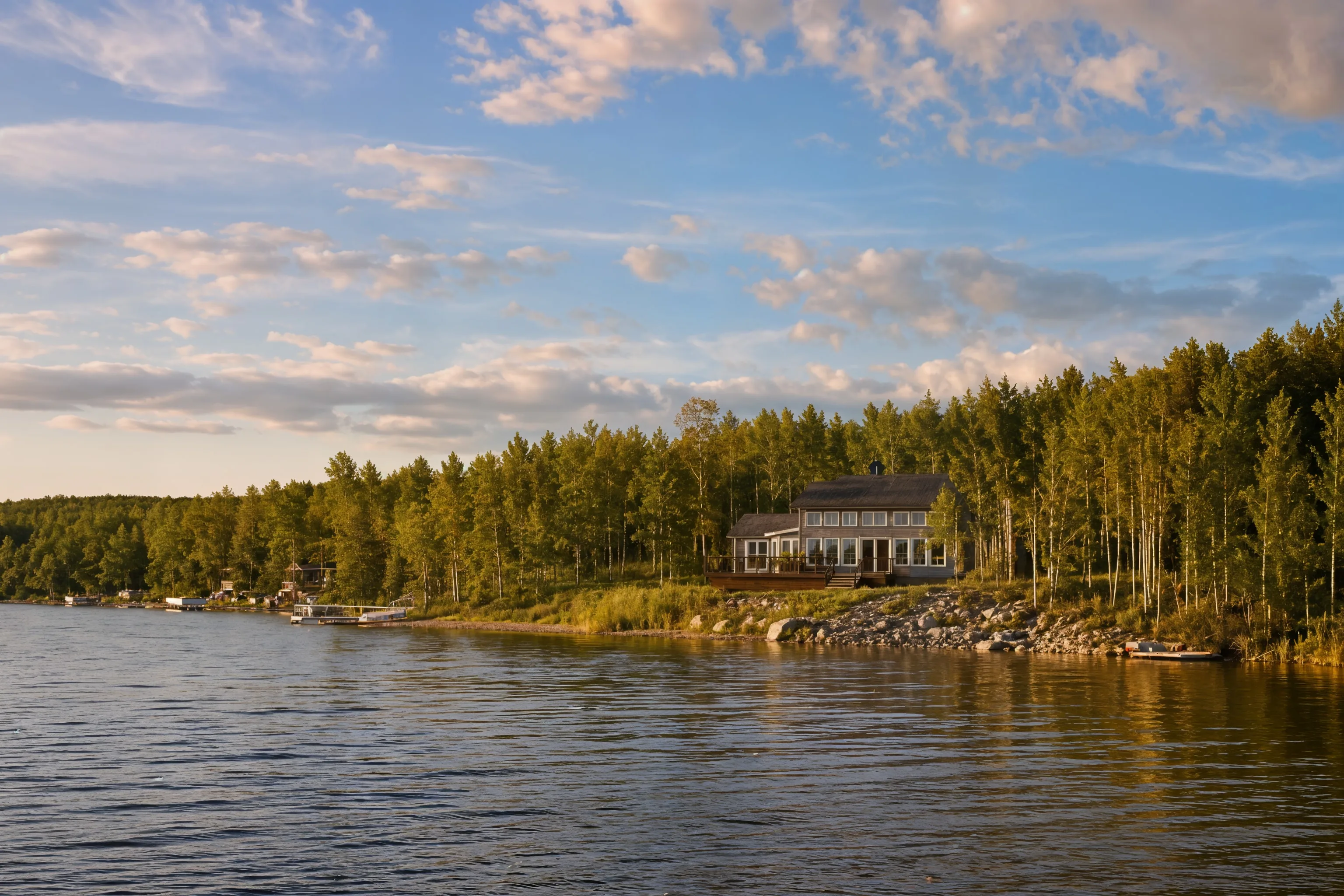
Solar Installation: Parkland County, Alberta
Solar Installation in Parkland County
Grid-tied solar for the acreages, hobby farms, and country homes of Parkland County, from the Stony Plain and Spruce Grove outskirts to the Wabamun Lake shore, engineered for FortisAlberta interconnection and Alberta snow loads.
Why Solar Fits Parkland County's Acreage Landscape
Parkland County is one of the most acreage-dense municipalities in Alberta. The 2021 Census counted 32,205 people spread across 2,375 square kilometres of aspen parkland west of Edmonton, a density of just 13.6 people per square kilometre. The county wraps around the City of Spruce Grove and the Town of Stony Plain and holds dozens of country residential subdivisions and farmsteads around Wabamun Lake, Spring Lake, Entwistle, Fallis, Gainford, Keephills, Tomahawk, and Carvel. That settlement pattern matters for solar: instead of tight urban lots with shaded rooftops, the county is defined by quarter-section acreages with open southern exposure, detached shops and heated outbuildings, and long driveways fed by rural distribution lines. There is simply more room here to put panels in the right place, and more electrical load per property than in any city.
The resource is real. Environment Canada climate data for the Edmonton City Centre Airport station, the closest long-record station east of the county, averages roughly 2,300 hours of bright sunshine per year, and Natural Resources Canada's photovoltaic potential maps put the south-facing, latitude-tilt yield in this corridor at about 1,150 kilowatt-hours per kilowatt of installed panels annually. Nearly the entire county sits on FortisAlberta's rural distribution system, so micro-generation approval follows one consistent utility process whether you are outside Wabamun or ten minutes from West Edmonton. Because homes here heat with electricity more often than in the city, run well pumps, heat water troughs, and power workshops, annual consumption on an acreage regularly runs two to four times a city bungalow's, and grid-tied solar offsets consumption directly without any battery bank.
The county's identity backs this up. Wabamun Lake has drawn cottagers since the summer villages incorporated in the early 1900s, the former TransAlta Wabamun generating station anchored the lakeshore economy through the coal era, and today the Acheson Industrial Area along Highway 16 houses more than 200 businesses on 4,000 hectares. Between the lake communities and the industrial corridor lies the county's real fabric: working farms and country residential properties with high, steady electrical loads. Those are exactly the properties solar serves best, and they are the properties we design for.
Typical Parkland County Load Profiles
Sizing starts with the 12-month usage graph on your FortisAlberta-serviced power bill. These three profiles cover most of the county properties we assess.
Country residential acreage with shop
A home on 3 to 10 acres outside Stony Plain or Spruce Grove, with a heated detached shop, well pump, and possibly a hot tub or EV. Monthly bills commonly run $350 to $650. A 10 to 12 kW system usually covers the year.
Hobby farm near Wabamun or Entwistle
A farmhouse with a horse barn, auto-waterers and trough heaters, a grain bin fan or two, and a yard light. Winter demand spikes hard. Monthly bills of $500 to $900 point to a 12 to 16 kW array, often ground-mounted in an open field.
Rural shop or acreage-based business
A welder's shop, small manufacturing bay, or contractor yard along the Highway 16 corridor toward Acheson. Demand charges and heavy tool loads push bills to $1,000 to $2,500 or more. Systems of 20 to 40 kW on three-phase service are typical here.
What Solar Costs in Parkland County
We price installed systems by the watt. A straightforward rooftop installation on a sound south or west-facing roof runs $2.25 to $2.85 per watt. A ground mount costs more because of racking, pile or concrete foundations, and trenching, at $2.50 to $3.50 per watt. These ranges cover panels, inverter, racking, engineering, permits, the FortisAlberta interconnection filing, and labour. They do not include electrical service upgrades when a panel or service entrance needs replacement, which we flag at the site visit before you sign anything.
A worked example, stated honestly: a 10 kW rooftop system on an acreage near Stony Plain at $2.50 per watt comes to $25,000 installed before GST. At the NRCan-proxied yield of about 1,150 kWh per kWp, that system produces roughly 11,500 kWh per year. Valuing self-consumed power at 20 to 25 cents per kWh, a range typical of combined energy and delivery charges on rural FortisAlberta bills, annual offset lands around $2,300 to $2,900. That is a simple payback of roughly 9 to 11 years on self-consumption alone, inside the 25 to 30 year panel warranty life, before any export credits on months you overproduce. Export-heavy systems under Alberta's current rate structure earn less per exported kWh than power they displace, which is why we size to your consumption rather than to your roof.
| System | Installed cost | Annual production | Est. annual offset | Simple payback |
|---|---|---|---|---|
| 8 kW rooftop | $18,000 to $22,800 | about 9,200 kWh | $1,800 to $2,300 | 9 to 12 years |
| 10 kW rooftop | $22,500 to $28,500 | about 11,500 kWh | $2,300 to $2,900 | 9 to 11 years |
| 14 kW ground mount | $35,000 to $49,000 | about 16,100 kWh | $3,200 to $4,000 | 10 to 13 years |
Estimates use NRCan PV potential data proxied from the Edmonton reference location, exclude GST, and assume consumption patterns that use most production on site. We do not guarantee savings; your production estimate is built from your own bills and site conditions.
FortisAlberta Interconnection, Start to Finish
Because Parkland County lies entirely within FortisAlberta's service territory, every project here follows one utility process. Under the Alberta Micro-Generation Regulation, we file the micro-generation application on your behalf through FortisAlberta's customer generation process, including the single-line diagram, equipment certifications, and your consent form. FortisAlberta's approval of a standard residential application typically takes two to six weeks. Systems above 10 kW on a rural single-phase line may require a technical review, which we scope and quote before you commit. If you are still comparing options, our solar installation overview for Parkland County walks through equipment choices and what a build day looks like on an acreage.
Once the array is installed and passes municipal electrical inspection, FortisAlberta dispatches a crew to swap your meter for a bi-directional unit, which is normally scheduled within about two to three weeks of commissioning. From that point, surplus kilowatt-hours flow to the grid and appear as credits on your next full billing cycle from your retailer. You keep your choice of electricity retailer throughout; the wires utility and the retailer are separate, and nothing about going solar forces a retailer switch.
Permits run in parallel. Parkland County issues the building or development permit for the array, and a licensed electrical contractor files the electrical permit under Alberta's Safety Codes Act. Ground mounts on county acreages sometimes need a setback confirmation from the county relative to property lines and the road allowance, which we check against your title at the design stage so the array location does not hold up approval.
Working With an Airdrie Crew at This Distance
Remote bill review first
Send your 12-month usage graph from your FortisAlberta bill and we do the initial sizing and price range remotely, so the drive only happens when a project makes sense.
One consolidated site visit
We schedule the assessment, site measurements, shading check, and service inspection in a single trip to your acreage or farmstead, roughly 370 kilometres from Airdrie, a little over four hours via the QE2 and Yellowhead corridor.
Fixed price, no travel premium
Your quote is a fixed installed price. Distance is our scheduling problem, not a surcharge on your project, and we batch county installations so neighbouring properties can share a mobilization week.
Crew on site, then utility handoff
Installation runs two to four days for most acreage systems. After inspection we hand off to FortisAlberta for the meter swap and stay accountable through energization, not just panel delivery.
Frequently Asked Questions
Get a Solar Design for Your Parkland County Property
Send a recent power bill and your site address, and we will return a system size, production estimate, and fixed installed price for your acreage, farm, or rural business. No obligation.
Also Serving Nearby Communities