Costs · June 24, 2026
Solar Installation in Chestermere: Costs and Real Numbers
Thinking about solar installation in Chestermere? Here are real costs, utility rules, and payback numbers for acreage and lakeside properties near Calgary.
Chestermere Is Not Calgary. Your Solar Math Is Different.
Chestermere is one of those towns that feels suburban but operates differently than Calgary the moment you look at your power bill. You are on FortisAlberta, not ENMAX. That single fact changes how net metering works, what credits you earn for exporting power, and how you size a system correctly. A lot of Chestermere homeowners call us after getting a quote from a Calgary-focused company that did not account for this. The quote looked wrong because it was wrong. Lake-adjacent properties, larger lots, and acreages on the Chestermere perimeter tend to run more electricity than a standard Calgary infill. Heated garages, well pumps, and shop panels all push consumption up. That changes the math on system size, cost, and payback. This post lays it out plainly.
What Solar Installation in Chestermere Actually Involves
A residential solar installation in Chestermere covers four main pieces: the panels, the inverter, the racking that holds it all to your roof or ground, and the interconnection to FortisAlberta's grid. That last piece is the part most installers underexplain. You do not just bolt panels to a roof and plug them in. FortisAlberta requires a microgeneration interconnection application before your system can legally export power. Until that approval comes through and a utility inspection happens, your system either runs in isolation or does not run at all.
For a typical Chestermere property using 14,000 to 18,000 kWh per year, the right system size lands between 12 and 16 kW. Smaller systems exist and can work for people with modest consumption or significant shading. Larger systems make sense for properties running shops, heated outbuildings, or EV chargers. The point is that system sizing should follow your actual bills, not a salesperson's preferred product tier.
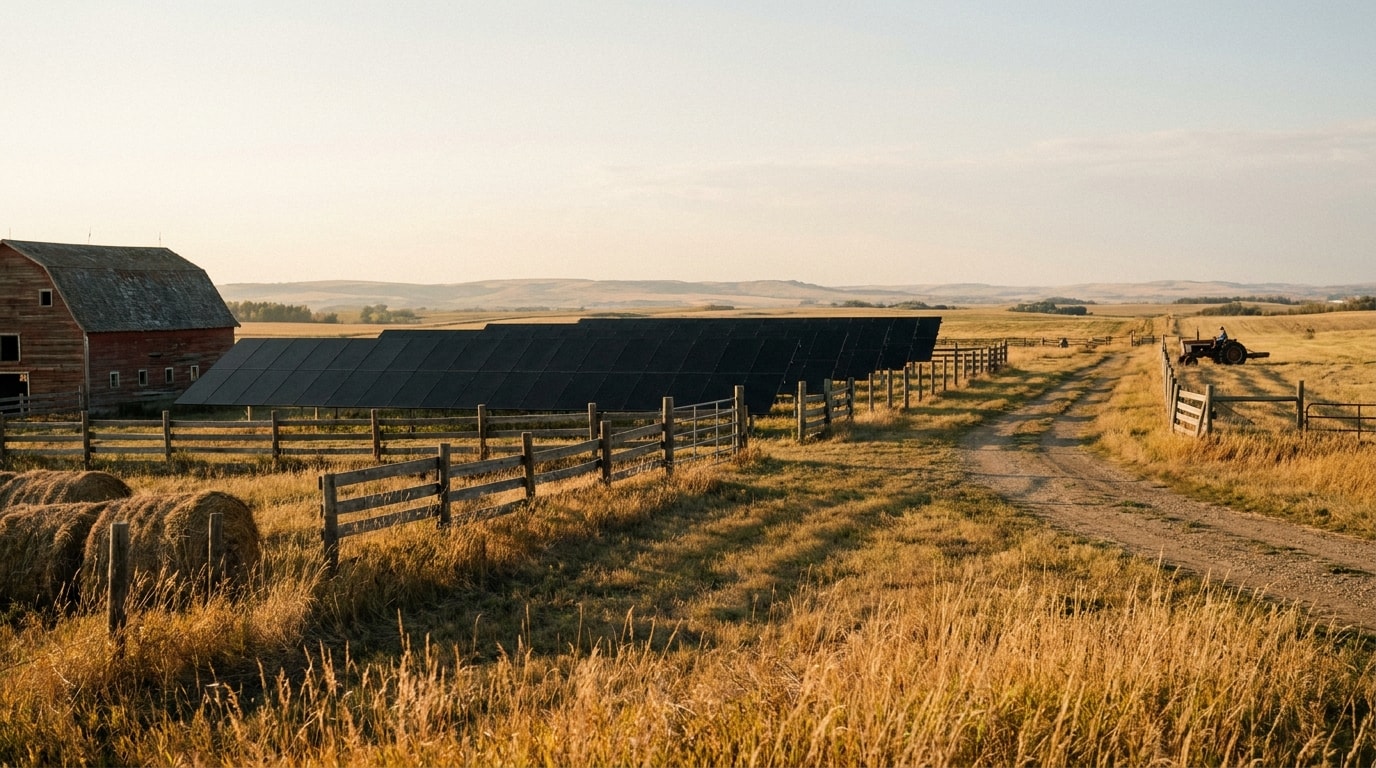
Roof-mounted systems are most common in town. Ground mounts are more common on the acreages east and south of Chestermere where there is space and sometimes better solar exposure than a pitched roof allows. Both options are available. Both connect to FortisAlberta the same way.
FortisAlberta Microgeneration: How It Works in Chestermere
Because Chestermere is served by FortisAlberta rather than a municipal utility, you fall under Alberta's Micro-Generation Regulation and FortisAlberta's specific interconnection process. Here is what that means practically.
When your panels produce more power than your home is using at that moment, the excess flows back to the grid. FortisAlberta credits you for that exported power at the rate you would have paid to buy it. That rate sits around $0.35 per kWh under current microgeneration rules, which is meaningfully higher than what many other provinces offer. Credits accumulate and apply to future bills. They do not expire monthly. Unused credits roll forward, which helps offset the fact that Alberta winters produce less solar than Alberta summers.
The interconnection application itself takes time. FortisAlberta processes these applications and coordinates the final meter inspection before your system is officially live on microgeneration billing. This is not instant. Plan for several weeks between permit submission and utility approval. Range Road Solar handles the application on your behalf so you are not navigating FortisAlberta's paperwork alone.
The Real Math on a Chestermere Solar Installation
Here is a worked example using realistic Chestermere numbers. Assume a property consuming 16,000 kWh per year at a blended rate of $0.20 per kWh. That is a $3,200 annual power bill before any fixed charges or distribution fees.
A 14 kW system in Chestermere, with good roof orientation and no major shading, produces roughly 13,000 to 14,000 kWh per year. Call it 13,500 kWh to be conservative. That covers about 84 percent of annual consumption. The remaining 16 percent still comes from the grid.
At $0.20 per kWh, 13,500 kWh of offset is worth $2,700 per year in avoided purchases. If some of that production gets exported and credited at $0.35 per kWh, the annual savings figure can move higher depending on how well your consumption timing aligns with peak production hours.
Installed cost for a 14 kW system in this area runs approximately $35,000 to $42,000 depending on equipment, roof complexity, and whether a ground mount is involved. Using $38,000 as the midpoint and $2,700 in annual savings, the simple payback period is about 14 years. Factor in Alberta's history of rate escalation and that number compresses. Power rates have not gone down. They tend to go the other direction.
After payback, that system continues producing for another 10 to 15 years. The panels carry a 25-year production warranty. The inverter typically warrants for 10 to 12 years. The long-term economics favour ownership.
Frequently Asked Questions: Solar in Chestermere
Does Chestermere's lake affect solar panel performance or installation?
Not in any meaningful way. The lake creates some morning mist and can influence humidity levels slightly, but nothing that materially affects panel output or equipment longevity. Standard panel warranties account for Alberta conditions. The bigger factor is roof orientation and pitch, not proximity to the water. South-facing roofs with a 30 to 45 degree pitch perform best. Many Chestermere lots oriented toward the lake are east or west facing, which matters when sizing the system. We account for that in the design.
Can I install solar if I am in a Chestermere HOA?
Some Chestermere developments have HOA rules that govern exterior appearance. Alberta's Municipal Government Act does not override HOA restrictions the way some other jurisdictions protect solar access. If your neighbourhood has an HOA, check the rules before you order equipment. Most HOAs that do have restrictions focus on visible panel placement, not outright prohibition. Ground mounts in backyards sometimes sidestep approval requirements entirely. We can help you figure out what applies to your specific address before the design process starts.
How long does a solar installation take in Chestermere?
The physical install itself takes one to three days for a typical residential system. The timeline that takes longer is everything around the install. Permits, FortisAlberta interconnection application, and the final utility inspection add several weeks to the total process. Once permits clear, installation happens within two to six weeks. The utility inspection and meter swap happen after that. From your first call to a live microgeneration system, total calendar time is usually two to four months depending on FortisAlberta's current processing queue.
What happens to solar production in Chestermere winters?
Production drops significantly from November through February. Alberta winters are cold and days are short. A south-facing system in Chestermere might produce 30 to 40 percent of its summer monthly output during peak winter months. Snow accumulation on panels is real. Panels shed snow faster than most people expect because the glass surface is slick and panels generate some heat, but heavy snowfall events can knock out production for a day or two. The annual production estimates we use already account for this seasonal variation. The system earns its savings across the whole year, not just summer.
Is a ground mount better than a roof mount for my Chestermere property?
It depends on your lot and your roof. If your roof faces south with minimal shading and a reasonable pitch, roof mounting is simpler and cheaper. If you have a flat or north-facing roof, an older roof that needs replacing soon, or open yard space with better orientation, a ground mount often produces more per dollar spent. Ground mounts cost more upfront due to the racking structure and trenching for conduit. They tend to be easier to maintain and clean. For larger properties east of Chestermere with open land, ground mounts are worth pricing out alongside a roof option.
What Working With Range Road Solar Looks Like
The process is straightforward. Start by pulling your most recent power bill. That data is what drives the system design. Without it, any quote is a guess.
Once we have your consumption history, we design a system sized to your actual load. We look at your roof or available ground space, shading from trees or structures, and your FortisAlberta rate structure. You get a proposal with real numbers, not ranges designed to look impressive.
After you approve the design, we handle permits and submit the FortisAlberta microgeneration interconnection application. You do not chase paperwork. We do.
Once permits clear, the physical installation happens within two to six weeks. Most installs finish in one to three days on site. After installation, FortisAlberta schedules an inspection and completes the meter configuration for microgeneration billing.
From that point forward, your system is live, your bill reflects exported credits, and you can monitor production through the system's app. We stay reachable after install. If something looks off, call us.
Get a Quote for Your Chestermere Property
Range Road Solar is based north of Calgary in Rocky View County. We work across the region including Chestermere, Langdon, Strathmore, and surrounding areas. We know FortisAlberta's process because we do it regularly. If you are ready to find out what a solar installation actually costs for your specific property and bills, call us at 587-330-7502 or visit rangeroadsolar.com/book to get started. Bring your most recent power bill. That is where the real conversation begins.
Range Road Solar installs across Alberta. See Chestermere solar installer for service area details.
Ready to get a real number for your property?
Send us your most recent power bill. We'll review your consumption and give you an honest design and cost estimate. No obligation.