What to Expect
From Power Bill to
Commissioned System.
The process is straightforward. We review your usage, design a system around it, handle the utility approvals and engineering, and install it. You don't manage the paperwork. You don't coordinate with the utility. We do that.
For most standard residential and shop systems, we move from signed agreement to panels on your roof in 4–6 weeks. Larger commercial systems and complex ground mounts typically run 6–12 weeks — the extra time is almost always utility interconnection and permitting, not us. Our crews move fast and we don't let installs sit in a queue.
Submit Your Power Bills
We start with 12 months of actual consumption data from your Fortis, ATCO, ENMAX, EPCOR, EQUS, or your local REA account. This tells us your real load — seasonal peaks, base load, and total annual usage. No guessing. No generic estimates.
your most recent power bill gives us seasonal load data
We identify your peak demand periods
We calculate your actual annual kWh consumption
This determines the right system size
System Design
We design a system sized to your actual load. Roof or ground-mount — whichever fits your property better. We specify the panel count, racking type, inverter configuration, and mounting angle for your site.
Roof assessment or ground-mount site evaluation
Panel count and layout designed to your load
Inverter and electrical configuration
Snow load, wind, and tilt angle calculations
Utility Approval & Engineering
We manage the Fortis, ATCO, ENMAX, EPCOR, EQUS, or your local REA interconnection application, engineering drawings, and permit submissions. This is the step that delays most projects when it's not handled properly. We've done it enough times to know how to move it through.
Fortis, ATCO, ENMAX, EPCOR, EQUS, or your local REA interconnection application
Stamped engineering drawings
Municipal permit submission
Utility approval coordination
Installation & Commissioning
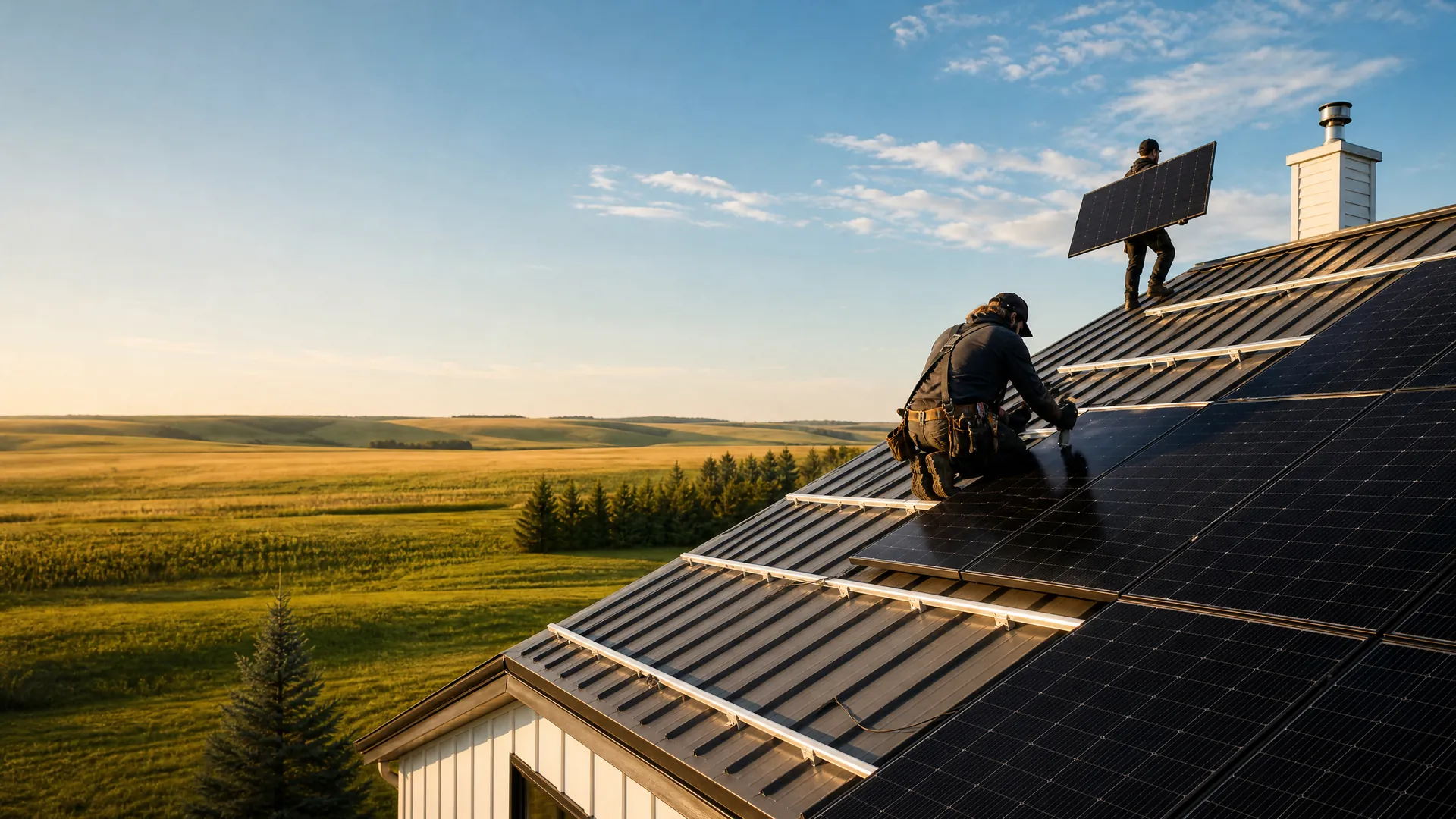
Our crew installs the system. We commission it, verify production output, and walk you through the monitoring setup. We don't leave until the system is producing and you understand how to read it.
Racking and panel installation
Electrical connection and inverter setup
Utility meter exchange coordination
System commissioning and production verification
The Utility Process
Fortis, ATCO, ENMAX, EPCOR, EQUS & local REAs.
We Handle It.
Every grid-connected solar system in Alberta requires utility approval before it can operate. For most rural properties, that means Fortis, ATCO, ENMAX, EPCOR, EQUS, or your local REA. The interconnection application involves engineering documentation, electrical drawings, and a formal review process.
We prepare and submit everything. We follow up with the utility. We coordinate the meter exchange. You don't deal with it.
Interconnection Application
Submitted to Fortis, ATCO, ENMAX, EPCOR, EQUS, or your local REA with full technical documentation. Required before any grid-tied system can operate.
Engineering Sign-Off
Stamped electrical drawings from a licensed Alberta engineer. Required for permits and utility approval.
Municipal Permits
Building and electrical permits submitted to your municipality. We know the rural permit process.
Meter Exchange
The utility installs a bi-directional meter after approval. We coordinate the timing with your install schedule.
Where We Install Solar
We serve homeowners, acreages, and farms across central and northern Alberta.
Ready to Start?
Send Us Your Bills.
Your most recent power bill is all we need to put together a proper design. No site visit required to get started.