
About Gibbons
Gibbons is named for William R. Gibbons, the first homesteader in the area in 1894, and the town was incorporated in 1977. It sits on the southern banks of the Sturgeon River, about 37 km northeast of Edmonton on Highway 28A, at the point where the historic Athabasca Landing Trail began, the main overland route from Edmonton to Athabasca and the gateway to northern Alberta before the railways took over. Today Gibbons counts roughly 3,218 residents under the 2021 census, a small town surrounded by the acreages and working farms of Sturgeon County.
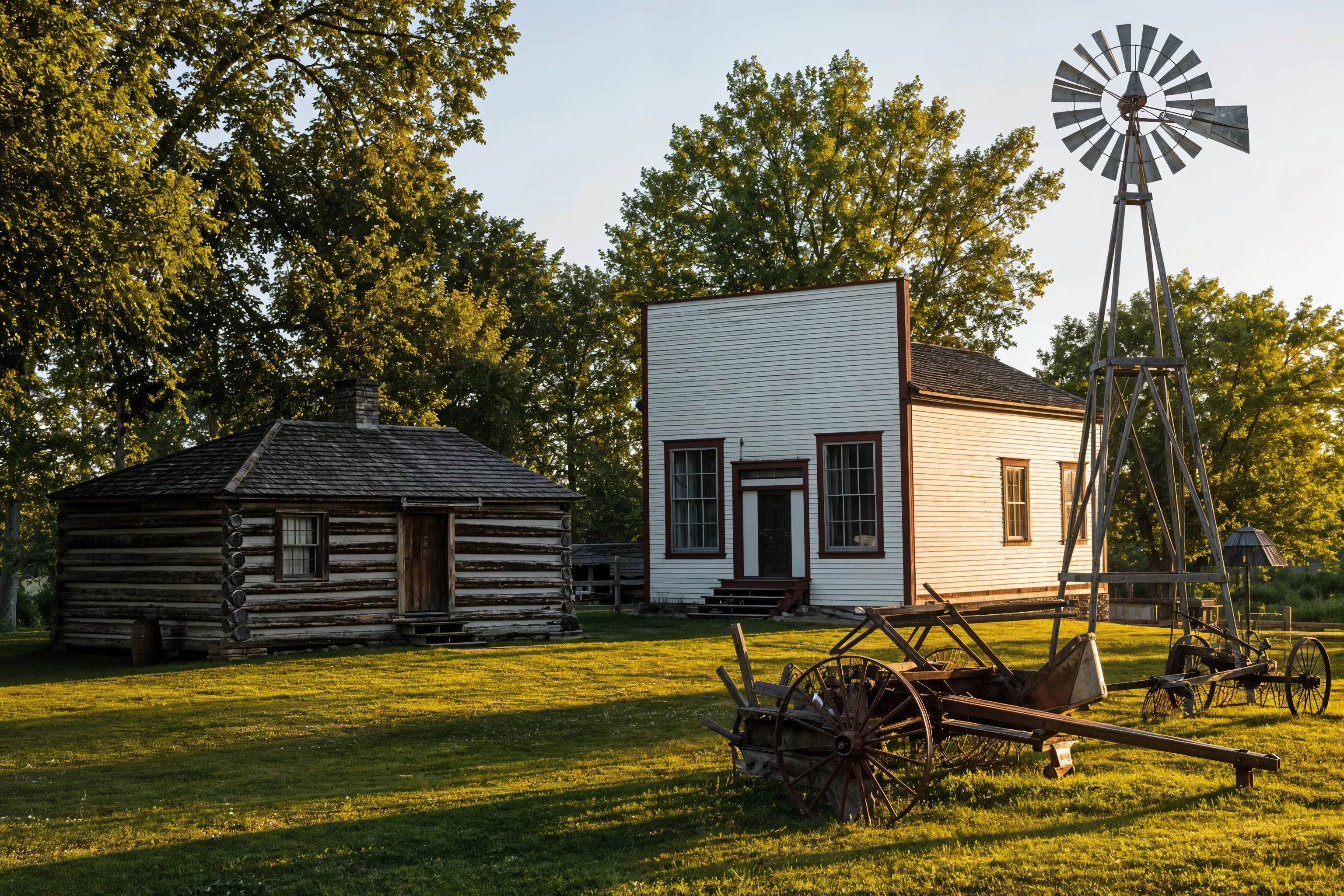
The Gibbons Museum in Emily Oliver Park keeps that history on display across six preserved buildings, including the 1907 Roberts House, a log home originally built along the Athabasca Landing Trail, and the 1929 McLean Bros. General Store, plus a working windmill and a collection of antique farm machinery. Out past the town limits, Sturgeon County's farmland economy and a handful of regional draws, Jurassic Forest and the Goose Hummock Golf Resort among them, bring steady traffic through the area without changing the basic fact that this is acreage and farm country first.
Solar Potential in Gibbons
There is no weather station right in Gibbons, so the number we design around is the Edmonton-area reading: roughly 2,345 hours of bright sunshine each year at latitude 53.83, translating to a yield of about 1,150 kWh per installed kilowatt. Run that math on a 7.6 kW array and you land near 8,700 kWh a year; step up to 10 kW and production climbs toward 11,500 kWh, more than most Gibbons households burn through in twelve months.
| Property type | Typical system | Installed cost range | Est. annual production |
|---|---|---|---|
| In-town Gibbons home | 6-8 kW roof-mount | $13,500 - $22,800 | ~6,900 - 9,200 kWh |
| Farm shop or outbuilding | 8-12 kW roof-mount | $18,000 - $34,200 | ~9,200 - 13,800 kWh |
| Sturgeon County acreage or farm | 10-15 kW ground-mount | $25,000 - $52,500 | ~11,500 - 17,250 kWh |
Pricing is a range because roof condition, panel count, and electrical work all move the final number. We confirm the exact figure at the site visit, not before.
Snow Load, Wind, and the Local Build
We design to snow load zone S2 and wind load zone R3 here, the same regional figures used for other Edmonton-area towns since no Gibbons-specific structural reading exists. Rooftop arrays get a tilt steep enough to shed snow within a day or two of sunshine, while the ground-mount systems common on acreages around town sit on footings driven below frost depth so freeze-thaw cycles do not heave the posts over time. None of that costs you production in winter, either: panel output per watt actually climbs in cold, clear conditions, so a sharp January day can out-produce a hazy July one.
Most residential and small commercial jobs around Gibbons are well served by rooftop arrays on quality racking hardware, while the larger acreage and farm properties typically make more sense as ground-mount, where we can pick the ideal tilt and orientation instead of working around an existing roofline.
Grid Connection and Net Metering
The poles and wires running past your Gibbons property belong to FortisAlberta, and nothing exports to the grid until they sign off on it. That means a paper trail: a micro-generation application, a technical review on FortisAlberta's end, and a swap to a bi-directional meter once everything clears, usually inside two to six weeks of a complete filing. We handle each of those steps ourselves. Your panels are physically in place and inspected well before that approval lands, they just are not pushing anything back onto the grid yet.
From the moment the new meter goes in, Alberta's net metering framework takes over: the meter tracks what you generate against what you draw, running backward whenever you are producing more than you use. A Gibbons summer banks far more credit than the array needs, and that surplus simply rolls forward to offset the shorter, darker days of winter, so it is the yearly total that counts, not any one month's number.
Six Steps From Power Bill to Power Producer
Send Your Power Bill
A recent bill tells us your real annual usage and how it swings by season, which is what actually sizes the array, not a rule of thumb.
Walk the Property
We come out to your Gibbons property to look at the roof or the ground, check the electrical panel, note any shading, and scope what the interconnection will need.
Lock In a Price
You get a drawn layout, a production number, and one fixed price, no soft estimate that moves once the crew shows up.
Permits and Paperwork
Building and electrical permits get pulled, and the FortisAlberta micro-generation filing goes in under your name.
Crew on Site
Racking, panels, inverters, and wiring, all installed by licensed electricians. Most homes are done in a day or two.
Flip the Switch
Final inspection, the meter swap, and FortisAlberta brings you onto the grid as a producer, not just a consumer.
Solar in Gibbons, Common Questions
Nearby Communities We Serve
Our clients speak for themselves
Read what Alberta homeowners and farmers say about Range Road Solar.
Free Solar Assessment for Gibbons
Rooftop or ground-mount. In town or on the acreage. We will tell you what works best.
From the Townsite to the Quarter Section, We Know Gibbons
Send over a power bill and we will put real numbers in front of you for your Gibbons property, not a ballpark guess.
Also Serving Nearby Communities