
Why Solar Fits Wetaskiwin County
The County of Wetaskiwin No. 10 is the rural municipal district wrapped around the City of Wetaskiwin and the Town of Millet, both of which are separate urban municipalities inside its boundaries. Statistics Canada's 2021 census counted 11,212 people in the county itself, spread over roughly 3,122 square kilometres of farmland, pasture, and lake country, with the city adding another 12,594 at the county's centre. The county's own hamlets include Gwynne, Mulhurst Bay, Alder Flats, Buck Lake, Falun, Westerose, Winfield, and the Village of Pigeon Lake, plus the summer villages strung along Pigeon Lake's shore: Ma-Me-O Beach, Silver Beach, Grandview, Crystal Springs, Argentia Beach, Poplar Bay, and Norris Beach. The Reynolds-Alberta Museum and its world-class vintage machinery collection sit in the City of Wetaskiwin proper, worth a visit the day you drive in to meet us.
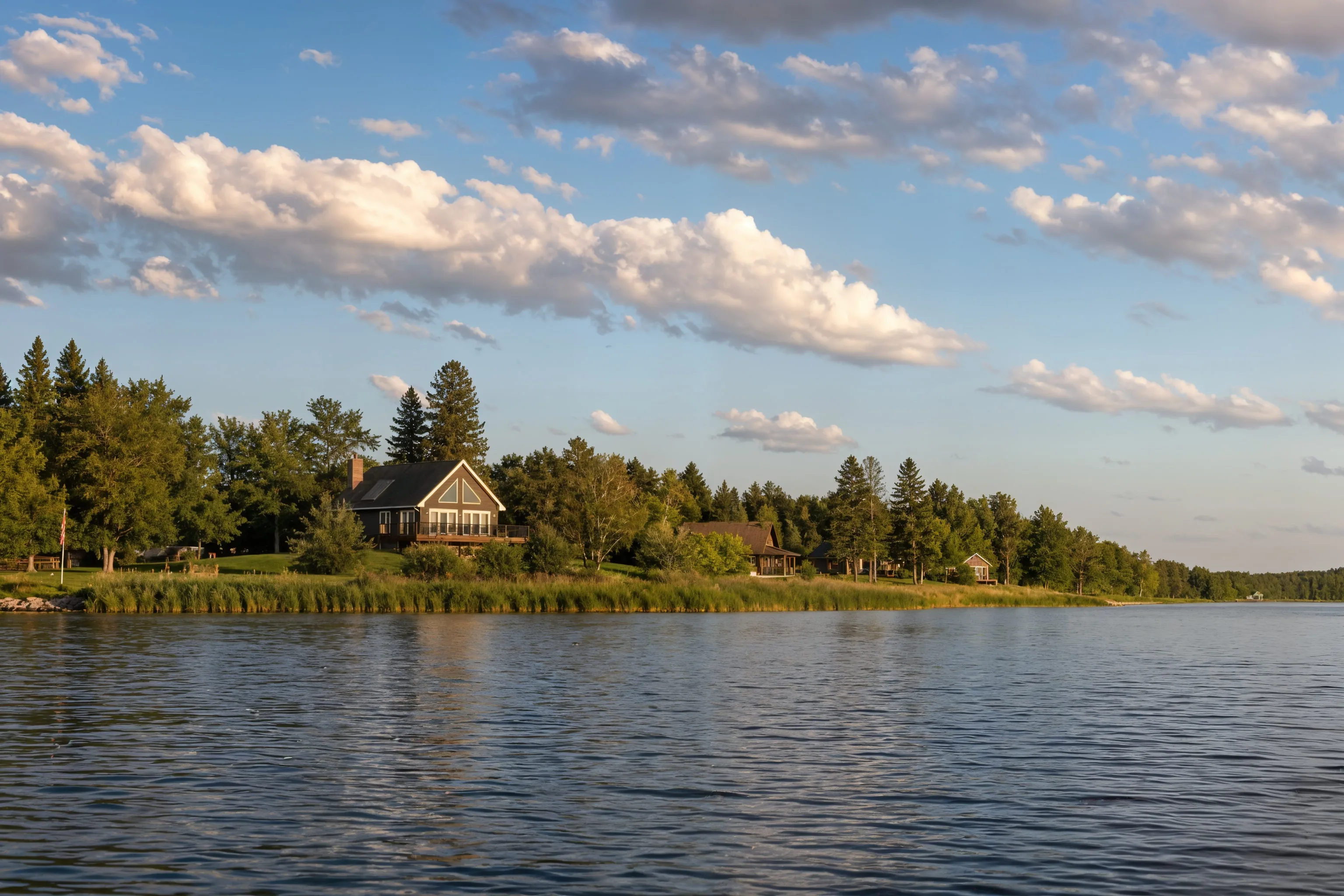
Two markets meet here. The first is agricultural: mixed grain and livestock operations with heated shops, wells, and seasonal dryer load spread across open land with no shade, exactly what ground mount solar likes. The second is lake country: Wizard Lake's south shore and the full Pigeon Lake shoreline hold hundreds of acreages and cabins, many of them weekend properties whose owners want the fridge, pumps, and air conditioning covered while they are away, then a fat summer export cheque through the Solar Club while the sun does the work. Both markets share the same wires company, FortisAlberta, and the same straightforward interconnection process.
The resource is solid central Alberta prairie. Natural Resources Canada's municipal PV potential dataset gives the City of Wetaskiwin row, which we use as the representative figure for the whole county area, at about 1,193 kWh per kWp per year for a south-facing array tilted at latitude. Cold winters help rather than hurt panels, and the long summer days at this latitude carry the annual total. The financial case rests on Alberta's Micro-Generation Regulation rather than any subsidy: export credits roll forward month to month, and a well-sited county system typically pays for itself in roughly 9 to 15 years and keeps producing for 25 to 30.
What Wetaskiwin County Properties Actually Use
System design starts with the 12-month usage graph on your FortisAlberta bill. Three property types cover most of the county:
Lake-Country Acreage or Cabin
The Pigeon Lake and Wizard Lake shorelines hold two distinct animals. A seasonal cabin may only draw 3,000 to 6,000 kWh a year, but it peaks hard in July and August with air conditioning, fridge, and lake pumps, and sits empty and exporting the rest of the summer: a 5 to 8 kW system paired with the Solar Club high export rate fits that profile well. A permanent acreage with a heated shop, well, and hot tub runs more like a small farm, 12,000 to 20,000 kWh a year and bills of $250 to $550 a month, which lands on a 10 to 14 kW array. Shade from mature shore trees is the design challenge here, and we treat it seriously on every assessment.
Working Farm Between Millet and Gwynne
The grain and livestock land east and west of Highway 2 runs everything from a 100 amp single-phase farm service to a 400 amp three-phase yard site. Bills swing with the season, often $500 to $1,400 in harvest months and $150 to $350 in winter, for 18,000 to 40,000 kWh a year. These are the county's best solar candidates: big usage, open ground for a 15 to 30 kW ground mount, and a service entrance we assess before sizing anything.
Hamlet, Village, or Summer Village Home
A standard home in Gwynne, Mulhurst Bay, Falun, or one of the Pigeon Lake summer villages usually uses 7,000 to 12,000 kWh a year with bills of $140 to $300 a month. A 7 to 11 kW rooftop system covers most of that, and summer surplus exports well while the lake season runs. In-town lots in Millet work the same way, though remember Millet is its own town, and its interconnection still runs through FortisAlberta.
Solar Costs and Savings in Wetaskiwin County
Installed pricing in this territory runs $2.25 to $2.85 per watt for rooftop systems and $2.50 to $3.50 per watt for ground mounts, with the ground range reflecting trenching, racking, and distance to the service. Those numbers include panels, inverter hardware, racking, permits, the FortisAlberta micro-generation application, and commissioning. We quote a fixed installed price after the site assessment, and we do not pitch financing products.
A worked example, using the range honestly: a 10 kW ground mount on a permanent acreage near Mulhurst Bay costs between $25,000 (at $2.50 per watt, short trench, easy ground) and $35,000 (at $3.50 per watt, long trench run, treed site). Using the NRCan Wetaskiwin-area yield of about 1,193 kWh per kWp, that array produces roughly 11,900 kWh a year. At a realistic all-in rate near 17 cents per kWh, that is about $2,000 a year off the bill, putting simple payback between about 12 and 17 years. Lake cabins that export hard through the Solar Club in summer can beat that range, and farms with three-phase service and high usage usually do better still. We show you this math with your actual bill before you commit to anything.
| Property profile | Typical system | Est. annual production | Est. annual savings | Simple payback |
|---|---|---|---|---|
| Farm with three-phase yard site | 20 kW ground mount | ~23,900 kWh | $3,500 to $4,600 | 9 to 13 years |
| Permanent lake acreage with shop | 12 kW ground mount | ~14,300 kWh | $2,100 to $2,800 | 11 to 15 years |
| Hamlet or summer village home | 9 kW rooftop | ~10,700 kWh | $1,600 to $2,100 | 12 to 16 years |
Savings assume an all-in rate near 17 cents per kWh and full usage of annual production; actual results depend on your retailer, rate plan, and consumption pattern.
FortisAlberta Interconnection in Wetaskiwin County
Every address in the county territory, from a Ma-Me-O Beach cabin to a farm service east of Bittern Lake, is wired by FortisAlberta. The City of Wetaskiwin's own utilities page points residents to the FortisAlberta municipal franchise fee rider, which confirms the same wires company serves the city inside the county ring, and the Town of Millet is FortisAlberta territory as well. That matters for your project: your micro-generation application, bi-directional meter swap, and any technical review all run through FortisAlberta's customer generation process, no matter which retailer's name appears at the top of your bill.
Under Alberta's Micro-Generation Regulation, small micro-generators under 150 kW receive kilowatt-hour credits at their retail rate, rolling forward month to month, and ordinary interconnection costs are shared across the utility's customer base rather than billed to you. We file the application in our Master Electrician's name, handle the safety code filing, and coordinate the meter swap. From submission to a swapped meter, plan on two to six weeks. Farm systems above 10 kW on an older single-phase line sometimes trigger a utility technical review; we flag that possibility at the design stage so there are no surprises.
Working With an Airdrie Crew, Two Hours South
Wetaskiwin County is one of the closest rural territories we serve from Airdrie: roughly 160 kilometres down Highway 2, about two hours on a clear day, close enough that we batch county work weekly in season rather than monthly. We serve it because the properties here, open farm yards and lake acreages with strong solar exposure, are exactly the work we want, and batching keeps travel from inflating your quote.
Bill review by phone or email
Send a photo or PDF of your FortisAlberta bill. We read the 12-month usage graph, check your rate class and service size, and tell you straight whether solar pencils out for your property before anyone drives south.
Batched site assessment day
We group Wetaskiwin County assessments, walk your roof or ground-mount sites, measure shade from the lake-country tree cover, check panel condition and breaker service, and price trench runs for ground mounts. You get a fixed installed price with production estimate within days.
Permits and FortisAlberta filing
We file the micro-generation application with FortisAlberta and pull the electrical permit through the applicable municipality or the county, whichever has jurisdiction over your address.
Install and commissioning trip
One crew installs racking, LONGi panels, APsystems microinverters, and the AC disconnect, then coordinates inspection and the bi-directional meter swap. Most county systems commission within two to six weeks of the utility filing.
Wetaskiwin County Solar Questions, Answered
See what our clients say
Real reviews from Alberta homeowners and farmers.
Get a Free Solar Assessment
We serve Wetaskiwin County and surrounding areas. No obligation.
Also Serving Nearby Areas
Ready to Assess Your Property?
Submit a recent power bill and we will review your consumption and provide an honest assessment of what solar can do for your Wetaskiwin County property. No obligation.
Also Serving Nearby Communities