Solar Education · September 14, 2026
Off-Grid Solar That Pays: Watering, Cabins, RVs and Shop Lighting in Alberta
Range Road Solar's new Off-Grid Solutions section covers solar livestock watering, a portable pump trailer, building lighting, RV and trailer power, and cabin systems for Alberta, with real sizing and real prices.
Why We Built an Off-Grid Section
Range Road Solar has always been a grid-tied company first. Rooftop and ground-mount solar for homes and farms is what we do most days, and that is not changing. But over the last year the same question kept coming from a different direction: I do not have power out there, can you still help? A dugout half a mile from the nearest line. A shop with no service. A cabin at the end of a long driveway. A trailer that follows the cattle around the rotation.
So we built an Off-Grid Solutions section to answer it properly, with real numbers instead of brochure talk. Five pages, one per job, each with the sizing method, the equipment we actually use, and pricing from real Canadian suppliers.
The Off-Grid Solutions section
- Off-Grid Solutions hub: all five jobs in one place
- Livestock water pumps: wells, dugouts, sizing and pricing
- Portable solar pump trailer: one trailer, several wells
- Building and cold-storage lighting with no power service
- RV and camper trailer power: three honest tiers
- Cabins and acreages: whole-site systems sized for December
Store Water, Not Electricity
The rule that runs through all of it is simple: off-grid is about storing what you need, not chasing a perfect day. For watering, that means storing water, not electricity. A cow-calf pair drinks about fifteen imperial gallons a day in summer heat. Size a cistern for three or four days of that, let the pump top it up whenever the sun is out, and a cloudy stretch never leaves the herd dry. No battery to buy, no battery to replace. The limit is almost never the panels. It is the well.
The livestock water pump page walks through the sizing for a well or a dugout, the Grundfos SQFlex pump and LONGi panel kit we use, and three worked examples from a dozen head to a full cow-calf operation.
The Grant That Halves the Cost
Alberta's On-Farm Water Supply program covers 50 percent of an eligible watering project up to $40,000, and it is open until March 2028. A solar pump on a well or dugout is exactly the kind of project it was written for. We point you at the program and the paperwork; we do not promise the cheque, because that is the province's call, not ours.
One Trailer That Waters the Whole Rotation
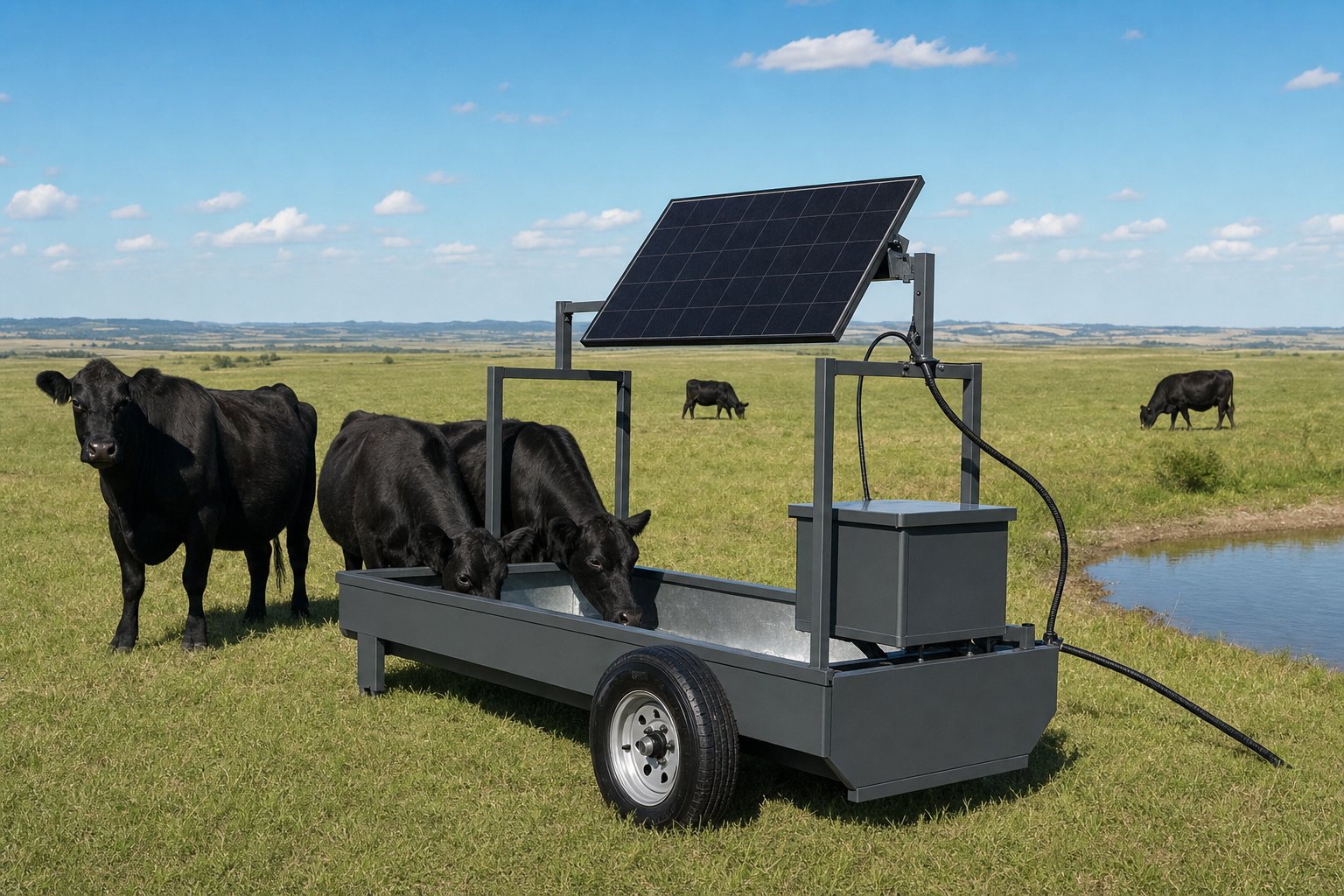
This one came from a farmer we are working with, and we liked it enough to build it. A portable solar pump trailer: panels on a tilting rack, the pump controller and float switch on board, and a quick-connect fitting at each wellhead so one trailer serves several wells. Pull up, plug in, pump. No trench, no battery, no power line. We are building them over the winter for summer orders, in three configurations by well depth.
Lights in a Building With No Power
A cold-storage building or a shop with no service does not need a whole-house system. It needs lights that work at forty below and a battery that will charge in the same cold. We use cold-rated LED high bays, which actually get brighter as the temperature drops, on a self-heating lithium battery in an insulated enclosure, with the array sized for a five-hour December day. The building lighting page shows the math for a 160 by 60 foot storage building.
RVs and Trailers: Three Honest Tiers
We sized three camping-power systems for a typical Alberta travel trailer and ran each one against eleven summers of hourly weather data. A weekend system. A long-weekend system that finishes a four-day trip with power to spare about 95 percent of the time. And a three-rainy-days system that never went dark in any window we tested. The RV and trailer page shows the odds for each tier, so you can decide how much you want to spend on the days it rains.
Cabins and Acreages: Size for December
For a whole-site system, the honest math is about the worst month, not the average one. December in Alberta is the binding constraint, so we size the array and battery around it and tell you up front how many hours the generator is likely to run in a year. Our reference build south of Okotoks ran zero shortfall days across eleven simulated years with about 200 generator hours a year. The cabins and acreages page has the full method and the findings that shaped it, including why flooded lead-acid ends up costing more than lithium.
How to Start
Pick the page that matches your job and read the worked example closest to yours. Then book a free 15-minute review. Tell us the well depth, the building size, or the trailer, and we will run your numbers before anyone talks about signing anything. None of this is exotic. It is just sized for here, and priced so it pays.
Call Range Road Solar at 587-330-7502 or visit rangeroadsolar.com.
Ready to get a real number for your property?
Send us your most recent power bill. We'll review your consumption and give you an honest design and cost estimate. No obligation.