
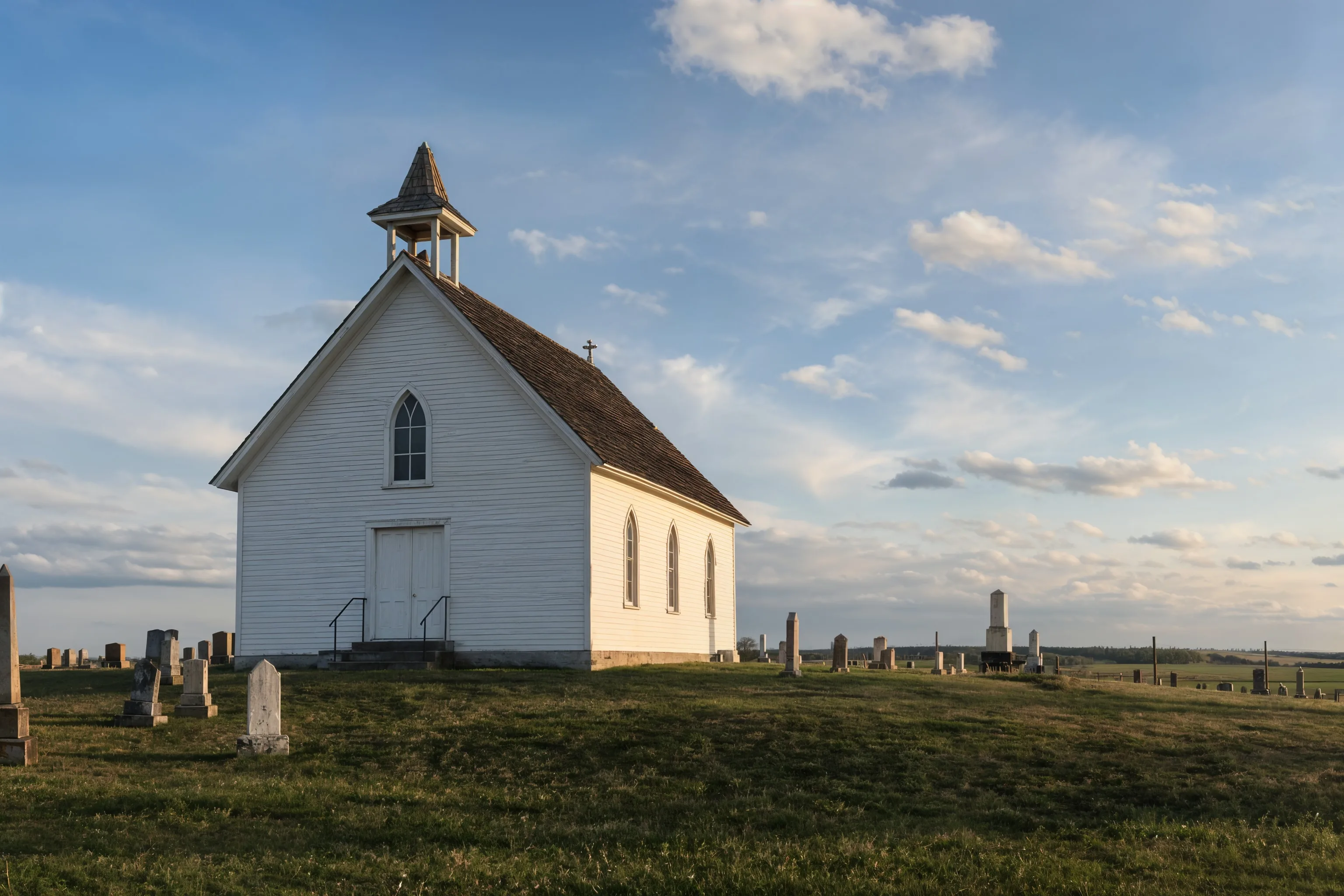
About Mirror
Mirror began in 1870 as a Grand Trunk Pacific Railway divisional point and incorporated as a village in 1912. Residents voted in 2003 to give up village status, and Mirror became a hamlet under Lacombe County effective January 1, 2004. The 2021 census counted 481 people, down from 502 in 2016, a small and steady rural population built around the surrounding farmland.
The Mirror and District Museum keeps the railway and settler history visible, with a restored 1952 CN caboose on the grounds that visitors can step inside. Next to the museum stands St. Monica's Anglican Church, built in 1895 by ranchers Walter and Edward Parlby and their neighbours, the oldest church in Lacombe County and still standing as a small log building with a bell tower over its west entrance. Buffalo Lake and The Narrows Provincial Recreation Area, about 10 km away, is one of the county's three main tourism lakes and brings summer lake traffic through the area.
Solar Potential in Mirror
Mirror sits at latitude 52.47 and receives approximately 2,336 hours of bright sunshine per year. A 7.6 kW reference system here produces about 9,650 kWh annually, roughly 1,278 kWh for every installed kW. Farm-sized systems scale linearly from there: a 15 kW ground-mount array lands around 19,170 kWh a year, enough to offset grain bin and dryer loads on top of the house.
| Property type | Typical system | Installed cost range | Est. annual production |
|---|---|---|---|
| Hamlet home in Mirror | 6-8 kW roof-mount | $13,500 - $22,800 | ~7,670 - 10,220 kWh |
| Working farm, house + shop | 12-15 kW ground-mount | $30,000 - $52,500 | ~15,340 - 19,170 kWh |
| Grain operation (bins + dryer) | 15-20 kW ground-mount | $37,500 - $70,000 | ~19,170 - 25,560 kWh |
Pricing is a range because roof or ground condition, panel count, and electrical work all move the final number. We confirm the exact figure at the site visit.
Designing for the Open Farmland Around Mirror
There is very little to block the wind on the quarter sections around Mirror, and the National Building Code's R3 wind rating for the area reflects that: racking here is engineered to handle open-prairie gusts, not a sheltered suburban lot. Snow load sits at S2, which shapes how steep we set the tilt so accumulated snow slides off on its own instead of shading the bottom rows for weeks. Ground-mount footings on farm properties go in below frost depth so spring thaw does not heave the posts out of alignment. The upside of a hard central Alberta winter is real production: a panel runs cooler and more efficient on a bright, minus-20 morning than it does in July's heat.
Hamlet homes in Mirror and smaller farm installs typically run LONGi panels on APsystems microinverters, which keep each panel pair reporting and producing independently rather than letting one shaded or underperforming panel drag the rest of the string down. For the larger arrays sized to grain-handling loads, Solis string inverters make more economic sense at that scale. Either way, the tie-in is built around the electrical service already at your yard, not a ground-up rebuild.
Getting Connected From a Rural Address
A rural address does not change the interconnection process, it just means FortisAlberta's technical review has a bit more line to account for. We handle the application, answer their technical questions about your service, and line up the inspection and meter swap. Budget two to six weeks from a complete submission, with the system fully installed and inspected before it is ever switched on.
From there, net metering does the rest of the work: your meter credits you when the array outproduces your load and bills you normally when it does not. Farms around Mirror tend to see their biggest production months line up with long summer days, well ahead of winter heating and lighting draw, so those banked credits are what keep a February statement reasonable.
Six Steps From Power Bill to Power Producer
Bill Review
Send your most recent power bill. We calculate your annual consumption and seasonal pattern to size the system right.
Site Assessment
We visit your Mirror property in person: roof or ground evaluation, electrical panel inspection, shading analysis, and interconnection scoping.
System Design and Quote
A complete system layout, production estimate, and fixed-price quote. We tell you exactly what the system will produce and what it will cost.
Permitting
We pull building and electrical permits and submit your micro-generation application to FortisAlberta.
Installation
Our licensed electricians install the racking, panels, inverters, and wiring. Residential systems typically take one to two days.
Commissioning
Inspection, meter swap, and grid connection. You are now a micro-generator.
Solar in Mirror, Common Questions
Nearby Communities We Serve
Our clients speak for themselves
Read what Alberta homeowners and farmers say about Range Road Solar.
Free Solar Assessment for Mirror
Rooftop or ground-mount. Home or farm. We will tell you what works best.
From the Hamlet to the Section Line, We Know Mirror
Send us your power bill and we will show you the real numbers for your Mirror property.
Also Serving Nearby Communities