
Who Calls Us From Rockyford
Most of our Rockyford inquiries fall into two camps: village households on a standard lot who want to stop watching their power bill climb every winter, and grain operations on the surrounding quarter-sections looking to offset a dryer, an aeration fan, or a shop that pulls hard for a few weeks a year and sits quiet the rest of the time. Rockyford's population grew to 395 as of the 2021 census, up from 316 in 2016, a genuine gain of roughly a quarter, unusual for a small Wheatland County village and a sign this community is not shrinking the way some of its neighbours are. That growth means a mix of long-time farm families and newer households, and we design around both.
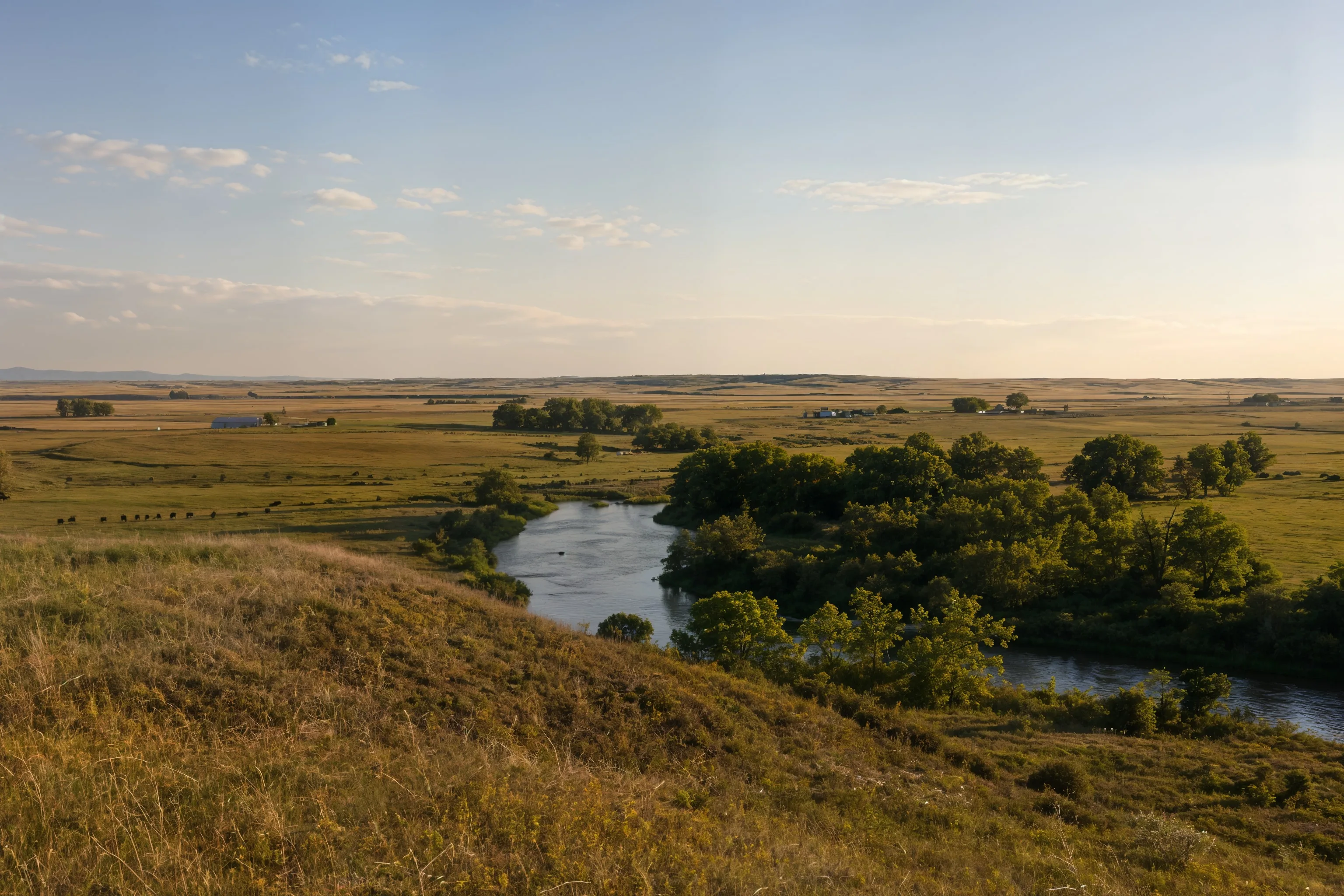
The village sits on the Rosebud River in Wheatland County, roughly 90 km northeast of Calgary and about an hour's drive from Strathmore. It is grain country first, with the village itself functioning as the local hub for the farms around it. We do not treat Rockyford as a drive-by market. A decent share of what we install in this part of the county is farm-scale ground-mount work, and that changes how we approach racking, permitting, and system sizing compared to a straightforward village rooftop.
Why Solar Works in Rockyford
Rockyford sits at roughly 51.24 degrees north, 113.15 degrees west, in the open prairie country between Strathmore and Drumheller. Environment Canada's climate normals put annual bright sunshine duration for this stretch of Wheatland County at approximately 2,389 hours a year. That is a measure of how many hours the sun is unobstructed and bright enough to cast a sharp shadow, not the "peak sun hours" figure used in solar production math, but it tells you plainly that cloud cover is rarely the problem here. Wide open farmland with almost nothing tall enough to cast a shadow means most Rockyford properties get clean, unobstructed exposure from sunrise to sunset for most of the year.
FortisAlberta owns and operates the distribution wires serving the Village of Rockyford and the farmland around it, confirmed against FortisAlberta's own service territory and against local outage notices published for the village. A grid-tied system has to clear FortisAlberta's micro-generation interconnection application before it goes live: they review your panel and conductor sizing, confirm the breaker setup can handle backfeed, then swap in a bi-directional meter. That review typically runs two to six weeks. We prepare and submit that application as part of every install, whether it is a village rooftop or a farm-scale ground-mount.
A Village Built Around the Rodeo Grounds
Rockyford was founded in 1913 with the arrival of the Canadian National Railway and incorporated as a village in 1919. More than a century later, the community's biggest annual draw is still homegrown: the Rockyford Agricultural Society runs the Rockyford Rodeo and Bull-a-rama every summer, with the Bull-a-rama held in late June and the full rodeo weekend on the third weekend of July. It has run for over sixty consecutive years and still pulls competitors and spectators from well outside the county for chuckwagon races, mutton busting, and a Friday night dance.
That agricultural identity carries through to the properties we quote. Village lots sit close together on flat ground with almost no tree cover, while the farmyards ringing the village along the Rosebud River run everything from cattle operations to grain and oilseed. The openness that makes this land good for farming also makes it good for solar, since there is rarely a shading problem to design around.
What a System Looks Like on a Rockyford Property
Village Home on a Standard Lot
Most houses inside the village run monthly bills in the $140 to $210 range depending on the season. A 7 to 9 kW rooftop system, installed roughly $15,750 to $25,650 at $2.25 to $2.85 a watt for roof-mount, covers the bulk of what a typical village household draws over a year.
Acreage With a Shop or Livestock Building
A house plus a heated shop or a barn with water systems and lighting typically pushes bills to $230 to $340 a month. A 10 to 13 kW system, split between roof and a small ground-mount array where the roof cannot carry it all, runs roughly $22,500 to $37,050 installed.
Grain Farm With Drying and Aeration Load
Farms running a grain dryer and aeration fans see sharp seasonal spikes, often $500 to $900 in peak drying months against a much lower baseline the rest of the year. These sites are usually the best fit for ground-mount, sized to annual rather than peak consumption: a 20 to 30 kW array, roughly $50,000 to $105,000 installed at $2.50 to $3.50 a watt for ground-mount, is typical for a working grain operation near Rockyford.
Snow Load and Frost Depth
Rockyford does not have its own published National Building Code ground snow load figure, so we use the nearest published value for this stretch of the province, the Drumheller and Strathmore area, at roughly 1.2 to 1.5 kPa, as the nearest published figure, not a site-specific reading. For ground-mount farm installations, which make up a real share of our Rockyford work, we run footings to depths that match local frost practice for this region, generally 4 to 5 feet for anything meant to stay put through repeated freeze-thaw cycles. Every post gets sized to the racking manufacturer's engineering spec rather than a number pulled from a warmer part of the province.
Rockyford Solar System Sizing and Savings Estimates
Based on $2.25 to $2.85 a watt installed for roof-mount and $2.50 to $3.50 a watt for ground-mount, our own modeled estimate of roughly 1,299 kWh of annual production per kWp for a Rockyford-area system (derived from a 7.6 kW reference system modeled at 9,870 kWh a year), and a blended Alberta residential rate of roughly 23 cents per kWh.
| System Size | Annual Production | Year 1 Savings | Simple Payback |
|---|---|---|---|
| 7 kW | 9,093 kWh | ~$2,091 | ~7.5 to 9.5 yrs |
| 13 kW | 16,887 kWh | ~$3,884 | ~7.5 to 9.5 yrs |
| 25 kW (ground-mount) | 32,475 kWh | ~$7,469 | ~8.4 to 11.7 yrs |
Payback shortens for incorporated farm operations that qualify for the 30 percent federal Investment Tax Credit on capital equipment. There is currently no Alberta residential solar rebate.
What We Put on Rockyford Properties
We standardize on LONGi panels for every install, village or farm. They carry a strong cold-weather track record and a 25-year product warranty, and they hold up through the temperature swings this part of Alberta throws at them, from deep winter cold to hot, dry summer afternoons. Village rooftops get APsystems microinverters, which run each pair of panels as its own independent circuit, so dust off a gravel road or a patch of lingering snow on one section of the array does not drag down the rest of the system's output. Farm-scale ground-mount arrays run on Solis inverters, built for the higher throughput a 20-plus kW system demands.
How We Work with Rockyford Properties
Power Bill Review
Send us your last 12 months of usage. For farms, we look at the seasonal swing between drying-season peaks and the quieter months to size the system correctly.
Site Visit to Rockyford
We drive out and walk the property, roof, shop, or field where a ground-mount would sit, checking orientation, shading, and how far you are from the Rosebud River if setbacks apply. No charge, no obligation.
Custom Design
A full system design with panel or ground-mount layout, a production estimate, a cost breakdown, and a realistic payback timeline for your specific property.
Permitting
We handle the building permit, electrical permit, and the FortisAlberta micro-generation interconnection application. You sign once, we chase the paperwork after that.
Installation
Licensed electricians install racking, panels, inverters, and wiring. One to two days for a village rooftop, longer for a farm-scale ground-mount array.
Grid Connection
Final inspection, FortisAlberta commissioning, and your bi-directional meter goes live. From there the system just runs.
Rockyford Solar, Frequently Asked Questions
218+ installations. Zero shortcuts.
Read what Alberta property owners say about our work.
Free Solar Assessment for Rockyford Properties
Village home, acreage, or grain operation, we will come to you and give you an honest number.
Also Serving Near Rockyford
Get a Solar Quote for Your Rockyford Property
Send us your address and a recent power bill, and we will tell you what system size actually fits your usage, what FortisAlberta's interconnection process looks like for your property, and what it costs installed. No inflated range, no generic template.
Also Serving Nearby Communities